
A wooden table or chair leg is narrow, sturdy, and easy to find in a busy room. That makes it a tempting marking and stretching spot for some cats even when there is already a scratcher elsewhere. Repeated raking can expose splinters, lift varnish, and damage an expensive surface. The goal is to keep the furniture safe without eliminating a normal feline behavior. First examine the damaged wood, then offer a nearby scratcher with the right height, orientation, and resistance. This is general behavior and environment guidance, not a diagnosis. Sudden behavior change or signs of pain deserve veterinary advice. See our veterinary disclaimer.
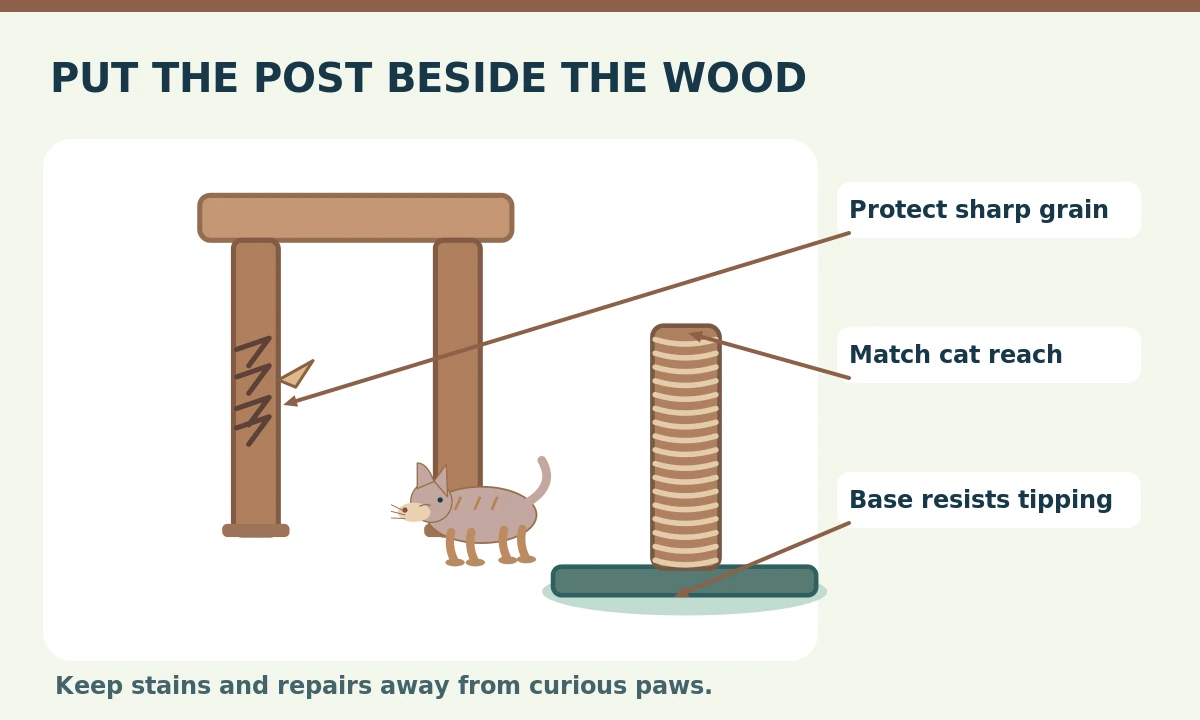
Inspect the damage before allowing access
Run a visual check over the scratched area without sliding bare fingers along sharp grain. Remove access to wood with splinters, peeling paint, loose finish, cracked joints, or protruding fasteners. Do not leave wood stain, sanding dust, glue, or finishing products accessible to a curious cat. When a repair becomes necessary, follow the manufacturer’s curing and ventilation instructions and keep the pet in another room until the area is safe. A chair leg damaged enough to wobble is a household safety problem, not simply a cosmetic issue. Check the underside of the table for fasteners that could catch a paw.
Study the cat’s preferred motion and target
A cat may scratch the same side of a chair leg after waking, while another targets the long upright corner of a cabinet. Watch whether paws pull straight down, around a rounded post, or across a nearby rug. Also notice whether the furniture sits on a familiar route between the bed and a doorway. These details reveal where a replacement should go. A remote cardboard block may not compete with a stable wooden leg. Cornell’s behavior guidance recommends matching both material and scratching orientation to the cat’s preference.
Compare the real reach and stability
Choose a scratching post high enough for the cat to extend comfortably while using it. A base should resist tipping when the cat pulls downward or leans sideways. If a narrow furniture leg was popular, test a post with a grippy surface and a satisfying upright profile; flat cardboard may suit a cat that rakes the floor instead. Inspect rope windings, exposed attachment staples, and rough cut ends before purchase or placement. A stable piece with a secure base matters more than decorative height. Place the post so it cannot fall into a person’s walking path or strike the furniture.
Protect the leg with a reversible barrier
Use a smooth, secure protective sleeve or a freestanding guard intended for the particular furniture finish. Check its fit on a hidden section first, especially on lacquer, veneer, antique wood, or oiled surfaces. Adhesive protectors may remove finish, while improvised wire or rigid plastic edges may scrape a cat. A guard should not pinch paws or loosen into a chewable strip. Protect the leg while the new scratching habit develops rather than permanently wrapping every object in a room. A temporary barrier is most effective when there is an equally accessible and rewarding alternative immediately beside it.

Put the scratcher beside the favored leg
Place the new post within a paw’s reach of the repeatedly scratched side, allowing clear access from the cat’s normal route. Avoid wedging the cat into a tight space between chair legs or near a moving recliner. In a dining area, keep the scratcher away from where chairs slide and feet travel. A heavy base might be stable but still unsafe if someone trips over it in a narrow aisle. If the cat uses the new post consistently, shift it a small distance at a time if you need a more permanent position. Leave another accessible station elsewhere.
Reward voluntary scratching instead of forcing it
Let the cat investigate the post independently. You can attract attention with a brief toy movement nearby, a food reward after a natural paw touch, or a familiar scent on the surface. Do not put the cat’s paws against the material, hold them upright, or punish use of the old leg. Rewarding the first full stretch may be more effective than waiting for a perfect series of scratches. Family members should respond consistently. If the cat returns to wood, revisit its texture or height rather than repeatedly lifting the cat away. ASPCA guidance emphasizes enrichment and reward-based use of approved scratching objects.
Keep furniture repair and cat training separate
Furniture wax, stain, and wood filler are not animal training products. Do not coat legs in hot pepper, essential oils, harsh cleaners, or strongly scented deterrents. Repair and finish the wood only when the cat cannot contact wet products, then reinstall a safe surface protector if needed. Avoid leaving sanding tools and grit on the floor. Check whether a repair changes the feel or smell in a way that attracts new scratching, and keep a scratcher available throughout the work. Protecting the furniture finish is useful, but preventing injury from rough grain or chemicals comes first.
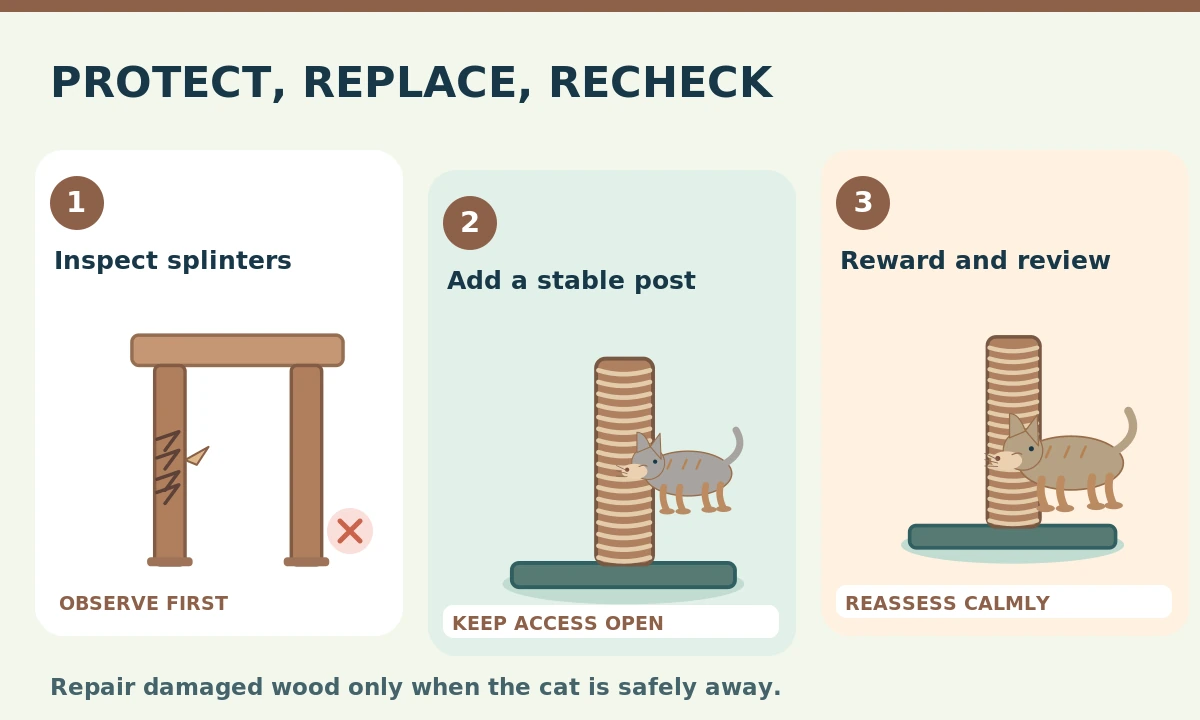
Check progress and maintain the chosen post
Look for fresh marks on the furniture and normal scratch wear on the substitute over a week or more. Expect wear on the post; loose rope loops, sharp staples, and unstable bases are not. Adjust the position if a table or chair blocks access when people sit down. Provide separate stations for cats that compete over a popular location. If scratching suddenly spreads to numerous surfaces with signs of fear or agitation, consider environmental stress and consult a veterinarian when behavior changes abruptly. Keep a familiar, well-used post unless its condition makes it unsafe.
How We Research
Our editorial approach uses veterinary and animal-welfare guidance from Cornell, ASPCA, VCA, and AAFP/ISFM. Documented principles on normal scratching, resource access, surface preference, and low-stress handling inform specific home checks. The illustrations explain design and behavior; they do not represent clinical trials or independent product tests. If pain, urinary changes, wounds, or abrupt behavior changes occur, veterinary assessment takes priority. Read our editorial approach and research method.
Sources
ASPCA — Destructive Scratching — background on feline scratching, enrichment, safe choice, and humane redirection.
Cornell Feline Health Center — Feline Behavior Problems: Destructive Behavior — background on feline scratching, enrichment, safe choice, and humane redirection.
AAFP/ISFM — Feline Environmental Needs Guidelines — background on feline scratching, enrichment, safe choice, and humane redirection.
VCA — Why cats scratch furniture — background on feline scratching, enrichment, safe choice, and humane redirection.
Some adhesives can damage finishes or catch fur. Test protectors cautiously and prefer a secure, non-damaging sleeve or barrier.
The leg may have a more stable shape, better texture, or more appealing location than the post.
Height helps an upright scratcher, but texture, stability, and placement also need to match the cat’s preferences.
Keep the cat away from the damaged wood, repair it safely, and use a smooth protector during retraining.
No. Provide a nearby substitute and reward voluntary use without frightening the cat.