
Gentle reward-based redirection only. Sudden changes, injury or concerning stress signs warrant veterinary advice. Read the HubPet vet disclaimer.
How to stop cats from scratching walls begins with accepting that scratching itself is normal. Cats use vertical surfaces for stretching, claw maintenance and scent marking. If a cat favors wallpaper, the edge of a doorway or a painted corner, removing every scratching option will not erase that need. Instead, make a tall stable scratcher more rewarding at the exact spot the cat already chooses, protect fragile surfaces temporarily and improve the room setup without fear or punishment.
Read the wall-scratching pattern before changing the room
Notice whether the cat scratches a door frame just after waking, marks a wall where other pets pass, or attacks a loose strip of wallpaper for play. Timing offers useful clues. Scratching immediately after a nap may be a full-body stretch; scratching where other animals travel can also be social marking. VCA explains that claws leave both visible marks and scent from the paws. The goal is to provide a safe replacement at that meaningful location.
Do not call a cat stubborn because it ignores a short wobbly post in another room. A wall is tall, solid and close to the activity the cat cares about. Match those properties with a firmly anchored vertical panel or a heavy free-standing scratcher that cannot tip. Check that the cat can reach upward without the apparatus rocking. Keep the alternative close enough that the cat does not have to abandon its favorite room.
| Damage location | Likely attraction | Practical replacement |
|---|---|---|
| Tall painted wall | Vertical stretch and marking | Tall stable vertical post |
| Wallpaper seam | Loose shreddable texture | Secure cardboard/sisal panel |
| Doorway corner | Busy social boundary | Second post near route |
| Wall near resting spot | Post-nap stretching | Scratch surface by bed |
| Same hallway with two cats | Shared territory tension | Separate scratching stations |
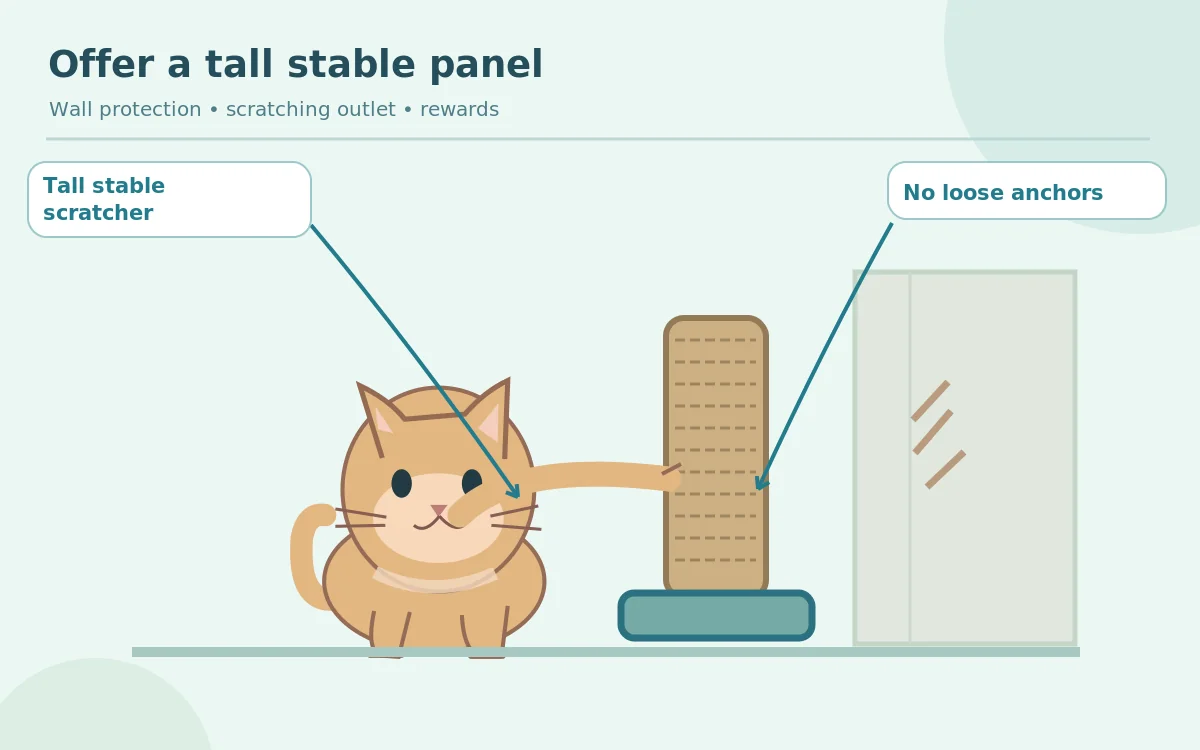
Protect wallpaper while rewarding the right surface
For temporary protection, use a wall guard compatible with the paint or wallpaper and check the manufacturer’s instructions; adhesive films can damage delicate finishes, so test an inconspicuous area. Avoid sharp corners, exposed staples and loose plastic that a cat can chew. If covering a wall, add a scratching post adjacent to it rather than only making the spot inaccessible. This preserves a legitimate scratching outlet.
Reward voluntary scratching on the replacement with quiet praise, a food reward away from the claws or a short interactive game. Do not grab the paws and scrape them against the scratcher; that can create fear. Keep sessions brief and choose a quiet time. VCA recommends selecting a surface the cat likes and placing it where scratching already occurs. Some cats prefer sisal, some corrugated cardboard and others wood-like textures.
- Identify the wall location and time of scratching before moving any furniture.
- Install a stable suitably tall scratching surface right beside the chosen area.
- Protect fragile finishes with a safe removable guard after testing the surface.
- Reward voluntary use of the scratcher; never move paws forcefully or frighten the cat.
- Maintain alternatives in high-use rooms and inspect wall mounts for hazards.

A three-stage wall-to-scratcher plan
First, position the stable scratching surface directly beside the damaged area. Second, encourage exploration with a toy moved near, not over, the cat’s face, and reward a natural scratch. Third, after the new surface has become a reliable choice, move it only gradually if you need to reclaim space. Do not relocate it suddenly to a hidden corner; prominent locations are part of a cat’s marking behavior.
Watch a cat’s response. If it hesitates, startles or avoids the area, stop interacting and offer a calm escape route. Never shout, spray water, startle with alarms or punish normal claw use. These methods can create stress without teaching where scratching is welcome. Our published post-training guide covers shaping the preferred behavior across the home.
Check materials, mounting and multi-cat pressure
A wall-mounted scratcher needs appropriate anchors for its substrate, no exposed hardware or rough backing and clearance from electrical cords. Renters can choose a non-damaging heavy free-standing option instead of drilling. A cat that loves wallpaper may prefer a similar shreddable texture; provide a safe disposable cardboard alternative in a holder where torn pieces can be removed. Inspect frequently for loose fasteners or ingestible fragments.
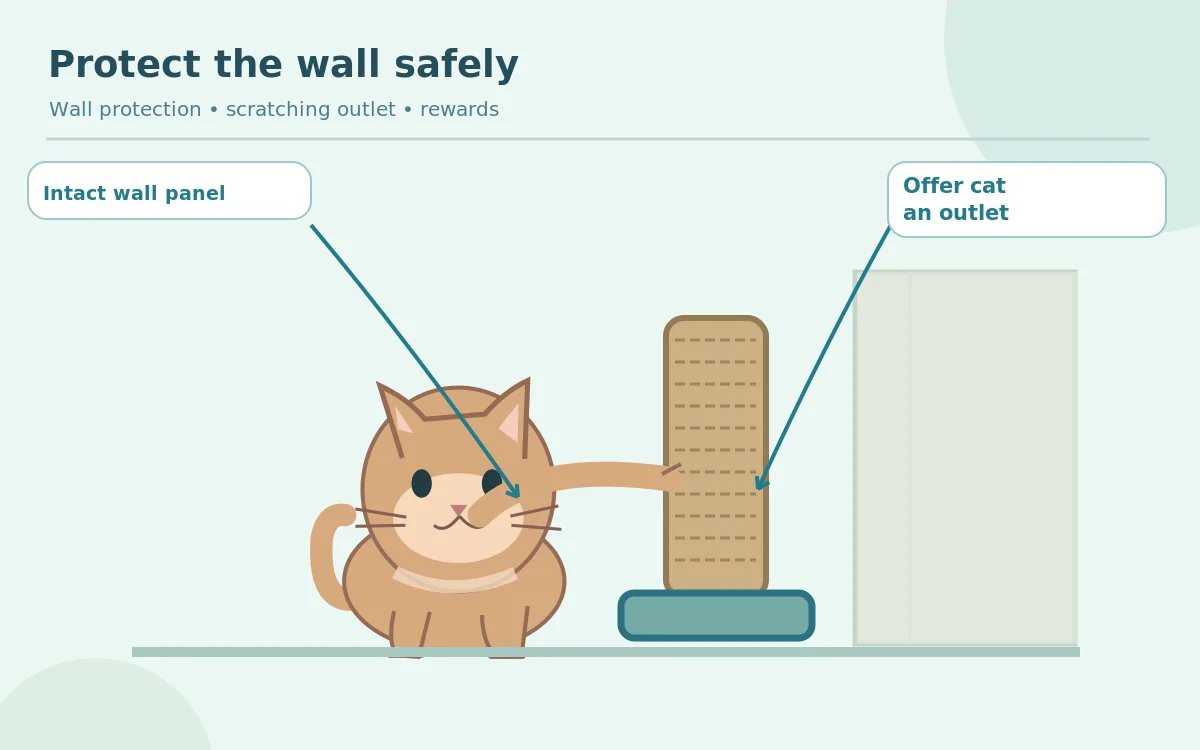
When two cats share a narrow hallway, a single scratcher beside a doorway can become a defended resource. Add separate scratching areas near each cat’s resting or movement route. Sudden increased scratching, compulsive behavior, aggressive interactions or signs of pain deserve veterinary advice. A reliable wall-scratching solution changes the environment and reinforces choices, not the cat’s personality.
Avoid making the wall a source of surprise noises, sprays or physical confrontation. Cats cannot connect punishment later with marks found after the event, and fear can increase stress. If you need to shield a large wallpaper section, keep a scratch-compatible panel close to the cat’s ordinary movement path. Check the condition of claws and ask a veterinarian for help if the cat limps, struggles to retract claws or shows a sudden behavior change.
When to Call Your Vet
Sudden behavior changes, apparent pain, damaged claws, compulsive scratching or conflicts between pets deserve veterinary discussion. Use reward-based management and consider a credentialed cat behavior professional after medical concerns are reviewed.
How We Research
HubPet checked the specific cat behavior and safety guidance linked below, compared environmental choices with veterinary warning signs, and avoided unsupported product superiority claims. The tables offer decisions a household can observe without diagnosing disease. Read HubPet’s editorial approach for our process. For individual medical concerns, ask your veterinarian to adapt these choices to your pet.
Sources
VCA — Cat Scratching Behavior — referenced for animal-welfare guidance and safety limits.
ASPCA — Destructive Scratching — referenced for animal-welfare guidance and safety limits.
Cats Protection — Cat Care — referenced for animal-welfare guidance and safety limits.
The wall may be taller, sturdier or closer to a meaningful marking site. Put a suitable stable scratcher beside the preferred wall.
Yes. Protect the surface temporarily and reward voluntary use of an appropriate alternative placed in the same area.
Some adhesives can harm finishes. Follow product instructions and test a hidden patch before considering temporary wall protection.
Only when it can be securely installed without exposed fasteners or cords; a heavy stable floor-standing post can also work.
A change in scratching or social tension deserves investigation, and a veterinarian can help rule out stress-related or physical problems.