
A pet food storage container should protect food and simplify feeding. A poorly chosen one can trap moisture, retain oily crumbs, or hide the lot number you need during a recall. The U.S. Food and Drug Administration recommends keeping dry food in its original bag, ideally placing that whole bag inside a storage bin. This guide helps you select a workable container. A decorative airtight label does not solve every storage problem. Read the HubPet veterinary disclaimer for feeding concerns involving a particular animal.
Start by recording the size of the bags you normally buy, your available storage space, and how often you refill. Also keep feeding utensils for pet food only. Official FDA guidance provides the starting point for hygiene and traceability; our feeding-schedule guide helps turn a good storage system into a consistent routine.
Keep the original bag when you can
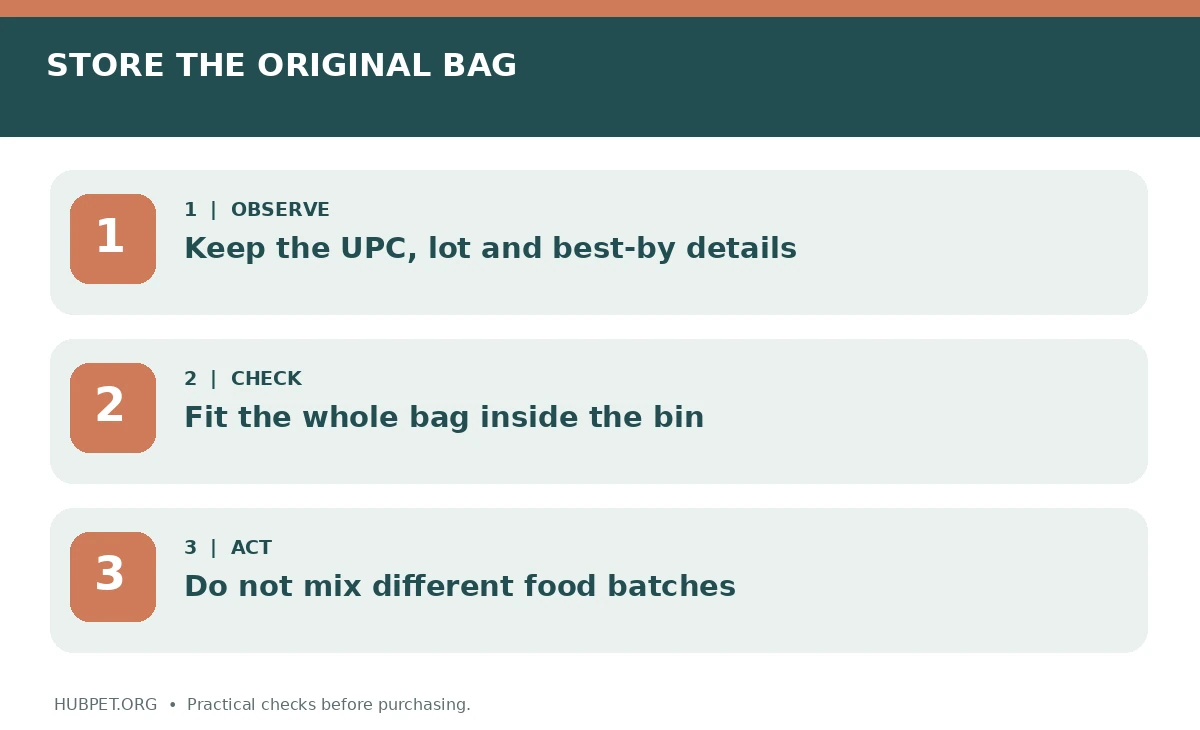
For dry pet food and treats, the FDA advises keeping original bags or containers. Original manufacturer bags carry the UPC, lot number, product identity and best-by date. These details matter during food recalls or when you need to report a problem. Placing the closed bag inside a clean bin preserves them while adding a convenient physical barrier.
Before buying, check whether a full bag with the top folded or resealed will fit. A bin may hold the same pounds of loose kibble yet lack enough room for the original bag’s width or height. For loose kibble storage, preserve the packaging details and clean and dry the container between bags. Never throw away the only lot information.
Measure usable capacity rather than trusting a headline number
Capacity advertisements often use volume, while stores price and sell pet food by weight. Different kibble shapes and densities can fill the same bin differently. Measure the actual bag dimensions and allow room for the closure. Ask for interior dimensions and check whether wheels, tapering sides, or a thick lid reduce the space you can use.
Buying a much larger container does not make food last longer safely. For smaller routine purchases, choose storage that fits the original bags and keeps loose food from sitting exposed to air for weeks. If a large sack cannot fit a practical dry storage spot at home, consider buying less at a time. The container should support your feeding pattern, not encourage overstocking.
Evaluate the seal and how often you open it
A snap lid, gasket or screw closure can limit casual access to crumbs and pests, but the words airtight and freshness are not interchangeable with laboratory results. Examine whether the gasket sits continuously without gaps and whether the lid closes cleanly after repeated use. Consider whether children can open it or a clever pet can knock it loose.
Test the latch with the empty container and a normal hand motion. If it requires force or leaves a sharp pinch point, daily feeding can become awkward. Position the bin so its lid opens fully without hitting a wall. A secure seal is useful only when people actually close it after every feeding.
Choose an easy-to-clean interior and lid
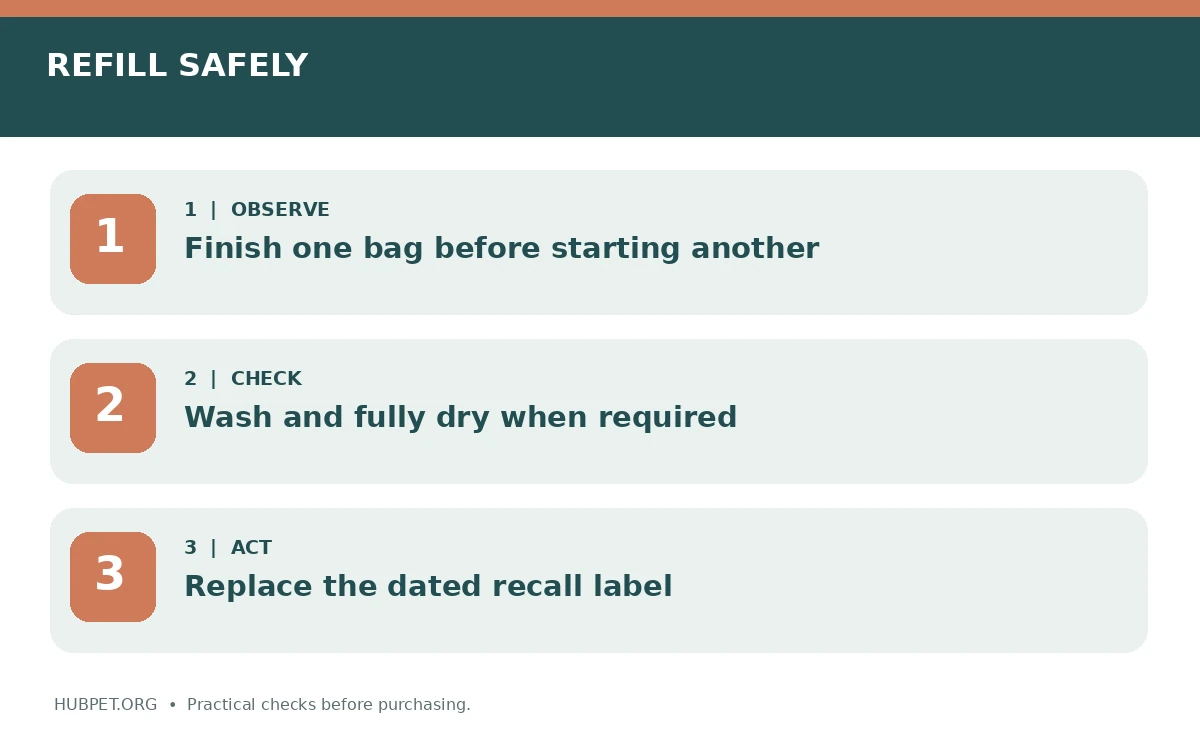
For loose-kibble storage, the FDA recommends washing and drying the container between batches. Oil residues and small crumbs can accumulate under a gasket, in corners, and around wheel housings. Inspect whether you can reach every food-contact surface with ordinary cleaning tools and remove the gasket for care if the maker allows.
Do not pour a fresh bag over an old layer of kibble. Empty, wash, rinse and dry the container completely according to its care instructions. Humidity trapped under a lid can undermine the reason for using the bin. A simple shape with a broad opening may be more practical than a tall decorative design with hidden crevices.
Compare materials without assuming one is automatically safer
Plastic, metal and glass containers each have tradeoffs. Check whether a specific product supports food contact, resists cracking, offers smooth cleanable surfaces and comes with care instructions. Thin plastic may scratch or warp; some metal containers can dent or develop damaged coatings; glass adds breakage and weight concerns.
A container’s visible color or premium price does not establish hygiene. Verify the manufacturer’s material claims, the type of gasket and whether replacement parts are available. If you see a strong persistent odor or damaged interior lining, do not use it for direct food contact. Bag-in-bin storage can simplify some concerns about direct contact with the food.

Store the container in the right environment
The FDA says dry food and unopened cans belong in a cool, dry place below 80°F (27°C). Avoid placing the bin near stoves, water heaters, sunny windows, damp floors or a garage with large temperature swings. Even a sealed container should not be treated as permission to ignore heat or moisture.
Choose a level shelf or floor area that stays clean and lets you inspect for insects or leaks. Keep the lid above standing water and away from cleaners. If you use wheels, test that the unit does not roll into a doorway or tip when pulled. Plan the storage location before choosing a container with an unusual shape.
Think through scooping, measuring and contamination
Store a dedicated dry scoop in a clean holder according to the product’s instructions. The FDA advises washing and drying food bowls and scooping utensils after each use. Do not switch a scoop between pet food and household cleaning supplies. Portion size should follow the animal’s feeding plan, not the largest scoop that fits in the container.
Wet hands or a damp measuring cup can introduce moisture into dry food. Keep cleaning cloths out of the bin and avoid setting a food scoop on a dirty surface. In a home with more than one diet, use clearly labeled containers and dedicated utensils to reduce accidental feeding of the wrong formula.
Create a recall-ready label and rotation routine
With the bag inside, keep its printed information readable or photograph it for backup. If you pour food out, tape the lot number, manufacturer, exact product name and best-by date to the outside and replace the label with each new bag. A vague label such as chicken kibble is not enough for a targeted recall.
Write the opening date if that helps household members use the older bag first. Do not combine batches with different lot numbers in one bin. If the food develops an unusual smell, visible mold or insect activity, do not feed it. Contact the manufacturer or a veterinarian when appropriate and retain the packaging details for a report.
Handle treats and wet food differently
A dry-kibble storage bin is not the right place for opened wet food. The FDA advises refrigerating or discarding unused canned or pouch food promptly and setting the refrigerator to 40°F (4°C) or colder. Follow the product label for timing after opening. Do not place opened wet food into a large room-temperature dry bin.
Treats can have different packaging and storage requirements from kibble. Store them securely, retain identifying information and keep them away from pets that may break into a supply. A household with prescription or medically restricted diets should take extra care to separate foods and follow veterinary instructions.
Run a practical buying and maintenance test
With an empty sample container, check the lid, gasket, carrying handles, corners and cleaning access. Simulate removing and replacing the entire usual food bag. Make sure the bin fits its intended shelf and can be lifted safely when full. Compare replacement gasket availability and product-specific instructions rather than chasing a single feature score.
A week after first use, inspect for trapped crumbs or moisture and confirm everyone closes the lid properly. Keep a simple cleaning reminder near the feeding station. The best container makes the safest routine easy: identifiable food, dry storage, clean utensils and dependable daily access. For changes between diets, use our gradual food-transition guide.
How We Research
We prepared this guide using animal welfare guidance and practical questions owners can ask about size, materials, supervision, fit and safe use. We did not purchase or independently test products, and we do not rank brands or claim veterinary endorsement. On October 26, 2026, our editorial review considered these sources. Learn more about HubPet and our editorial approach. This material does not replace advice for a specific animal from its veterinarian.
Sources
U.S. Food and Drug Administration: Proper Storage of Pet Food and Treats. Accessed October 26, 2026.
U.S. Food and Drug Administration: Tips for Safe Handling of Pet Food and Treats. Accessed October 26, 2026.
The FDA recommends leaving food in its original bag when practical and placing that bag inside a clean storage bin. If you pour kibble out, keep the lot information and clean the container between bags.
No. A close-fitting lid can help with access and pests, but you still need cool, dry storage, appropriate packaging, routine cleaning and attention to the manufacturer’s storage advice.
Measure the actual bag, including its folded top, and compare it with the bin’s usable interior dimensions. Weight or volume claims alone may not describe whether the intact bag fits.
If kibble directly contacts the bin, the FDA recommends washing and drying it between batches. Follow product instructions and clean earlier if crumbs, oil, moisture or contamination appear.
No. Opened canned or pouch food needs refrigeration or disposal following label instructions. The FDA recommends a refrigerator at 40°F (4°C) or colder for appropriate leftovers.