
A kitten’s first food dish needs to be easy to find, comfortable to approach, and simple to clean. It does not need to look miniature if the kitten can reach the food without climbing into the dish. High rims, sliding lightweight cups, and noisy feeding locations can make a straightforward meal unnecessarily difficult. This guide compares shallow dish shapes, base stability, materials, separation of food and water, and cleaning routines. It avoids promising that one special bowl prevents ‘whisker fatigue’ or fixes picky eating. A reliable setup makes enough suitable kitten food accessible at regular times and gives the growing animal a quiet place to learn its routine.
Pick a rim a small kitten can comfortably reach
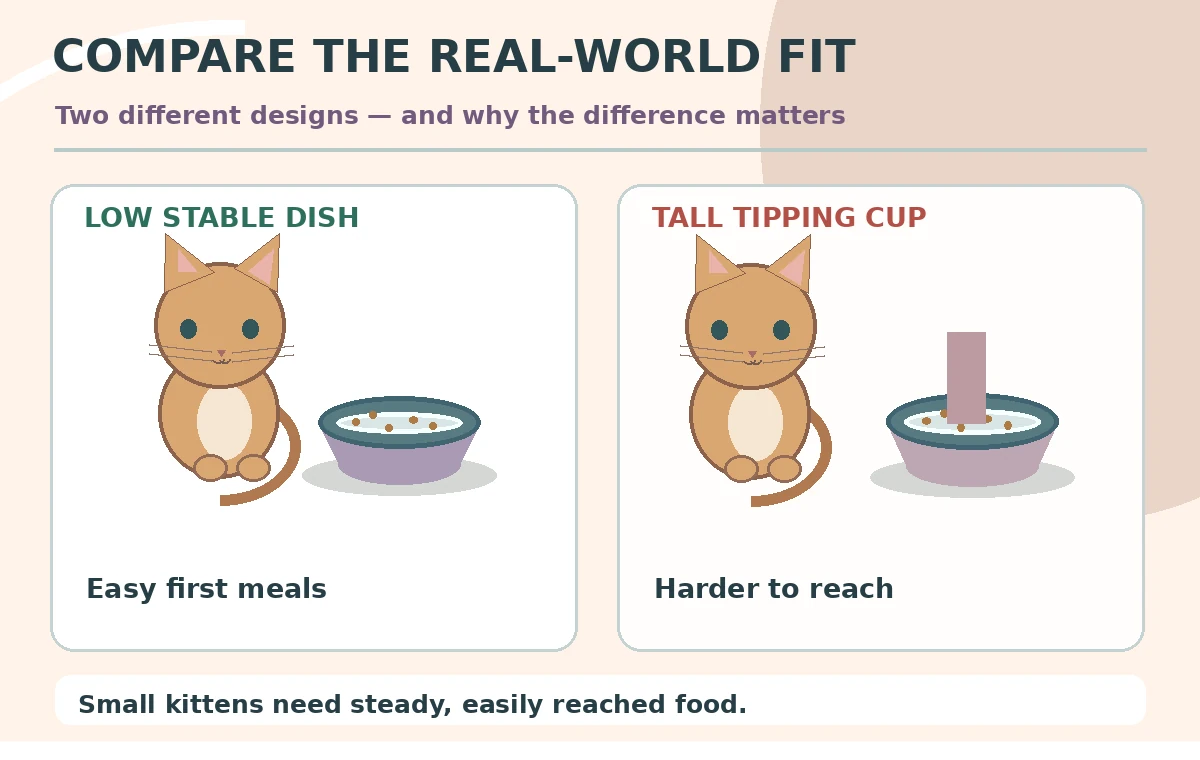
Set a prospective dish on the floor and imagine the kitten standing beside it with all four paws on the ground. The kitten should reach food near the center without placing its forelegs over a tall wall. Low saucer-style edges often work well, while deep cups may trap the last bites at the bottom. Use the feeding posture as the main test: the head should enter easily and the animal should not strain upward. An extremely wide plate can also spread small amounts of food too far from the center. Start with a modest shallow food area and adjust as the kitten grows.
Stability matters more than a cute shape
A curious kitten may bump, paw, or walk around the dish. A broad flat base with enough weight or a secure non-slip ring can reduce sliding on tile. Test for rocking by pressing gently at several edges before adding food. Avoid very lightweight cups with tall narrow feet, dangling decorations, detachable rubber pieces, or coatings that flake when scratched. If the kitten bats the dish across the floor, use a safe washable mat or heavier stable option rather than scolding the pet. Spills are an equipment and setup problem to solve, not misbehavior that requires punishment.

Select a surface that can be cleaned thoroughly
Smooth stainless steel, food-safe glazed ceramic, and some dishwasher-safe alternatives can all work if they are undamaged and suited to the household. Ceramic can crack or chip; plastic can develop scratches; metal bowls should not have unfinished sharp edges. Check the base and rim every time you wash. FDA advises cleaning food utensils after use with soap and hot water, and CDC specifically recommends cleaning wet-food bowls after each use. Rinse away all detergent and allow the dish to dry. Simple one-piece construction is often more practical than decorative crevices that trap food residue.
Keep food and water in separate quiet places
Cats Protection recommends separate food and water bowls and a food station away from the litter tray. Give the kitten an accessible, low-traffic spot, not a busy doorway or directly beside a washing machine. If the household includes another cat, provide separate feeding opportunities so a bolder animal cannot block the kitten. Observe whether the kitten approaches the dish easily and can turn away when finished. Do not make a small kitten cross a stressful area to reach its regular food. A quiet spot improves usability regardless of the bowl material.
Match the dish to wet and dry meals
Wet kitten food may spread across a flat plate, so use a shallow dish with a lip that helps keep pieces from sliding onto the floor. Dry pieces are easy to measure in a small cup, but ensure the bottom remains reachable as the level falls. Clean wet-food dishes after every use and refrigerate or discard leftovers promptly in line with FDA guidance. Offer a complete, age-appropriate kitten diet, following packaging guidance and individualized veterinary instructions. Keep the food portion consistent when testing a new bowl so you can judge the dish fairly rather than changing diet and equipment at the same time.
Do not oversell whisker-friendly claims
A wide shallow rim may feel comfortable for some cats, but the evidence does not justify presenting ‘whisker stress’ as a proven universal diagnosis. A published trial comparing marketed whisker-friendly and regular bowls found no consistent improvement in time spent eating, intake, or dropped food in the cats tested. That study involved adults, so it also cannot prove a special benefit for kittens. Choose a shallow shape because it is reachable and easy to observe, not because a label guarantees sensory relief. If a kitten is reluctant to eat, first check freshness, location, diet changes, and the kitten’s health.
Let the kitten choose a familiar routine
When introducing a new bowl, put a small measured serving of familiar food in the quiet designated location. Let the kitten approach voluntarily and avoid hovering over the dish or moving it during the meal. If the kitten is unsure, place the familiar dish nearby for a gradual comparison. Keep feeding times consistent and replace wet food that has been sitting out. Young kittens typically need smaller, more frequent meals than adult cats, and Cats Protection offers age-specific feeding guidance. Monitor the kitten’s growth and consult the veterinarian about portions and feeding frequency when uncertain.

Plan for growth and signs that warrant advice
A dish that suits an eight-week-old kitten may be too small months later. Reassess whether the kitten has enough room for its face, can reach the last bite, and is no longer tipping the bowl. Replace chipped or scratched equipment. If the kitten suddenly refuses meals, repeatedly vomits, becomes weak, or shows other illness signs, get veterinary advice promptly instead of repeatedly purchasing a new bowl. For everyday use, a low rim, stable washable base, and calm placement usually matter more than elaborate branding. Good equipment supports feeding; it does not replace attention to the kitten’s needs.
How We Research
We compared primary veterinary, government food-safety, and established animal-welfare guidance with real-world bowl geometry and maintenance trade-offs. We separated general feeding principles from product-specific fit questions and did not treat a manufacturer’s claim as independent evidence. The illustrations explain practical checks rather than certifying any product. We reviewed sources October 27, 2026. Read more about our editorial approach on About HubPet.
Sources
Cats Protection: Bringing a New Kitten Home: Read primary guidance. Accessed October 27, 2026.
Cats Protection: Feeding Your Cat: Read primary guidance. Accessed October 27, 2026.
Journal of Feline Medicine and Surgery: Evaluation of Whisker Stress in Cats (2020): Read primary guidance. Accessed October 27, 2026.
US Food and Drug Administration: Tips for Safe Handling of Pet Food and Treats: Read primary guidance. Accessed October 27, 2026.
US Centers for Disease Control and Prevention: Cleaning and Disinfecting Pet Supplies: Read primary guidance. Accessed October 27, 2026.
Safety note: These product-selection tips are educational, not an individualized feeding or medical plan. A sudden change in appetite, swallowing, breathing, or behavior warrants veterinary advice. Our veterinary disclaimer has more context.
A shallow reachable dish is often convenient, especially for a small kitten that should not have to climb over a high rim.
Either may work if smooth, food-safe, stable, and undamaged. Inspect ceramic for chips and metal for rough edges.
No universal need is established; choose an open comfortable dish and watch the kitten’s actual feeding behavior.
Cats Protection suggests placing drinking water separately from food, with both stations readily accessible and away from the litter tray.
Upgrade it when growth makes the rim restrictive, the base tips, or damage prevents safe cleaning; use appetite changes as a reason to consult a vet.