
This guide offers general feeding-equipment and hygiene information, not individual veterinary advice. If a pet has persistent eating difficulty, vomiting, or signs of pain, consult your veterinarian; see our veterinary disclaimer. Plastic dog food bowls are light, affordable, and easy to move, but the finish matters more than its cheerful color. A rim that has become rough or a bottom full of grooves deserves a closer look, particularly when wet food clings to it. This guide explains how to inspect the eating surface, spot damage, and decide when a different material will be easier to maintain. It is not a claim that every plastic bowl is unsafe. Use the condition of the specific dish and your dog’s chewing behavior as the deciding factors. The FDA advises cleaning food bowls and serving tools after use; the bowl you choose needs to make that routine practical.
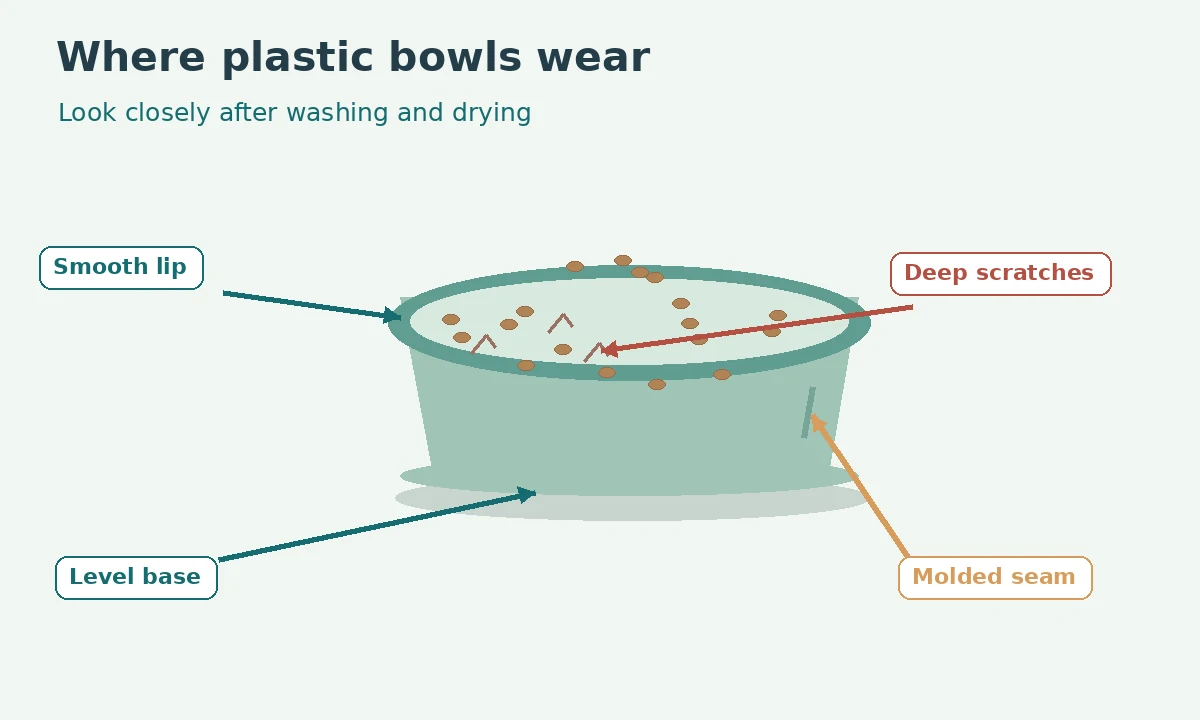
Inspect the inner surface in bright light
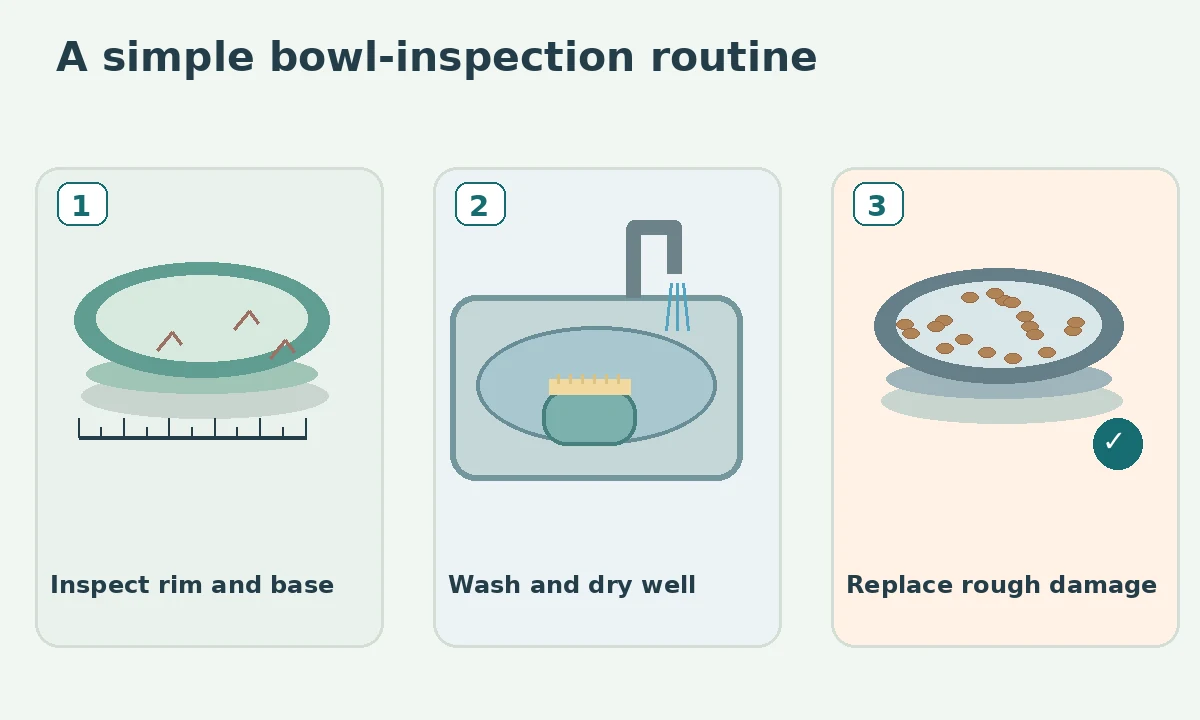
Empty the bowl, wash it, dry it, and turn it slowly under a kitchen light. Look for cloudy scuffs where the dog’s tongue repeatedly reaches, sharp-feeling gouges around the base, and rough areas near molded ridges. A light scuff is different from a groove that traps food or catches a fingernail. Do not probe a dog’s bowl with a tool that might make more scratches. Run a clean finger along the rim for burrs, paying close attention to molded seams. If you cannot thoroughly clean a deep scratch, replacement is usually simpler than trying to polish it. Holding kibble is not enough reason to keep a damaged bowl.
Check the rim and base before every refill
The lip should feel smooth all the way around, especially where a dog rests its lower jaw. Inspect feet, adhesive pads, and labels attached to the underside. A loose rubber bumper or peeling sticker can become a chew target when your dog noses the bowl. Put the empty bowl on the actual feeding surface and give it a gentle sideways push. Light dishes may skate across tile. A pet can chase them into cabinets. A mat may help if it stays flat and is easy to wash, but do not use a mat to conceal an unstable bowl. Check the dish for tipping with its usual food portion.
Wash thoroughly rather than masking odors
Remove leftover food after a meal and wash the bowl using warm water, dish soap, and a clean dedicated brush or sponge. Rinse carefully and let the bowl dry completely before putting it away. The FDA recommends washing pet food bowls and scoops after use, while CDC advises following manufacturer directions for dishwasher-safe pet supplies. Lingering smell after a normal wash is a reason to inspect the plastic, not to add fragrance or harsh cleaner. Strong scented products can leave unwanted residue. Scrub gently enough to avoid creating more surface damage; an abrasive scouring pad defeats the purpose. Wet food deserves prompt cleanup. Residue can build up in scratched corners.
Decide whether the plastic fits your dog
A calm dog who eats without moving the bowl may use a smooth, intact plastic dish successfully. A puppy that picks up dishes or chews the rim needs a different setup with less opportunity to swallow fragments. Watch for tooth marks, missing pieces, or damaged seams after meals. Never offer a cracked bowl simply because it is lightweight. If the bowl has become a toy, remove it between supervised meals and choose a sturdy alternative. Dogs vary in muzzle reach, eating speed, and sensitivity to a shifting dish; those observations are more useful than a universal rule. In a multi-dog home, keep each dish identifiable. Wash each one between meals.
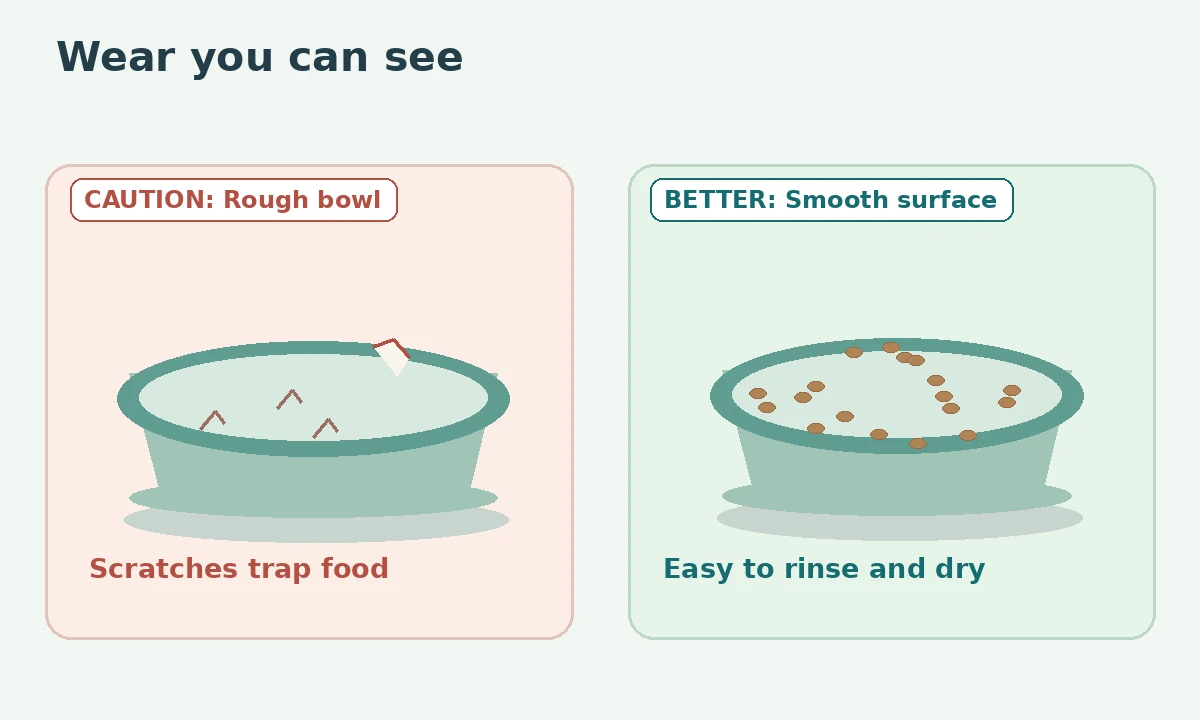
Compare plastic with steel and ceramic without overclaiming
Stainless steel has a smooth, durable surface when intact, while ceramic offers useful weight but needs regular chip inspections. Plastic may be convenient for travel or temporary use, though its working surface can show wear. Neither a high price nor a material label removes the need for washing and inspection. If your dog reacts to one dish, try an appropriately sized smooth alternative before blaming the ingredient list. Measure the actual inside diameter and usable depth, not only the outside package dimensions. Avoid decorative dishes with unknown food-contact finishes. Consider how easily your hand and cleaning tool can reach the entire base, particularly if the dish has decorative channels or a raised logo.
Set simple replacement triggers
Replace a bowl when there are cracks, sharp edges, bite marks, detached base pieces, severe grooves, or damage that prevents proper cleaning. Persistent residue can justify a new dish. Color alone does not prove contamination. Inspect the replacement before use too: the rim needs a rounded rim and level base. Keep the old dish out of reach once retired rather than turning it into a chew toy. If a dog has swallowed part of a bowl, contact a veterinarian promptly. Do not induce vomiting or wait for an obstruction to become obvious. A written reminder to inspect the bowl during the weekly feeding-station cleanup can prevent minor wear from being ignored.
Build a routine you can actually sustain
Keep a clean backup dish available so food preparation never depends on reusing a dirty bowl. Wash your hands before and after handling food, use a dedicated measuring utensil, and refrigerate perishable leftovers promptly. Keep bowls away from litter boxes and cleaning chemical storage. Choose a location where your dog can eat without another pet crowding it, and lift the bowl when the meal is over if chewing is a concern. Evaluate whether the setup reduces spills, is simple to dry, and remains comfortable for the dog. A suitable dish is one you can inspect and clean every time, not a dish that promises to stay hygienic forever.
How We Research
We compare guidance from FDA and CDC on equipment hygiene with veterinary and welfare advice relevant to this dish. We distinguish a product measurement or inspection from unproven health promises, and we favor practical checks an owner can repeat at home. This is editorial guidance, not laboratory testing or a product endorsement. Read more about HubPet.
Sources
FDA — Safe Handling of Pet Food and Treats — context for bowl materials, hygiene, feeding access, or safe handling.
CDC — Cleaning and Disinfecting Pet Supplies — context for bowl materials, hygiene, feeding access, or safe handling.
Banfield — Choosing a Dog Bowl — context for bowl materials, hygiene, feeding access, or safe handling.
No. Material alone is not the whole story; check the specific dish for damage, chew marks, a smooth rim, and practical cleaning access.
Very light scuffs may be cleanable, but deep grooves, rough edges, and damage that traps food are strong reasons to replace the bowl.
Residue may remain in scratches or seams. Wash and dry it properly, inspect the surface, and replace it if you cannot remove the buildup.
Only use the dishwasher when the manufacturer says that bowl is dishwasher-safe; otherwise wash with soap and water and dry fully.
Remove the damaged bowl and seek veterinary advice immediately if a piece may be missing. Use a more chew-resistant feeding setup.