
A tiny bowl is not always the right bowl for a tiny dog. Compare inside width, bowl depth, base weight and feeding habits. This guide focuses on the physical features you can inspect, the actual eating experience, and a repeatable cleaning routine. It does not recommend a particular brand or promise that a feeding accessory can treat a medical problem. Test the setup with your pet under ordinary home conditions, and stop using an item that becomes unstable or damaged. For feeding difficulty, ongoing appetite changes, or other health concerns, consult a veterinarian and read the HubPet veterinary disclaimer.
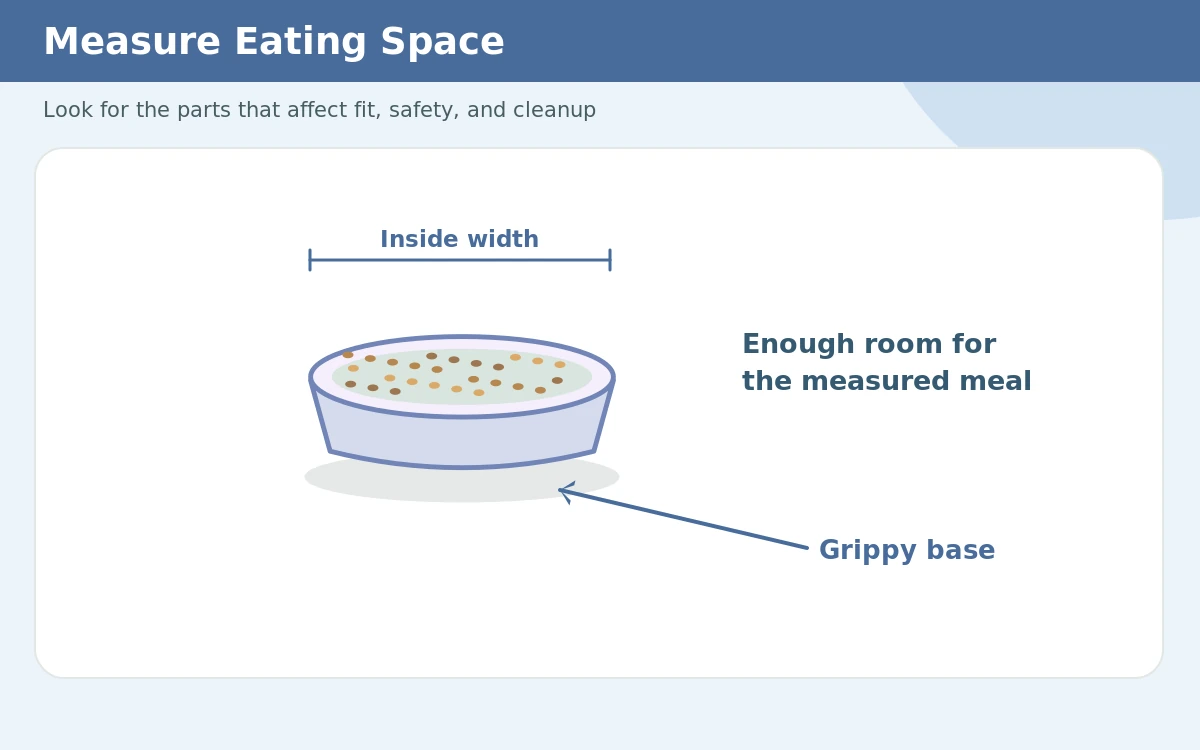
Measure the meal before choosing the dish
Start with the portion the dog actually eats, measured according to its food plan. Pour that amount into a familiar bowl and note how far the food spreads. A smaller volume does not mean that an extremely narrow container is useful. If kibble piles into a deep cone, the dog may have to chase the last pieces down a steep wall. A shallower dish with enough interior width can make the full portion accessible. Choose usable bowl space rather than relying on package labels such as toy breed or miniature.
Look at the interior rim and nose clearance
Measure the opening from inside wall to inside wall. The decorative outer rim may add width without creating more room for the muzzle. Watch whether the dog can reach food without scraping its whiskers, lips, or nose against a hard inward lip. A short-faced dog may prefer a broader shallow plate, but feeding comfort is individual. Avoid making a medical claim from bowl shape alone. If eating suddenly becomes difficult or painful, a veterinary assessment matters more than changing the dish.
Balance weight against slip resistance
A small ceramic bowl can be heavy enough to resist nudges, yet dropping it may chip the edge. A very light metal bowl may be simple to wash but slide across tile. Check how a specific bowl behaves on your actual floor. A removable nonslip ring is helpful only when it stays attached and can be cleaned underneath. Avoid suction bases that are difficult to remove or leave loose pieces a dog might chew. Stability comes from the entire setup, not from a single feature label.
Understand shape for wet food versus kibble
Wet food can smear along the edges of a curved bowl. A gently rounded interior makes it easier to collect the last bite and easier to wash afterward. Kibble may scatter when a dog noses the rim, so a slightly taller wall could be useful in that situation. Observe the meal before choosing between a dish and a shallow plate. Do not assume a deep narrow bowl slows eating safely. If the dog gulps meals, a purpose-designed feeder with appropriate easy-to-clean channels may be a separate choice.
Choose a floor location the dog can approach
Set the bowl where the dog has enough room to stand with paws on a secure surface. A small dog should not have to stretch under a cabinet edge or reach behind a furniture leg. Keep the dish away from the path of swinging doors and children’s feet. When another pet hovers nearby, separate feeding areas may be calmer. The ideal bowl size becomes less useful if the location creates stress or crowding. Watch the dog’s posture through an entire meal, including the final bites.

Check seams, coatings, and removable pieces
Inspect the interior for scratches, chipped glaze, rust spots, and rough molding seams. Confirm the bowl is intended for food contact. Decorative paint inside the feeding surface deserves careful attention to the manufacturer’s claims and care directions. Any removable rubber foot or silicone ring needs regular cleaning, because food can collect at the join. A dog that chews and swallows detached parts should not be left with an accessible loose ring. Replace damaged bowls instead of concealing cracks with tape.
Match cleaning to the meal schedule
FDA recommends washing and drying pet food bowls after each use. A small bowl is convenient only if you can clean around the entire inside curve and rim quickly. Wash with suitable dish soap and water, rinse well, and dry before the next portion. Keep a second bowl ready if several small meals are offered during the day. A bowl that is too difficult to scrub between meals may be the wrong design, even if its footprint fits your kitchen perfectly.
Test whether the bowl stays put during eating
Try a normal portion, not an empty dish alone. Watch the dog’s mouth position and how much the bowl moves when the final pieces are at the bottom. If it skids, try a broad washable mat or a heavier stable design instead of putting it on a raised shelf. Look for scooting, repeated tipping, or frustrated pawing. A quiet meal with comfortable access is a more useful test than a product claim about an advanced anti-tip base. Keep the feeding area clear of loose small objects.

Build a practical comparison before purchase
Compare at least the interior opening, useful food capacity, edge finish, weight, floor contact, and cleaning method. A dog with a small daily ration may still benefit from a relatively wide dish. A dog with limited head mobility may need individualized advice. Avoid buying several sizes solely from breed charts; those charts cannot account for a particular animal’s muzzle and posture. Keep the bowl that works with the real portion and return or repurpose any that consistently cause awkward reach or slipping.
How We Research
We compare the stated purpose of small dog food bowls with observable design details: food access, fit, stability, cleaning, and failure points. Read more about our approach on the HubPet about page. General hygiene guidance comes from federal public-health and food-safety resources. Specific construction and dishwasher claims still require the exact manufacturer instructions. This article is an editorial buying and use guide, not a hands-on performance test of every model or a veterinary diagnosis.
Sources
FDA — Proper Storage of Pet Food and Treats. Used for the relevant animal feeding, cleaning, or safety guidance; not as a product endorsement.
CDC — Cleaning and Disinfecting Pet Supplies. Used for the relevant animal feeding, cleaning, or safety guidance; not as a product endorsement.
VCA — Feeding Times and Frequency for Your Dog. Used for the relevant animal feeding, cleaning, or safety guidance; not as a product endorsement.
Not necessarily. Choose by interior eating space, the measured portion, muzzle access, stability, and the dog’s normal posture rather than breed labeling alone.
A shallow wider dish may improve access for some individuals. Observe comfortable eating and ask a veterinarian about persistent difficulty or changes in appetite.
Try a broad washable nonslip mat or a heavier stable bowl, and check for loose base rings that could become chewing hazards.
Yes. FDA recommends washing and drying food bowls after each use; keeping a spare clean dish makes multiple meals easier.
Its size alone is not a reliable slow-feeding strategy. Consider food portions, meal environment, and a suitable feeder if rapid eating remains a concern.