
A cat window perch can turn an ordinary view into a comfortable observation spot. Its most important feature is not how high it sits but whether the installation remains stable during jumping, stretching and sleep. This guide compares sill supports, suction-mounted hammocks and furniture-based options without treating a product label as proof of structural strength. If your cat suddenly hesitates to jump, review our veterinary disclaimer and seek veterinary guidance.
Cats Protection notes that many cats enjoy high vantage points, including windowsills. The ASPCA warns that unprotected windows can lead to serious falls. A perch belongs inside a secured home; it never makes an open window safe. Our window-watching article explores the behavior behind the preference.
Choose the resting purpose before choosing a mount
Observe whether your cat watches birds while standing, curls into a loaf for a long nap, or changes windows as the sun moves. An active watcher may appreciate a broad shelf, while a cat that sleeps in a curled posture may prefer a flat padded platform. A narrow fabric hammock may not suit an animal that likes to turn freely.
Also consider the room beneath the perch. A drop above hard furniture, stairs, or a sharp edge adds avoidable risk. A lower interior window with a clear landing zone can offer plenty of visual stimulation. The cat should be able to leave independently and reach another safe resting place when sunlight or outside activity becomes uncomfortable.
Measure your cat and the actual usable platform
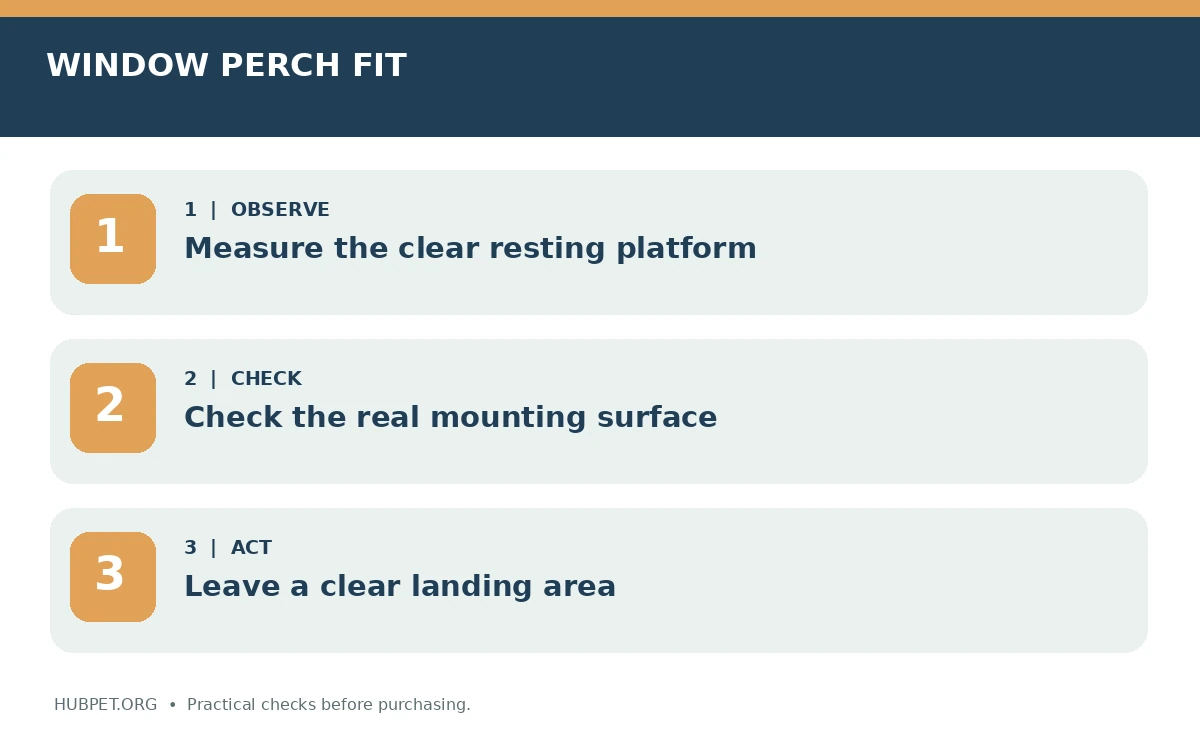
Do not judge dimensions from photos of kittens on oversized windows. Measure platform depth from back to front and width between side supports. Watch your cat rest on an existing shelf to estimate how much space it needs to turn without hanging over the edge. Check that seams, raised borders and mounting arms do not reduce the usable area.
Read the stated weight limit but treat it as one part of the assessment, not a guarantee. Landing force during a jump may differ from a still weight placed on the perch. Large or energetic cats may need a sturdy furniture-supported solution rather than a lightly mounted hammock. Choose stability over decorative extras.
Compare sill-mounted shelves and suction hammocks
A sill-mounted shelf relies on the actual ledge geometry and its specific attachment system. Measure sill depth, trim shape and clearance for brackets. Do not drill into unknown structures or ignore manufacturer restrictions. Check whether the shelf interferes with curtains, blinds, window handles or a safe route out of the area.
A suction hammock depends on a suitable smooth glass surface, correct installation and ongoing adhesion. Texture, dirt, moisture and temperature changes may affect performance. Inspect every suction cup before use and continue checking it. Never assume a cup that held yesterday will remain attached indefinitely. Provide a safe alternative perch if adhesion seems uncertain.
Confirm window security separately from perch strength
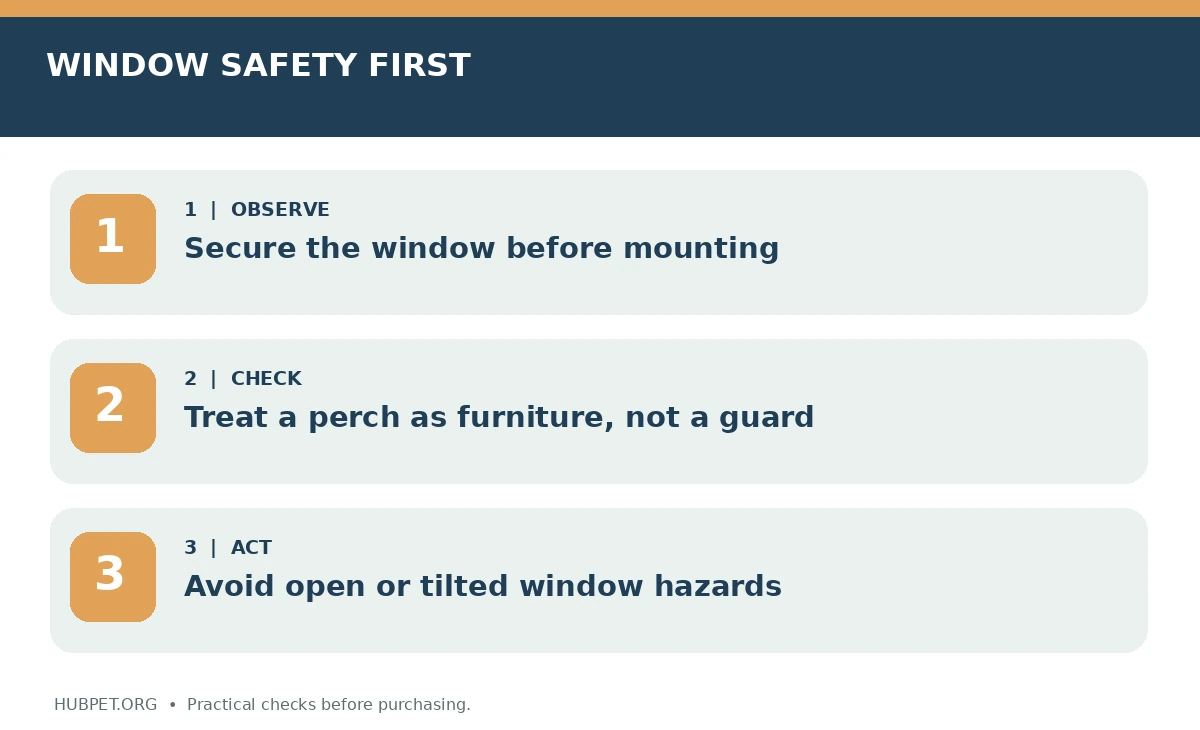
Before installation, make sure the window has a secure barrier appropriate for a cat and cannot open unexpectedly. ASPCA guidance urges snug, sturdy window screens; common child window guards are not sufficient. A suction cup attached to glass is not a safety restraint, and a perch must never substitute for secure window construction.
Tilt-and-turn windows create particular entrapment hazards when left partly open, as Cats Protection warns. Keep the cat away from unsafe openings during installation and cleaning. If the window’s safety cannot be established, choose a freestanding perch set back from the glass. A nice view is not worth a fall or entrapment risk.
Test support points and the surrounding wall or frame
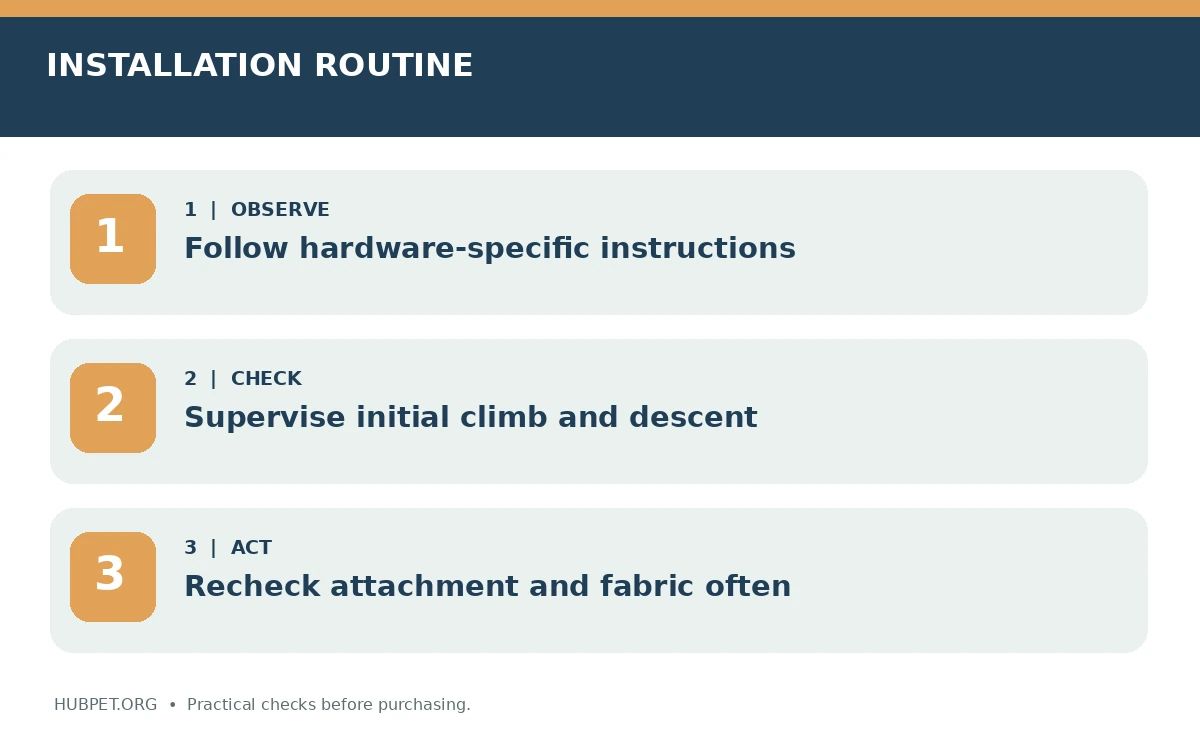
Trace how the cat’s weight reaches a support: through cups, brackets, a sill lip, or legs on the floor. Follow the manufacturer’s stated compatible surfaces. Adhesive mounts, painted trim and delicate window films may fail or become damaged when used outside instructions. Never improvise attachment hardware just to force a preferred model into place.
Once installed, check that each support is seated and hardware is fully engaged. Apply a cautious hand check only as directed; this does not replace the product’s rated installation procedure. Keep the cat away while you work and watch initial approaches. Any creak, slip or visible motion is a reason to remove the perch and reassess.
Build an easy route up and back down
A perch is only useful if the cat can reach and leave it comfortably. Place a stable chair, platform or cat tree where intermediate steps are possible. Avoid a layout that requires a blind jump behind furniture. Cats Protection suggests steps and ramps for older cats that struggle to reach favorite places.
Watch an ordinary descent. Does the cat pause at the edge or land hard on slippery flooring? Move supporting furniture if necessary and add a secure non-slip landing surface. Never lift a reluctant cat onto a high shelf to force a trial. Sudden difficulty moving, slipping or reluctance to jump merits a veterinarian’s assessment.
Check fabric, edges and removable padding
Examine the surface your cat will touch. Rough cut edges, exposed fasteners, frayed cords and loose decorative tassels can turn resting equipment into a hazard. Choose covers that attach securely and can be washed according to their care label. Long loops and strings should not remain accessible on an unattended perch.
Fabric slings can sag differently from rigid shelves and may feel unstable to some cats. If the cat cannot turn comfortably, consider a firmer platform. Pay attention to hot sunlight through glass; provide nearby shade and another resting area. Do not place electric heating pads on the perch or route cords where a cat can chew them.
Plan for more than one cat and changing preferences
In a multi-cat household, a single high-value window may become a point of tension. Provide alternative perches and escape routes so one animal cannot block another. Position places to rest apart from litter boxes and feeding stations when possible. Observe whether a cat approaches freely or waits because another cat controls the spot.
Changes in bird activity, street noise or outdoor cats may make the window exciting or stressful. A cat that suddenly avoids the perch is giving useful information. Shift furniture or lower visual stimulation rather than coaxing it into a spot it dislikes. The goal is choice, not mandatory daily use.
Establish a quick daily and monthly inspection
Before letting the cat use the perch, glance at supports, stitching, mounting hardware and the window lock. For suction products, follow the stated cleaning and reseating schedule. Wipe away condensation where it affects mounting surfaces. Recheck the product after a heat wave, a window-cleaning session or an accidental bump.
Every month, inspect hidden edges and the underside for fatigue or cracking. Replace components only with compatible parts. Record the date of installation if that helps maintenance. A product that repeatedly slips or requires improvised repairs should be retired. Maintenance is part of the purchase cost, not an optional luxury.
Run a supervised trial before regular use
Invite exploration with a familiar blanket or a small reward on a lower nearby step. Let the cat decide when to climb. Observe the perch during settling, turning and descent without physically shaking it while occupied. Stop the trial immediately if the structure moves, the cat panics or the route seems risky.
After several calm supervised visits, decide whether it fits this cat and window. Keep other safe rest spots available. For a larger climbing plan, see our cat climbing-space guide. A stable floor-supported station can be a better purchase than the most compact hanging model.
How We Research
We prepared this guide using animal welfare guidance and practical questions owners can ask about size, materials, supervision, fit and safe use. We did not purchase or independently test products, and we do not rank brands or claim veterinary endorsement. On October 26, 2026, our editorial review considered these sources. Learn more about HubPet and our editorial approach. This material does not replace advice for a specific animal from its veterinarian.
Sources
Cats Protection: Why Do Cats Like Sitting on Things?. Accessed October 26, 2026.
ASPCA: High-Rise Syndrome: Lifesaving Tips for Cat Parents. Accessed October 26, 2026.
Cats Protection: Keeping Your Cat Safe in the Home. Accessed October 26, 2026.
Cats Protection: Elderly Cats Care Guide. Accessed October 26, 2026.
They may work on compatible surfaces when correctly installed and regularly inspected, but adhesion can weaken. Follow the maker’s instructions and provide a safe landing zone.
Choose a usable platform wide and deep enough for your cat to stand, turn and rest comfortably. Compare actual measurements rather than relying on breed or weight labels alone.
Do not rely on a perch to keep a cat inside. Secure windows with appropriate barriers and avoid dangerous tilted openings, following ASPCA and Cats Protection safety advice.
Offer lower stable steps or a ramp and easy descent. A sudden change in jumping ability deserves a veterinary check instead of forcing access to a high spot.
Look over attachments and fabric before use, and follow the manufacturer’s scheduled cleaning and reseating instructions. Stop use if suction, stitching or brackets shift.