
This article is general information, not veterinary advice. If your pet seems unwell, is in pain or may have eaten something harmful, contact your vet or an animal poison control line right away. Read our vet disclaimer.
Pet dental chews are not all the same. Some edible chews have clinical evidence for controlling plaque or tartar, while others mainly offer something to gnaw. A package that promises fresh breath does not establish that it treats dental disease. Start with a dog’s age, chewing style and oral health, then check independent evidence and the exact size instructions. Chews may support a dental plan, but they cannot replace gentle daily toothbrushing or a veterinary dental exam.
Educational information only; not a diagnosis or a substitute for care tailored to your pet. If your pet has pain, illness, persistent distress or a sudden change in behavior, contact a veterinarian. Read the veterinary disclaimer.
What a dental-chew claim actually means
A VOHC Seal identifies an accepted product and its specific plaque or tartar claim. Look up the current product and the exact version on the Veterinary Oral Health Council list rather than trusting a generic seal-shaped picture. Even when a product appears on that list, the claim does not establish treatment of periodontal disease, removal of hardened deposits already attached to teeth, or replacement of professional cleaning. Consider the accepted claim one useful screening signal, not an unlimited guarantee.
A dental treat works through contact with teeth or another tested mechanism. Therefore a chew that disappears in one bite may offer less contact than the tested formulation. Conversely, a very hard chew introduces a different risk. AAHA warns that bones, antlers and hard objects can fracture teeth. A dog with painful gums, broken teeth or chewing difficulty needs assessment before adding a new chew.
| Check | Promising sign | Reason to pause |
|---|---|---|
| Effectiveness | Current VOHC product and specific plaque/tartar claim | Only a breath-freshening slogan |
| Fit | Age/weight range matches the individual dog | Swallows whole or bites very large chunks |
| Texture | Dog can chew it without extreme force | Rock-hard or splinters |
| Diet | Ingredients and calories work with regular diet | Sensitive stomach or prescribed diet |

Match the chew to the dog, not the package photo
Read the producer’s weight and age range for the exact chew. Watch how your dog handles a small trial while you remain close enough to intervene. Does the dog bite off enormous chunks, swallow without chewing, or guard the object? Those are reasons to reconsider that format. Texture, shape and ease of holding matter more than an attractive color. A treat suitable for a calm adult dog might not fit a gulping puppy or an older dog with mouth pain.
Also account for every calorie, not only the calories in this one chew. WSAVA advises keeping all treats below about a tenth of daily energy intake. A dog already receiving training rewards and food-stuffed toys has less room for a substantial daily chew. If the dog follows a therapeutic diet, has food allergies or has trouble digesting certain ingredients, get veterinary guidance before introducing a dental snack.
Practical step-by-step plan
- Find the exact chew on the VOHC list and read its accepted claim.
- Check the dog’s size, life stage, diet and dental history.
- Offer a trial only while supervising chewing and swallowing.
- Adjust other rewards so treat calories stay modest.
- Continue daily brushing and veterinary dental examinations.
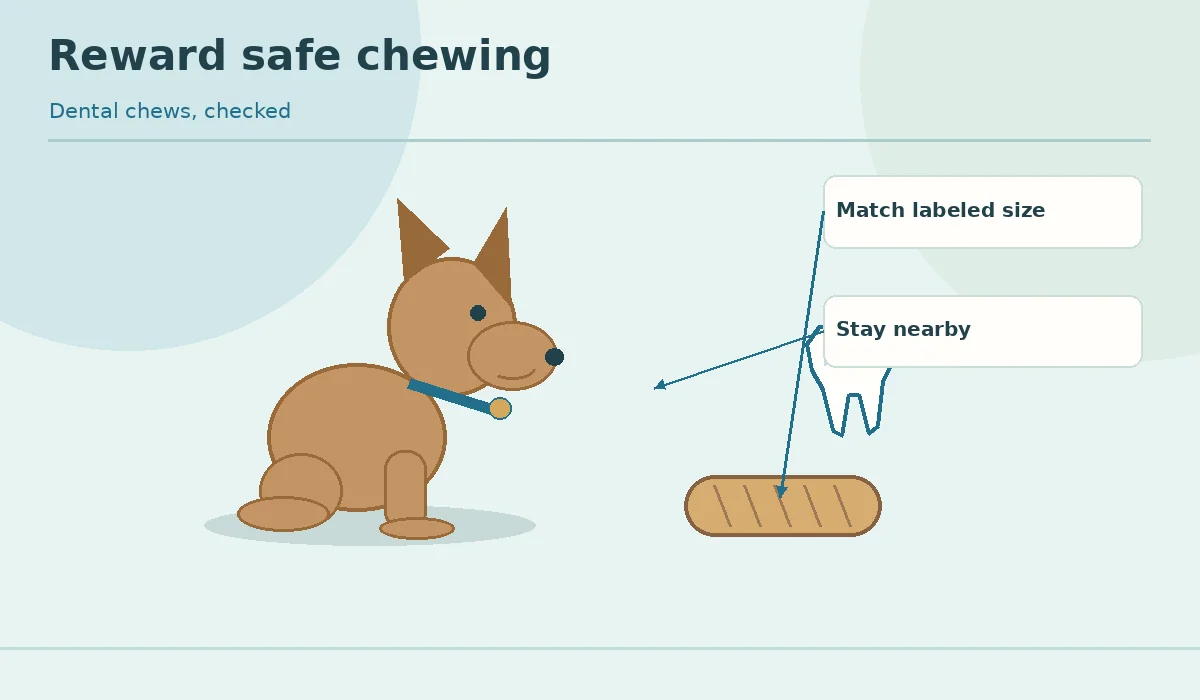
Run a fast label-and-behavior screen
A label should provide a full ingredient list, feeding guidance, a manufacturer contact and clear instructions. If a claim depends on a particular serving frequency, follow the product directions rather than doubling it to chase faster results. Do not rely on marketing statements such as “naturally scrubs every tooth.” Instead, check actual evidence and watch the part of the mouth the dog chews with. A product can have a valid dental claim and still be a poor individual fit.
During the first sessions, supervise the entire chew. Remove fragments that become a choking hazard and put the remainder away when playtime ends. Keep water available. If the dog coughs, gags, repeatedly retches, or seems distressed, stop and seek appropriate veterinary care. For sustained bad breath, gum bleeding or refusal of dry food, a dental examination matters more than a different flavored treat.
Use chews as one layer of a dental routine
The AAHA describes daily brushing with pet-specific toothpaste as the primary home technique for plaque control. Build handling gradually by rewarding your dog for calm lip lifts, touching a soft brush to a tooth, and stopping before stress builds. Chews may complement this active care; they do not let you skip examinations or resolve an already painful mouth. The practical goal is a routine that fits the dog without creating new chewing hazards.
Keep a simple record for a few weeks: the item and accepted claim, whether the dog truly chewed it, any digestive response, and how consistently you brushed. This makes it easier to discuss changes with the veterinarian. However, photos of surface stains cannot reveal hidden periodontal disease. Ask your clinic what signs deserve a visit and which dental products suit the dog’s history.

When to Call Your Vet
Contact your veterinarian if your dog shows significant pain, injury, distress or a persistent new problem. Mouth bleeding, inability to chew, repeated gagging or possible choking need prompt advice; trouble breathing is an emergency. For a new puppy, repeated vomiting, severe diarrhea, marked weakness or breathing difficulty also deserve urgent assessment. A snack or home routine does not treat these problems.
Related HubPet reading
For practical background, see this published HubPet guide. The next step depends on the dog’s current needs. Review the related home-care article for another practical approach. Then use this follow-up checklist to decide what to prepare.
How We Research
We compare current guidance from independent veterinary and animal welfare organizations with manufacturer instructions where equipment or food labels matter. We distinguish tested dental claims from marketing and avoid invented rankings. See the HubPet editorial approach for how we prepare guides. These recommendations describe general choices; your veterinarian can adapt them to a particular dog.
Sources
Veterinary Oral Health Council, Accepted Products.
WSAVA, 2026 Global Dental Guidelines.
WSAVA, Feeding Treats to Your Dog.
Frequently Asked Questions
No. Check the exact product on the VOHC accepted list and read whether its claim concerns plaque, tartar or both.
Do not expect a snack to remove firmly attached dental calculus. Ask your veterinary team about an oral examination and professional care.
Use only products labeled for the puppy’s age and size. Ask your veterinarian when changing treats, particularly during teething.
No. Excessively hard items can crack teeth. Choose an appropriate texture and stop if the dog shows pain or chewing difficulty.
Follow the specific product label and your veterinarian’s guidance. Treats add calories and should complement, not replace, brushing.