
An insulated heated outdoor cat house works best when its roof and walls block wind and moisture before anyone turns on the pad. Heat from a pad will not repair a roof leak or stop water coming through a floor. A sound setup has insulated walls, a raised dry base, an appropriately sized entrance and a safe way for the cat to move off the heated surface. For a community cat, familiarity and escape routes also matter. This step-by-step guide explains how to evaluate a location, position a manufactured outdoor-rated heater and maintain the shelter through changing weather without making unsafe electrical alterations.
For general education only; not a substitute for individual veterinary assessment. If your pet has pain, injury, severe distress or a sudden behavior change, contact your veterinarian. Veterinary disclaimer.
Choose a sheltered site and raise the floor
Start in a quiet location away from traffic, splashing water, snowplows and frequently opened doors. An overhang or covered porch reduces direct rain, while an elevated platform protects the floor from ground moisture. Alley Cat Allies recommends waterproof, windproof shelter construction with an entrance facing away from prevailing wind. Keep storage boxes and furniture away from the entrance. Leave room for cats to approach without another animal trapping them.
Placing a shelter against a wall may reduce wind, but keep the doorway visible and accessible. Check for pooling water after heavy rain, not just on installation day. Avoid placing electrical equipment next to outdoor faucets, hose connections, buried cables or downspouts. If there is no safe place for a powered product, an unheated insulated shelter with dry straw is the correct alternative. Our winter care checklist also covers drinking water and regular inspection.
| Component | Safe design goal | Inspect for |
|---|---|---|
| Roof and seams | Sheds rain away from entrances | Leaks, loose edges, dripping condensation |
| Floor and base | Raised, dry, level floor | Puddles, sagging, soft wood |
| Wall insulation | Protected, intact and out of reach | Chewed foam, gaps, drafts |
| Approved heat pad | Only part of floor warmed | Damage, improper cover, unsafe power route |
| Entrances | Easy access and clear escape | Blocked flaps, snow, trapped cat |
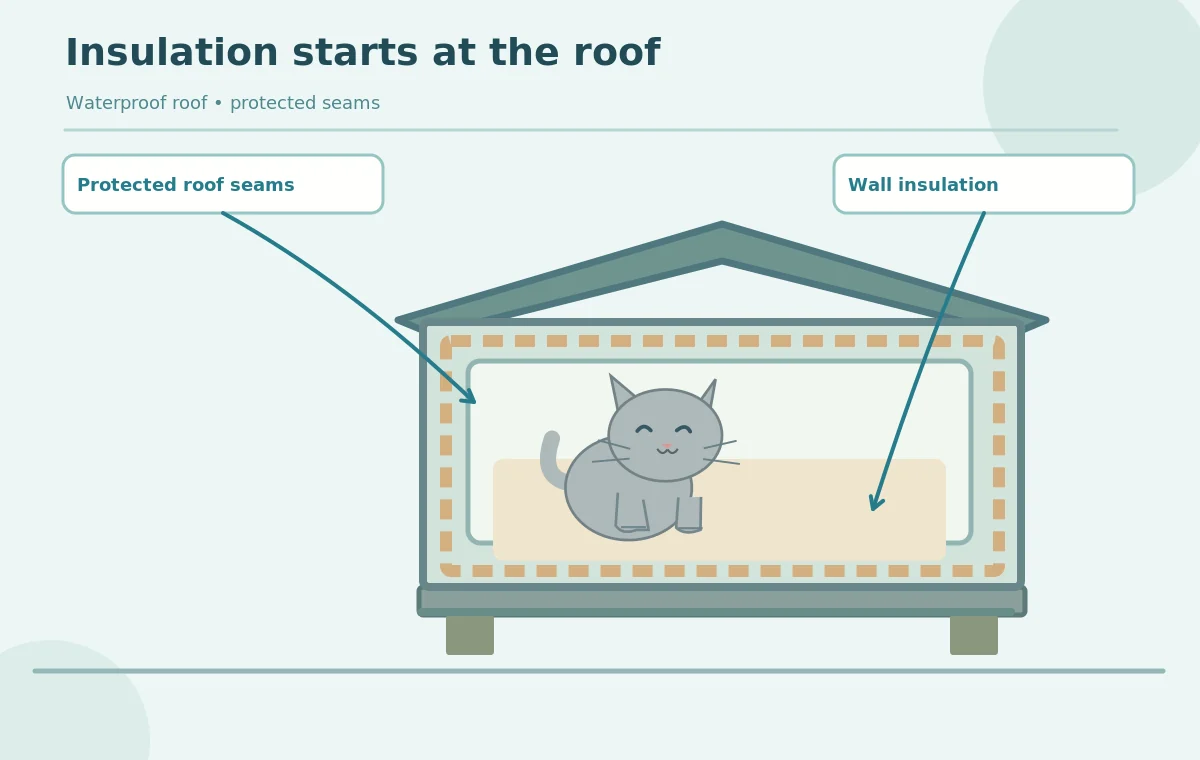
Understand what each insulated layer does
A roof prevents rain entering from above; sealed walls and a floor barrier reduce drafts and moisture intrusion. Solid insulation fitted behind a protective inner lining helps preserve body heat, but exposed foam can become a chewing or debris problem. Check seams, floor joints and entry flaps for openings where wind or water can enter. A compact interior can retain warmth better than a huge empty box, though it must allow a cat to stand, turn, curl up and escape comfortably.
For an unheated shelter, Alley Cat Allies recommends loose dry straw instead of hay, towels or household blankets, because fabric and hay can hold moisture. In a heated shelter, the pad manufacturer’s instructions control what may touch or cover its surface. Do not pile straw, thick fleece or foam over a powered pad unless that exact arrangement is explicitly allowed. The two setups need different bedding approaches. Follow the particular heater manual rather than combining them.
Step-by-step check
- Pick a quiet elevated location and observe it during rain or wind.
- Confirm roof, sidewalls, insulation and floor remain dry.
- Test entrances, turning room and the cat’s independent escape routes.
- Follow the exact outdoor-rated heating-pad installation instructions.
- Check the entire shelter after storms and clean or replace bedding appropriately.

Install only approved, protected heating components
Read the house and heater manuals together. A seller may market a house as winterproof, but that does not make every electric accessory suitable. Use a heater specifically approved for the proposed sheltered outdoor environment. Check for a listed safety certification, protected cable, intact case, matching power supply and instructions for cleaning. Some manufactured cat houses include a dedicated pad built for that unit; replacing it with an arbitrary larger heater can remove the animal’s cool resting zone.
Keep the power route above puddles and out of paw and chewing reach. Do not bury connectors under straw, run household extension cords through standing water, or drill new holes through the heater housing. If the available outlet is unsuitable, consult a licensed electrician rather than creating a temporary outdoor wiring run. Leave part of the house unheated, and do not close a frightened cat into the compartment to force acclimation.
Size entrances and exits to the animals using them
Alley Cat Allies gives a small opening of roughly 6–8 inches (15–20 cm) wide as one rule of thumb for community-cat shelters, helping exclude larger animals and drafts. That is guidance for particular shelter designs, not a universal limit for every large or mobility-impaired cat. Check whether the actual animal can enter and turn without pushing through a stiff barrier. An entry flap can reduce wind but may deter a shy newcomer; introduce it gradually and never leave an exit blocked by snow.
A second escape door is useful where competing cats or predators may trap an animal at a single opening. Some manufactured shelters include two entryways with removable flaps, while many rigid designs do not. Evaluate the location’s real risks rather than assuming two doors are always warmer. Position openings away from heavy wind as far as the product allows. The published safe limited-outdoor-access guide addresses other ways to reduce exposure around doors and yards.
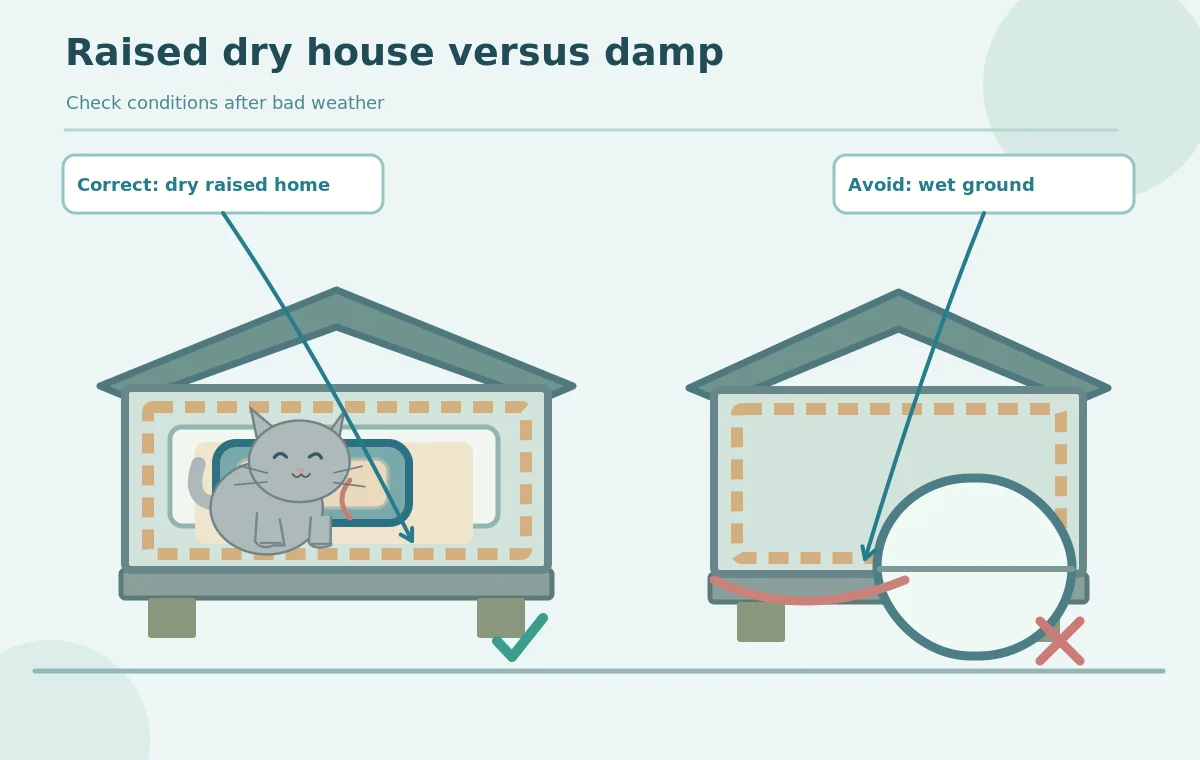
Inspect in bad weather and revise if cats avoid the house
Inspect the roof, base, electrical cord and door openings before cold or wet weather. Check the supplied heated pad for damage and follow the manufacturer’s cleaning instructions. Snow can pile against doors; rain may enter beneath a curled flap. Replace wet straw in an unheated shelter and remove any damaged electrical component from service. Provide fresh water in a protected place, and do not leave food inside an enclosed sleeping area if it attracts unwanted animals.
Cats may ignore a new shelter for days, then begin visiting at night. Keep placement consistent and avoid chasing or trapping them inside. If cats avoid the house, check the noise, wind exposure and odors first. A sheltered, unheated alternative nearby can preserve choice. For broader seasonal preparation, consult HubPet’s guide to keeping pets comfortable in winter.
Common mistakes to avoid
Frequent problems include setting a house directly on wet concrete, exposing insulation that cats can claw or chew, placing a heater in standing water, and covering the entire warm floor so cats cannot choose cooler space. A shelter with an impressive temperature claim but a leaking roof is still unsuitable. Do not use a home space heater or close every vent to ‘save’ warmth. Dryness and free movement matter as much as heating.
When to Call Your Vet
Very young, elderly, ill or immobilized cats may need a controlled indoor environment rather than an outdoor heated house. Contact a veterinarian for persistent shivering, lethargy, inability to move normally, skin injury or any sudden change. Collapse or breathing distress requires urgent care. No shelter plan can replace veterinary treatment or emergency rescue in extreme conditions.
How We Research
HubPet compared the intent of this search with veterinary, welfare and relevant equipment guidance, then translated supported principles into pet-specific checks. We do not claim hands-on product tests, ranking results or veterinary diagnosis. See our editorial approach.
Sources
Alley Cat Allies — Providing Shelter — source guidance used to support the safety and selection advice above.
Alley Cat Allies — Cold Weather Tips — source guidance used to support the safety and selection advice above.
K&H Pet Products — Insulated Heated House Features — source guidance used to support the safety and selection advice above.
Not always. A small dry shelter with suitable insulation and straw can help many community cats without a plug.
Use only the surface and bedding configuration allowed by the exact pad manufacturer; do not improvise thick insulating layers.
A second escape route can help where animals might be cornered, but site placement, drafts and specific design also matter.
It may be unfamiliar, noisy, damp or exposed. Reassess location and allow voluntary exploration.
Only as permitted by the manufacturer’s weather rating. Even outdoor-rated pads generally require protection from standing water.