
A dog bed labeled chew-proof may survive one dog and fall apart in minutes with another. Fabric, seams, zippers, foam, and the dog’s specific chewing habits all affect what happens. The useful purchase is not the toughest-looking bed; it is the one you can inspect, maintain, and remove before loose pieces become a hazard.
Chewing is normal dog behavior, and damaged bedding is a safety problem rather than evidence of a bad dog. ASPCA advises matching chewing items to the individual dog and preventing swallowed fragments. If your dog eats fabric or foam, contact a veterinarian; see our veterinary information disclaimer for the limits of this guide.
Start by identifying the actual damage pattern
Inspect the previous bed before ordering another. Did the dog open a zipper, bite a corner, pull threads from an edge, or dig through the top surface? These are different failure modes. A tighter weave may help with surface scratching but will not protect an exposed zipper pull from a dog that grabs hardware.
Also record when damage happens. Calm nesting before sleep differs from frantic destruction during departures. If tearing appears only when your dog is alone, consider distress rather than simply upgrading fabric. Our separation-anxiety guide explains how to identify warning signs without blaming your dog.
Chew-resistant is a design claim, not a safety certification
Look for precise product descriptions: fabric weight or weave, concealed seams, protected zippers, and whether buyers can replace the cover. Be wary of absolute promises such as indestructible or safe in every situation. No textile is safe for a dog that repeatedly tears and swallows bedding.
A warranty may replace a ripped bed, but it cannot prevent a swallowed fragment. Read exclusions and return terms without confusing them with testing evidence. Detailed listings describe materials and construction, not merely a dramatic photograph of an energetic dog or a large marketing number.
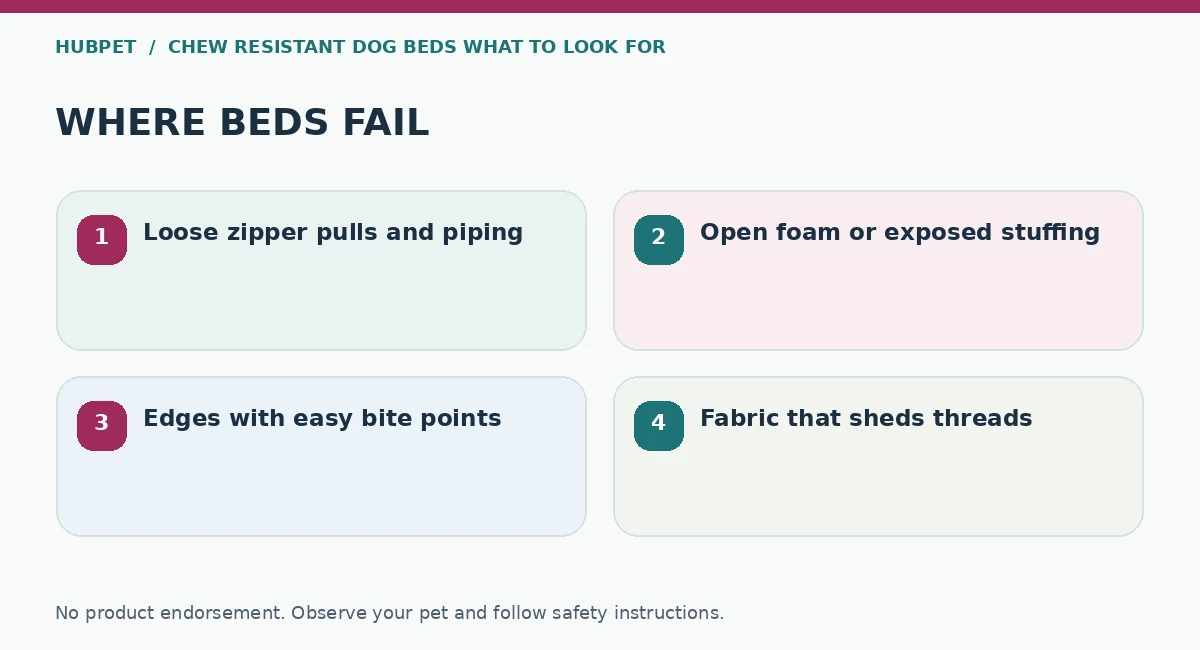
Compare woven covers, coated fabrics, and exposed foam
Densely woven outer covers may resist casual clawing better than a loose knit. Coated surfaces can simplify wiping, but cracked coatings or peeling layers create another source of loose pieces. Ask whether the maker documents abrasion testing and what that testing actually measured. Home chewing remains more variable than a laboratory fabric test.
Foam is useful for support but must stay enclosed. Open foam, stuffing, and shredded fill can be dangerous if swallowed. A removable liner adds a layer, although it is not chew protection on its own. Inspect the underside too, where some dogs begin pulling threads once the bed shifts on the floor.
Edges, zipper tracks, and handles deserve attention
An attractive raised edge may be the first place a dog can grip with front teeth. Search the product photographs for exposed piping, fabric handles, metal pulls, decorative tags, and thin corner seams. Every added feature creates an attachment point; fewer accessible features may suit a dog that picks at details.
If you already own the bed, examine it after each supervised trial. Stop using it when seams open, filling shows, or loose hardware becomes reachable. Do not stitch a torn corner and then assume the product is suitable for unattended use. Reinforcement does not eliminate the underlying chewing behavior.
Choose the sleeping surface your dog will actually use
A flat mat has fewer protruding edges than a heavily bolstered nest, but some dogs need a softer or more stable surface. Measure the dog while resting, note whether they sprawl or curl, and confirm the interior sleeping area rather than the outside footprint. Materials only matter if the bed is comfortable enough to encourage normal rest.
A hard, thin mat is not automatically a better choice merely because it resists chewing. Check floor grip and access for older dogs. If standing, turning, or getting up appears painful, discuss comfort with a veterinarian. Our senior-dog comfort guide explores safe access.
Manage chewing before relying on another purchase
Dog-proof the resting area by moving shoes, fabric scraps, cables, and household hazards out of reach. Offer an appropriately sized, supervised chew activity away from the bed. ASPCA recommends attractive approved chewing options and management, rather than expecting dogs to understand a household rule without practice.
For a dog that shreds beds whenever left alone, temporarily use a safe, easy-to-clean resting area chosen with professional guidance. A new bed does not treat panic or compulsive fabric ingestion. Read our guide to safer chewing habits for alternatives that do not punish normal behavior.

Test a new bed during supervised rest
Place the bed on a non-slip floor in a familiar spot. Reward calm voluntary investigation and allow the dog to leave. During the first sessions, watch for grabbing at the seams, frantic digging, or prolonged chewing of the cover. If the dog rests and changes position comfortably, record that observation rather than declaring the product chew-proof.
Inspect the surface after each use. Small punctures can grow rapidly, especially once the dog discovers loose threads. Remove the product immediately when you find exposed stuffing or hardware. Do not leave bedding in a closed crate unless you have established that it is safe for this particular dog.
Know the ingestion red flags
Missing chunks of bedding warrant a call to a veterinarian even when your dog appears fine. A swallowed piece may cause choking or a gastrointestinal blockage. Vomiting, repeated retching, abdominal discomfort, loss of appetite, or unusual lethargy deserve prompt veterinary attention. Never wait for a damaged object to pass without professional advice.
Do not induce vomiting, give laxatives, or pull a visible string from a dog’s mouth or anus unless a veterinary professional directs you. Bringing a photograph of the damaged bed and an estimate of what is missing can help the clinic assess the situation. Product shopping can wait until safety has been addressed.
Use a three-question buying decision
First, is the construction less tempting than the failure points your dog targeted before? Second, can you inspect every seam and remove the cover for cleaning? Third, can you monitor initial use and provide an alternative if chewing begins? If the answer to any question is no, a claim of superior durability should not decide the purchase.
An effective setup combines environmental management, appropriate chewing outlets, a bed with no readily accessible loose parts, and a plan for stopping use if damage starts. It is better to postpone a purchase than to buy another attractive object your dog may swallow. Safety remains the deciding factor.

The bottom line: durability must include an exit plan
Chew-resistant does not mean ingestible, indestructible, or appropriate for every dog. Different materials shift the likely point of failure instead of removing risk entirely. Choose construction that fits the observed behavior, inspect it after use, and keep the dog’s comfort and mobility in the decision.
If the dog repeatedly eats bedding, destroys items when left alone, or appears distressed, ask a veterinarian about medical and behavioral assessment. That can prevent the next bed from becoming another emergency. Humane training and supervision are more useful than chasing an absolute chew-proof label.
How We Research
We compared animal-welfare and veterinary guidance with practical construction and use-case criteria. We checked the linked sources on October 26, 2026, and kept shopping observations separate from clinical advice. HubPet did not test, rank, or endorse individual products. Learn more at About HubPet.
Sources
ASPCA: Destructive Chewing. Accessed October 26, 2026.
ASPCA: Position Statement on Dog Chews and Treats. Accessed October 26, 2026.
VCA Animal Hospitals: To Crate or Not to Crate?. Accessed October 26, 2026.
No bed can be assumed chew-proof for every dog. The safest choice depends on the dog’s chewing style, supervision, and how easily you can spot damage.
No fabric is safe to swallow. If your dog may have eaten cover material, contact a veterinarian rather than relying on the material name or warranty.
Avoid a one-size-fits-all decision. Ask your veterinarian about a safe resting setup when bedding is repeatedly eaten, particularly if your dog has mobility needs.
A warranty is a commercial promise about replacement, not proof that the bed cannot tear or cause an obstruction. Inspect construction and supervise use.
Departure-linked destruction may involve separation distress. Record other signs and seek qualified veterinary or reward-based behavior guidance rather than buying tougher material alone.