
A folding dog ramp is attractive when storage space is limited, but each hinge and latch introduces a step that a caregiver must perform correctly. The same unit may be stored in a closet, moved into a car and deployed on uneven ground. Its working safety depends on the installed surface, locking mechanism, grip and the dog’s confidence, not just how small it folds. This guide focuses on foldable construction rather than repeating a general ramp-buying checklist. The AKC and veterinary mobility sources emphasize adequate width, traction and stable support. If a dog hesitates because of pain or has new walking difficulty, consult a veterinarian; see the HubPet veterinary disclaimer.
Understand the three common folding designs
A bi-fold ramp opens like a book, a tri-fold model uses more hinged panels, and a telescoping design slides nested sections instead of folding. All can store compactly, but they create different handling tasks. Multiple panels may introduce extra joints under the walking surface. A telescoping slider may collect grit in its rails. Compare the completely deployed length, not simply the folded dimensions in the product photograph. Check whether each segment aligns without a step or seam that catches toes. Read the manual to learn which joints must lock and where hands should go during setup. Simpler handling can be more important than the smallest package.
Inspect hinge alignment and locking points
Open the ramp fully on level ground with no pet nearby. Look for metal or plastic components that seat evenly, exposed fasteners and latches that clearly indicate their locked position. A loose hinge can allow flex or twist, even if the platform initially looks flat. The maker should describe how to verify readiness before each use. Do not stand on the ramp to test it unless the instructions explicitly permit human loading. Instead, use the inspection procedure specified for the product. If a locking pin seems bent or a panel no longer closes evenly, discontinue use and contact the manufacturer about replacement.

Protect hands, paws and tails at fold points
A portable hinge can pinch fingers during opening and can trap a curious pet that approaches the moving panels. Make unfolding a dog-free activity. Hold the ramp at designated grips and keep children away from the mechanism. Once assembled, look for accessible gaps along the tread or side edge that may snag nails. Some models conceal hinges beneath tread material, making wear harder to see. Verify that guards remain attached after cleaning. Never fold equipment while the dog stands nearby in its path. A carry strap also needs to be secured so it cannot wrap around a leg during a training session.
Compare ramp flex during use
A little manufacturer-specified flex may be normal, but visible twisting, bouncing or shifting can frighten a dog. Evaluate the support arrangement on the intended surfaces, from the lower feet to the upper landing. Do not assume a published weight rating measures stability in every configuration; it often assumes correct deployment. Inspect how the panels transfer load through their joints. If a dog changes pace or stops on a seam, the center section should not suddenly drop. Seek a model whose construction and instructions give you confidence in the full installed route. Stop using any unit that has cracked or distorted after travel.
Match traction across every panel
A ramp with grippy material on its main panels can still have slick transition plates at the hinges. Sweep your hand along the entire path and look for abrupt edges or worn areas. Carpet strips that peel at their corners may become a tripping hazard. A high-friction abrasive surface may not suit sensitive paws. Check how the tread behaves after rain, mud or cleaning. If the manufacturer sells replacements, find out whether they cover the entire working area, including near fold joints. A portable ramp is likely to encounter several environments, so cleaning and grip maintenance deserve extra attention.
Measure storage space and lifting effort
A folded ramp may still be wide and heavy enough to strain a person lifting it into a trunk. Check its folded length, thickness and actual carry weight. Test the lift and storage path with household caregivers in mind. A carrying handle should avoid pinch points and stay usable with gloves. In a vehicle, secure the folded ramp against sliding during braking; do not leave it loose beside an unrestrained pet. In a home, choose a dry storage area where a falling panel cannot hit someone. A ramp that nobody can deploy easily may remain unused regardless of its features.
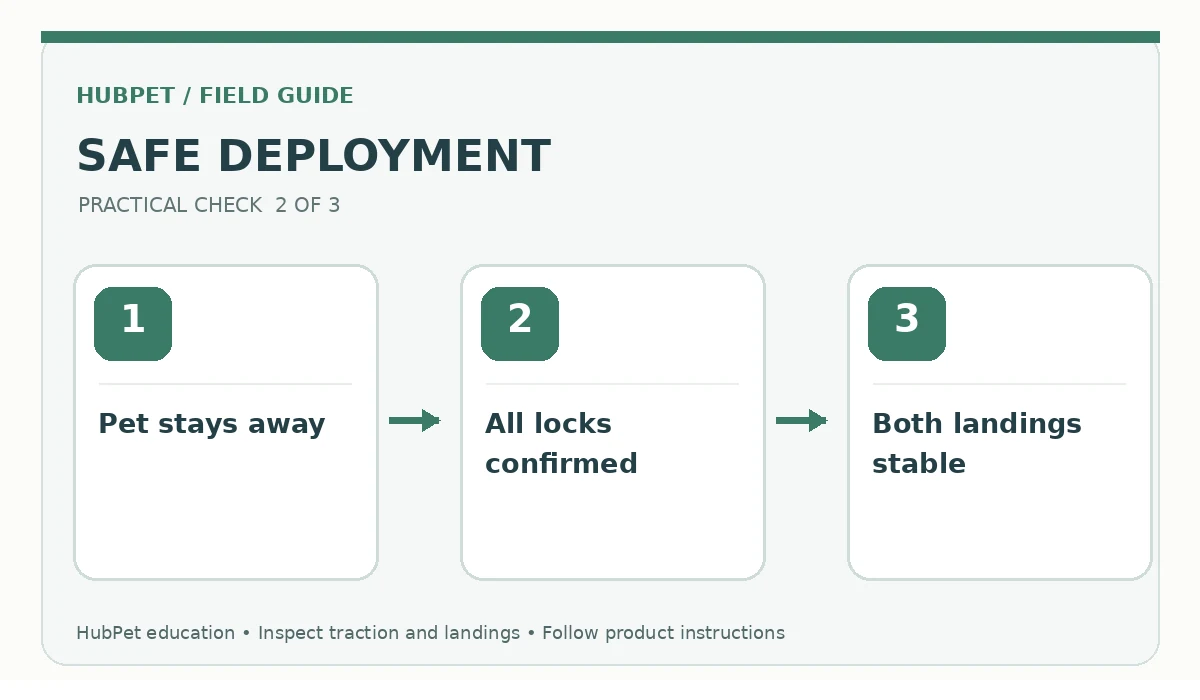
Practice assembly until every caregiver is confident
Have each caregiver unfold, lock, position, inspect, remove and store the ramp without the dog present. The steps should be easy to repeat consistently. If one person cannot tell whether a latch is engaged, that is a reason to reconsider the design. Use the manufacturer’s setup guide, not a guess based on what looks straight. Mark the storage location and keep instructions nearby. Before inviting the dog onto the equipment, double-check the footing and top support. Training the humans first prevents hurried handling while the dog waits beside a car, porch or bed.
Train the dog on a fully stable surface
Introduce the deployed ramp flat when the maker permits that use. Let the dog investigate and reward voluntary steps rather than pulling or nudging it forward. Avoid folding or extending the unit in the dog’s presence during early sessions if the noise startles the animal. Later, raise the ramp gradually to a secure position and practice moving slowly in both directions. The AKC recommends reward-based exploration and brief steps for getting accustomed to ramps. If a dog bolts sideways, increase the distance from distractions or return to an easier configuration. Do not add steepness simply to speed up training.
Build an after-trip maintenance routine
After use, remove road grit, mud and debris from the tread and hinge pockets as directed. Check for rust, cracked plastic, loose fasteners and weakened grip. Let the ramp dry before folding it for prolonged storage when the manual permits. Avoid adding general-purpose lubricants near walking surfaces unless the maker specifically recommends them; overspray can reduce traction. Periodically compare latch operation with the original instructions. Record changes in sound or flex instead of accepting them as normal wear. If replacement parts are not available, factor that limitation into the total ownership cost before purchase.
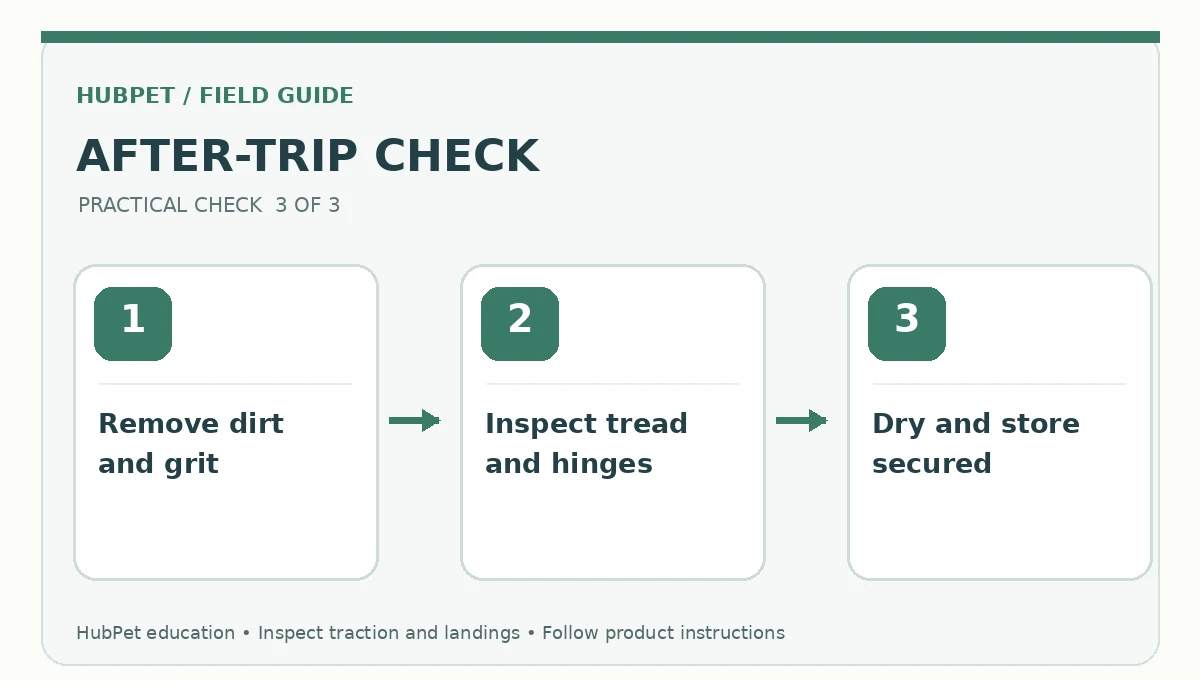
Recognize when portability is not worth the trade-off
A fixed ramp may be better when the route never changes and consistent stability matters most. Conversely, a portable model can be useful for multiple approved settings if it deploys correctly in each one. Do not use a folding unit across gaps, on stairs or against an unapproved vehicle edge. Ask a veterinarian for a tailored mobility plan if the dog has pain, neurological signs or difficulty balancing. The purchase checklist is straightforward: clear locking instructions, secure landings, reliable full-length grip, adequate width, manageable lifting weight and practiced assembly. No hinge design removes the need for supervision.
How We Research
Our editorial review compared animal-welfare recommendations with consumer safety guidance for pet drinking stations, material safety, cleaning routines, and equipment reliability. Each source supports the specific safety context named above; water circulation and filters do not replace fresh drinking water or cleaning. We did not test specific products in laboratory conditions, certify filtration claims, or receive manufacturer endorsements. Follow equipment manuals and seek veterinary advice when a pet’s drinking pattern changes. We reviewed these sources on October 27, 2026. Read about our editorial standards on the About HubPet page.
Sources
American Kennel Club: Dog stairs versus ramps: selection, stability, grip, and introduction. Accessed October 27, 2026.
Canine Arthritis Resources and Education: Home and vehicle accessibility changes for dogs. Accessed October 27, 2026.
PetMD, reviewed by a veterinarian: When a dog may benefit from stairs or a ramp. Accessed October 27, 2026.
Not necessarily. Strength and stability depend on the engineered joints, load rating and correct deployment. Inspect the actual product rather than assuming either design is superior.
Only if both settings match the manufacturer’s allowed heights, surfaces and support points. Measure each location independently.
Stop use until you understand whether the movement is within the maker’s specifications. Cracks, damaged locks or new twisting warrant service or replacement.
No. Keep animals clear until the ramp is fully open, locked and positioned. Unfolding creates moving gaps and pinch points.
Follow storage instructions and secure it against movement during travel. A loose folded ramp can become a hazard during sudden braking.