
A knitted dog sweater is a soft layer for some cold-sensitive dogs, not an all-weather shell. The practical differences are in neck stretch, armhole placement, yarn loops, and washability. A stylish cable knit can still snag a toenail, trap loose hair, or stretch out of shape. Choose a garment that makes movement easy and does not encourage chewing or prolonged discomfort. This article explains equipment checks, not veterinary treatment. If your pet has an injury, persistent discomfort, or a medical concern, consult your veterinarian and see our veterinary disclaimer.

Check the weather and the dog before dressing
Sweaters can be useful on cool indoor days or short dry outings for small, lean, hairless, or lightly coated dogs. Dogs with thick coats may be comfortable without clothing and can become too warm in extra layers. A knit layer usually does not block wind and rain like an appropriate outer shell. Consider the dog’s activity and whether you can quickly remove the sweater if needed. Watch for panting, reluctance to move, shivering, or scratching at the garment. These signals are more valuable than a label saying that the sweater suits every breed.
Measure the neckline without guessing by breed
Start with a flexible tape at the neck base and measure chest girth and back length while the dog stands. Compare all three numbers with the brand’s sizing diagram, including any stretch guidance. A stretchy neckline should slide over the head without scraping the ears or pressing on the throat. It also must not hang so loosely that a paw can catch inside. For broad-chested or long-backed dogs, check the pattern shape, not just the overall length. A close-but-comfortable torso fit helps keep knitted material from twisting or bunching underneath the belly.
Inspect the knit for loose loops and decoration
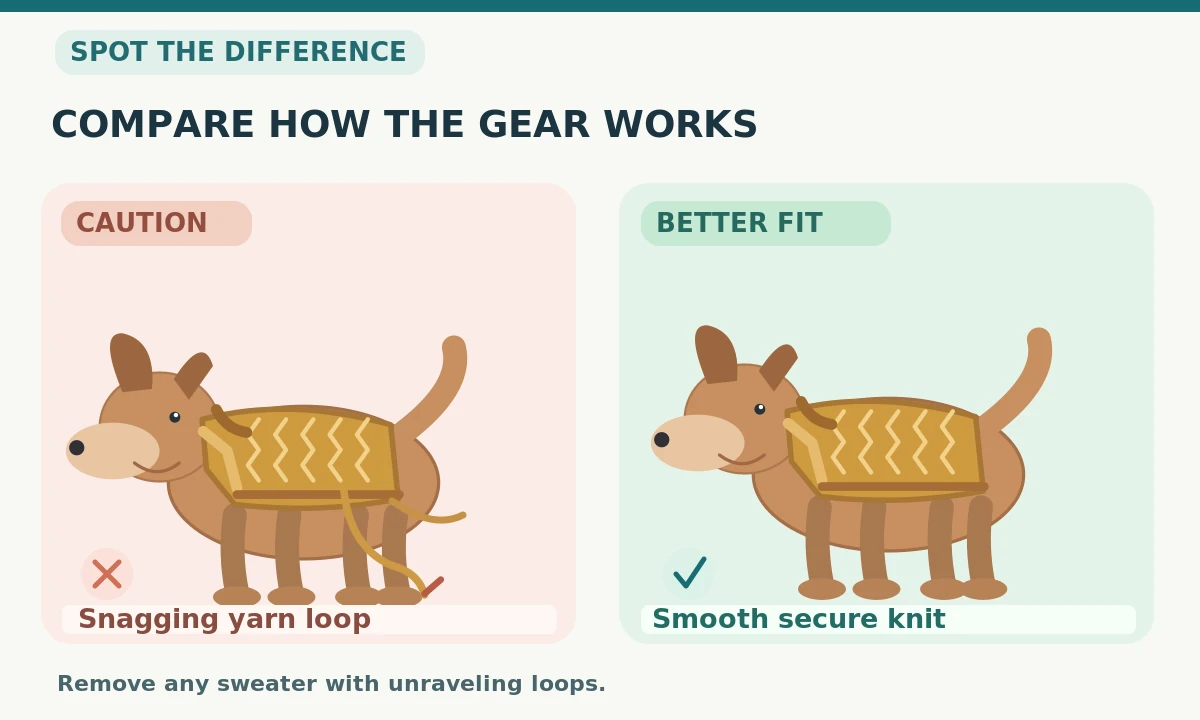
Look closely at the outer face and reverse side before buying. Pull gently on a visible loop to see whether the yarn snags easily; stop before damaging the sample. Raised buttons, pom-poms, drawstrings, and dangling tags are especially poor choices for dogs that chew fabric. Check whether the seams are flat and whether the ribbing leaves loose threads. A dense, smooth knit may snag less often than an open, decorative weave, though construction varies. Remove the sweater immediately if a nail catches or a strand unravels; do not leave a damaged garment within reach.
Give the shoulders and front legs room
Put the sweater on slowly and observe the dog walking, reaching forward, sitting, and lying down. The leg openings should frame the legs without bunching into the armpits. A sleeve that looks charming when the dog stands still may roll downward and trip a moving paw. The knit should move with the shoulders, rather than pull the neckline backward. Watch the hem when the dog steps over a low doorway threshold. Do not stretch an undersized sweater forcibly over the dog’s head. If your dog resists or freezes, remove it and practice short positive sessions.
Keep the belly area practical and clean
Sweaters often extend beneath the chest, where they can pick up water, mud, and bathroom splashes. Check that the cut of the underside leaves normal elimination clear for your particular dog. Remove and dry any sweater that repeatedly gets wet; damp yarn may chill or irritate the skin. Avoid leaving a sweater on a damp dog after a walk. If the dog has a long coat, check for tangles underneath the ribbing, especially behind the elbows. Simple shapes with fewer folds are usually easier to keep clean and comfortable.
Separate walking equipment from sweater fabric
If you use a harness, test it independently for correct fit before introducing the sweater. Some harnesses can sit over a thin garment, but added fabric may change strap tension or cause rotation. Others may need a coat or sweater with a purpose-built leash opening. Never clip the leash to a sweater embellishment or expect a soft knit to control the dog. Check that the neck opening does not climb toward the jaw when you gently tighten the leash. For dogs that frequently back out of gear, use a properly adjusted walking harness rather than relying on clothing to improve security.
Introduce the sweater through a calm choice routine
Allow the dog to sniff the sweater and earn a small reward for voluntary attention. Practice touching the fabric near the shoulders, slipping it on briefly, and removing it. Build up to moving around the room while the dog shows relaxed body language. Never restrain a frightened dog just to finish getting dressed. If the sweater collects static or catches the coat, consider another fabric and fit. Take it off before crate time, rough play, or unsupervised rest, particularly with young dogs and strong chewers. Dogs need a comfortable resting space even when they wear no clothing.

Wash without ruining the fit or leaving detergent
Read the fiber and wash label before the first use. Some knits require gentle laundering, flat drying, or a laundry bag to prevent stretching. Check for loose threads after washing and remove lint or trapped hair. Avoid putting a still-damp sweater back on the dog. Lay the garment flat to check whether the neckline and leg openings have become distorted. If a sweater shrinks, loses elasticity, or develops a long loose loop, replace it rather than forcing it back into service. Keep a dry spare only if the dog truly benefits from wearing one.
How We Research
Our editorial approach draws on veterinary associations, animal-welfare guidance, and established dog-care education, alongside practical checks of garment shape, fit, materials, and maintenance. Product features described here are inspection criteria, not independently tested safety ratings. We did not laboratory-test brands, verify individual manufacturer performance claims, or guarantee safety. Compare any product with its own instructions and your dog’s needs. Learn about our editorial approach.
Sources
American Kennel Club — Does Your Dog Need a Sweater? — reference guidance for safe use, fit, and relevant environmental limits.
American Kennel Club — Helping Your Dog Get Comfortable Wearing Clothes — reference guidance for safe use, fit, and relevant environmental limits.
American Kennel Club — Does My Dog Need a Winter Coat? — reference guidance for safe use, fit, and relevant environmental limits.
ASPCA — Cold Weather Safety Tips — reference guidance for safe use, fit, and relevant environmental limits.
Some cold-sensitive dogs may benefit from a light layer in a cool house. Monitor warmth and comfort, and remove the garment if the dog is too warm.
Raised loops and decorations can be tempting to chew or snag. Choose simpler fabric and do not leave a dog unattended in loose knitwear.
It should slide comfortably over the head, avoid throat pressure, and stay in place without allowing a paw to become caught.
No. Most knitted fabrics absorb moisture and do not provide dependable rain protection. Use appropriate weather gear or shorten the outing.
Inspect loops, seams, and loose trim before each use, and check the neck and armholes after every wash.