
A slick staircase can be frightening for a dog and dangerous for the people following behind. Dog stair treads add friction only when each cover lies flat and stays attached. Some dogs also need stairs blocked entirely because of pain, weakness, or balance changes. This guide shows how to assess tread depth, front-edge visibility, installation, and cleaning before treating a set of stick-on mats as a complete mobility solution. For persistent stumbling, pain, or a sudden change in movement, contact your veterinarian rather than relying on a home product. Read our veterinary disclaimer for health-related information.
Decide first whether stairs are appropriate
Watch your dog approach the stairs without urging a climb. Difficulty starting, hesitation, slipping, or carrying weight unevenly can signal a mobility problem. VCA notes that dogs with osteoarthritis may need reduced stair access and supervised movement. Ask your veterinarian whether stair use belongs in your pet’s routine. A non-slip cover does not repair weakness or protect against a fall from every height. If stairs are not appropriate, place a gate in a safe position and provide essentials on the accessible floor. Never force a dog to demonstrate the stairs to assess a purchase.
Measure every step and the landing
Measure the full tread depth from the front nose to the riser, plus the width where paws usually land. Check for rounded bullnoses, open risers, or irregular dimensions between steps. Some treads have hard front lips that can lift on curved wood. Others leave a strip of slippery flooring right where the dog transfers weight. Draw a simple side-view plan and compare the installation surface with the product specifications. Do not assume that a twelve-piece kit matches twelve differently sized steps. Plan the landing separately so the first and last transitions are not sudden.
Choose low edges with visible boundaries
An oversized thick mat may hide the front edge while producing a ridge under a paw. Select a flat, securely bound cover with a visible border that shows where the step ends. Contrast can help a pet with reduced vision distinguish the treads from the risers, but color alone cannot make steep stairs safe. Avoid long fringes, loose loops, and tabs that a claw can catch. A taped-on edge that peels may become a trip hazard. Inspect sample corners and the rear edge before covering the whole staircase. People also need a reliable, clear view of each step.
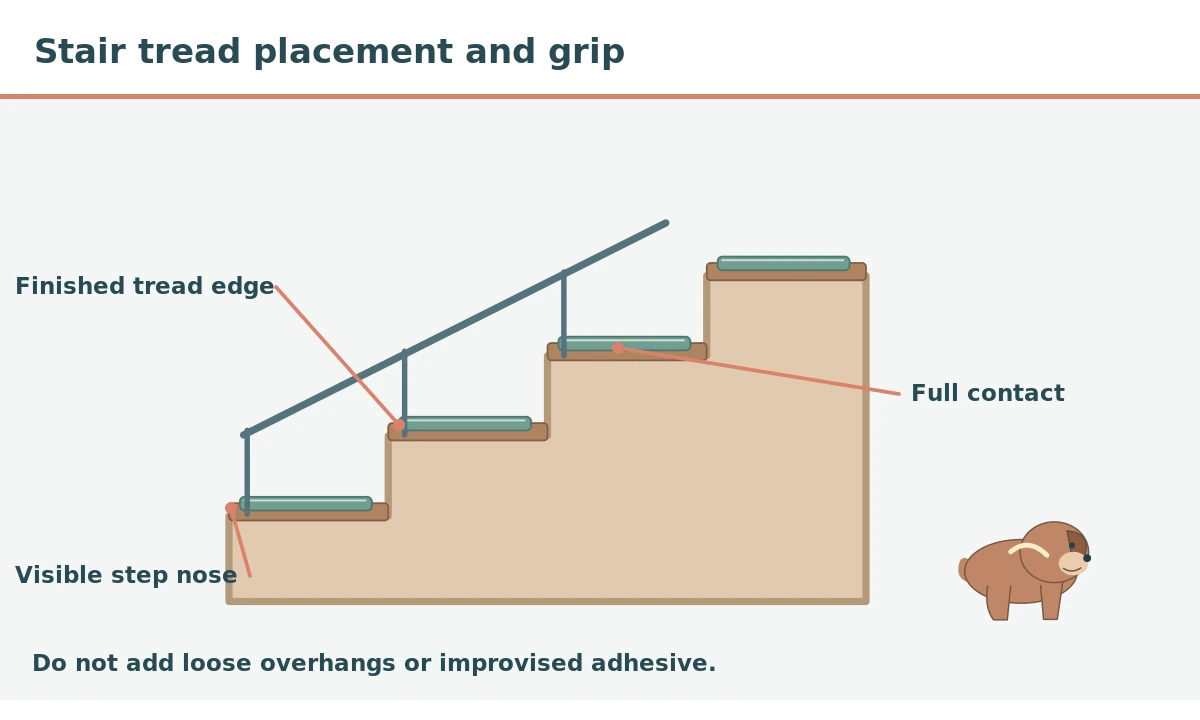
Check grip and attachment for the stair finish
Wood, laminate, painted stairs, and tile may need different attachment methods. Ask the stair or finish manufacturer whether adhesives, rubber, or removable pads are acceptable. A product marked residue-free can still affect delicate finishes, so follow the actual surface guidance. Check for a clean, dry, compatible base before installing anything. Never place a mat over loose finish, peeling paint, or grit. If the required attachment conflicts with the stair material or rental rules, choose another approved option. Adhesive strength and floor compatibility matter more than an attractive pattern or a high star rating.
Secure each cover without blocking the tread
Install according to the precise product instructions, including surface preparation and any setting time. Keep pets and children away while you work. Position the cover so every corner contacts the step and no edge overhangs unless the maker specifically designs it to wrap a nose. An overhang can snag toes or peel when a dog steps down. Press or roll the cover only as directed. Inspect the underside of any removable carpet tread for slack. A loose first step compromises the entire route. For stairs that require structural changes, consult a qualified installer rather than improvising.
Test the system before allowing normal use
With pets separated from the area, check every tread by walking up and down at a normal pace while holding the handrail. Look for shifting, bubbles, curling, and uneven gaps. Recheck at the landing and where a tread crosses a rounded nose. Never challenge the treads by jumping, pushing, or making a dog run. If the stairs feel less stable to people, the installation needs revision. Once the system passes a basic household check, let your dog approach calmly and reward a voluntary step where safe. Keep a gate available until the dog and veterinarian agree the route is suitable.

Clean without lifting adhesive corners
Sweep grit from step edges and use the manufacturer’s approved method to clean each tread. Vacuuming can catch a carpet corner, and wet mopping can weaken some attachment systems. Check the underside after any spill or muddy walk. If you must remove the covers for washing, follow the reattachment procedure rather than laying damp fabric straight back onto the steps. Avoid saturating wood or leaving a slick cleaning residue. Check every tread for changes after a deep clean. A surface that looks fresh can still slide when damp or when backing wears smooth.
Spot wear where the dog changes direction
The first step, last step, and turning landing receive different forces from a straight center step. Watch for flattened pile, torn edges, trapped dog hair, or exposed adhesive. Do not wait for an entire cover to detach. Replace the affected tread using approved methods, and inspect adjacent steps for the same failure. A piece of home tape placed over peeling fabric can produce another slick patch and may damage the finish. Provide a safe alternate route while repairs happen. This is especially important for older dogs that rely on predictable traction every time they enter a familiar area.
Build a safer plan for changing mobility
Stair treads support foot placement but do not carry an animal’s weight. An older dog may eventually need a ramp in a suitable location, a sling under veterinary guidance, or one-floor living. VCA highlights the importance of adjusting stairs and traction for dogs with osteoarthritis. If a dog suddenly stumbles, drags a paw, falls, or cries on steps, stop stair use and seek veterinary advice. Avoid tugging the collar or encouraging hurried climbing. Keep water, bedding, and toileting access on a reachable level, and check that human household members can still use the stairs safely.

How We Research
We reviewed veterinary recommendations about changing stair access for mobility-limited dogs and public safety guidance on secure walking surfaces. We did not independently test adhesive strength or certify an installation. Our guidance covers realistic home setup checks, not unverified safety ratings or product endorsements. See our editorial approach.
Sources
VCA: A Comfortable Home for a Mobility-Compromised Dog. Refer to the manufacturer’s current flooring and product instructions for installation and cleaning.
VCA: Helping a Dog With Osteoarthritis. Refer to the manufacturer’s current flooring and product instructions for installation and cleaning.
CDC/NIOSH: Slips, Trips, and Falls. Refer to the manufacturer’s current flooring and product instructions for installation and cleaning.
No. The attachment and backing must suit the stair surface and finish. Follow both manufacturers and replace any cover that lifts or shifts.
Use the manufacturer’s intended fit. A loose overhang can catch paws, while exposed slick nosing may also create a hazard.
They can add traction but cannot address pain or weakness. Your veterinarian may recommend limiting or blocking stairs entirely.
Begin calmly and reward voluntary investigation, but only when stair use is appropriate for the dog. Never pull or rush a hesitant pet.
Keep the dog away from the stairs, then replace or reinstall the tread as directed. Do not patch a loose corner with improvised tape.