
This article is general information, not veterinary advice. If your pet seems unwell, is in pain or may have eaten something harmful, contact your vet or an animal poison control line right away. Read our vet disclaimer.
Large dog dental chews need more than a “large breed” label. A strong jaw does not make an oversize bone safe, and a fast eater can swallow a whole treat that another dog spends minutes chewing. Start with the exact package weight band, then watch actual chewing, verify any evidence claim and consider teeth, digestion and household behavior. The useful question is not which chew looks substantial. It is which tested product, if any, the individual dog can use calmly and safely.
Educational information only; not a diagnosis or a substitute for care tailored to your pet. If your pet has pain, illness, persistent distress or a sudden change in behavior, contact a veterinarian. Read the veterinary disclaimer.
A size chart is a starting point, not a guarantee
Manufacturers group dental treats into weight bands, but two dogs of the same weight may have very different jaw shapes and eating habits. Do not guess from a photograph of an extra-large stick. Find the product’s measured minimum size and life-stage instructions, and choose the correct labeled version. Then monitor the dog as it tries the chew. If it can gulp the entire piece, a larger or different design may be necessary; a veterinarian can help with safer alternatives.
For a household with several dogs, give the treats in separate calm areas. Large dogs can seize a smaller dog’s chew, while competition can also provoke guarding. Watch for freezing, hard staring or frantic swallowing. Never wrestle a risky chew from a dog’s mouth; instead, manage access and ask a reward-based trainer for help if guarding persists. Safe tooth care should not create a confrontation.
| Dog pattern | Better screening choice | Avoid |
|---|---|---|
| Steady chewer | VOHC-listed chew in labeled weight range | Unlabeled oversized or rock-hard objects |
| Fast gulper | Discuss supervised alternatives with vet | Small pieces that can be swallowed whole |
| Crowded multi-dog home | Separate spaces, calm supervised access | Chews left available for stealing |
| Known dental pain | Veterinary evaluation before new chewing | Hard chews as a treatment |

The tooth-fracture test matters for powerful chewers
Bigger dogs are often offered antlers, marrow bones and extremely dense chew products because they destroy soft toys quickly. However, durability is not the same as dental safety. AAHA notes that hard chew items can cause tooth fractures. If your thumbnail cannot make an impression on the material, treat that as a practical warning rather than a formal dental test. Avoid offerings that splinter or shed large pieces, and never assume that extra-hard chewing will scrape a mouth clean.
Watch for subtle changes after a new chew. A dog may chew on one side, drop kibble, paw at the mouth or refuse a favorite toy. These signs can accompany dental pain, even if the dog still eats. Stop the chew and contact a veterinarian. No home photo can show all painful tooth-root or gum problems, so do not use a chew trial to diagnose a mouth.
Practical step-by-step plan
- Read the exact weight and age instructions, not just the front label.
- Check the VOHC status and the specific approved claim.
- Separate dogs before offering a chew; avoid competition.
- Observe a complete supervised session and discard risky fragments.
- Stop at signs of pain, gulping or distress and contact your vet.
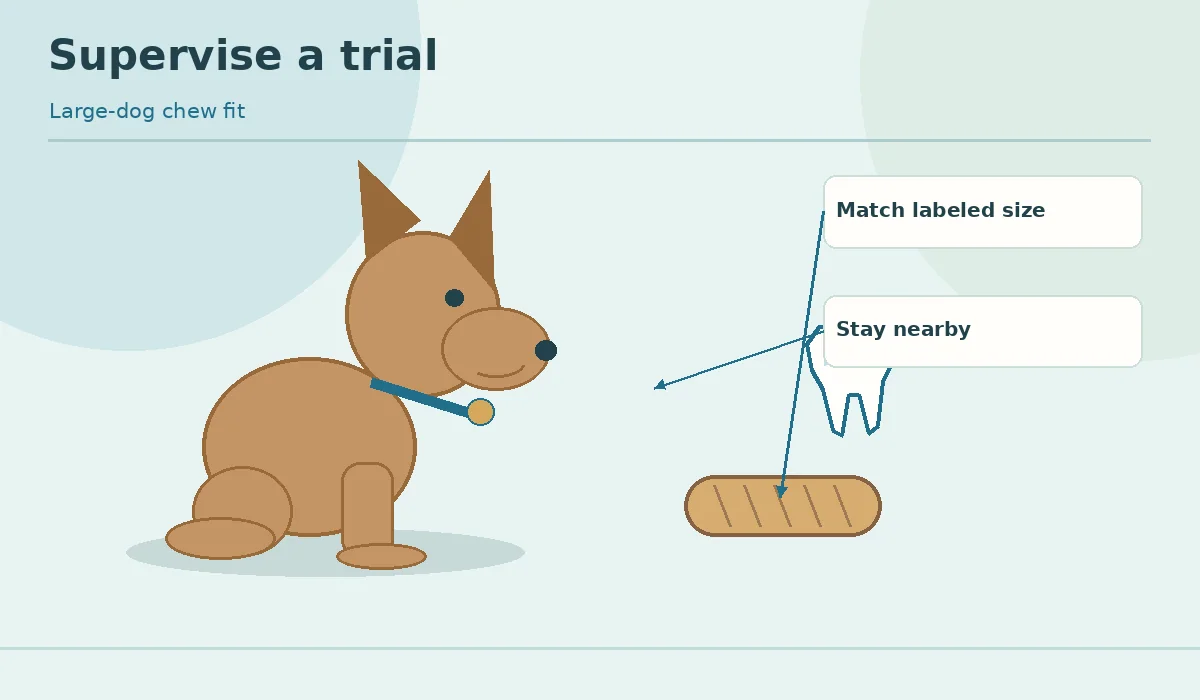
Compare accepted dental benefit with feeding cost
The VOHC accepts specific products for specific plaque and tartar effects. Compare the exact product and size variation to that list. Some chewing products have a dental claim; others simply serve as enrichment. Neither is automatically wrong, but the role must be clear. The daily portion matters too. WSAVA recommends that snacks and treats stay a small minority of the diet, generally under ten percent of total calories.
For a large dog on a weight-management plan, a substantial chew can consume a noticeable portion of that allowance. Ask the veterinary team how to make room for it, rather than cutting balanced meals without a plan. If the dog needs a restricted food formula or has a history of pancreatitis, digestive upset or food reactions, a dental chew is not a low-risk impulse purchase.
Use a supervised trial and make a stop plan
Offer the first chew in a quiet space. Observe whether the dog settles to gnaw, crushes off large sections, or immediately attempts to swallow. Inspect leftover material before it becomes small enough to lodge in the throat. Stop if the dog gulps, coughs, retches or shows distress. If a chew becomes stuck or the dog has trouble breathing, seek emergency veterinary care immediately.
Finally, pair any appropriate chew with positive mouth handling and a regular brushing routine. The AAHA recommends daily toothbrushing as effective active plaque care. A large dog still needs a professional oral exam. Treat choice is about supporting that plan, not producing a shortcut that hides oral disease.

When to Call Your Vet
Contact your veterinarian if your dog shows significant pain, injury, distress or a persistent new problem. Mouth bleeding, inability to chew, repeated gagging or possible choking need prompt advice; trouble breathing is an emergency. For a new puppy, repeated vomiting, severe diarrhea, marked weakness or breathing difficulty also deserve urgent assessment. A snack or home routine does not treat these problems.
Related HubPet reading
For practical background, see this published HubPet guide. The next step depends on the dog’s current needs. Review the related home-care article for another practical approach. Then use this follow-up checklist to decide what to prepare.
How We Research
We compare current guidance from independent veterinary and animal welfare organizations with manufacturer instructions where equipment or food labels matter. We distinguish tested dental claims from marketing and avoid invented rankings. See the HubPet editorial approach for how we prepare guides. These recommendations describe general choices; your veterinarian can adapt them to a particular dog.
Sources
Veterinary Oral Health Council, Accepted Products.
WSAVA, 2026 Global Dental Guidelines.
WSAVA, Feeding Treats to Your Dog.
Frequently Asked Questions
No. Weight range, mouth comfort and chewing style can differ widely between individual large dogs.
Stop using that shape. Discuss safer oral-care alternatives with your veterinarian rather than forcing a larger hard object.
Hard items such as antlers can damage or fracture teeth. Choose less risky products with clear instructions and evidence.
No. An accepted chew can support plaque or tartar control, while daily brushing and veterinary assessment remain important.
Do not let dogs exchange partially chewed items. Give appropriately sized products individually and prevent guarding or stealing.