
A microchip feeder is an access-controlled bowl: it recognizes an approved cat and opens a cover so that animal can reach a portion of food. In homes where one cat steals another cat’s meal, this can make a feeding plan easier to maintain. It is not the same as a timed hopper that produces measured portions at scheduled hours. Some products combine features, but do not assume they do. Before shopping, identify the challenge you are trying to solve: a cat eating the wrong diet, resource guarding at meal time, or a timid cat getting pushed away. Observe where each cat eats comfortably and whether simple separate rooms would solve the problem with less equipment.
Understand the chip and collar-tag difference
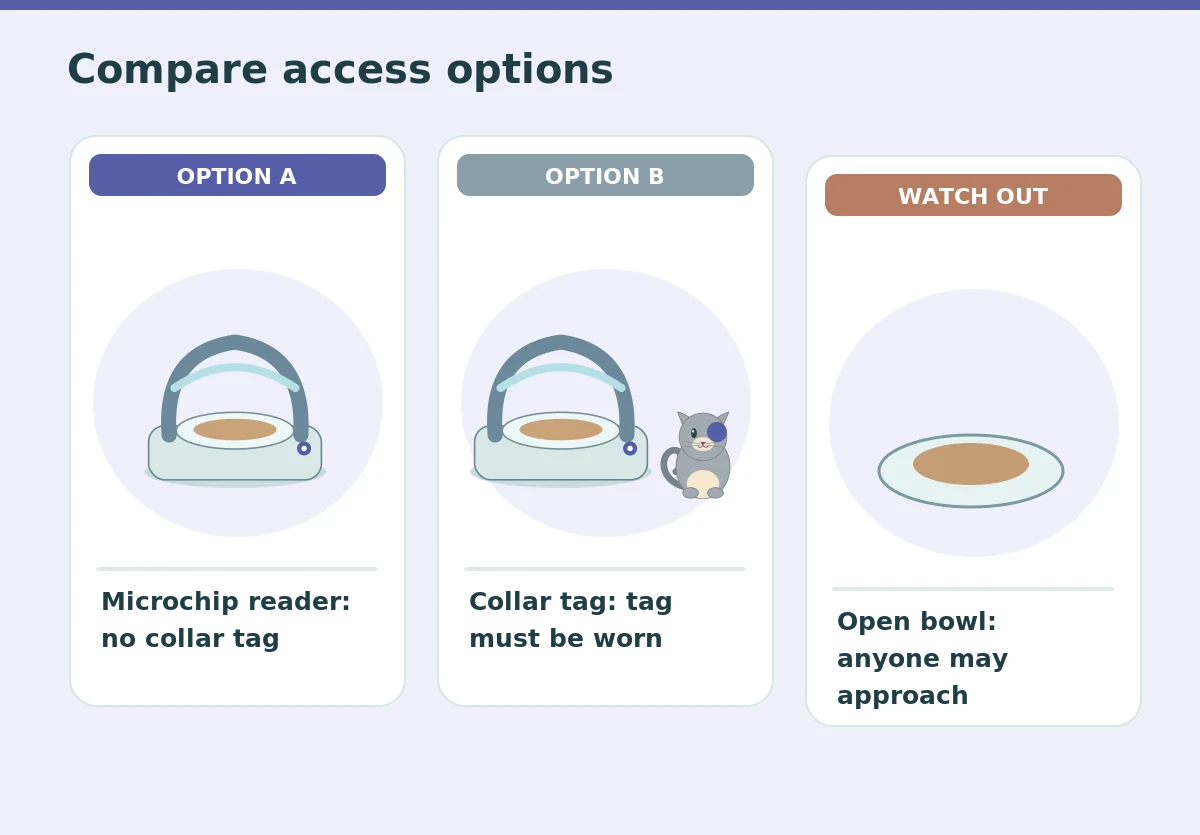
A selective feeder may read an implanted identification microchip or a compatible radio-frequency collar tag, depending on the design. Check the exact chip standards and registration instructions in the manual; compatibility is not universal. The reader recognizes a stored identifier, not your cat’s face, body condition, or dietary needs. A collar tag requires careful attention to collar fit and breakaway safety, while an implanted microchip does not need a wearable accessory. Never attach an improvised tag to a tight collar. If your cat dislikes collars, prefer a compatible implant-reading device or a separate feeding station rather than forcing a collar solely for convenience.
Look at the cover while the cat enters and exits
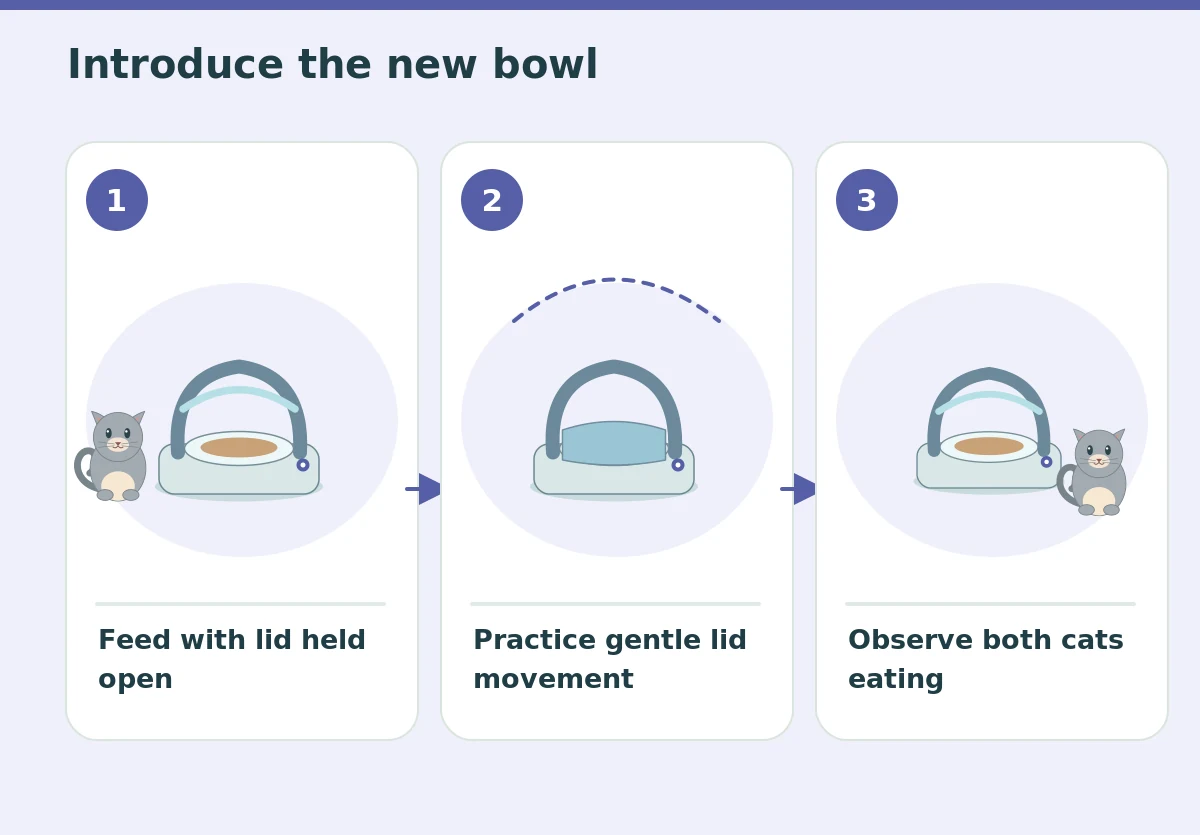
The hood and lid should leave enough space for your cat’s head and whiskers to move comfortably. Observe where the cover travels when opening and closing; keep fingers and tails out of the mechanism during setup. Some devices close after a preset delay, and a fast closure may startle a cautious animal. Look for adjustable training modes that allow the lid to remain open at first. A large confident cat may reach over or around a poorly positioned cover and eat another cat’s food. Test the actual geometry instead of treating access control as an absolute barrier against determined housemates.

Make bowl capacity and washing realistic
Selective access solves a permission question, but the amount served still needs measurement. Look for an insert you can lift, wash, dry, and reinstall without damaging the reader. Food residue near the hinge or lip can interfere with clean closure. A smooth, easily sanitized insert helps if you serve wet food; in that case the same refrigeration-or-disposal guidance applies as for any bowl. Do not interpret a fitted lid as a food refrigerator. If the manufacturer recommends specific cleaning methods around the electronics, follow those directions rather than running the base under a faucet. Keep fresh water available independently of the feeder.
Choose a quiet, separate location for each cat
International feline feeding guidance recommends that cats in a shared household have feeding locations that feel safe and offer visual separation when needed. Placing two expensive feeders side by side may still allow a dominant cat to guard both. Put the selective bowl where the intended cat already eats without pressure and leave a route to leave. Avoid setting it next to the litter box or a doorway where another animal can block access. If the cat has reduced mobility, make sure the approach and entry height are accessible. The placement often matters as much as recognition accuracy.
Teach access in small and voluntary steps
Start with the device powered down or in its open training mode, as described by the maker. Offer the cat an ordinary meal from its removable bowl so it learns the location is safe. Once the cat approaches freely, register its chip or tag and let the cover make a small movement at a distance that does not cause retreat. Progress toward a full opening and closing over several brief meals. Reward a calm approach; never push a cat’s head under the hood or leave a frightened cat without another way to eat. Keep track of actual meals during the transition.
Test unauthorized access without provoking conflict
After registering the intended cat, test the feeder while supervising both cats separately. Check that the cover remains closed for the unregistered animal, and that the intended cat can move away without an observer trapping it. Some cats learn to hover near a registered cat and slip in as the lid opens. A selective feeder cannot manage this social problem on its own; add distance, barriers, or separate rooms. If one cat blocks or intimidates another, prioritize the household setup and ask a veterinary behavior professional for help rather than escalating to punishment or withholding food.
Know exactly what the device records
Models vary: some simply open a lid, while others may claim to weigh a bowl or log access events. An opening event does not establish how much a cat ate. A scale reading may include spills, incomplete meals, or a second animal approaching the bowl. Use a kitchen scale or another consistent way to measure served food when monitoring intake. Keep a brief feeding log if the cats have different plans and report unexpected appetite or weight changes to a veterinarian. Controlled access can support care but does not constitute clinical intake tracking without evidence for that model.
Plan for lost power and identification failures
Find the instructions for replacing batteries, resetting registrations, and handling a pet when the reader cannot detect a chip. Check whether the lid rests open or closed if the unit loses power and whether an animal could become unable to reach its meal. Set up an alternative feeding method that a caregiver can use immediately. Test the fallback before a vacation, not during one. Update registrations only while monitoring how both cats respond; a configuration mistake could inadvertently deny a cat access. The safe solution is always a dependable meal, not blind trust that electronics rarely fail.
Decide whether the purchase earns its footprint
A microchip cat feeder is particularly useful when access separation is the bottleneck, such as two cats with different food plans. It can be unnecessary if feeding in separate rooms is easy and reliable. Compare the reader compatibility, hood opening, cleaning process, training modes, power loss behavior, and replacement bowls against your home’s actual routine. Allow extra floor space around the machine so each cat can choose to eat out of another cat’s line of sight. If dietary separation is medically important, review the feeding plan with your veterinarian while keeping the device’s promise narrow: it manages access, not health outcomes.
How We Research
We compared published feline feeding guidance with a controlled feeder study to distinguish access restriction from measured intake. We avoid assumptions about chip standards or product-specific security without manufacturer documentation. See About HubPet for general editorial information.
Sources
Journal of Feline Medicine and Surgery — Feline Feeding Programs: Read the source. Accessed October 27, 2026.
Journal of Feline Medicine and Surgery — Feeding Cats for Optimal Mental and Behavioral Well-Being: Read the source. Accessed October 27, 2026.
Frontiers in Veterinary Science — Pet-Separating Automatic Feeder Evaluation: Read the source. Accessed October 27, 2026.
U.S. FDA — Tips for Safe Handling of Pet Food and Treats: Read the source. Accessed October 27, 2026.
Safety note: Feeders cannot replace observation of eating and drinking. Ask your veterinarian about changes in appetite, weight, behavior, or a medically restricted feeding plan; see the HubPet veterinary disclaimer.
Usually not. An access-controlled bowl opens for an approved identifier, while a timed feeder schedules servings. Some devices combine functions; inspect the actual specification.
Compatibility depends on the exact reader and chip standard. Check the model instructions before buying and test recognition during the return period.
Yes. A persistent cat may hover or slip into the opening. Space out feeding areas and supervise introductions rather than relying on the lid alone.
Not necessarily. Even a feeder with event logs may report access rather than confirmed consumption. Track portions separately when intake matters.
Start with the bowl accessible and the lid stationary, then use gradual training modes and short calm sessions. Keep another safe food option during training.