
A bed advertised as XXL may still feel cramped to a long-legged dog. The number on a listing often describes the outside edge, including bolsters. Your dog sleeps in the interior, not on the product name. Before comparing prices, watch a few ordinary naps and record how far your dog stretches, curls, and turns. Those observations make a better starting point than breed charts alone. The goal is usable space, stable support, and a route to the bed that your dog can manage comfortably.
Start with the resting pose, not a breed label
Watch your dog at a quiet time when nobody is asking them to move. Some large dogs sprawl with both back legs extended; others curl tightly even when a roomy mat is available. Measure the longest relaxed posture from nose toward the rump or tail base, and note the widest spread of shoulders and legs. Then make sure the proposed sleeping surface accommodates that posture without feet hanging over the edge. AKC recommends enough room to lie on the side. Do not buy a smaller model because your dog can technically fit while curled.
Separate advertised size from usable sleeping space
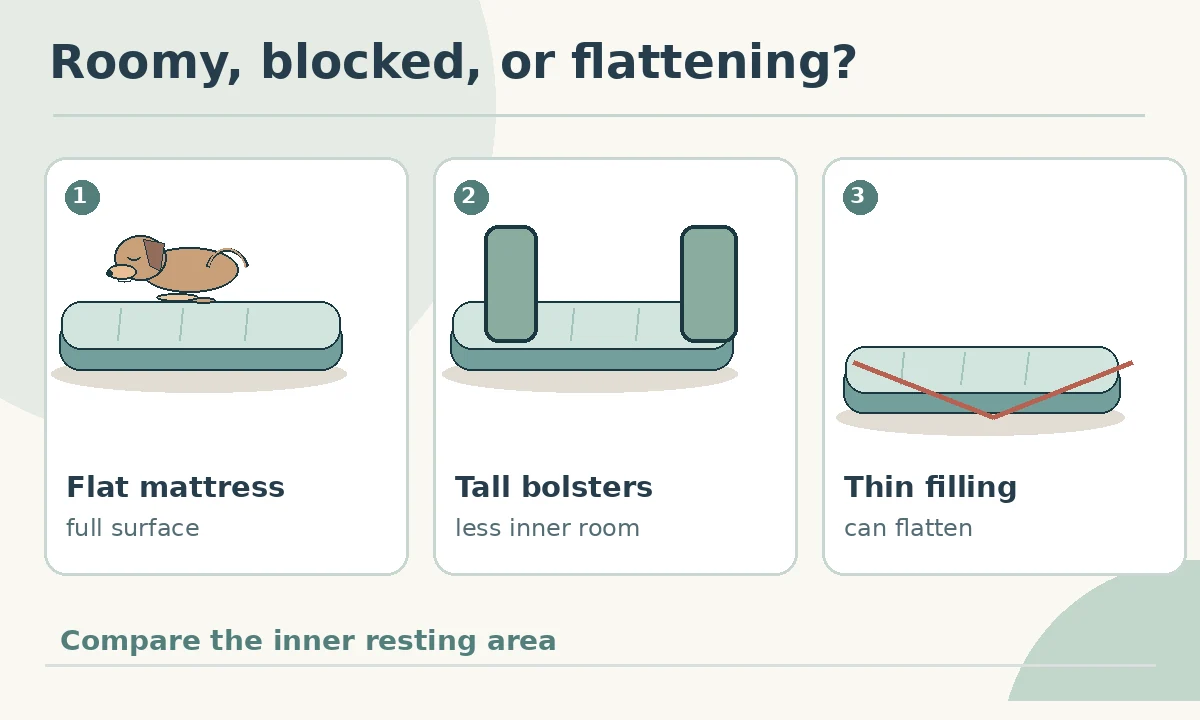
A 48-inch outside dimension does not guarantee a 48-inch flat sleeping area. Raised edges and thick rolled arms take up room. Ask for interior dimensions or estimate them from the actual width of the bolsters. A rectangular foam mattress usually offers more continuous surface than a sofa-style model with equally large exterior measurements. For a heavy dog, look at foam thickness and construction as well as footprint. Treat breed and weight suggestions as broad clues, then confirm fit against your own measurements and observed rest habits.

Do a painter’s-tape layout test before buying
Mark the proposed outside footprint on the floor with low-tack tape that will not damage your finish. Place it in the intended location and watch how people, pets, doors, and furniture pass through the room. Leave a clear approach on at least one long side; a dog should not have to squeeze around a table leg to get into bed. Check that open doors cannot strike the bed and that a robot vacuum or household cleaner can still reach the surrounding floor. This simple rehearsal can prevent a very expensive size mistake.
Assess firmness without making medical promises
A thick bed is not automatically supportive. Some loose stuffing shifts to the edges when a heavy dog lies down; some very soft foam lets hips sink until the dog struggles to rise. If possible, test whether the surface rebounds evenly and whether the base stays flat. An older dog that needs a more stable sleeping surface may prefer firm padding on the floor rather than an elevated, wobbly frame. VCA notes that getting onto soft or high surfaces may challenge dogs with mobility problems. A bed is a comfort product, not a treatment for joint disease.
Choose a low entrance and a non-slip landing
Large dogs need room to stand, pivot, and step off the bed. A high decorative rim at every edge can make access awkward, particularly if your dog hesitates when stepping over objects. Position the opening toward a clear section of non-slip flooring. A washable, low-pile mat beside the bed may make getting up less slippery than polished tile. Keep loose rugs flat so claws cannot catch an edge. If your dog suddenly avoids getting up or shows pain, ask a veterinarian rather than assuming a different cushion will solve the problem.
Check seams, covers, and the weight of the mattress
An XXL bed can be difficult to maneuver into a washer or carry outdoors for airing. A removable cover and a separate protective liner often make cleaning simpler than washing an entire oversized cushion. Locate the zipper before purchase and check whether you can remove the foam without bending or tearing it. Look for reinforced seams where a dog pushes against the edge. Pets that chew bedding need supervised access and regular inspections; no fabric should be considered indestructible. If stuffing or foam becomes exposed, remove the damaged bed.
Use a practical two-dog test, not a shared-bed assumption
Two dogs who nap near each other may still need separate rest spaces. One animal can occupy the broadest part of an XXL mattress and leave the other perched against a wall. Offer two accessible beds or a nearby alternate rest spot, especially when dogs have different sleep schedules or social preferences. Do not pressure a nervous dog to share. Watch for stiff posture, blocking, resource guarding, or repeated displacement. In a multi-dog room, consider whether each dog can leave without stepping over the other.
Inspect floor clearance and day-to-day housekeeping
Put the bed away from heater vents, direct wet entryways, and places where people step over the dog at night. If the foam sits directly on a cold or damp floor, lift and inspect it regularly for trapped moisture. Follow the product’s care tag and dry covers and inserts fully before reuse. The CDC advises using labeled washing instructions for soft pet items. Keep an alternate clean mat available while the large bed dries. A washable setup that you can maintain reliably is more useful than an elaborate design you cannot clean.

The final fit test happens after delivery
Unpack the bed on a level floor, let it reach its intended shape, and check the true internal surface. Invite your dog to explore without forcing them onto it. Over several days, observe whether the dog can stretch, change positions, stand up, and exit without snagging a leg. Note if the dog repeatedly chooses an open floor beside the new bed. That choice can suggest a temperature, location, or comfort mismatch. If the design fails the fit test, use the seller’s return policy rather than trying to reshape foam with improvised inserts.
How We Research
This independent buying guide compares fit, construction, usability, and common safety limitations. We reviewed veterinary guidance from VCA Animal Hospitals and relevant pet-care recommendations from the American Kennel Club and CDC, focusing on the claims that apply to XXL dog beds. We examined dimensions a shopper can verify, everyday cleaning requirements, and observable signs a dog finds a bed usable. Illustrations show principles, not a tested or endorsed product. No purchases, laboratory durability tests, or veterinary examinations took place. Read About HubPet for our editorial standards.
Sources
American Kennel Club, Sleepy Time: Choosing a Dog Bed: Read the guidance. Accessed October 27, 2026.
VCA Animal Hospitals, Should My Dog Sleep in My Bed?: Read the guidance. Accessed October 27, 2026.
CDC, Cleaning and Disinfecting Pet Supplies: Read the guidance. Accessed October 27, 2026.
Safety note: Inspect beds for torn fabric, exposed fill, and unsafe hardware. Remove bedding if the dog chews or swallows components. New problems standing, walking, breathing, or resting need veterinary evaluation rather than assumptions about the bed. See our veterinary disclaimer.
Compare your dog’s longest normal resting posture with the flat interior dimensions. The exterior footprint can include bolsters that reduce usable space.
No. An extra-large footprint helps only if the sleeping surface offers adequate support, stable entry, and enough floor room to approach and exit.
Choose raised sides if your dog leans or rests its chin on them. For a dog that sprawls or needs easy access, a flat mat may provide more usable space.
Some dogs choose to rest together, but provide another accessible sleeping spot and watch for blocking, guarding, or a dog repeatedly losing its space.
Contact your veterinarian about sudden reluctance to lie down, new trouble rising, pain behaviors, or major changes in sleep and mobility.