
A slow-feeder cat bowl may mean a low dish with gentle ridges or a food puzzle that asks a cat to use its paws. These are different experiences. Some cats enjoy hunting for dry pieces, while others become discouraged by narrow compartments or an unfamiliar feeding spot. See the HubPet veterinary disclaimer for health and safety limits.
Start by understanding why your cat seems to eat quickly. Other pets, stress, hunger, and an inconvenient dish can affect feeding behavior. Sudden appetite changes, repeated vomiting, or trouble eating deserve veterinary attention instead of a harder puzzle.
Identify whether slow feeding is actually needed
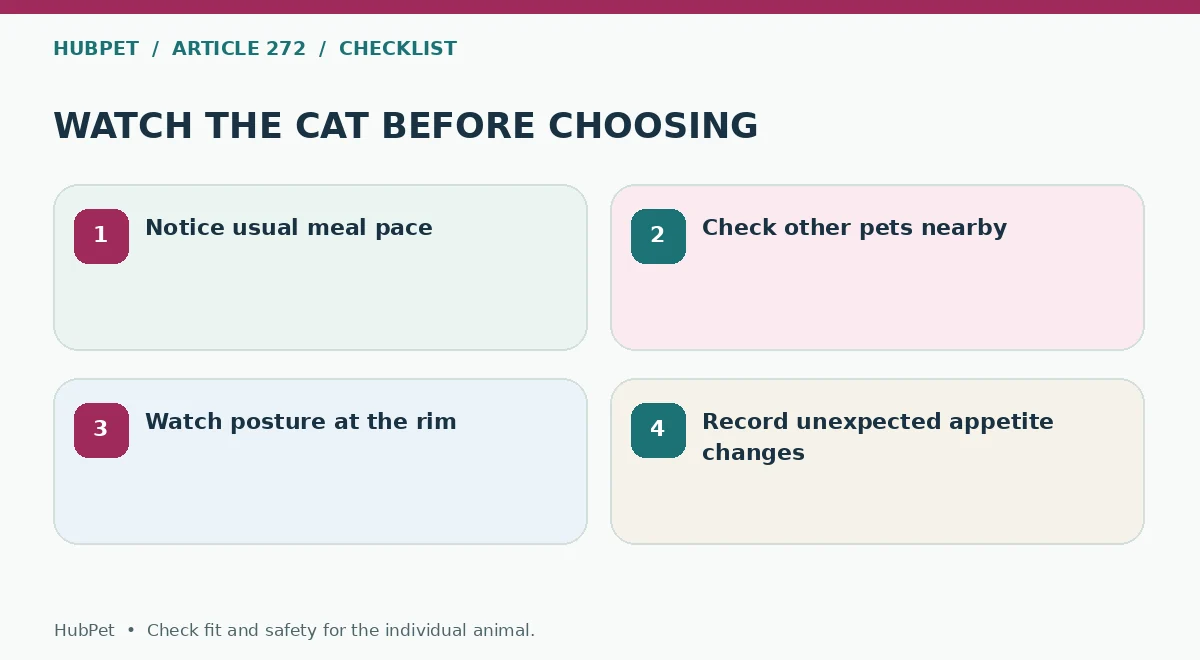
A cat may eat a few bites and leave, or finish a measured portion in one visit. Either pattern can be ordinary for that individual. Before buying a maze, observe the pace, body posture, and whether another animal approaches the food station.
Consider the whole routine rather than using a stopwatch alone. The Feline Veterinary Medical Association recommends feeding opportunities that address feline behavior, including smaller meals and appropriate puzzles. However, a cat with new weight loss or changes in appetite needs assessment, not an obstacle placed between the cat and food.
Distinguish shallow bowls from food puzzles
A shallow slow bowl usually separates food into easy channels. Stationary puzzles add cups or compartments that require a paw or nose action. Rolling dispensers release dry pieces as the cat moves the toy across the floor.
Choose according to the cat’s behavior and mobility. A timid cat may accept a low dish before tolerating moving equipment. Older animals can have difficulty standing or reaching deep wells. Begin with easy access so the cat learns the task while still getting its full meal.
Check whisker space and a comfortable posture
Observe whether the cat hesitates at a deep rim or pulls food out before eating. A broad, low plate gives more room around the face. This may help some cats, but not every cat dislikes contact with bowl sides.
Compare the feeder’s real inner width rather than the outer decorative edge. Grooves should allow the tongue to collect food without requiring awkward head angles. A dish that pushes the cat’s face into high plastic walls is a poor choice even when it claims to slow eating.
Match design to wet food, dry food, and cleanup
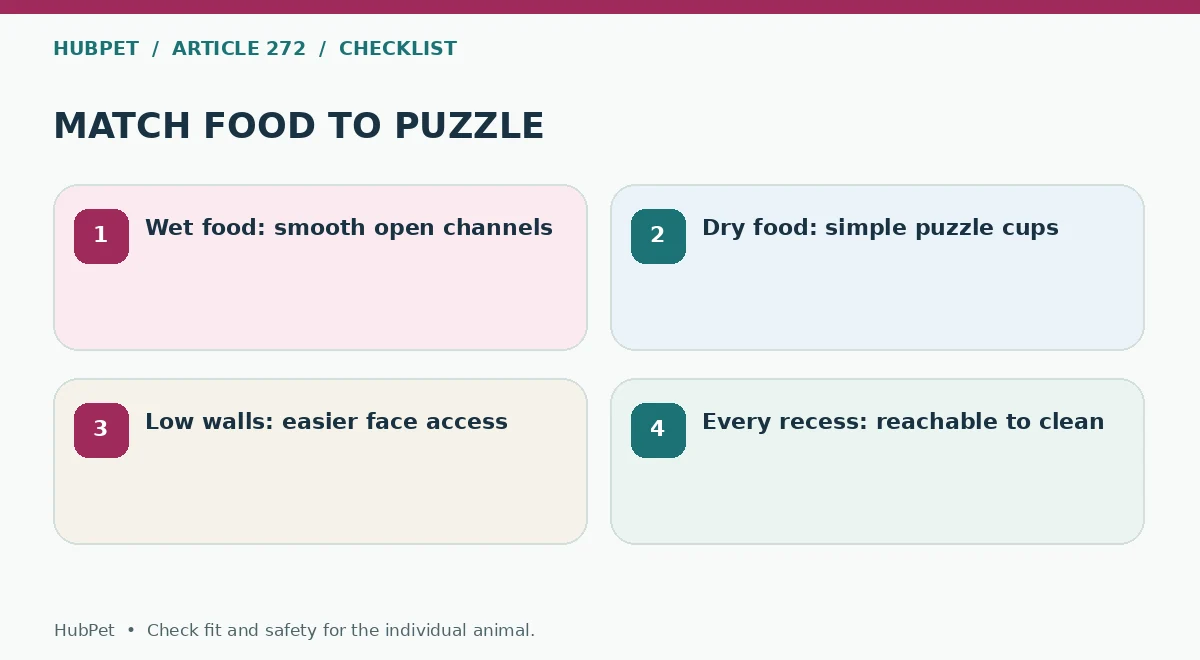
Soft food sticks in narrow channels and mobile dispensers are rarely appropriate for it. A smooth washable mat or shallow divided plate may be easier to clean. Dry kibble can work in stationary puzzles or rolling devices if openings match the kibble size.
Follow food handling guidance and wash equipment promptly. CDC recommends cleaning dishes after wet-food use and daily for dry food. Inspect tiny openings for trapped pieces and moisture. Avoid porous or damaged surfaces that stay dirty despite repeated washing.
Introduce the puzzle with visible easy rewards
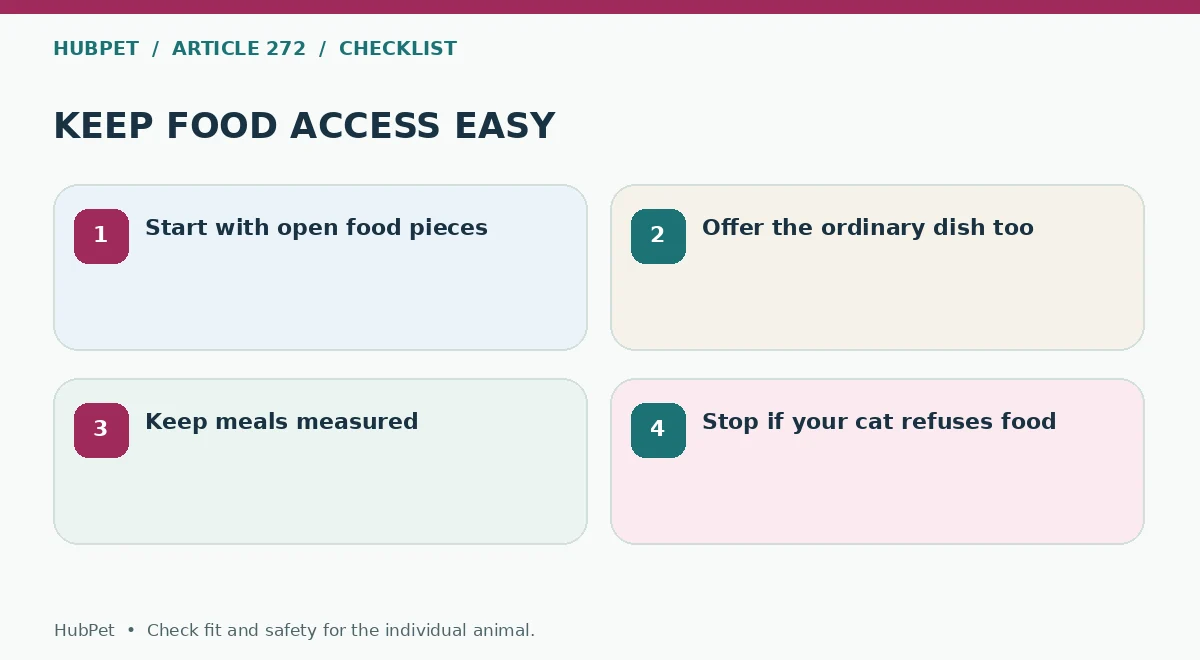
Put a few pieces of the usual food in open compartments and let the cat investigate. You can initially leave familiar food in the normal dish, then shift a small measured portion to the puzzle as confidence grows.
Watch the cat’s body language: a curious approach, relaxed sniffing, and repeated voluntary visits suggest progress. Rapid tail flicks, withdrawal, or knocking the whole unit aside call for an easier option. Never force the cat to finish a difficult puzzle before receiving dinner.
Preserve the correct daily ration
Puzzle feeding does not justify extra calories. Decide the daily portion using the normal feeding plan and veterinary advice where appropriate. Divide that ration between the feeder, regular bowl, and any training treats so the total remains consistent.
In shared homes, identify which cat actually eats from each device. One cat may quietly steal the other’s meal while the owner assumes both ate. Separate stations or supervised sessions make intake easier to observe. Check body condition and weight trends with your veterinary team.
Provide enough private feeding locations
Cats may tolerate a shared kitchen but still feel pressured when another cat blocks the route to a bowl. Place feeding stations apart with visual separation and a route to leave. Keep dogs away from the cat’s food.
A puzzle can make a cat linger longer at a contested location. If mealtime creates tension, simplify the dish and improve placement first. The feeding environment matters as much as groove complexity; food should not become a conflict over territory or access.
Evaluate material, stability, and moving pieces
Check the surface for burrs, small removable plugs, and frayed edges. Washable materials and rounded compartments help maintain hygiene. Stationary dishes should not slide unexpectedly; rolling toys require clear space away from stairs and fragile objects.
Supervise new equipment, particularly for cats that chew plastic. Follow the maker’s instructions for dishwashers and replacement parts. Metal, ceramic, and plastic each have practical trade-offs. No material label substitutes for safe edges and a finish you can keep clean.
Know when to stop rather than increase difficulty
If your cat refuses meals, takes far less food, or avoids the feeding area, remove the puzzle and restore a familiar easy bowl. Cats should never have access to adequate food delayed simply to make a game more challenging.
Gradual voluntary enrichment may help some cats. Yet persistent vomiting, dental pain, and changes in thirst can indicate medical problems. Seek veterinary advice promptly when intake changes; do not assume a maze is the right response to fast eating or a cat’s unusual behavior.
Use a simple decision card at purchase time
List the cat’s preferred food, current dish, mobility, household competition, and cleaning needs. Choose a broad, shallow device that starts easy. For a playful cat eating dry kibble, compare a simple stationary puzzle with a rolling dispenser.
Once home, keep the normal bowl available during introduction. Measure portions and assess comfort rather than chasing maximum difficulty. A successful choice adds an optional pleasant activity without compromising food access or hiding signs that a cat needs help.
How We Research
We checked this guide against the authoritative sources listed below on October 26, 2026. We reviewed practical differences, safety limits, and relevant home conditions rather than drawing conclusions from brand advertising. Specifications, warranty policies, and device capabilities change; check the manufacturer’s current manual. We did not purchase, laboratory-test, rank, or endorse individual products. Where a pet has pain, skin concerns, or fear, seek individual veterinary advice. See our approach at About HubPet.
Sources
Feline Veterinary Medical Association: Feline Feeding Programs: Addressing Behavioral Needs. Accessed October 26, 2026.
International Cat Care: Managing the cat that won’t eat. Accessed October 26, 2026.
CDC: About Cleaning and Disinfecting Pet Supplies. Accessed October 26, 2026.
No. A familiar wide dish may work better, and some cats prefer a gentle feeding puzzle only as optional enrichment.
Use only a food-safe design with shallow surfaces you can clean completely after each meal. Avoid hidden cavities that hold residue.
It cannot reliably treat vomiting. Repeated vomiting, appetite changes, or other signs need veterinary assessment.
Begin with wide, visible compartments that let the cat retrieve food easily. Increase challenge only if the cat remains relaxed and keeps eating normally.
It can be, but monitor intake and provide separate feeding spaces. A puzzle may increase conflict if another cat can guard or steal food.