
A gravity cat feeder holds dry food in an upper container and lets more kibble fall into a bowl as the cat eats. It often needs no electricity, clock, Wi-Fi connection, or motor. That simplicity makes it easy to confuse with an automatic measured feeder, but it does not schedule meals or restrict how much food is available. A larger hopper makes more food available over time but does not improve portion control. Before buying, ask whether your cat maintains an appropriate body condition when dry food is always present. A gravity dispenser can be a practical convenience for selected routines; it is not a substitute for planned portions when intake needs control.
Match the outlet to your specific kibble
A narrow throat may clog with large, irregular, or oily pieces; a wide opening may release more food than intended when a cat nudges the bowl. Check the manual for compatible dry-food dimensions and formulations. Test the actual food you serve, rather than empty dry cereal or an unfamiliar sample. Watch several refill cycles as the bowl empties; confirm that the food falls freely without shaking the hopper. Never insert fingers or tools into an occupied chute while an animal is eating. A container that releases a large load when a blockage clears may create overeating and cleanup problems even if the design normally looks simple.
Be cautious with unlimited access
Cornell Feline Health Center identifies unmanaged free feeding as a contributor to weight problems in many cats. WSAVA notes that free feeding is only appropriate when an animal can regulate intake and maintain suitable body condition; they advise against it for pets prone to excessive weight gain. A full bowl hides whether a cat eats small amounts steadily or empties large portions quickly. If your cat is gaining weight, receiving a controlled diet, or competing with other pets, choose a measured-meal method after consulting your veterinarian. Never abruptly restrict a cat’s food to compensate for weeks of unmeasured feeding; significant calorie changes deserve professional guidance.
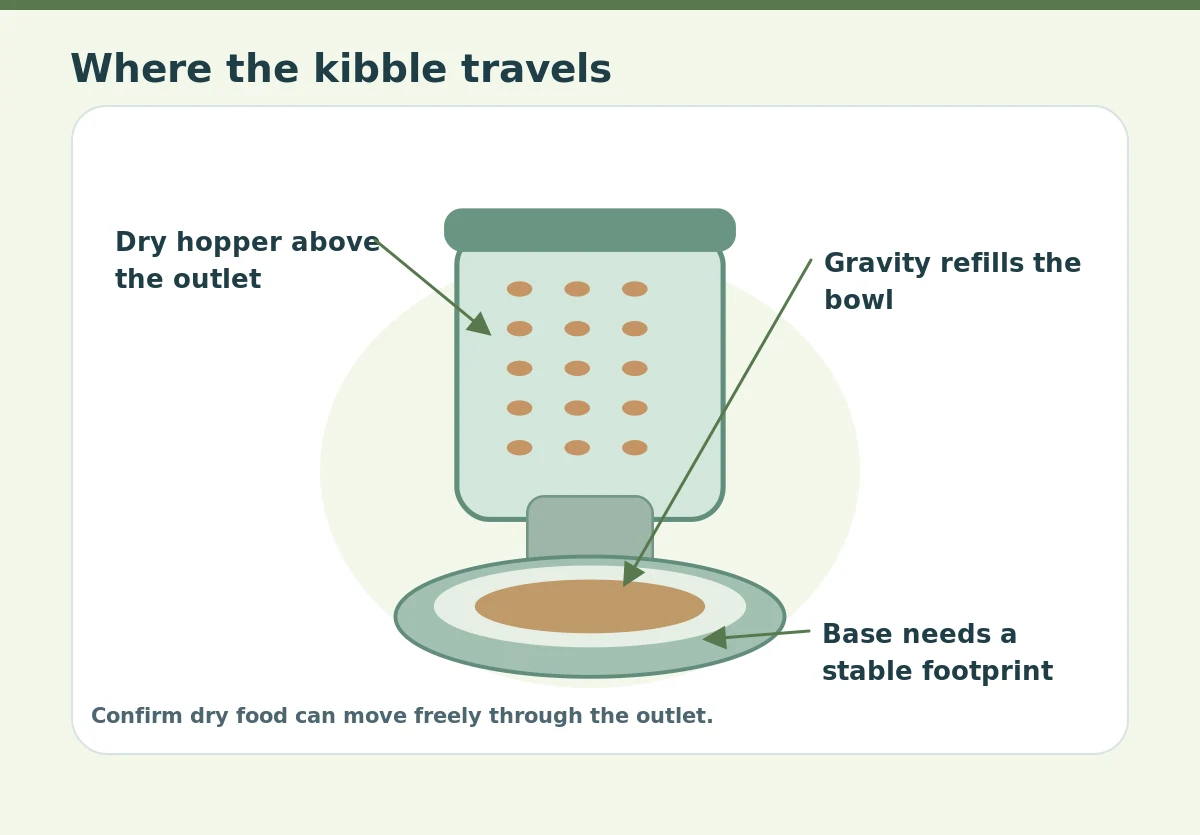
Check the base before filling the hopper
A tall, narrow container can tip if a curious cat leans against it. Place the feeder on a level floor where feet cannot slide and where pets cannot pull it from furniture. Check the joint between hopper and bowl for sharp edges, loose snaps, or small removable plugs. A transparent reservoir may make the fill level easier to inspect, but it also exposes food to light if placed in a sunny window. Avoid direct heat, humid laundry spaces, and splash zones. The outlet should be easy to see and clean. If the machine scatters food over the floor, look for a lower opening or a sturdier tray.
Treat the hopper as a food storage container
FDA advises keeping dry pet food cool, dry, and preferably in its original package; that preserves labeling and lot information. Repeatedly topping up a feeder can mix new kibble with older crumbs and make it difficult to know when the food was first opened. Use a manageable fill quantity and empty the feeder completely at routine intervals for cleaning. Keep the food bag’s product information and best-by date. Do not store filled feeders in high humidity or near heat sources. If the food smells stale, appears damp, or shows pest activity, discard it appropriately rather than pouring a fresh layer on top.
Design cleaning around the actual corners
Look for a removable hopper and a bowl with smooth edges. A narrow curved chute can trap fat-coated dust and small crumbs that are difficult to reach with a cloth. Empty the unit, disassemble only as instructed, wash its food-contact pieces, rinse, and dry fully before refilling. FDA and AVMA recommend regular bowl and utensil washing. Wet surfaces can damage dry kibble and encourage buildup, so do not hurry the drying step. A reservoir that seems impossible to dry completely may be inconvenient for regular use. Examine gaskets and seams for cracks; replace worn parts rather than taping across food-contact areas.

Find out how much your cat actually consumes
Start each observation period by weighing the food added to the feeder, and record any top-ups. At a consistent time later, measure what remains and account for obvious spills. This gives a rough picture of total food removed, but it still cannot tell whether a second pet ate some or whether a cat carried pellets away. A measured bowl at scheduled times makes individual intake easier to check. Review your cat’s body condition and discuss portion needs with its veterinarian when necessary. A feeder should not turn appetite monitoring into guesswork. Sudden changes in eating, vomiting, or unusual lethargy merit direct attention.
Think about multiple pets and special diets
A gravity feeder is accessible to anyone who can reach the opening. It does not recognize microchips, keep diets separate, or defend the bowl from a persistent dog. In a multi-cat home, one cat may control the area while another quietly eats less. Place food resources where animals can approach without another pet blocking their exit, and use individual stations when necessary. If a cat receives a veterinarian-prescribed diet, free access by other pets can undermine that plan. Access-controlled bowls or separate rooms are alternatives. A large hopper cannot resolve social tension or identify which animal consumed each pellet.
Set realistic expectations for time away
The lack of electronics removes one failure mode. Still, a gravity dispenser can jam, tip, collect dirt, or empty sooner than expected. It also cannot report that a cat missed meals. Provide fresh water independently and have someone check the animal at sensible intervals during absences. Keep a backup measured bowl ready if the outlet fails. Do not treat a hopper that contains many servings as permission to leave a cat without daily observation. The caregiver needs to see the cat, check litter and water, and notice any behavior change. Convenience is useful only while basic care remains visible.

Make a narrow, informed purchase decision
Choose a gravity feeder for a cat that tolerates free access well and whose intake you can still monitor. Look for easy disassembly, stable footing, a predictable outlet, dry-food compatibility, and a reservoir that you can clean and refill without waste. If your goal involves measuring portions, setting fixed meal times, separating cat diets, or tracking intake, select a different system. Test any new dispenser with short attended sessions and record the result before adopting it as a daily routine. A simple mechanism can be dependable, but it should solve the problem you have rather than the problem written on a product box.
How We Research
We used WSAVA and Cornell guidance on free feeding and authoritative food storage instructions to identify when an open hopper is suitable. We did not treat refill capacity as evidence of accurate intake measurement. See About HubPet for general editorial information.
Sources
Cornell Feline Health Center — Obesity: Read the source. Accessed October 27, 2026.
WSAVA Global Nutrition Committee — Feeding Method Questions: Read the source. Accessed October 27, 2026.
U.S. FDA — Tips for Safe Handling of Pet Food and Treats: Read the source. Accessed October 27, 2026.
American Veterinary Medical Association — Safe Handling of Pet Food and Pet Treats: Read the source. Accessed October 27, 2026.
Safety note: Feeders cannot replace observation of eating and drinking. Ask your veterinarian about changes in appetite, weight, behavior, or a medically restricted feeding plan; see the HubPet veterinary disclaimer.
No. It refills the bowl as food moves out, but it does not independently schedule or measure a meal.
No. Use gravity hoppers only for the dry food types specifically allowed by the manufacturer. Moist food requires different handling and storage.
No. Cats prone to weight gain or on controlled diets may need measured meals. Review feeding routines and body condition with a veterinarian.
Empty it completely, wash the removable food-contact parts as directed, rinse well, and dry all surfaces before adding dry food.
A hopper cannot check food intake, water, jams, illness, or household safety. Arrange a responsible in-person check rather than relying on stored kibble.