
A warm sleeping spot can be inviting to a cat, especially in a cool home. An electrically heated bed adds hazards that a normal blanket does not: faulty cords, overheating, moisture, and skin contact with a warm surface during long naps. Before shopping, decide whether a heater is necessary at all.
VCA warns that heating pads can burn sleeping pets, especially older or unwell animals that may not move away quickly. This article is an equipment-safety guide, not an instruction to treat a cold or sick cat at home. For illness, impaired mobility, or unusual coldness, call your veterinarian and read our veterinary information disclaimer.
First ask whether a non-electric bed meets the need
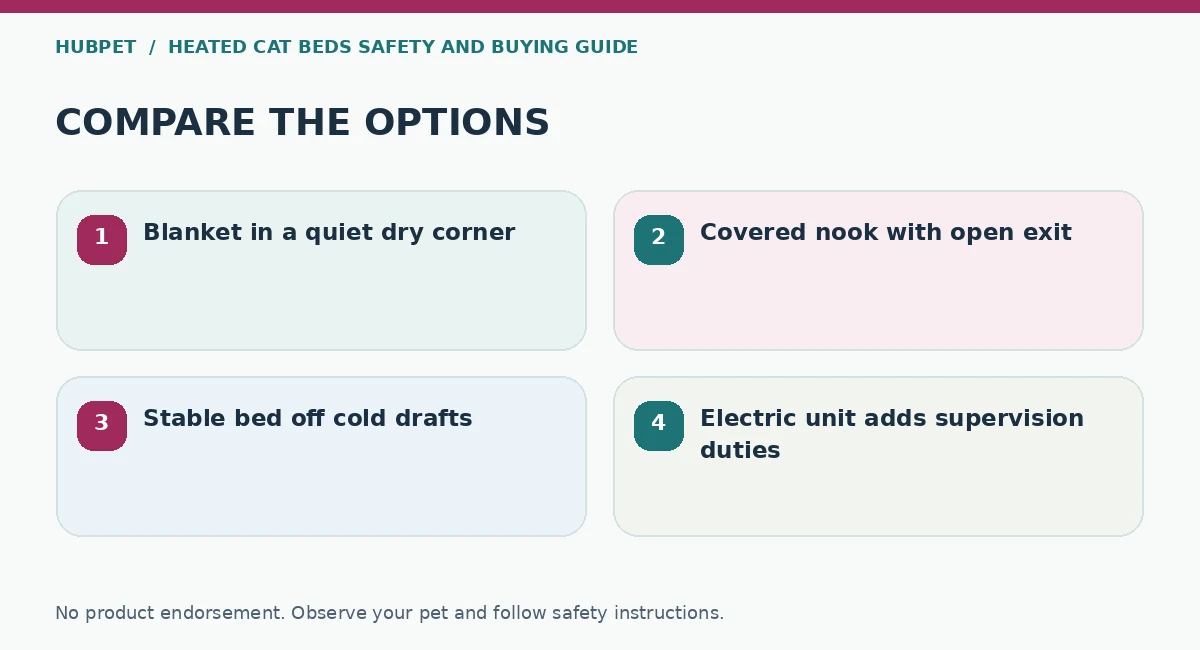
Move an ordinary padded bed to a quiet area without drafts, then add a dry washable blanket. A covered resting nook may hold warmth better than an exposed mat, provided the cat can enter and leave easily. Cats Protection recommends warm but not overheated sleeping places, with options for cats to change location.
Try familiar fleece or a stable insulated resting surface before adding a powered product. Keep an unheated spot available, too. A cat’s decision to lie in sunshine does not establish that the cat needs an electrical device. Warmth should expand choices without creating a new hazard.
Know what powered warming can get wrong
Electrical bedding can produce burns through extended contact even without an obvious bright-red hot spot. A faulty thermostat, folded heated layer, or trapped heat beneath blankets may make the surface warmer than intended. VCA specifically cautions about burns and chewed cords. Check warnings rather than assuming low-wattage means risk-free.
The risk rises when a pet cannot notice heat, move away, or reposition normally. Kittens, older cats, injured cats, and animals recovering from procedures need individualized veterinary advice. Never use a household human heating pad as an improvised unattended cat bed. Different devices serve different situations.
If buying one, inspect specifications before checkout
Look for an explicit pet-use designation, manufacturer and model, clear operating instructions, a stated temperature-control method, warranty support, and a way to stop heating. Review any independent electrical safety certification claimed by the exact model; do not treat a vague safety seal in a photo as verified certification.
Check whether the maker gives a maximum operating temperature and explains how it was tested. Some devices warm only under an animal’s weight, while others stay continuously on. Neither approach removes the need for supervision, cord protection, and a safe escape route. If documentation is missing, skip that listing.
Manage cord access and liquid exposure
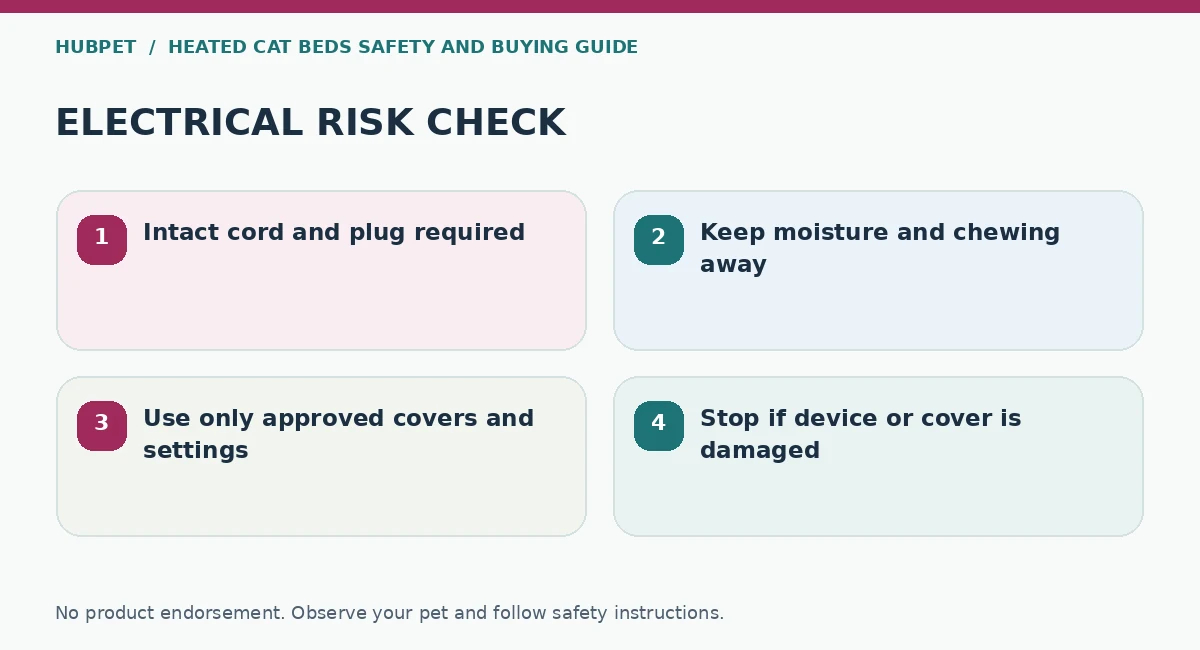
Route a power cord away from claws, teeth, water bowls, litter areas, and walkways. Inspect insulation and connectors before every use. A pet that chews wires should not have access to powered bedding. Do not splice a damaged cord, cover it with a makeshift repair, or continue to operate an item with a frayed lead.
Read the manufacturer’s instructions about damp locations, washing, and whether the heating element can be removed. Disconnect power before cleaning. If a bed becomes wet, unplug it safely and follow the maker’s instructions; do not assume drying restores a damaged electrical component. For a broader household check, use our pet-proofing guide.
Build an unconditional escape route
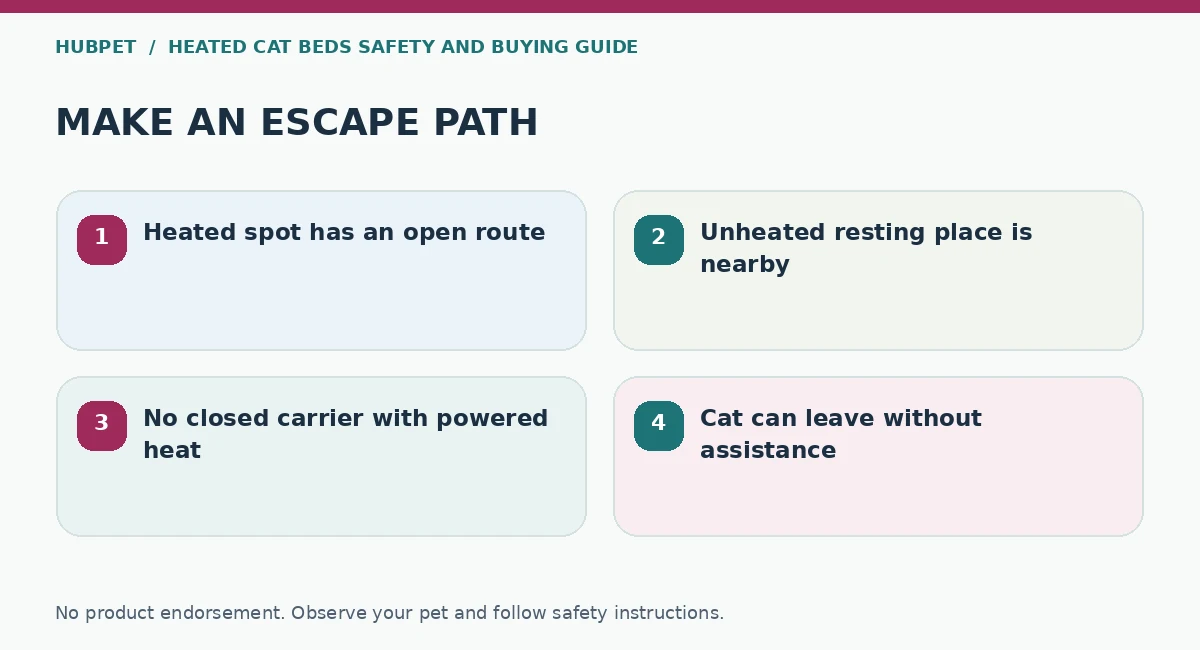
Never close a cat into a crate, carrier, or small enclosure with an active heater. VCA warns that pets must be able to leave the heated surface when uncomfortable. Place an unheated mat nearby and keep the doorway and surrounding floor unobstructed. The cat should be able to move away without climbing over a high rim.
Check that electrical cords are not stretched across an exit and that covers do not collapse over a cat. A hidden, restricted spot may look cozy but can trap heat. The safer arrangement gives the cat space to rest away from warmth whenever they choose.
Placement and fabric change the heat exposure
A warm bed should sit on a stable surface away from curtains, piled blankets, and other heat sources. Do not place it directly under a space heater or against a radiator. Follow the maker’s restrictions for floor material and surrounding clearance. Avoid folding powered inserts or stacking extra pads unless instructions explicitly permit that setup.
Use only the cover and bedding arrangement specified for the device. Thick layers can alter how heat escapes, while thin or damaged material can increase direct contact. Also consider room temperature: an already warm room may make an electric bed unnecessary, even if a cat slept in one during winter.
Supervision and inspection are not optional extras
Begin with a short, attended setup so you can check the material and the cat’s behavior. Observe whether the cat chooses the surface, can change position, and walks away freely. Follow operating limits and never substitute a casual hand-touch for the manufacturer’s safety directions. A human hand cannot reliably confirm that prolonged pet contact is safe.
Check plugs, seams, controls, and the resting surface routinely. Unplug the device when it cannot be used as directed or when damage appears. If a cat scratches, chews, or digs into the powered layer, remove the product immediately. This is not the situation for a trial-and-error repair.
Recognize when warmth could hide a medical problem
A cat that suddenly seeks heat, seems weak, hides, moves painfully, stops eating, or feels unusually cold needs veterinary advice rather than a stronger warming product. Kittens and sick animals may need carefully controlled professional warming. Never assume that sleeping on a heater means normal behavior or a specific diagnosis.
If a cat appears burned, painful, or has skin redness after contact with a warming product, disconnect the device and contact a veterinarian promptly. Do not apply creams or try home treatments before receiving professional guidance. Preserve the product details to share with the clinic if asked.
A practical choice checklist for buyers
Write down the following before buying: Is heating truly necessary? Can the cat move freely to an unheated place? Is the exact model documented for pet use? Can cords stay intact and inaccessible? Can you follow the supervision, washing, and placement requirements every day? Any clear no is a good reason to choose non-electric comfort.
Do not compare products solely by cost or the promise of therapeutic warmth. There is no universal safe heating temperature for every pet and situation in this guide. Veterinary advice should govern care for cats with health problems. Comfort claims alone should not turn an accessory into a medical recommendation.
The takeaway: prioritize an ordinary safe warm place
Most cats can choose among blankets, sheltered resting spots, and cooler surfaces without any device plugged into an outlet. An electric bed requires added assessment of burns, wiring, moisture, placement, and escape. The best decision may be not to add that equipment at all.
If you do use a powered bed, follow the exact manufacturer instructions, inspect it consistently, and offer a safe unheated alternative. A cat’s ability to leave is essential. Consult your veterinarian about heating needs when health or mobility is a concern, rather than relying on shopping claims.
How We Research
We compared animal-welfare and veterinary guidance with practical construction and use-case criteria. We checked the linked sources on October 26, 2026, and kept shopping observations separate from clinical advice. HubPet did not test, rank, or endorse individual products. Learn more at About HubPet.
Sources
VCA Animal Hospitals: Heating Pads: True or False. Accessed October 26, 2026.
Cats Protection: Where Do Cats Sleep?. Accessed October 26, 2026.
PetMD: Hypothermia in Cats. Accessed October 26, 2026.
Do not assume unattended operation is safe. Follow the exact device instructions, consider burn and cord hazards, and ask a veterinarian about vulnerable pets. A non-electric bed is simpler.
A human heating pad may cause burns, particularly with long contact or trapped heat. Avoid improvised setups and seek veterinary advice if your cat needs supplemental warming.
Some may seek warmer spots, but reduced mobility or illness can increase burn risk. Ask a veterinarian about individual needs and always provide an easily accessible cool alternative.
Stop using the device and disconnect power safely. Keep the damaged cord away from the cat and contact your veterinarian if an injury or possible electrical exposure occurred.
A quiet, draft-free, accessible sleeping spot with dry washable bedding is often a sensible starting point. Offer several locations and let the cat move between them freely.