
When temperatures drop below freezing, ordinary outdoor bowls can ice over before a dog has another chance to drink. A heated outdoor dog water bowl may help maintain accessible liquid water at a supervised yard or kennel station, but it adds electrical risks as well as weather-related maintenance. Seattle Animal Shelter recommends keeping water unfrozen and notes heated bowls as one option, while electrical safety organizations warn against damaged cords and improvised outdoor connections. A heated dish never makes prolonged cold exposure safe for a pet. This guide helps compare outdoor suitability, power protection, bowl position, cord routing, and checks you can perform without making electrical repairs yourself.
Confirm the product is explicitly meant for outdoors
Do not assume that every warming dish or indoor heated pet bowl can withstand rain, snow, mud, and temperature swings. Read the manufacturer’s exact operating instructions, outdoor-use rating, and requirements for the power source. Look for a clear label covering the intended environment rather than relying on a marketplace headline. The cord and connection point are part of the system, not accessories you can ignore. If the paperwork is missing or the unit has an unclear rating, choose a non-electric approach such as replacing frozen water more often. Never improvise by wrapping an indoor pet warmer around a bowl.
Use an appropriate protected power supply
Outdoor electrical outlets should have ground-fault circuit interrupter protection, commonly called GFCI, and suitable weather protection. The Electrical Safety Authority recommends outdoor-rated appliances and GFCI-protected receptacles. If you cannot identify whether an outlet is suitable, ask a qualified electrician rather than guessing or bypassing a safety device. Follow manufacturer connection instructions exactly. Do not remove grounding pins, adapt incompatible plugs, or modify a cord to make it reach. A unit marketed as low wattage still sits near water and animals, so careful installation matters even when it is not designed to make the water hot.
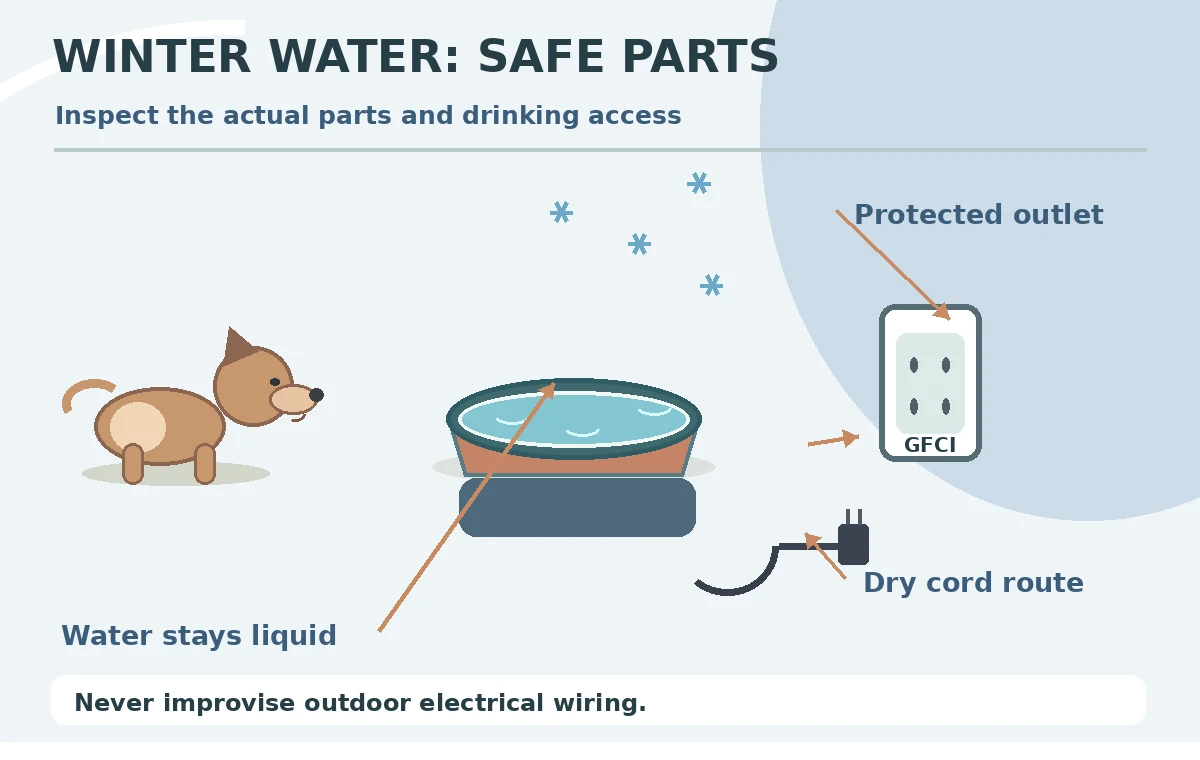
Route the cord beyond teeth and paws
Choose a bowl position that permits drinking while keeping cable routing away from chewing, foot traffic, puddles, and snow removal. Use the protective design provided by the manufacturer; do not assume a simple plastic sleeve makes a cord chew-proof. Check regularly for bite marks, crushed insulation, loose plugs, and exposed wire. Stop using a damaged item immediately, unplug safely if conditions permit, and replace it according to instructions. ESFI warns against running cords through doorways, windows, or wet outdoor areas. Never attach a power cable with nails or staples that could puncture its insulation.
Avoid permanent improvised extension cords
Extension cords are temporary solutions, not substitutes for a suitable permanent outdoor receptacle. ESFI advises choosing outdoor-rated cords with appropriate electrical ratings and keeping them out of water and snow; the Electrical Safety Authority makes similar recommendations. Some heated bowl makers prohibit extension cords entirely, so the product manual takes precedence. Do not join multiple cords, cover a connector under snow, or run a household cord beneath a mat. If the outlet is too far away, move the station or arrange a safer electrical solution with a professional. Convenience should not determine the wiring plan.

Keep drinking comfortable and the bowl stable
The water surface should remain reachable without forcing a dog to lean over a warm housing or touch an exposed electrical element. Inspect how the dish rests on its base and whether it tips when bumped. Choose a smooth rim, a sturdy non-slip footprint, and enough capacity for the dog’s ordinary drinking pattern. The unit should prevent freezing according to its design rather than making water uncomfortably hot. Never add antifreeze, salt, deicing agents, or other chemicals to the drinking water. Keep the unit away from spilled ice melt and vehicle fluids, both of which can expose a dog to hazards.
Remember that water is not a warm shelter
A heated water bowl does not protect an animal from frostbite, hypothermia, wind, or wet bedding. ASPCA emphasizes bringing pets indoors during dangerously cold weather. A dog that cannot safely remain outside should be brought inside rather than relying on a heated accessory. Check the weather forecast and the animal’s comfort frequently, especially for puppies, older dogs, and short-coated animals. If a bowl fails during a power outage, supply fresh unfrozen water by another method and shorten or end outdoor exposure. Never describe the presence of a heated bowl as permission to leave a dog outdoors in freezing conditions.
Unplug before washing and maintain the water
Follow the manufacturer’s shutdown instructions and disconnect power before handling or cleaning any electrical component. Never immerse a powered base or an item not rated for immersion. Wash removable water-contact surfaces according to the manual; CDC recommends cleaning water bowls daily. Inspect mineral buildup, cracks, chew marks, and loosened seams before reconnecting power. Rinse cleaning products thoroughly and allow parts to dry as directed. A heating unit that smells abnormal, has a hot or damaged plug, or behaves unexpectedly should be retired from use until the manufacturer or a qualified service professional advises a safe course.

Review the setup at every cold spell
Before freezing weather, confirm four things: the bowl and cord carry appropriate outdoor ratings, power comes from a suitable protected connection, the dog can drink freely without accessing damaged wiring, and someone checks the station each day. Then confirm the water remains unfrozen under real conditions and that the dog has a safe indoor option. Revisit placement after snowfall, freezing rain, yard maintenance, or a curious pet moves the bowl. If any safety condition fails, unplug the device and use regularly replaced clean water instead. The best winter water plan has a backup that does not depend on electricity.
How We Research
We reviewed first-party guidance from veterinary associations, established animal welfare organizations, government agencies, and electrical safety authorities where relevant. We compared practical water access, product geometry, materials, and maintenance rather than ranking untested products. Drawings are explanatory and do not represent product certifications or testing. Sources reviewed October 27, 2026. Learn more at About HubPet.
Sources
Seattle Animal Shelter — Severe Weather Tips. Read guidance. Accessed October 27, 2026.
Electrical Safety Foundation International — Extension Cord Safety Tips. Read guidance. Accessed October 27, 2026.
Electrical Safety Authority — Outdoor Safety. Read guidance. Accessed October 27, 2026.
ASPCA — Cold Weather Safety Tips. Read guidance. Accessed October 27, 2026.
CDC — About Cleaning and Disinfecting Pet Supplies. Read guidance. Accessed October 27, 2026.
Safety note: These are general equipment-selection tips, not a diagnosis or an individualized hydration or medical plan. A sudden change in drinking, severe weakness, or unusual behavior calls for veterinary assessment. See our veterinary disclaimer.
Use the manufacturer-approved outdoor electrical setup with appropriate GFCI protection; ask a qualified electrician when outlet suitability is unclear.
Do not assume so. Choose a model explicitly rated for its intended outdoor exposure and follow the exact operating instructions.
Follow the product manual; avoid permanent improvised extension cords, and never run electrical connections through snow or pooled water.
No. Access to liquid water does not protect against dangerous cold; animals still require appropriate shelter and may need to stay indoors.
Disconnect power and follow the manufacturer’s washing procedure. Clean water-contact surfaces regularly and never immerse non-washable electrical parts.