
This article is general information, not veterinary advice. If your pet seems unwell, is in pain or may have eaten something harmful, contact your vet or an animal poison control line right away. Read our vet disclaimer.
How to make the most of limited outdoor access is to stop treating “outside time” as the main source of enrichment. Build indoor opportunities for movement, sniffing, foraging, climbing, play, rest, and choice. Then use safe outdoor access for experiences that are hard to reproduce indoors. The AAHA enrichment guide, published 2026 recommends varied cognitive, sensory, social, food-based, and physical enrichment for pets at home.
Cats and dogs need different setups. Cats benefit from vertical territory, hunting-style play, safe retreats, and separated resources. Dogs benefit from sniffing, training, play, chewing, rest, and appropriate exercise. Limited access can work well when the plan matches the individual animal rather than simply adding more toys.
How to Make the Most of Limited Outdoor Access Indoors
Start by dividing the home into functions. Use an enrichment corner for rotating activities and a calm retreat for rest. Build predictable routines so activity does not fill the whole day.
In apartments, apartment pet management helps protect quiet zones and entryways. In practice, how to make the most of limited outdoor access begins with making the indoor layout useful before adding more activities.
For cats, the FelineVMA 2025 indoor-cat statement emphasizes safe places, separated resources, play and predatory behavior, positive predictable human interaction, and sensory needs. Build that with indoor-cat stimulation and safe climbing spaces. Also use boredom prevention rather than forcing exercise. For cats, how to make the most of limited outdoor access means providing several ways to climb, hide, play, and choose.
For dogs, the Dogs Trust enrichment guide, accessed 2026 describes sniffing, searching, play, training, and exploration as enrichment options. On home-heavy days, indoor activities for high-energy dogs and a legal digging outlet can redirect natural behavior without pretending indoor games fully replace appropriate walks or toilet access.
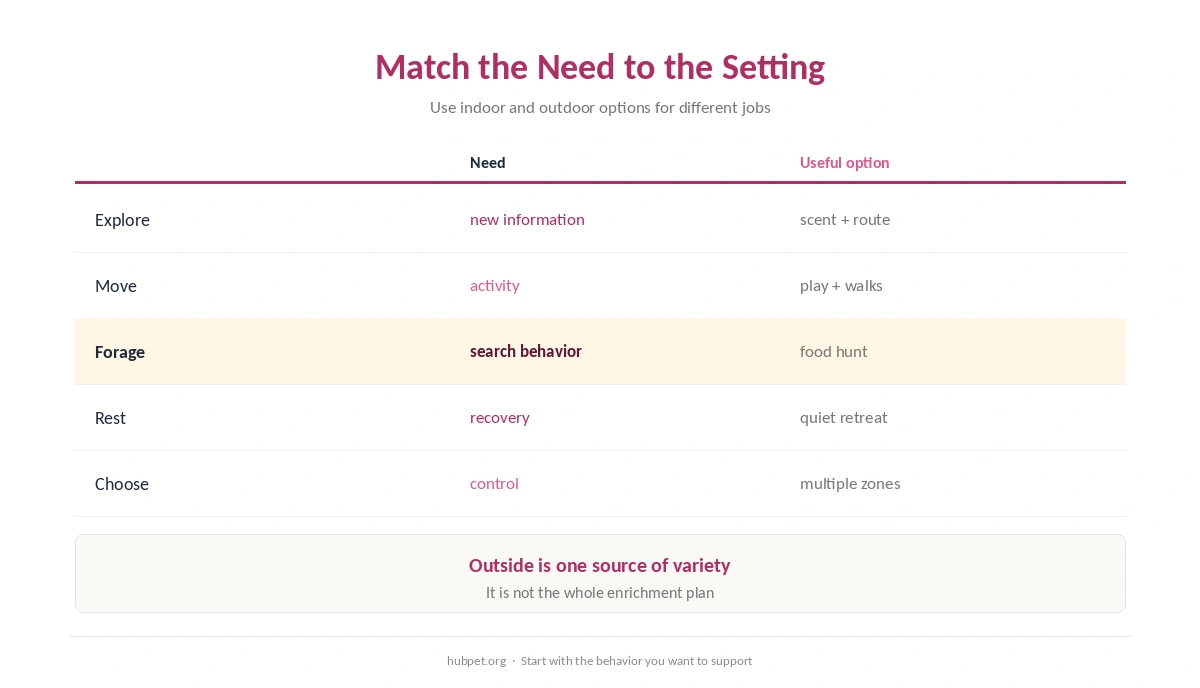
| Need | Indoor option | Outdoor access can add |
|---|---|---|
| Explore | Scent trails, new textures, rotated rooms | Novel smells and routes |
| Move | Play, stairs where safe, training | Longer movement and terrain |
| Forage or hunt | Food searches, puzzle setup, wand play | Naturalistic sensory variety |
| Rest | Quiet bed, hide, elevated perch | Sun, breeze, different sounds |
| Choose | Multiple safe activity zones | Another controlled environment |
How to Make the Most of Limited Outdoor Access Safely
For cats, the FelineVMA 2024 indoor/outdoor statement says controlled outdoor access can add stimulation while reducing some outdoor risks. Examples include an enclosure, a cat-safe fence, or harness-and-leash access for cats that tolerate it. If you use a balcony, start with cat balcony safety and secure window and balcony barriers.
Do not force an animal outdoors simply because access is available. Some cats find unfamiliar outdoor environments stressful, and some dogs need gradual exposure to busy streets, elevators, or shared spaces. Choice and recovery matter more than checking an “outdoor time” box.
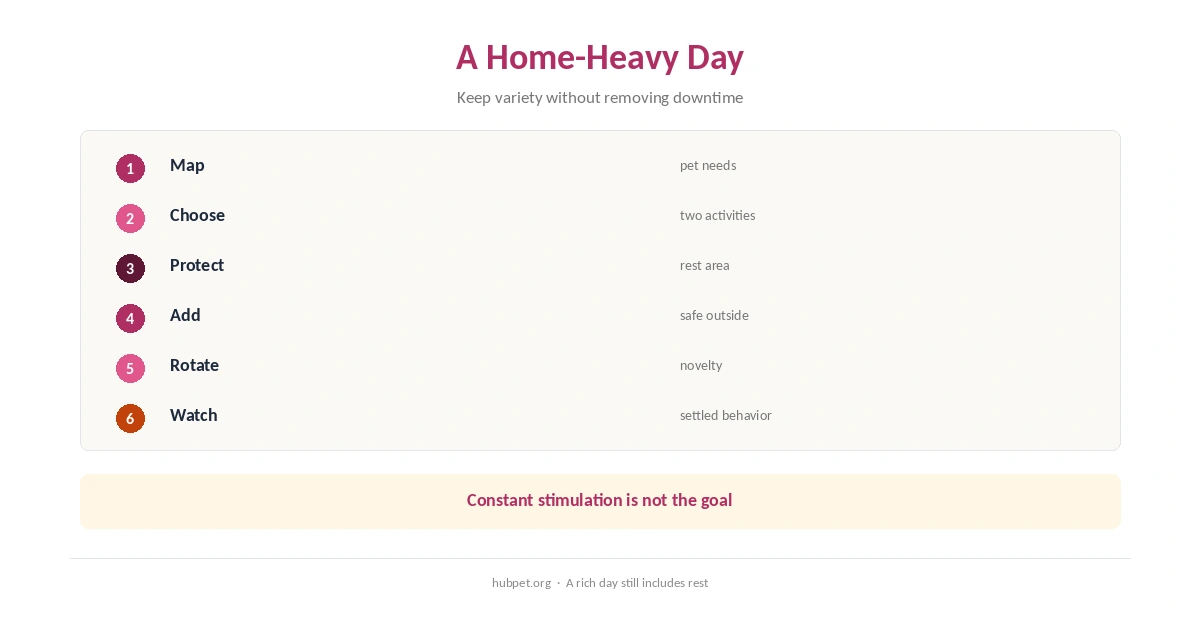
Rotate activities instead of running everything at once. Use toy rotation, the weekly enrichment checklist, and balanced play and rest to keep novelty without removing downtime. Constant activity does not automatically create a richer day.
- List the behaviors your pet needs opportunities to perform, not just the equipment you own.
- Choose one or two indoor activities that match those behaviors each day.
- Protect a quiet resting area away from high-energy play.
- Use controlled outdoor access only when the setup is secure and the pet is comfortable.
- Change routes, scents, games, or toy access gradually to create variety.
- Watch which activities leave the pet settled and engaged rather than frustrated.
When Limited Outdoor Access Creates a Bigger Problem
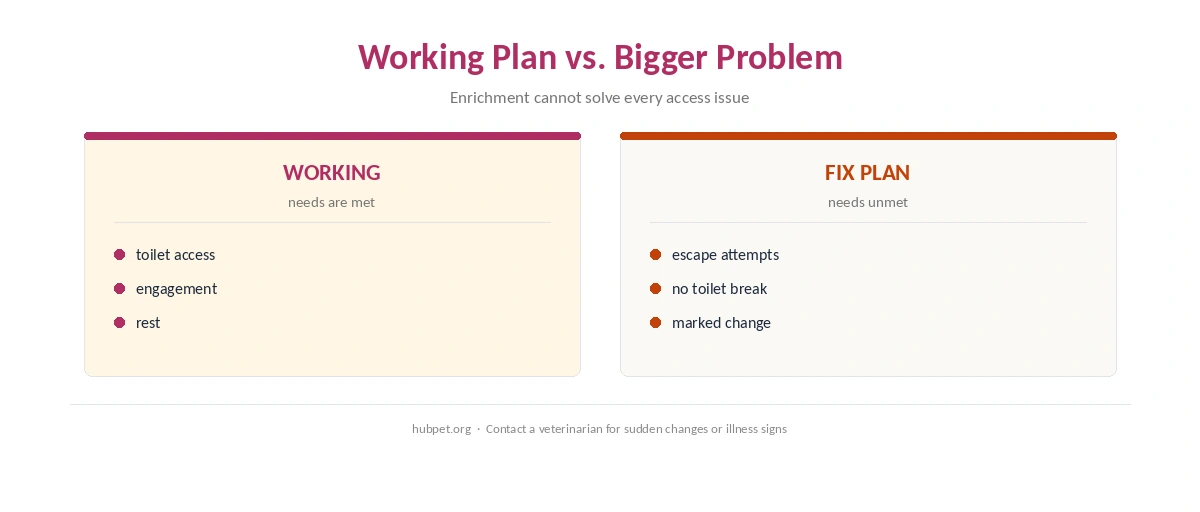
If a dog cannot get regular toilet access or appropriate exercise because of the home schedule, solve that logistics problem rather than adding another puzzle toy. The home-alone safety checklist helps plan access and care during absences.
If an indoor cat persistently tries to escape or stops using normal resources, review the environment before assuming the cat “needs to roam.” If the cat becomes difficult to settle, look for the trigger. Use shy-cat support when fear is part of the picture and keep secure retreat options available.
A sudden major behavior change can also have a medical cause. If your pet becomes markedly less active, stops normal routines, or seems unwell, contact your veterinarian instead of treating the change as a simple enrichment problem.
How We Research
HubPet reviewed these sources on October 11, 2026: the AAHA enrichment guide, 2026, the FelineVMA 2025 indoor-cat statement, the FelineVMA 2024 indoor/outdoor statement, and the Dogs Trust enrichment guidance. Read more about our research process.
Use appropriate walks or toilet trips when available, then add sniffing, training, play, searching, chewing, and rest at home.
Provide safe retreats, vertical space, hunting-style play, separated resources, predictable interaction, and secure controlled outdoor access only if the cat enjoys it.
No universal indoor plan replaces every dog’s need for toilet access, movement, sniffing, and appropriate real-world experiences.
No. FelineVMA says indoor-only living can support good welfare when essential environmental needs are met, although individual cats vary.
It can add sensory variety only if it is securely cat-proofed and supervised as appropriate; it does not replace the rest of the cat’s environmental needs.
The Bottom Line on How to Make the Most of Limited Outdoor Access
How to make the most of limited outdoor access is to build a complete indoor life first and use safe outdoor opportunities as a bonus. Match enrichment to natural behaviors, protect rest, and solve practical access needs directly.