
An outdoor heated cat blanket sounds like a simple way to keep a porch visitor warm, but the word blanket can be misleading. Many household electric throws are intended for dry indoor human use, not for damp shelters where paws, claws and precipitation create different risks. For an outdoor cat, compare a purpose-built, outdoor-rated pet warming pad with a dry, insulated shelter before buying anything electrical. The right setup lets a cat choose a warmed patch, step onto an unheated patch and leave freely. Here is a practical screening checklist based on community-cat shelter guidance and the operating instructions of an established heated-pad manufacturer.
For general education only; not a substitute for individual veterinary assessment. If your pet has pain, injury, severe distress or a sudden behavior change, contact your veterinarian. Veterinary disclaimer.
First distinguish an outdoor pet pad from a household blanket
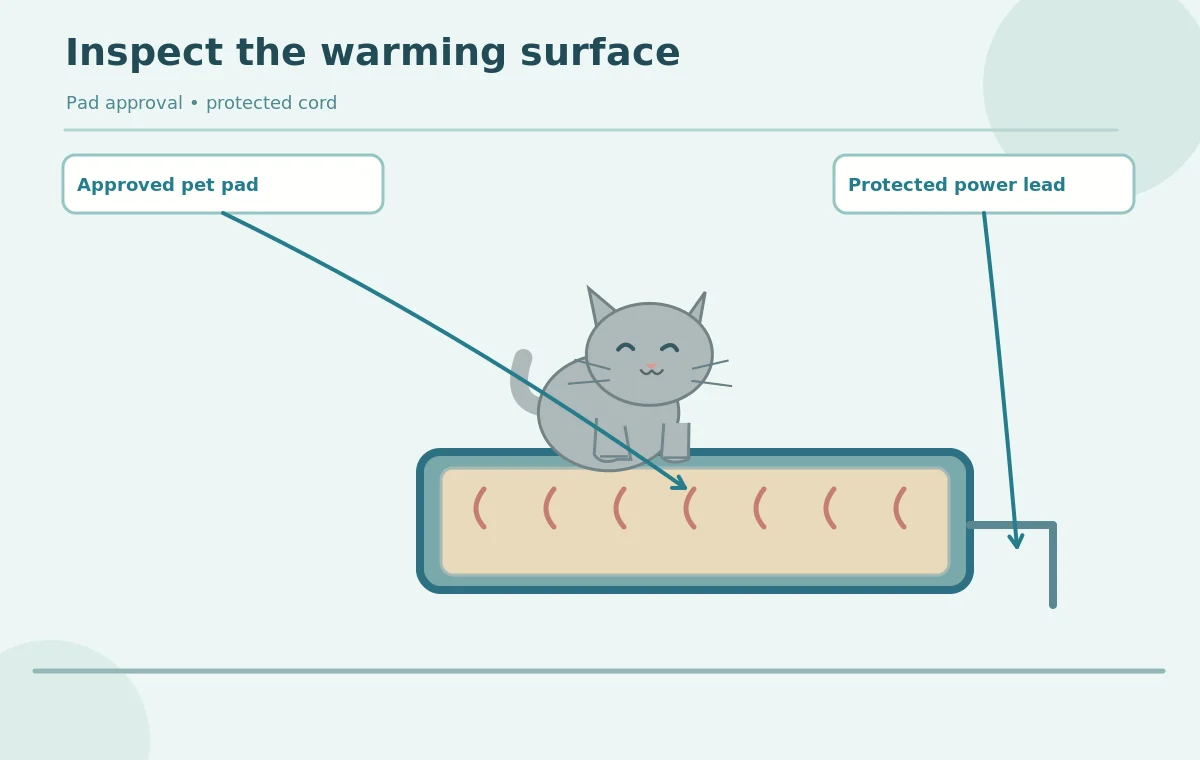
A standard heated throw may have exposed fabric edges, controls or washable covers that are unsuitable for an outdoor enclosure. Labels such as ‘cozy’ and ‘winter’ do not establish approval for damp locations. Check the exact instruction manual for outdoor or sheltered-outdoor use, its electrical safety listing where available, the pad’s allowed surface, and whether the supplied cover is the only permitted layer. Manufacturer approval is specific to a model; do not assume an indoor cat bed and an outdoor heated pad are interchangeable.
K&H, for example, describes an outdoor heated kitty pad with a hard protective shell, thermostat, guarded cord and instructions to place it in a relatively dry covered area. The same instructions caution against piling other blankets on top because extra layers can trap heat. These details are examples of why to read a real product manual, not an endorsement of one brand. If the label cannot answer where the item may be used, do not substitute guesswork for an outdoor safety rating. See HubPet’s winter comfort guide for other low-tech options.
| Option | Appropriate setting | Main limitation |
|---|---|---|
| Outdoor-rated thermostatic pet pad | Covered, dry, permitted shelter with safe outlet | Follow exact manual; keep an unheated escape zone |
| Ordinary household electric throw | Indoor human use only unless label explicitly says otherwise | Not a substitute for an outdoor pet-rated product |
| Unheated insulated shelter with straw | Outdoor spot without safe power | Keep straw dry and entrances clear |
| Microwavable heat accessory | Only where directions permit and a caretaker can monitor | Cooling and skin-contact risks; follow specific instructions |
Make a dry sheltered location before adding electricity
A heat source cannot compensate for wind, standing water and a cold exposed floor. Alley Cat Allies recommends a small waterproof, windproof shelter raised above the ground, with its opening away from prevailing weather. Insulation reduces heat loss; it does not require a plug. In a simple unheated community-cat shelter, dry straw is usually preferable to blankets or towels, which absorb moisture. A plug-in pad changes the bedding rules, so follow that heater’s manual rather than putting loose straw against powered elements.
Choose a covered porch, barn, sheltered outbuilding or similarly protected spot only when the specific pad allows it. Route the cable away from water, chewing, doors and foot traffic. Avoid improvised extension-cord runs across a wet yard; use an electrician if you cannot provide a properly protected outlet. Never immerse the device or place it in a puddle. A warm surface should occupy only part of the resting area, leaving a dry, accessible unheated section where the cat can shift position.
Step-by-step check
- Read the exact pad manual for outdoor suitability and approved covers.
- Set up an elevated, rain-protected shelter before considering power.
- Check a protected power route and place the mat on the stated flat surface.
- Leave an accessible unheated section and confirm the cat can exit.
- Inspect cables and moisture routinely; unplug any damaged unit.

Check fit, control and the cat’s ability to move away
Measure the sheltered floor and the usable pad footprint, including cable exit and any bend restrictions in the instructions. The cat should be able to curl up without pressing against stiff edges, and there should be space beyond the heated zone. Too-large pads can heat nearly the whole floor of a small box, removing the animal’s option to find a cooler area. Check the manufacturer’s stated operating mode: some thermostatic products warm most effectively with an animal resting on them and may feel only slightly warm when empty.
Young kittens, sick animals and cats with reduced mobility may not move away when they become uncomfortable. K&H specifically recommends veterinary advice before using its heated pads for young, recovering or unable-to-move animals. Do not raise the temperature above the product’s intended settings, add hot water bottles, or use an unregulated space heater inside a small shelter. Touch tests by people are not reliable temperature measurements. Observe whether the cat chooses the pad or avoids the location.
Use a simple inspection and cleaning schedule
Before every cold spell, unplug the pad and check cable protection, plug, casing and the supplied cover. Look for cracks, bite marks, dampness, discoloration and frayed wires; stop using damaged equipment. Keep electrical connections and outlets clear of rain and snow. Read the manual to confirm whether the cover can be removed and machine washed, and whether the pad itself may only be wiped. Refit every cover before restoring power, and never operate a device against its stated instructions.
During use, look for damp bedding, blocked entrances, unusually warm surfaces or a cat avoiding the heated area. Recheck after strong wind and snowfall. Cats can be wary of new shelters; position the house where they already travel and allow time for exploration. If no safe outdoor electrical supply exists, an insulated unheated straw-lined shelter is a better choice than a risky improvised heating arrangement.

Decide when heating is optional rather than essential
A healthy community cat may use a properly insulated shelter without electricity, particularly where winters are moderate. A tiny heated mat in a leaky structure will not make that structure weatherproof. Compare the ongoing cleaning burden, outlet accessibility and ability to inspect every connection with a dry straw-lined alternative. Community caregivers may need several simple shelters spread across a territory rather than one powered site that all cats must share.
When extreme cold, illness or a vulnerable kitten is involved, prioritize professional rescue or veterinary advice instead of treating a pad as life support. Provide unfrozen drinking water and monitor shelter condition. Refer to HubPet’s winter pet-care checklist and basic cold-weather comfort precautions to complete the rest of the plan. A reliable warm retreat combines shelter, safe placement and routine checks; power is only one possible part.
Common mistakes to avoid
The most common mistakes are putting an indoor electric throw outside, hiding the cable under damp straw, stacking thick blankets over a pad to ‘boost’ warmth and heating the entire floor so the cat cannot move away. Another mistake is reading a temperature claim from an advertisement without checking the device’s manual. Electrical equipment is never a substitute for a windproof dry shelter and fresh water.
When to Call Your Vet
Contact a veterinarian if a cat seems weak, unusually cold, unable to move normally, has skin irritation or is not behaving as usual. Cats showing collapse, severe lethargy or breathing difficulty need urgent assessment. Very young, recovering or mobility-impaired cats require individual professional advice before use of a heated product. This guide is not a treatment recommendation.
How We Research
HubPet compared the intent of this search with veterinary, welfare and relevant equipment guidance, then translated supported principles into pet-specific checks. We do not claim hands-on product tests, ranking results or veterinary diagnosis. See our editorial approach.
Sources
Alley Cat Allies — Providing Shelter — source guidance used to support the safety and selection advice above.
Alley Cat Allies — Straw, Not Hay — source guidance used to support the safety and selection advice above.
K&H Pet Products — Outdoor Heated Kitty Pad Safeguards — source guidance used to support the safety and selection advice above.
Not unless the manufacturer explicitly approves that exact product for the intended outdoor setting. An outdoor-rated pet pad is a different product category.
Only if that model’s manual allows the exact cover. Extra layers can trap heat and may violate its operating instructions.
No. Dry, insulated, elevated shelters with appropriate straw bedding can be useful without electrical heating.
Not necessarily. Some products warm more when occupied; use the maker’s testing guidance rather than increasing heat yourself.
Choose a well-designed unheated shelter or consult a qualified electrician. Avoid long improvised cords across wet ground.