
This article is general information, not veterinary advice. If your pet seems unwell, is in pain or may have eaten something harmful, contact your vet or an animal poison control line right away. Read our vet disclaimer.
How to stop cats from eating plants starts with access control, not punishment. VCA says there is no single proven reason cats nibble plants, and persistent fixation can justify a veterinary check (VCA, accessed 2026). ASPCA Poison Control warns that many common plants are toxic, while true lilies can be life-threatening to cats (ASPCA, 2026).
How to Stop Cats from Eating Plants Safely
First, identify every plant your cat can reach. Use the toxic-houseplant guide and the ASPCA plant database rather than guessing from appearance. ASPCA notes that any plant material can cause stomach upset, while certain plants can cause much more serious poisoning. For cats, true lilies and daylilies deserve special caution.
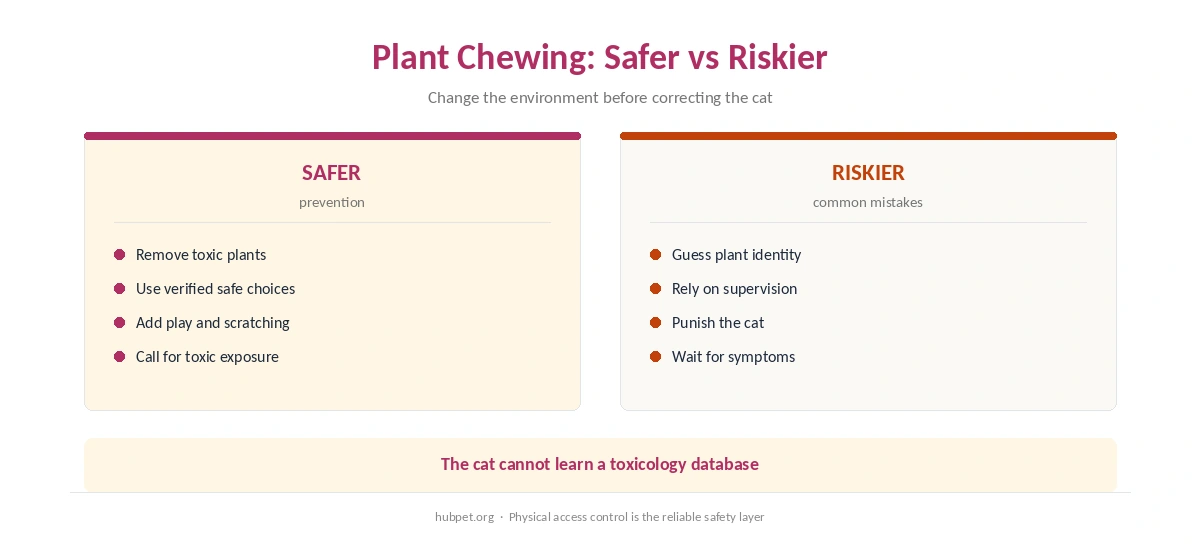
- Remove toxic plants from the cat’s environment rather than relying on supervision alone.
- Check bouquets and cut flowers as carefully as potted plants.
- Move verified non-toxic plants to locations the cat cannot casually reach or knock over.
- Pick up fallen leaves, petals, potting material, and vase water promptly.
- Offer safe enrichment and play so plant chewing is not the only interesting activity in the room.
- If you offer cat grass, keep toxic plants unavailable; cats do not reliably distinguish safe greens from dangerous ones.
- Watch for repeated or compulsive plant chewing and tell your veterinarian if it becomes persistent.
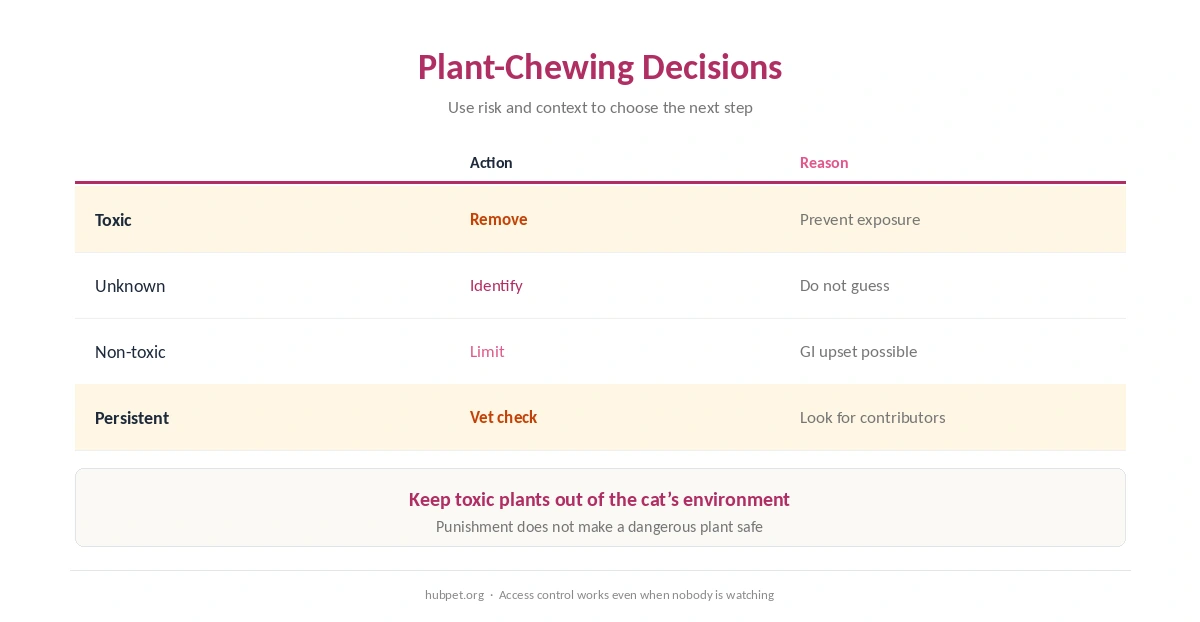
| Situation | Safer response | Why |
|---|---|---|
| Toxic plant | Remove access | Prevents repeat exposure |
| Unknown plant | Identify first | Appearance can mislead |
| Non-toxic plant | Still limit chewing | Plant material can upset the stomach |
| Persistent chewing | Ask your vet | Medical or stress factors may contribute |
| Need enrichment | Add play and choice | Supports normal feline behavior |
How to Stop Cats from Eating Plants Without Punishment
Do not make the plant scary. How to stop cats from eating plants works better when you control access and give the cat acceptable alternatives. FelineVMA advises against punishment and aversive methods because they can increase distress and worsen unwanted behavior. The indoor-cat enrichment guide and scratching-post training guide give practical alternatives.
A calm pet space can also help during noisy or unpredictable periods. How to stop cats from eating plants still begins with making unsafe plants inaccessible. If your cat shows broader stress signs, use how to calm a stressed cat. This does not prove stress causes the chewing; it gives the cat more appropriate choices.
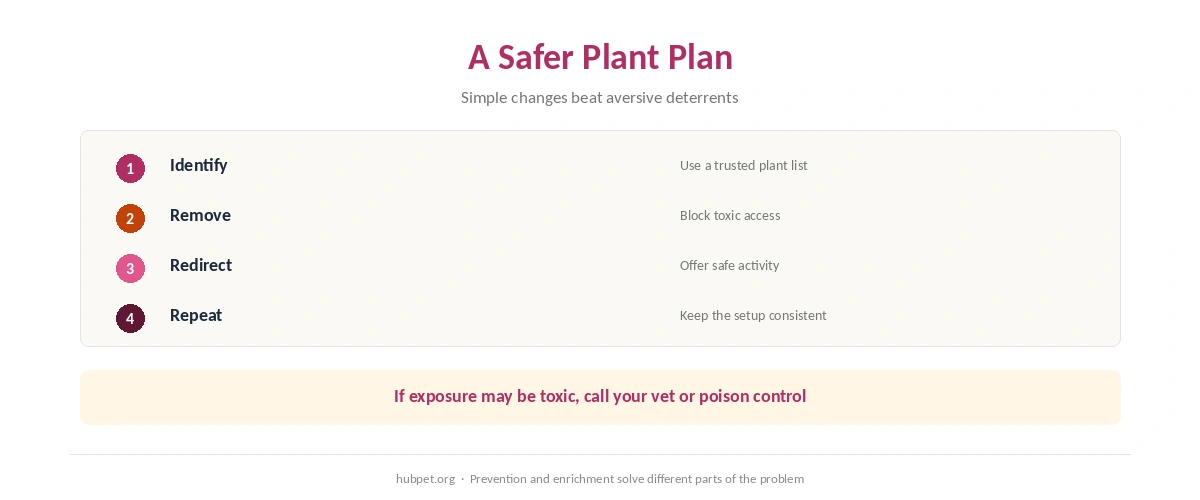
- Block access before the cat reaches the plant.
- Redirect to a safe activity such as play or a scratching surface.
- Reward the alternative behavior the cat chooses.
- Keep the environment predictable and repeat the setup consistently.
If Your Cat Has Already Chewed a Plant
If you know or suspect the plant is toxic, contact your veterinarian or animal poison control promptly. Do not wait for symptoms and do not try to induce vomiting unless a veterinary professional directs you. The pet emergency signs guide covers urgent triage, while toxic foods for cats covers common kitchen exposures.
How to stop cats from eating plants is different from treating an exposure. If the plant is unknown, keep a sample, label, or clear photo available for identification. Use the broader pet-proofing guide and pet-proofing checklist to remove other reachable hazards at the same time.
How We Research
HubPet uses veterinary organizations and research rather than personal anecdotes. We read these sources on October 11, 2026: ASPCA Poison Control toxic-plant guidance, 2026, ASPCA toxic and non-toxic plant database, accessed 2026, VCA plant-nibbling guidance, accessed 2026, FelineVMA behavior-training guidance, accessed 2026. See How We Research for our method.
How to Stop Cats from Eating Plants FAQ
There is no single proven explanation. VCA lists several possible factors and advises a veterinary check when the behavior is persistent or unusual.
The safer option is to remove toxic plants from the cat’s environment. Cats climb, leaves fall, and pollen or plant material can spread.
Cat grass can be an optional safe plant when it is grown and maintained appropriately, but it does not make toxic houseplants safe or teach a cat which plants are dangerous.
No. FelineVMA recommends addressing environmental needs and avoiding punishment or aversive methods.
Call promptly after known or suspected toxic-plant exposure, or when plant chewing becomes persistent and your cat also seems unwell.