
A cat bed for car window may look like a cozy perch, but a suction-cup hammock on glass is not a safe way to transport a cat. The American Veterinary Medical Association recommends a travel carrier for cats. It helps prevent interference with driving and escape during stops. Consider a window-mounted bed only during a brief, supervised stationary visit. Even then, the exact manufacturer must permit that glass and location. Never leave a cat in a parked car, even with windows cracked; vehicle temperatures can become dangerous quickly. For road trips, start with a properly secured carrier and treat any window perch as a separate, non-travel item.
For general education only; not a substitute for individual veterinary assessment. If your pet has pain, injury, severe distress or a sudden behavior change, contact your veterinarian. Veterinary disclaimer.
Separate a parked-car curiosity from real travel equipment
Window beds attach by suction cups, brackets or a small platform supported on a glass pane. Retailers often market them for household windows, not moving cars. Typical household-window perch descriptions do not address braking forces, turning, curved vehicle glass, airbags or moving doors. A retailer explicitly warns that one popular bubble perch does not belong in a vehicle. A static weight rating does not establish crashworthiness or safe road use.
Before the engine starts or the vehicle moves, secure the cat inside an appropriate carrier following the carrier and vehicle instructions. A carrier should provide room to lie naturally, turn around and rest without letting the cat roam around the cabin. Keep doors and windows closed while transferring a cat to the carrier. HubPet’s calmer cat-car rides guide covers gentle familiarization, and carrier introductions helps before a trip.
| Use case | Suitable setup | Avoid |
|---|---|---|
| Vehicle moving | Closed, well-ventilated secured carrier | Cat loose on suction perch or dashboard |
| Parked with human present | Cat in carrier with active temperature monitoring | Assuming parked windows make a perch crash-safe |
| Parked with no human present | Do not leave cat in car | Any bed, including cracked-window arrangements |
| Home window watching | Purpose-built perch on approved fixed glass | Loose cups, open windows, unsupported pane |
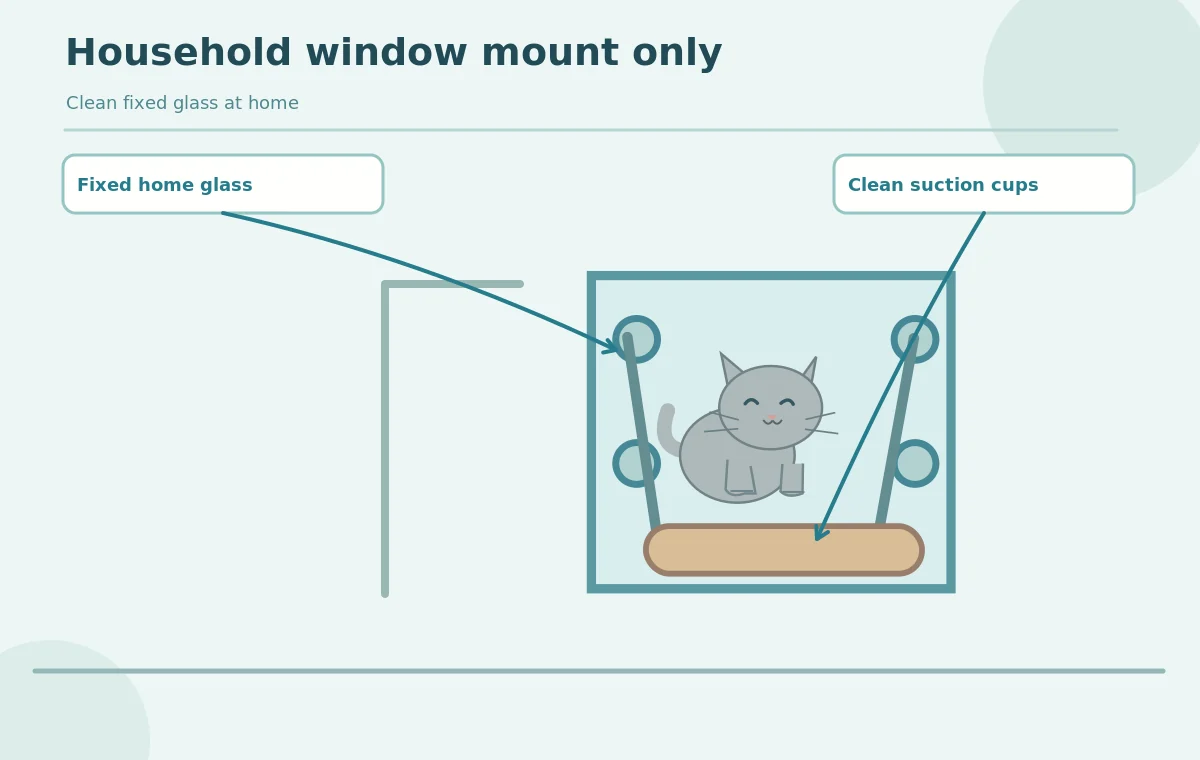
Check product instructions before any stationary-window fit
A household cat window bed often specifies minimum flat glass width, cup material and installation steps. Vehicle windows can be curved, tinted, coated or lowered into a door; these differences can undermine support. Never attach suction cups over a moving pane, seal, defroster line, sticker or unsupported window section unless the exact manufacturer approves it. A broad glass pane still needs the manufacturer to confirm compatibility. A secure, quiet home window is usually the intended place for this furniture.
Some manufacturers recommend thoroughly cleaning and drying a window and its cups and rechecking the seal monthly. That advice applies to their specified house-window installation and does not mean a car is an approved mounting location. Look for a complete instruction sheet, a load rating for the exact model and clear limits on glass size and type. No such information is a reason to pass on an uncertain car-window installation. Never place the bed where it blocks mirrors, sightlines or airbags.
Step-by-step check
- Read the cat window bed manual to establish its approved mounting location.
- Do not use suction window furniture for any moving-vehicle trip.
- Measure and secure an appropriate carrier before travel.
- Introduce the carrier gradually with familiar bedding and rewards.
- Choose a separate fixed household window perch if the cat likes watching outside.

Plan a stationary rest space without trapping heat
Parking does not turn an automobile into a safe pet room. AVMA warns never to leave animals alone in vehicles; dangerous temperatures can develop even on days that do not feel unusually hot. Sunlight through glass can heat a perch quickly, and a parked vehicle may provide inadequate ventilation. If you are waiting briefly with your cat, maintain active supervision and comfortable cabin conditions, and use the secure carrier as the default resting place.
For cats that enjoy watching activity, a home window perch is a safer long-term solution than a car bed. Install it on compatible fixed household glass, far from an open or unsecured window, and follow all weight and suction maintenance instructions. A nearby shelf may provide the same view without relying on glass suction. Our published window and balcony safety guide outlines household fall-prevention essentials.
Choose a carrier for the road and a perch for home
A carrier with ventilation and a secure latch gives a different view from a hanging hammock, but it serves a different safety purpose. Compare the cat’s size with usable carrier dimensions and check the door latch. Confirm how the carrier attaches securely to the vehicle. A folded washable pad can make the carrier more comfortable if it does not obstruct breathing or door closure. Introduce the bedding at home so its scent becomes familiar before a journey.
For a home-only window bed, compare the fixed-glass dimensions, manufacturer’s maximum pet weight, washer instructions and cup-replacement policy. Look for a wide, stable resting platform, a washable cover and a low enough installation to avoid injury if support fails. Inspect the mounting before every use and replace worn suction parts. If your cat is elderly or hesitant to jump, choose a sturdy low perch that needs fewer transitions.
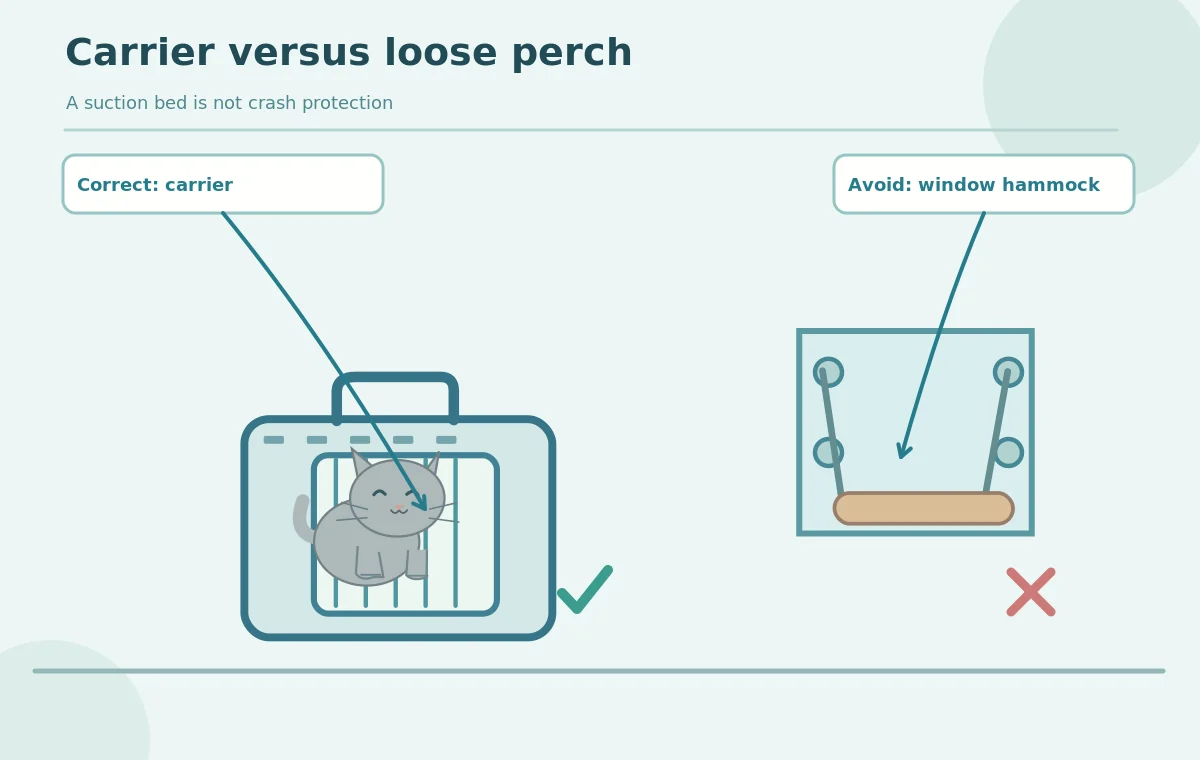
Respond to stress rather than chasing a window view
Cats vary enormously in how they respond to car travel. One may look quietly through a carrier vent; another may drool, vocalize or attempt to hide. Do not place a scared cat on a window hammock to make it ‘enjoy the scenery’. Instead, start with the stationary carrier at home, offer food or rewards near it, and build short calm travel experiences when needed. Covering part of the carrier with a light breathable cloth may help some cats when this does not interfere with airflow.
Discuss repeated vomiting, panic, breathing difficulty or suspected travel sickness with your veterinarian before longer trips. The best cat-car setup prioritizes restraint, temperature control and quiet access, not panoramic glass views. If the real goal is a warm spot for an indoor cat to watch outdoors, purchase a home window bed and keep it out of the vehicle entirely.
Common mistakes to avoid
The major mistake is treating a weight-rated window hammock as a certified travel restraint. Other errors include attaching suction cups to movable vehicle glass, blocking a side airbag, parking in sun with a cat inside, and relying on a cracked window for cooling. Do not convert a household-product claim into vehicle approval. No decorative bed compensates for a loose cat during emergency braking.
When to Call Your Vet
Contact your veterinarian if car trips trigger repeated vomiting, heavy panting, drooling, marked distress or unusual breathing. Possible heat illness is an emergency: move the cat to a safe cool environment and seek urgent professional help. This article addresses safe equipment selection, not medical treatment or a guarantee of crash protection.
How We Research
HubPet compared the intent of this search with veterinary, welfare and relevant equipment guidance, then translated supported principles into pet-specific checks. We do not claim hands-on product tests, ranking results or veterinary diagnosis. See our editorial approach.
Sources
AVMA — Traveling With Your Dog or Cat — source guidance used to support the safety and selection advice above.
AVMA — Warm Weather Pet Safety — source guidance used to support the safety and selection advice above.
K&H Pet Products — EZ Mount Home Window Bed Instructions — source guidance used to support the safety and selection advice above.
No. Cats should travel in a properly secured carrier. A window bed does not restrain an animal in a crash or sudden stop.
Often not. Check the exact manufacturer’s instructions; vehicle glass and moving windows have different conditions.
No. A parked car can overheat quickly even in apparently mild weather, with windows cracked.
Choose a safe carrier position and gradually acclimate the cat to car sounds and motion rather than letting it roam.
On a compatible fixed home window, following the manufacturer’s glass-size, suction, and weight instructions.