
This article is general information, not veterinary advice. If your pet seems unwell, is in pain or may have eaten something harmful, contact your vet or an animal poison control line right away. Read our vet disclaimer.
A winter pet care checklist should focus on cold exposure, paws, chemicals, shelter, identification, and indoor activity. The AAHA cold-weather guide, updated February 2026 warns about hypothermia, frostbite, ice, and chemical hazards. It also notes that every pet can be vulnerable to freezing conditions. For a related practical guide, see how to Keep Pets Comfortable in Winter.
This winter pet care checklist does not use one temperature cutoff for every dog or cat. Coat, age, body size, health, wet weather, and wind all change risk. Instead, use the pet’s condition and the environment to shorten exposure, then contact a veterinarian promptly when cold-related illness is possible.
Winter Pet Care Checklist: Quick Version
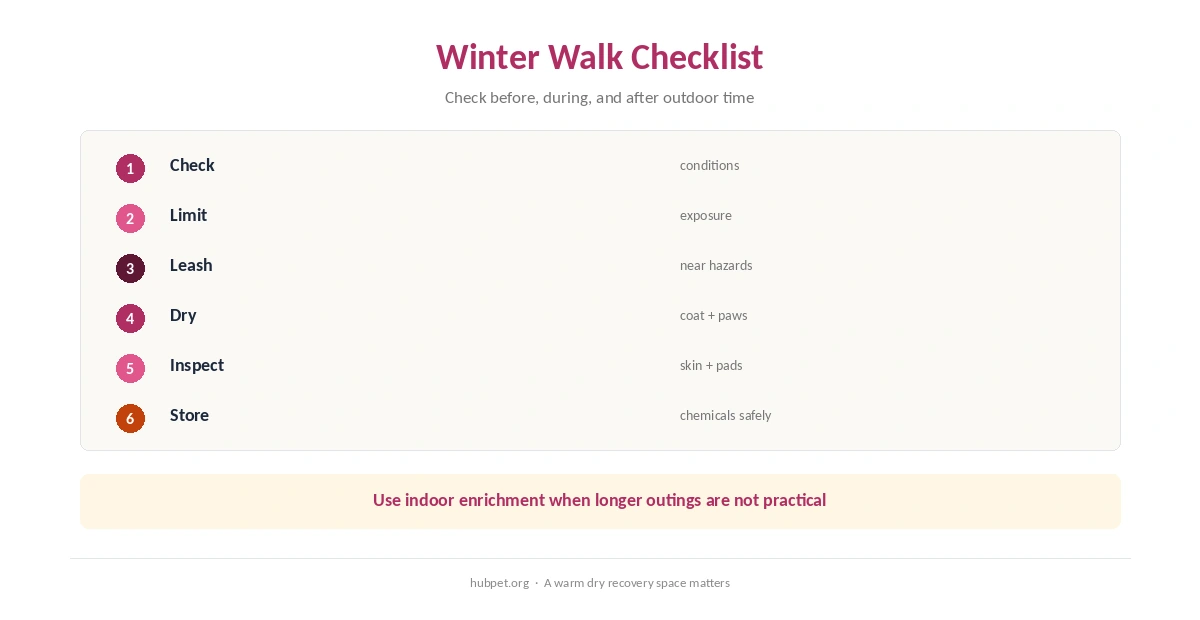
- Keep pets indoors during severe cold and give them a warm, dry resting area away from drafts.
- Shorten outdoor time when the weather is freezing, wet, or windy, especially for vulnerable pets.
- Dry paws and the underside after walks, and remove packed snow or ice from between the toes.
- Keep antifreeze, de-icers, and other winter chemicals out of reach and clean spills promptly.
- Use a leash near frozen water, snow-covered hazards, and low-visibility conditions.
- Check identification details and make sure doors, gates, windows, and carriers are secure.
- Inspect paws and exposed skin after outdoor activity for redness, swelling, or unusual discomfort.
- Keep fresh water available and maintain the normal feeding plan unless a veterinarian advises a change.
- Offer safe indoor movement, sniffing, play, and training when long outdoor sessions are not practical.
- Protect older pets and pets with limited mobility with easier routes, traction, and warm resting choices.
- Know the signs that need prompt veterinary attention, including weakness, confusion, shallow breathing, collapse, or suspected frostbite.
- Treat any possible antifreeze ingestion or other toxin exposure as urgent and contact a veterinarian or poison-control service right away.
The list works best alongside a pet first-aid checklist and the site emergency guidance. Those pages cover preparation and escalation, while this page focuses on winter-specific prevention.
Winter Pet Care Checklist for Walks and Outdoor Time
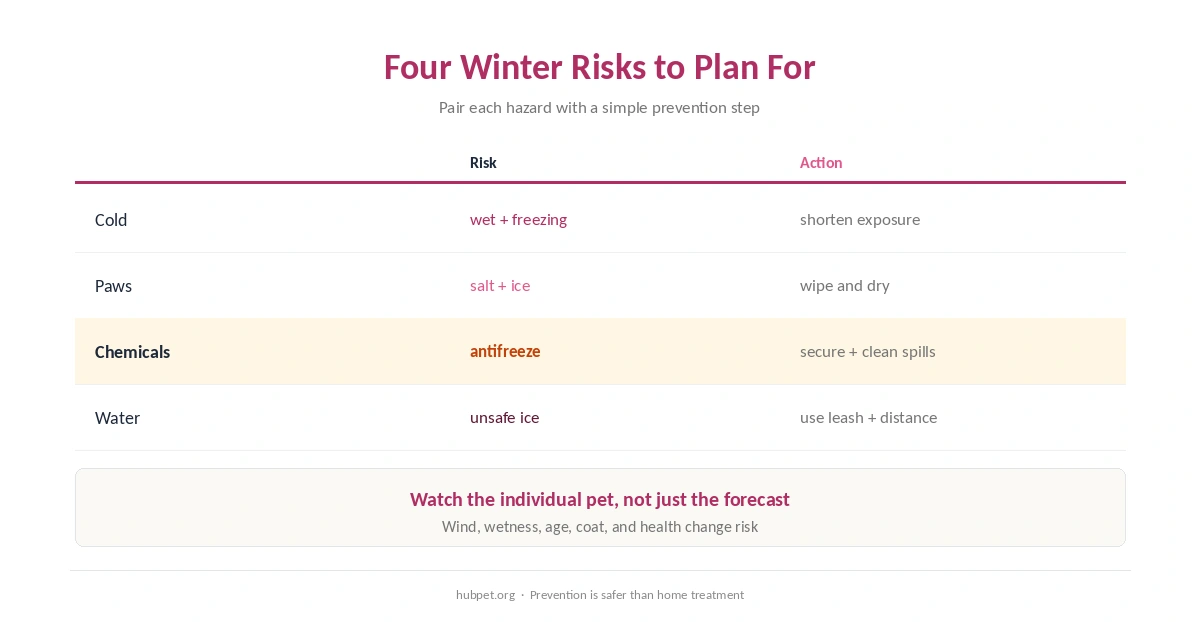
AAHA 2026 advises monitoring pets closely and limiting time outdoors in extreme cold. Therefore, plan shorter outings when conditions are harsh. A thick coat does not make a pet immune to cold injury. Use the coat-care basics in the healthy-coat guide without shaving away protective fur for winter.
After a walk, dry the pet and check paws. AAHA 2026 recommends removing salt, ice, and debris. The ASPCA de-icer guidance, January 2026 notes that de-icers can irritate paws and can cause illness if swallowed. Do not assume a product is harmless because it is used on sidewalks.
Watch exposed skin and paw pads rather than trying to diagnose frostbite at home. Use the home skin-check guide for observation only. If skin becomes pale, red, swollen, painful, dark, or otherwise abnormal after cold exposure, AAHA 2024 and Merck 2025 advise veterinary care.
| Winter risk | Prevention | Escalate when |
|---|---|---|
| Cold exposure | Shorter outdoor sessions and dry shelter | Weakness, confusion, collapse |
| Ice and salt | Leash, paw checks, wipe and dry | Painful or damaged paws |
| Antifreeze | Secure storage and immediate spill cleanup | Any suspected ingestion |
| Frozen water | Keep pets away from unsafe ice | Fall-through or cold exposure |
Winter Pet Care Checklist for Indoors
Cold weather often reduces outdoor activity. However, indoor life still needs movement, thinking, and rest. Use the weekly enrichment checklist and an enrichment corner to create options without turning the whole day into constant stimulation. A winter pet care checklist also needs a realistic indoor plan for days when longer walks or outdoor play are not sensible.
Dogs can use controlled scent games or short training sessions. Cats can use climbing, hiding, and play. The guides to indoor activity for high-energy dogs and indoor cat stimulation offer species-specific ideas.
Older animals may need easier access and more traction when floors are wet or icy near entrances. The articles on senior-dog comfort and supporting an aging cat explain how to adapt the home without assuming every slowdown is simply age.
Winter Chemicals Need Extra Care
Antifreeze can be life-threatening if swallowed. The AAHA antifreeze safety article, 2024 explains that ethylene glycol can damage the kidneys and nervous system. If exposure is possible, contact a veterinarian or animal poison-control service immediately. Do not induce vomiting unless a professional specifically directs you.
Store winter chemicals as carefully as household poisons. Also review pet-proofing basics and the home-alone safety checklist if products are kept in a garage, mudroom, or entry area that pets can access.
When to Call Your Vet in Winter
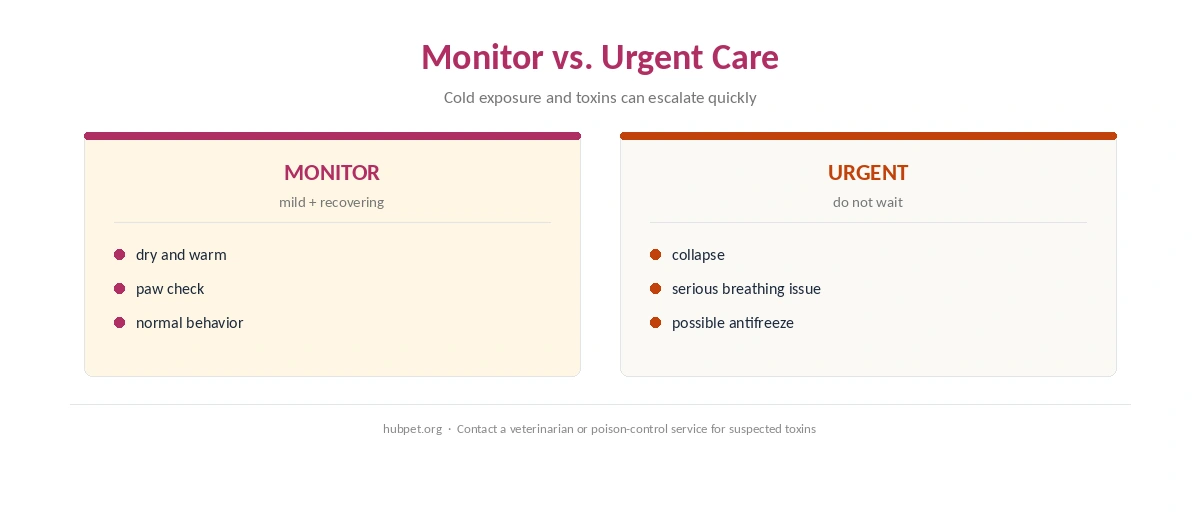
Call promptly for suspected frostbite, persistent weakness, confusion, shallow breathing, or a pet that cannot warm and recover after cold exposure. The Merck Veterinary Manual winter safety review, 2025 describes weakness, disorientation, shallow breathing, slow pulse, collapse, and unconsciousness as possible hypothermia signs.
Go now for collapse, unresponsiveness, a seizure, serious breathing difficulty, or suspected poisoning. The same emergency threshold appears in HubPet’s emergency guide. If the issue is dry or flaky skin without an emergency sign, use the dry-skin guide and arrange veterinary assessment when the problem persists or causes significant discomfort.
How We Research
HubPet reviewed these sources on October 11, 2026: AAHA cold-weather guidance, updated 2026, ASPCA winter safety tips, January 2026, ASPCA de-icer guidance from 2026, and the Merck Veterinary Manual winter review from 2025. Read more about our research process.
There is no single cutoff for every pet. Coat, size, age, health, wind, wetness, and exposure time all matter.
Yes. Remove salt, ice, and debris, then dry the paws and check for irritation or damage.
Yes. Suspected ingestion is urgent. Contact a veterinarian or animal poison-control service immediately.
Yes. When outdoor activity is limited, use safe indoor movement, play, sniffing, climbing, training, and rest options.
Collapse, unresponsiveness, seizures, serious breathing difficulty, and suspected poisoning need immediate care.
The Bottom Line on the Winter Pet Care Checklist
A winter pet care checklist is most useful when it prevents problems before they start. Limit harsh exposure, protect paws, secure chemicals, keep indoor needs covered, and know the signs that require prompt veterinary care. Do not use a generic temperature rule or a home remedy in place of professional assessment. A useful companion care page is how to Protect Paws from Cold and Salt.