
This article is general information, not veterinary advice. If your pet seems unwell, is in pain or may have eaten something harmful, contact your vet or an animal poison control line right away. Read our vet disclaimer.
Why cats prefer high places is best explained as a combination of safety, choice, observation, and usable territory. The AAFP/ISFM Feline Environmental Needs Guidelines, 2013 state that elevated areas increase vertical space and let cats monitor their environment. Raised safe places can also provide seclusion.
That does not mean every cat wants the tallest possible perch. Height must be easy to reach, stable, and appropriate for the individual cat. A cat may prefer a lower shelf, a covered bed, or a box when those options provide better security. In other words, why cats prefer high places depends partly on what that location lets the individual cat do.
Why Cats Prefer High Places: Safety, Choice, and a Better View
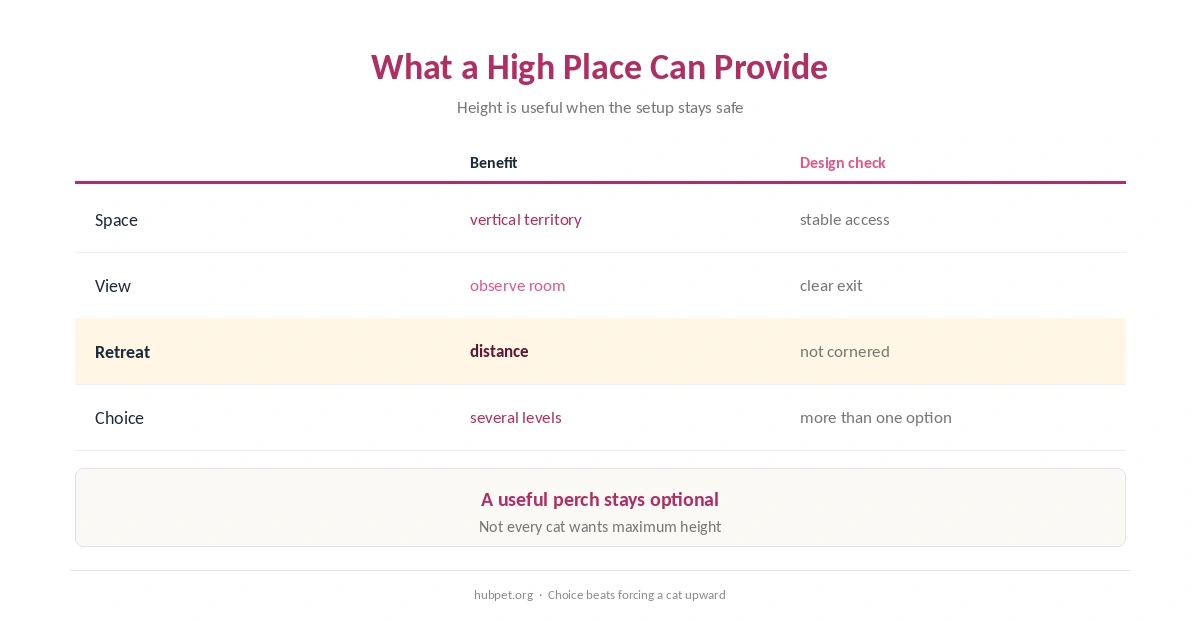
Elevation can turn one room into several usable levels. This is why safe climbing spaces for cats can matter even in a small home. The 2013 guidelines specifically connect elevated areas with vertical space and environmental monitoring rather than claiming that height is a status contest.
A raised location can also work as a retreat. That matters for cats that need distance from visitors, dogs, children, or another cat. Combine height with a calm pet space, shy-cat support, and enclosed hiding options so the cat has more than one way to feel secure.
| What the high place provides | Why it can help | What to check |
|---|---|---|
| Vertical territory | More usable space in the same room | Stable route up and down |
| Observation | View without being in the traffic path | No forced interaction at the perch |
| Retreat | Distance from activity | Cat can leave freely |
| Resource separation | Alternative location in multi-cat homes | More than one desirable option |
Why Cats Prefer High Places in Multi-Cat and Indoor Homes
The FelineVMA 2025 indoor-cat statement says indoor cats need safe places, separated key resources, opportunities for play and predatory behavior, predictable social interaction, and sensory-respecting environments. Several well-placed vertical options can support those needs better than one prized spot. This is why cats prefer high places more reliably when several safe options exist instead of one contested perch.
In multi-cat homes, one high shelf is not a complete solution. Provide multiple routes and resting locations so one cat cannot control the only desirable perch. Use gradual cat introductions, multi-pet conflict reduction, the multi-pet checklist, and resource placement basics alongside vertical space.
Indoor-only cats also need active outlets. Pair climbing with indoor cat stimulation, boredom prevention, an enrichment corner, and toy rotation instead of expecting furniture height to meet every need.
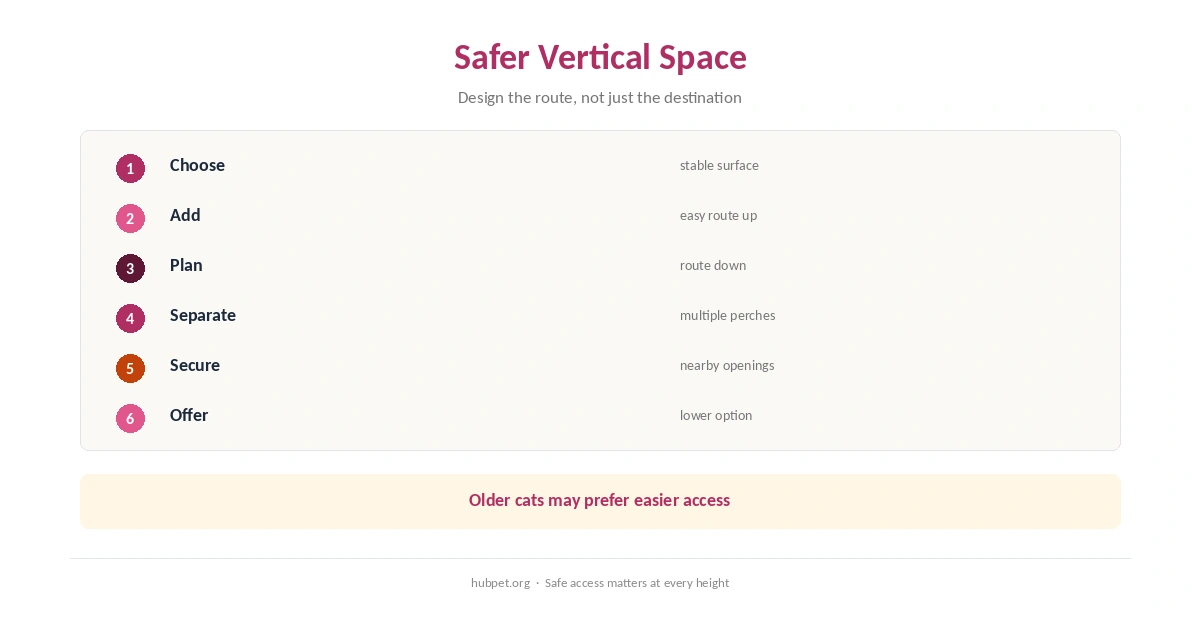
- Choose a stable perch with enough surface area for the cat to turn and rest.
- Provide a clear route up and a separate route down when practical.
- Keep the perch away from hazards such as unsecured windows or hot surfaces.
- Place more than one attractive elevated option in a multi-cat home.
- Add a lower alternative for cats that do not want or cannot use the highest level.
- Let the cat choose the perch rather than placing the cat on it repeatedly.
When a High Place Is Not a Safe Place
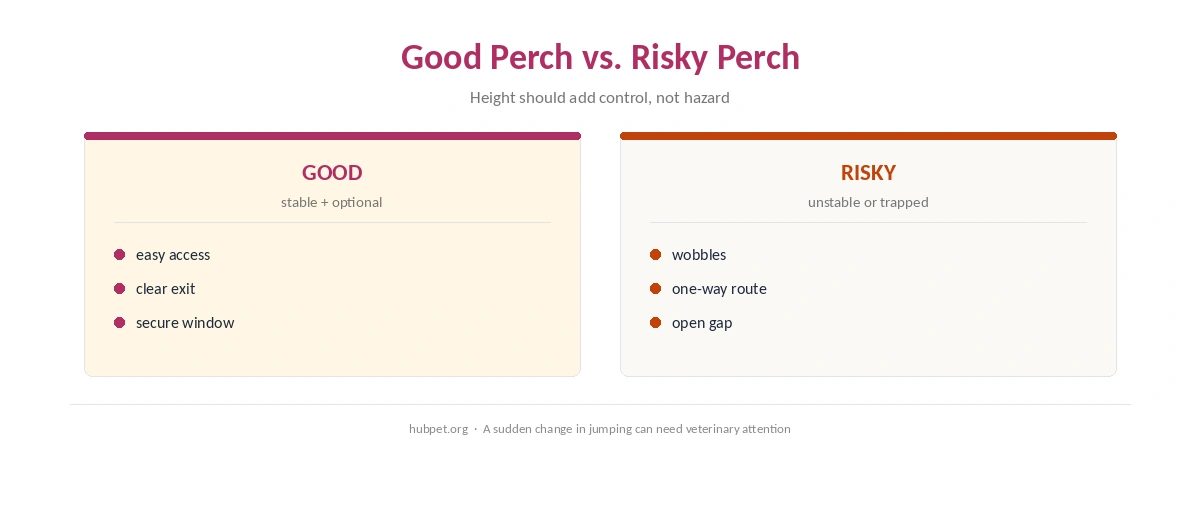
Height should not create a fall or escape route. Review balcony safety for cats and pet-proofed windows and balconies before placing a perch near an opening. In an apartment, apartment pet management can help separate climbing zones from doors and narrow traffic paths.
For older cats, a favorite high location may remain important even when access becomes harder. Use the aging-cat home guide to make routes easier and give comparable lower resting choices. Contact your veterinarian if a cat suddenly stops jumping, seems uncomfortable on stairs, or shows a marked change in normal movement; an online article cannot safely explain those changes as “just behavior.”
Likewise, if a cat starts spending almost all day high up and avoiding normal activities, review sudden hiding and withdrawal and look at the whole context. A high perch can be healthy choice-based retreat, but persistent avoidance can signal that something in the environment or the cat’s wellbeing has changed.
How We Research
HubPet reviewed these sources on October 11, 2026: the 2013 AAFP/ISFM Feline Environmental Needs Guidelines, the FelineVMA 2025 indoor-cat statement, and the AAHA indoor-cat enrichment guide, 2025. Read more about our research process.
Elevated locations can add usable vertical territory, allow observation, and provide a retreat from activity.
No. Cats need safe choices, and the preferred height varies by the individual, home layout, and ease of access.
Multiple elevated options can help cats avoid each other and use space more flexibly, but they do not replace separated resources and careful introductions.
Only if the opening is securely pet-proofed. A desirable perch should not create an escape or fall risk.
Add easier routes and lower alternatives, and contact your veterinarian if the change is sudden or accompanied by altered movement or discomfort.
The Bottom Line on Why Cats Prefer High Places
Why cats prefer high places is not about one simple instinct or a dominance ladder. Good elevated spaces add safe territory, observation, retreat, and choice while keeping access and exits secure.