
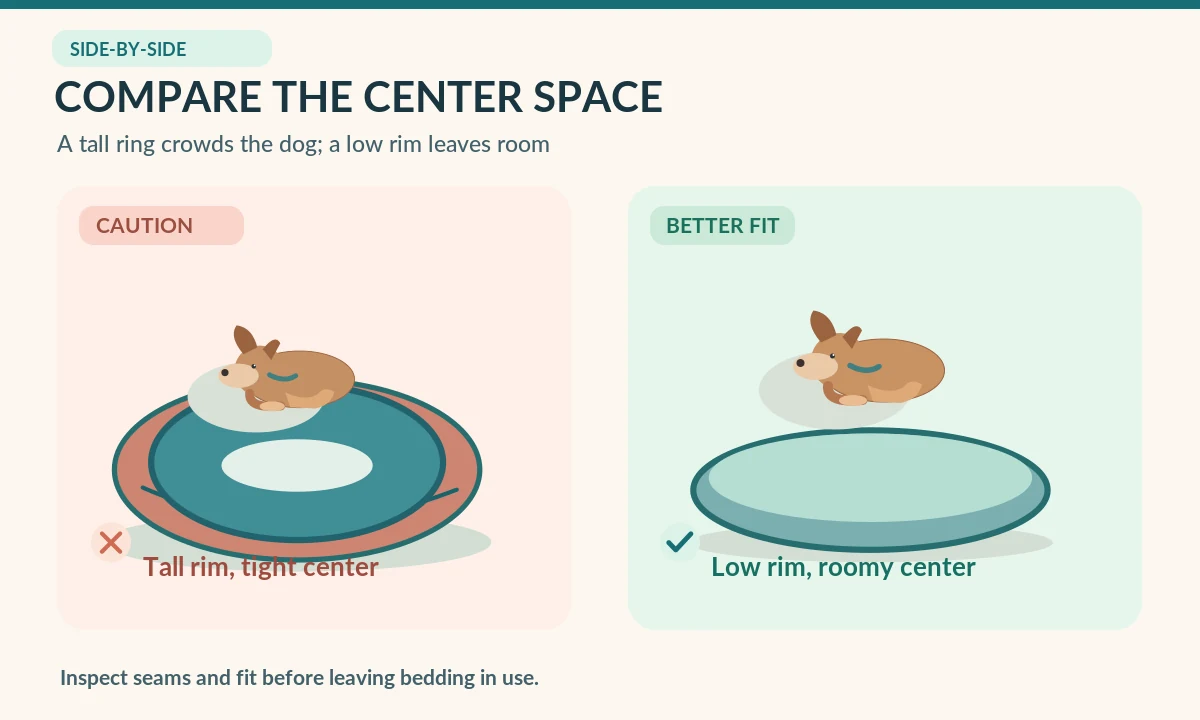
This guide covers general dog bedding and household safety, not individual veterinary treatment. If your dog struggles to rise, appears to be in pain, or may have swallowed bedding, contact your veterinarian; see our veterinary disclaimer. The outside diameter of a round bed rarely tells the whole story. Some circles are flat cushions, while others have a thick raised ring that takes away from the usable sleeping area. A curled sleeper may enjoy a defined edge, but dogs still need room to change positions and rise easily. Compare the interior with your dog’s usual sleeping position. Then ask how to clean the rim and cushion separately.

Separate outside size from sleeping size
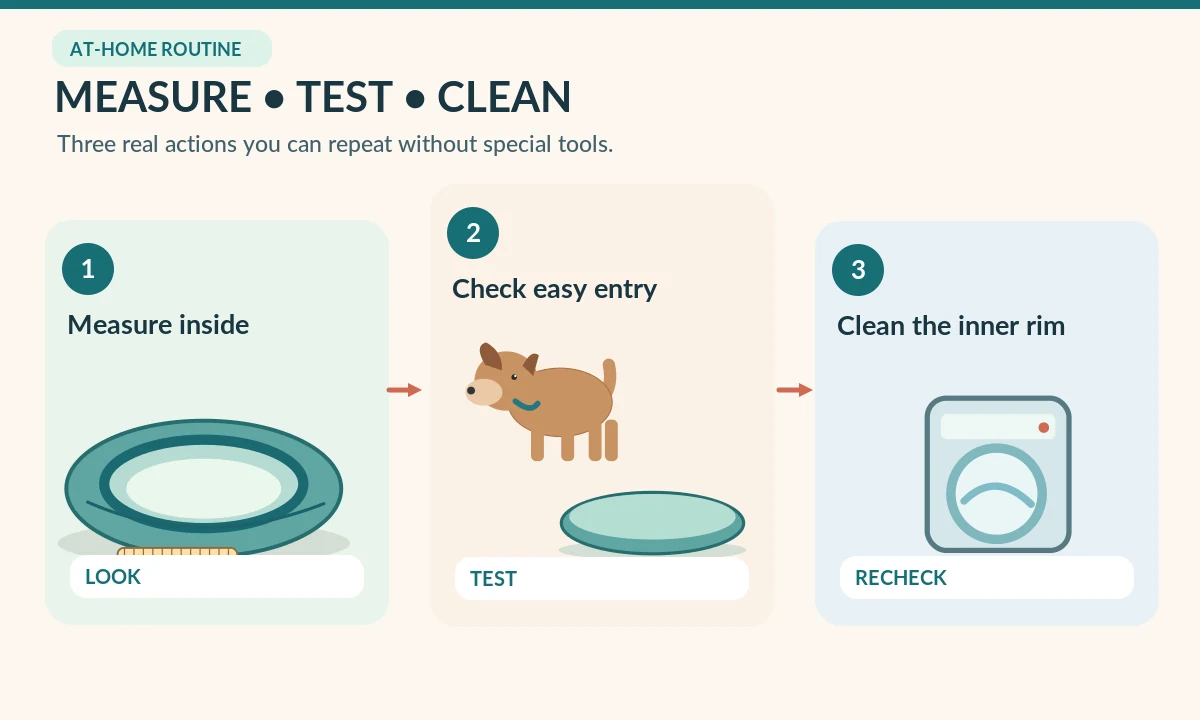
Measure across the outer seams. Next, measure the flat interior between the inside edges of the rim. A high padded ring can subtract meaningful room on both sides. Product listings may quote only the larger number. Outline the usable center on the floor with removable painter’s tape. Compare it with your dog’s normal sleeping space. Do not force the dog into a curled pose just to match a listing photograph. A bed should allow voluntary stretching, rotating, and repositioning.
Observe the dog’s preferred sleeping shape
Watch your dog during several relaxed naps on a familiar surface. Some dogs curl tightly, while others start curled and later stretch a leg or roll onto a side. Note the largest comfortable footprint, not merely the smallest coil. If the dog often sprawls, a round bed with a narrow center may create unnecessary contact with the rim. However, a low ring can give a curling dog an edge to lean against. It need not crowd the center. The goal is usable choice rather than matching a breed to a bed shape.
Compare a flat circle with a raised donut rim
A flat round cushion has a broad continuous surface, easy step-on access, and often a simple wash routine. A raised donut design adds a bolster-like ring. That ring can shrink the center and require a higher step. Inspect the junction where the ring meets the floor cushion: deep valleys can trap hair and crumbs. A tall soft rim may fold inward when stepped on. For a dog that struggles with mobility or climbs awkwardly, consider a lower entry and ask a veterinarian for guidance on comfortable sleeping access.
Check the seam and fill distribution
Run your hand around the full circular seam and inspect for pulled stitching, loose piping, and exposed zipper teeth. Press the pad at the center, near the ring, and under the ring to see where the filling actually sits. Some circular pads become lumpy after washing or repeated sleeping in one spot. If the cushion has a removable center, make sure it cannot flip up and create a gap when the dog turns. Dogs that mouth or shred fabric should not have access to loose stuffing or a damaged fastener. Remove damaged bedding from use promptly.
Choose a practical location and base
Put the bed on the intended surface and test how much it moves when a hand presses around its edge. A rubberized or textured underside may help on tile, but it still needs regular inspection and cleaning. Avoid placing the circle where its raised border becomes a trip hazard in a narrow corridor. Position it away from drafts, heat sources, and food spills, and leave a clear route into and out of the rest area. If the dog prefers a cooler floor at times, make that alternative available instead of insisting on the padded bed.
Plan washing for both the rim and center
The ring, center cushion, and backing may require different care. Check whether the entire bed can go in a washer or just the cover. A thick rim may dry more slowly than the center. The CDC recommends cleaning pet bedding regularly, with weekly care as a baseline. Treat heavily soiled bedding earlier. Use the wash temperature and dryer or air-dry instructions the maker provides. After washing, inspect the deepest crease along the inner rim. Continue drying the bed away from your dog until completely dry.
Introduce the new shape without pressure
Place the new bed beside an old familiar resting surface rather than removing all other choices. Let your dog sniff and investigate at its own pace. Reward calm interest if the dog enjoys treats, and never push or hold the dog into the circular center. Watch whether the dog can step over the rim without catching paws and whether the bed stays put when the dog rotates. A dog might rest next to a bed for several nights before using it. Voluntary use and easy movement demonstrate comfort, not by how fluffy the ring looks.
Know when a round bed is a mismatch
Choose another design if your dog spills over the rim or struggles to change position. Also watch for trouble stepping through a high ring. Consider a flat rectangular mattress for frequent stretchers or dogs that benefit from a lower entry. If the inner cushion becomes hollow, the rim collapses into the center, or you cannot clean the cover thoroughly, the bed no longer matches its intended use. Return to measurements of the dog and actual sleeping space rather than choosing a larger outside diameter blindly.
How We Research
Our research draws on veterinary, animal welfare, and public-health advice about cleaning, chewing, comfortable access, and home setup. Our measurements distinguish outer diameter from sleeping diameter and compare rim clearance, step height, and washability. No laboratory product tests inform these guides. These articles do not rank or endorse products. Learn more about HubPet.
Sources
American Kennel Club — How to Clean a Dog Bed — Evidence about pet care, household safety, or bedding maintenance.
CDC — Cleaning and Disinfecting Pet Supplies — Evidence about pet care, household safety, or bedding maintenance.
VCA Animal Hospitals — Comfortable Home for Dogs With Mobility Limitations — Evidence about pet care, household safety, or bedding maintenance.
A ringed round bed may lose space to its padded border. Compare inside sleeping dimensions directly instead of relying on the outside diameter or shape name.
Observe your dog’s relaxed curled and partially stretched positions, then choose an inner diameter that allows turning and repositioning without crowding.
No. A tall rim can be awkward for dogs that have trouble stepping over edges. A flat or low-entry option may be easier.
Follow the manufacturer’s construction and care label. If the parts separate, clean and dry each as instructed, especially the deep inner crease.
Keep an existing comfortable rest option available, try a quiet location, and allow voluntary exploration. Each dog has individual preferences. Never force the new bed on a reluctant dog.