
This article is general information, not veterinary advice. If your pet seems unwell, is in pain or may have eaten something harmful, contact your vet or an animal poison control line right away. Read our vet disclaimer.
How to stop dogs from chewing furniture starts with identifying when and why the chewing happens. VCA describes chewing as a normal exploratory behavior, especially in puppies, while destructive chewing can also appear with boredom, anxiety, or too few appropriate outlets (VCA, accessed 2026). RSPCA likewise recommends suitable objects to chew and enough exercise and mental stimulation (RSPCA, accessed 2026). Therefore, protect the furniture first, provide legal chewing options, and reward the dog for choosing them.
How to Stop Dogs from Chewing Furniture: Prevent Rehearsal
The fastest first step is environmental management. Close doors, use a gate, move tempting items, or keep the dog with you when supervision is possible. This follows the same logic as pet-proofing your home: a dog cannot practice chewing a chair leg that is not accessible. Meanwhile, place suitable chew items where the dog normally settles. How to stop dogs from chewing furniture becomes easier when the acceptable choice is also the easiest choice.
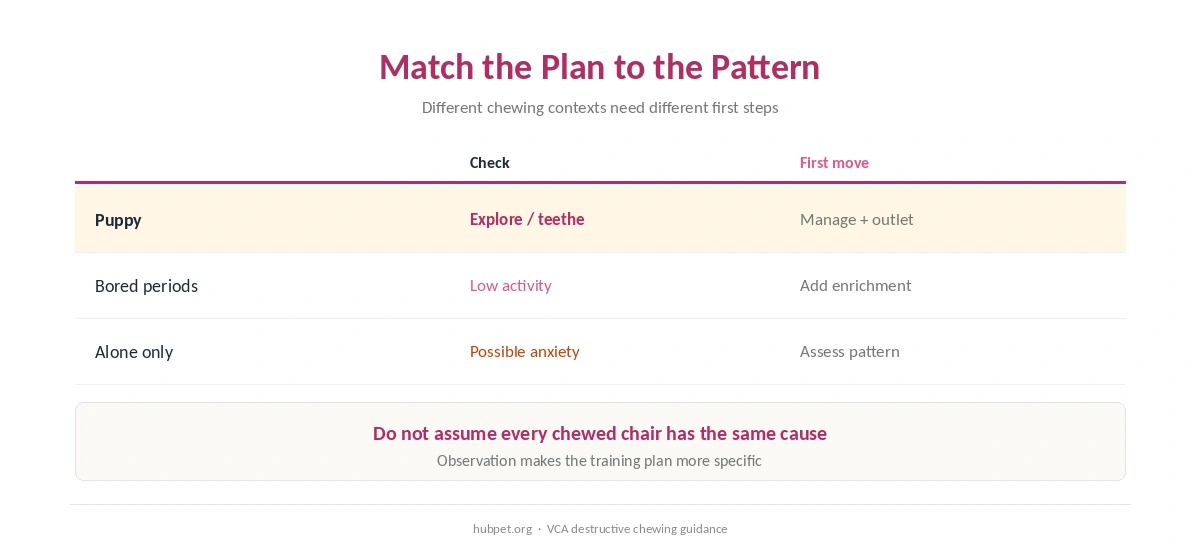
| Pattern | Likely context to check | First move |
|---|---|---|
| Puppy explores many objects | Normal exploration / teething may contribute | Manage access + provide safe chew options |
| Chews when bored | Activity and enrichment may be too low | Add appropriate exercise and mental work |
| Chews mainly when alone | Anxiety may be involved | Record the pattern and seek qualified help |
How to Stop Dogs from Chewing Furniture: Reward the Right Object
VCA recommends directing chewing into appropriate alternatives and providing enough play, exercise, and enrichment (VCA, accessed 2026). RSPCA also notes that suitable chew and play objects can reduce boredom and destructive behavior (RSPCA, accessed 2026). When your dog chooses the legal item, calmly praise or deliver another reward. This is where positive reinforcement helps: the dog learns what works instead of only hearing what is forbidden. If the dog needs more structure, basic dog training at home gives the same short-session framework.
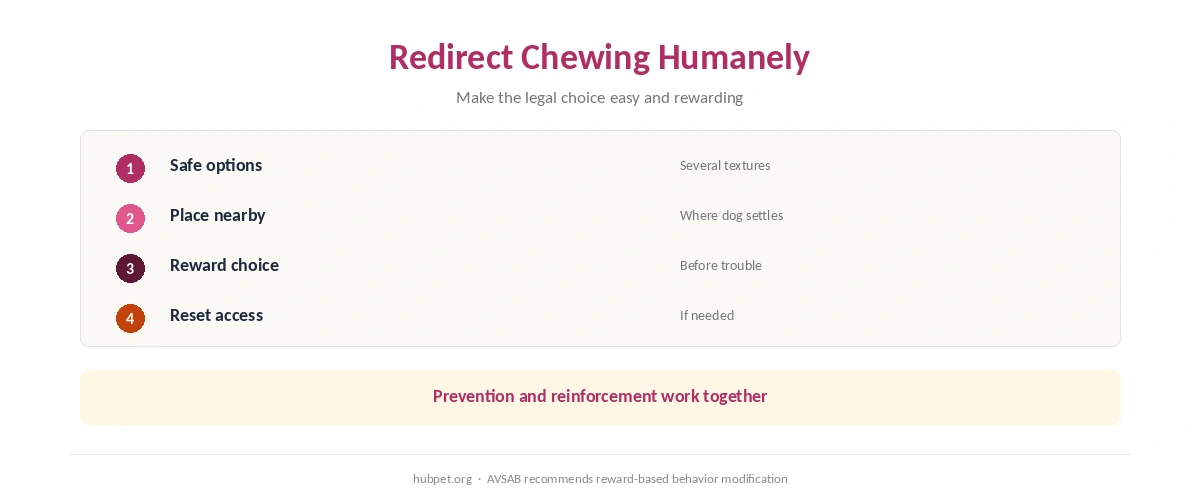
- Choose several safe chew options with different textures that suit your dog.
- Place them near the locations where the dog often settles or starts chewing.
- Reward the dog for choosing an appropriate item before furniture becomes involved.
- If the dog starts on furniture, interrupt calmly by calling away and offer the legal option.
- Reduce access again if the dog cannot yet succeed without close supervision.
Look for the Pattern Behind the Chewing
A diary or home camera can show whether chewing follows long inactive periods, departures, or predictable triggers. VCA specifically recommends observing when and where the behavior happens because the motivation changes the treatment plan (VCA, accessed 2026). If destruction happens mainly during absence and appears with distress, contact your veterinarian or a qualified reward-based behavior professional rather than simply adding more correction. The daily dog care checklist can help you track exercise, enrichment, and behavior changes without guessing.
Also contact your veterinarian if chewing begins suddenly, your dog swallows non-food material, damages a tooth, vomits, stops eating, or seems painful. Destructive chewing can create a foreign-body or dental risk (VCA, accessed 2026). For an urgent obstruction or poisoning concern, use pet emergency signs and seek veterinary care. For a young dog entering the home, the new pet owner checklist helps set up the environment before habits form.
How to stop dogs from chewing furniture is also a food-safety issue when dogs raid kitchens or trash. Keep dangerous foods inaccessible and review foods that are toxic to dogs.
How We Research
HubPet uses published veterinary, welfare, behavior, and research sources rather than personal anecdotes. We read these sources on October 11, 2026: VCA destructive chewing guidance, VCA young-dog destructive behavior guidance, RSPCA dog environment and enrichment guidance, AVSAB humane training position. See How We Research for our method.
How to Stop Dogs from Chewing Furniture FAQ
VCA lists several possible contexts, including normal exploration, teething in young dogs, boredom, attention, and anxiety. The pattern matters more than assuming one cause.
Limit access, supervise, and place suitable chew options nearby. Reward the puppy for choosing the allowed object and make the furniture harder to rehearse on.
No. AVSAB recommends reward-based behavior modification. Teach the alternative behavior and manage access instead of using fear or pain.
Record what happens if you can. Chewing linked to departures may involve anxiety, so veterinary or qualified behavior help can be more appropriate than stronger correction.
Call your veterinarian for sudden chewing changes, swallowed objects, vomiting, appetite loss, mouth injury, tooth damage, or signs of pain.
The Bottom Line
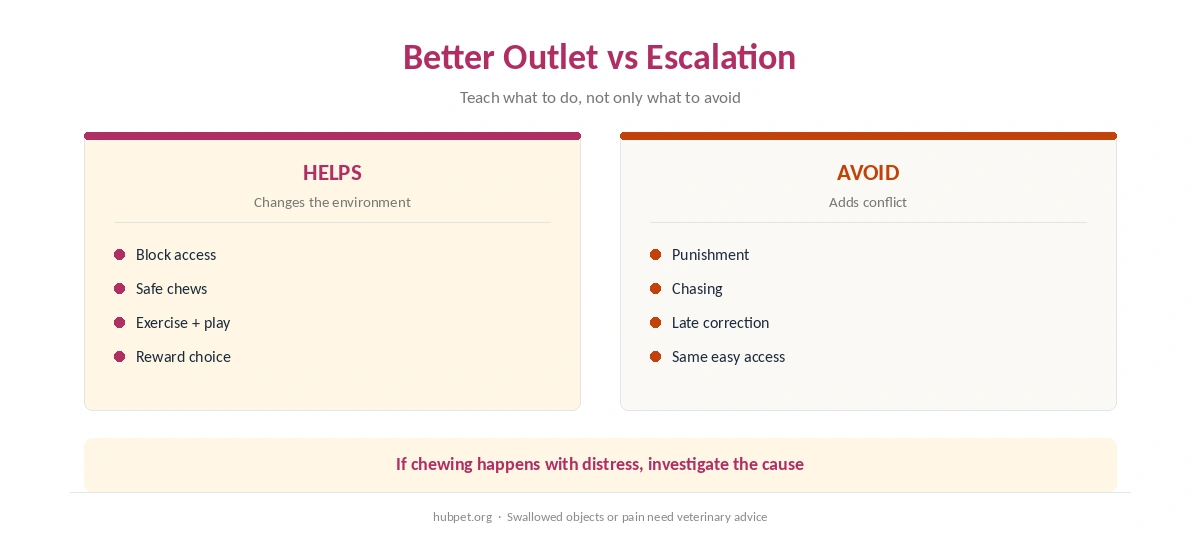
How to stop dogs from chewing furniture is to combine prevention with a better outlet. Block access, supply safe chew choices, reward the right object, and add suitable activity. If the pattern points to anxiety or a medical risk, treat that cause as the priority instead of escalating punishment.