
A soft cat bed can sit unused while the cat sleeps in its cardboard shipping box. That does not mean your cat is stubborn. Location, scent, visibility, temperature, and ease of escape may matter more than a product photograph. Start with where your cat already chooses to rest, then decide whether a new bed adds anything useful.
Cats Protection recommends several quiet, safe sleeping options rather than assuming one bed suits every cat. A sudden withdrawal into hiding or change in rest patterns can signal illness or stress; consult a veterinarian if behavior shifts. Our veterinary information disclaimer explains the limits of general advice.
Read your cat’s preferred resting places first
Observe your cat on two ordinary days. Record whether they curl in a sheltered spot, stretch in an open area, perch above the floor, or follow a sunny patch. Note busy hours, other pets, and drafts. This simple observation gives you more useful information than an estimated breed size or a generic cozy-bed ranking.
Cats Protection describes cats rotating their sleeping locations and choosing places where they feel safe. A cat that moves between two windowsills may want two accessible resting options rather than one expensive centerpiece. Keep familiar areas available while testing a new surface.
Open mat, bolstered nest, or enclosed cave?
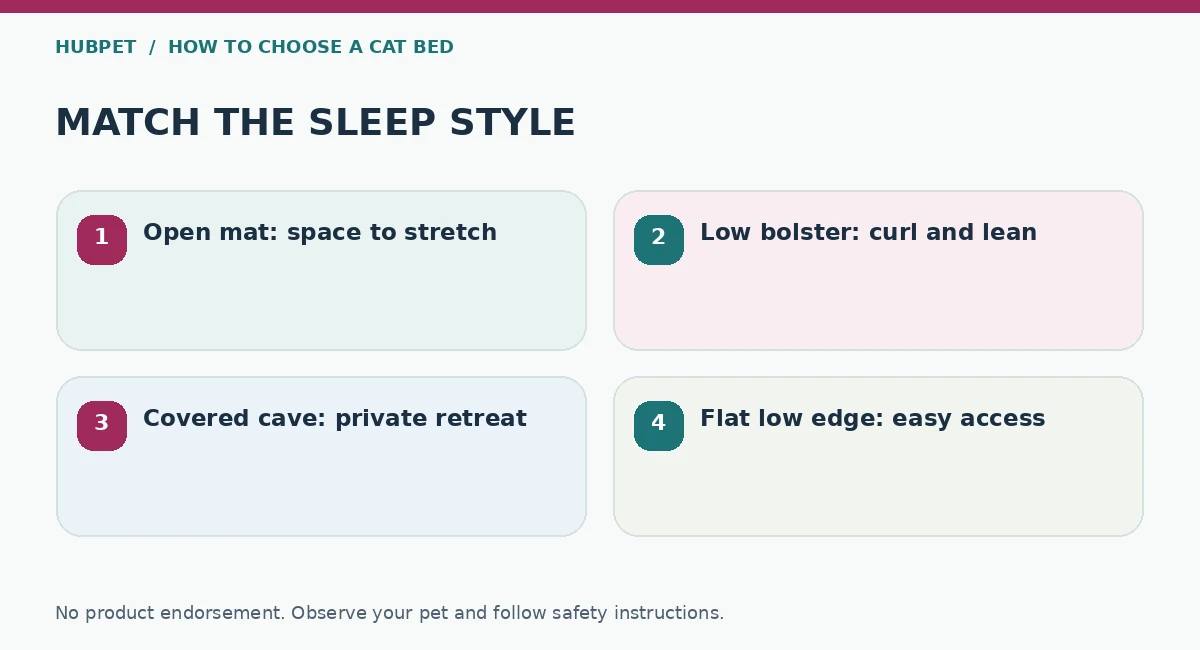
An open mat gives an easy exit and ample room for stretching. A low bolster can offer a boundary for cats that curl and lean their heads against an edge. A cave-shaped bed may appeal to a cat that already seeks hidden spaces. Each design is a possible match, not a universal personality test.
Make sure an enclosed bed has adequate opening space, a stable base, and no dangling decorations. Never trap or push a cat into a cave bed. Our guide to cats and boxes explains why a simple enclosed choice may already meet the need.
Measure usable space, not the decorative footprint
Watch your cat when fully asleep. Measure an approximate curled diameter or stretched body outline, then allow room for turning. Thick rolled rims reduce interior space, while collapsible sides may not hold their listed shape. Use product dimensions as a starting point and picture the actual sleeping area inside them.
A snug nest may suit a small cat that curls consistently, but it should never restrict changing position. For an older cat, consider a broad flat surface with a low approach rather than a narrow, high-sided bowl. Evaluate fit by comfortable movements, not an arbitrary size label.
Placement usually matters more than fabric
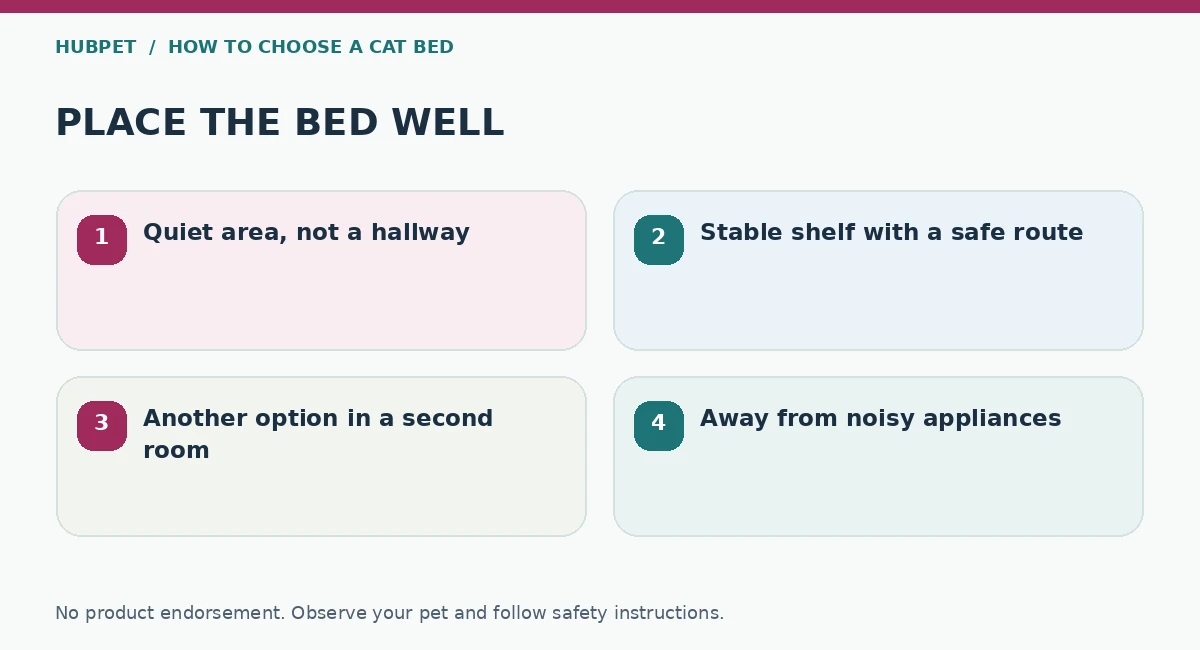
Place a trial bed near a site the cat already chooses. Keep it away from noisy appliances, busy walkways, drafty doors, and a dog’s main traffic lane. In a multi-cat home, provide separate resting choices so one cat cannot block another. Cats Protection advises several resources and quiet escape options.
If you offer an elevated location, secure the furniture and make the approach safe. A cat should not need a risky leap to reach the bed. For ideas about vertical spaces, see our safe cat climbing guide. An accessible low option is essential for cats with reduced mobility.
Texture, scent, and temperature can change preferences
Some cats like fleece, others choose a thin cotton towel or an unpadded shelf. Try a familiar, clean-smelling blanket before paying for specialty fabric. Avoid strong fragrance detergents and air fresheners near the resting place. Give a cat time to investigate without adding attention that may make the spot feel less private.
Warmth is appealing, but a bed should not be trapped next to a radiator or space heater. Cats Protection recommends warmth without placing beds too close to heat sources. A thick bed can feel too warm in summer, so retain a cooler alternative. Observe your cat’s choice across room temperatures.
Choose materials you can actually wash
Look for a removable cover, clear laundering instructions, and a base that dries fully. Check whether inner padding can be cleaned after an accident. A bed that traps moisture or retains strong odor may be less usable than a basic washable towel. Inspect decorative bows, strings, and loose buttons before offering a new bed.
Washing too often with strong fragrances can make a familiar resting spot smell strange. If possible, retain a spare familiar blanket during cleaning. Replace flattened, damp, or damaged filling. In shared homes, regular laundering and separate sleeping areas support hygiene without forcing cats into one location.
Plan for kittens, senior cats, and multi-cat homes
Young cats may climb, chew attachments, or roughhouse inside soft caves. Check every seam and avoid dangling strings. A senior cat may need a wider, lower entry and a stable non-slip approach. For cats with stiffness or changed jumping habits, request a veterinary assessment rather than diagnosing age-related pain from bed preference.
Households with several cats need multiple choices in different areas; placing all beds in one corner can create a bottleneck. Cats Protection recommends distributing resources and letting each cat retreat. Our senior-cat comfort guide covers household access.
Try a no-pressure seven-day placement experiment
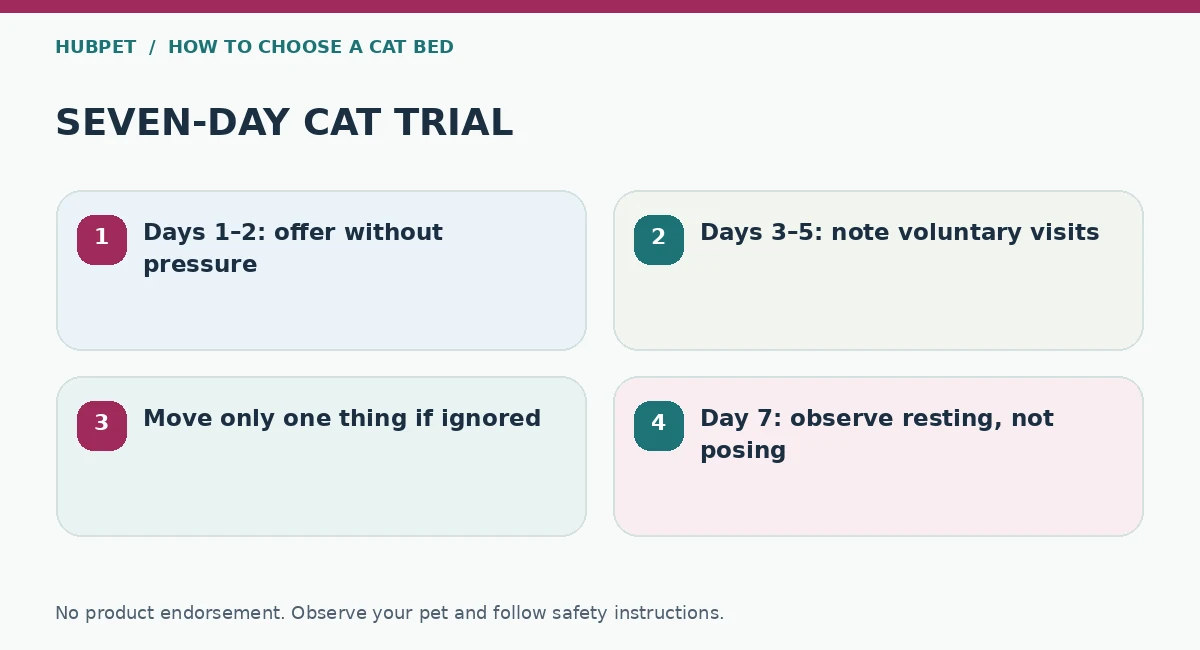
For the first two days, place a clean folded blanket or the chosen bed near a preferred sleeping place without moving the original spot. Keep the new item stable and let your cat approach freely. On days three through five, note voluntary sniffing, entering, and resting. Do not lift your cat onto the surface or insist they remain.
If ignored, change one variable: move the bed to a quieter spot, fold down a removable rim, or place a familiar blanket on top. By day seven, use actual voluntary resting as evidence of fit. A cat that prefers the cardboard box has still told you something valuable about enclosure and scent.
Avoid a costly solution to a placement problem
Before buying another bed, check whether the new spot competes with a favorite perch or puts the cat in view of another pet. A more expensive cushion will not fix an unsafe route, a noisy washing machine, or a draft. Start with comfort and control over the environment before comparing fabric finishes.
A shopping shortlist should include usable dimensions, access, stable construction, washable material, and placement options. When you can meet the need with a familiar blanket on a secure shelf or in a box, that may be the better choice. The goal is restful choice, not a specific product.
The best cat bed is one your cat can choose freely
Cats spend many hours resting in different locations. Providing variety, privacy, and easy movement makes a bed more useful than a fashionable shape alone. Watch what your cat does across ordinary days rather than judging success from one posed photo or a single curious sniff.
Keep a cool option, an accessible quiet option, and one familiar alternative where space permits. If your cat suddenly abandons usual beds while also eating less, hiding more, or moving awkwardly, ask a veterinarian for advice. Bedding is a comfort tool, not a health diagnosis.
How We Research
We compared animal-welfare and veterinary guidance with practical construction and use-case criteria. We checked the linked sources on October 26, 2026, and kept shopping observations separate from clinical advice. HubPet did not test, rank, or endorse individual products. Learn more at About HubPet.
Sources
Cats Protection: Where Do Cats Sleep?. Accessed October 26, 2026.
Cats Protection: How to Create the Ideal Home for Your Cat. Accessed October 26, 2026.
Cats Protection: Preparing Your Home for a Cat. Accessed October 26, 2026.
Preferences differ. Start by watching whether your cat normally stretches on open surfaces or curls into covered hiding spots; offer options rather than assuming one shape.
A box may offer familiar scent, stable walls, or a quieter position. Try matching the location and privacy before buying another bed or forcing your cat to use one.
Choose a quiet place with an easy escape route, away from appliances and traffic. A secure elevated perch can work if the cat can reach it safely.
Offer multiple separated, accessible resting places so one cat does not control them all. Some cats share by choice, but sharing should never be required.
Follow the care label and remove packaging odor when needed. Avoid strong fragrances, let the fabric dry fully, and consider a familiar blanket to help acceptance.