
Raised dog beds, sometimes called elevated cots, suspend a sleeping surface above the floor. Their open underside can encourage airflow and make quick wipe-downs easier. However, the frame adds new questions about wobble, height, paws, and safe entry. A cot should feel stable to the dog who uses it.
If your dog has pain, weakness, or trouble standing, discuss bed access with a veterinarian rather than assuming elevation always helps. This is a shopping-neutral safety guide, with additional context in our veterinary information disclaimer. Start with the room and the dog’s movements.
The main advantage: air can pass below the bed
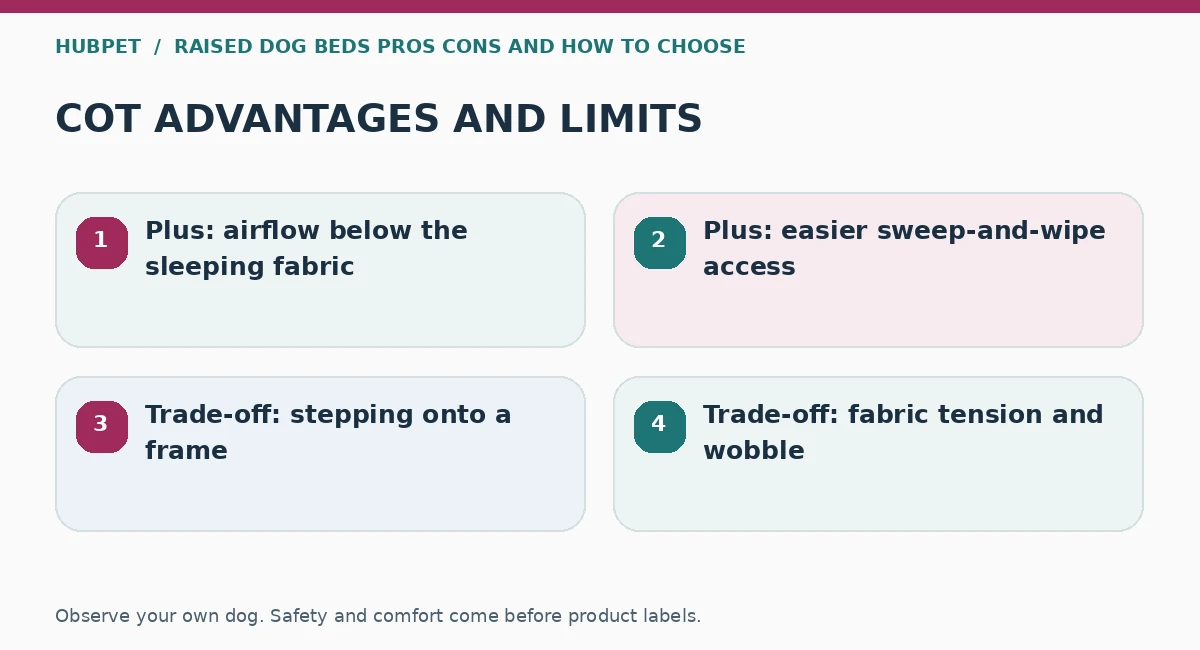
A cot lifts the fabric off the ground, leaving space for air to circulate beneath it. That can make the surface feel different from a plush foam mattress, especially for dogs that leave thick beds for cooler flooring. A wipe-clean mesh or coated textile may also shed dirt more easily than padded fabric.
Yet airflow is not automatic cooling. Sunlight, room temperature, fabric type, and the dog’s coat all affect comfort. Never leave a dog in unsafe heat just because a cot seems breathable. Provide shade, water, and an appropriate indoor resting option during hot conditions.
The key trade-off: a frame creates a step
Every elevated bed asks the dog to step up and down. A low cot may suit a mobile dog, while a tall frame can create a fall or strain risk. For dogs with stiff joints, the ideal design depends on individual movement. VCA recommends avoiding sleeping surfaces that require difficult climbing.
Watch the dog approach a low trial surface without pressure. Can all paws get on comfortably? Does the dog need to jump, twist, or hesitate? If so, consider a lower mat. Our senior home-access guide explains why safe transitions matter.
Look for a stable, level frame
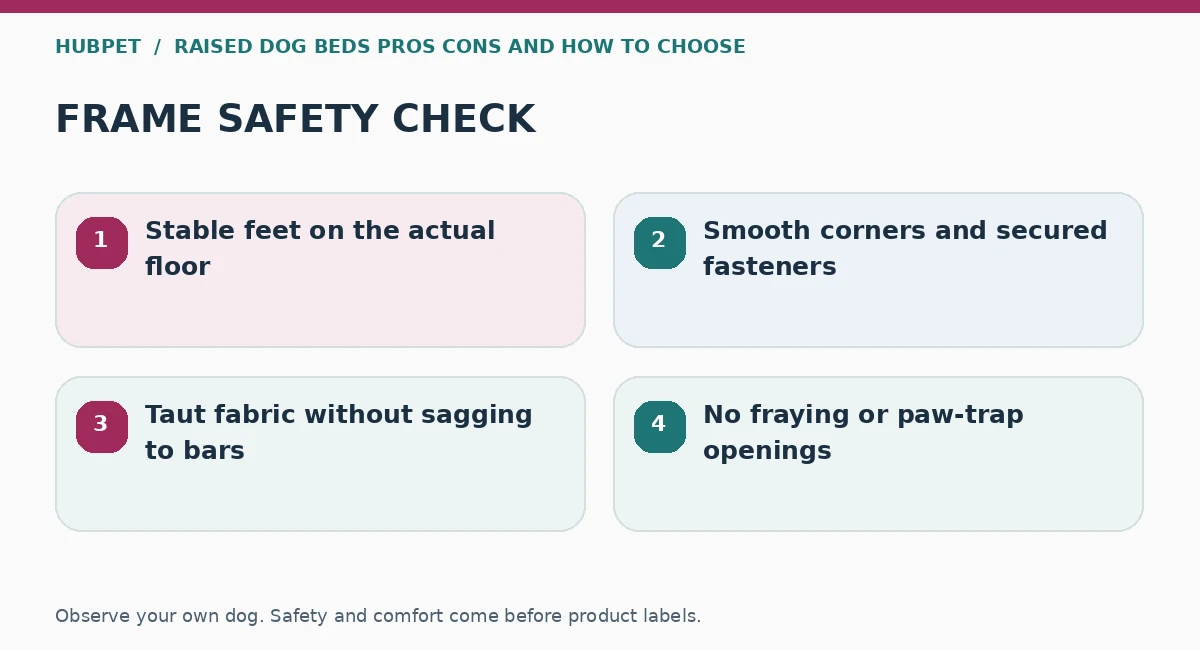
Push gently against the unloaded cot from several directions. It should not rock, twist, or scoot across the floor. Check each corner and joint for movement, then inspect assembly instructions and any locking parts. On slick floors, grip matters. An unstable frame can frighten a dog even when the fabric looks comfortable.
If the maker lists a weight capacity, treat it as one factor rather than proof of comfort. Match the bed to the dog’s size and normal movements. Avoid a cot that bends dramatically when a dog turns. Review the manufacturer’s guidance about indoor or outdoor placement and routine frame checks.
Inspect fabric tension and edge safety
The sleeping fabric should support the dog without sagging to the bars beneath. Look for intact stitching and a smooth boundary where cloth meets frame. Exposed sharp ends, fraying edges, or openings that could trap a paw are reasons to avoid the product. Also, check whether fabric can be replaced without replacing the whole frame.
Some dogs scratch before settling or push against an edge while standing. Observe those habits rather than relying on photos of perfectly still dogs. If the bed develops tears, stop using it until repairs are safe. Remove loose parts that could become chewing hazards.
Measure both the cot surface and the floor footprint
The product’s outside dimensions include legs and frame tubes. A dog needs enough usable fabric to lie in a preferred position, turn, and extend paws. Meanwhile, your room needs clearance around the cot so no one trips over the legs. Measure both the resting dog and the proposed location.
Do not squeeze a frame against a doorway or narrow passage. Leave a safe route to water and out of the room. For large dogs, confirm the stated interior surface, not just the boxed measurements. Avoid choosing by breed pictures alone.
Compare cleaning benefits with real maintenance
A raised cot may let you sweep or mop underneath without moving heavy cushions. Some fabrics wipe clean or detach for washing. However, joints and frame feet can collect hair and dirt. Check the care label and whether detergent, sunlight, or weather exposure harms the material.
Inspect the underside for snagged hair, worn fasteners, or mildew after damp conditions. Dry the cot before storage. A washable mat can add warmth in cooler rooms if it stays secure and does not introduce a tripping edge. See HubPet’s home-cleaning tips for routine upkeep.
A cot is not automatically an orthopedic bed
An elevated fabric surface supports weight differently from a foam mattress. Some dogs enjoy the taut feel, while others prefer cushioning at hips or elbows. Labels cannot tell you whether a particular cot meets a dog’s medical needs. Watch actual resting behavior and avoid unsupported pressure-relief promises.
For a dog with arthritis or other mobility concerns, prioritize entry height, grip, and veterinary guidance. A low cot might work for one dog while a floor-level padded surface works better for another. Our senior dog comfort overview can help frame the choice.
Indoor, porch, and yard use have different risks
Indoors, a flat nonslip base matters. On a porch, wind and wet surfaces add concerns. Outdoors, keep beds in reliable shade and supervise the dog. A raised bed must never serve as an excuse to leave a dog exposed to extreme temperatures. Examine whether the product suits its intended environment.
Place the cot away from railings, stairs, and areas where a dog might leap off a height. Do not put it on unstable furniture or platforms. If children are present, teach them to leave the resting dog undisturbed. The bed should be a calm option, not a play structure.
Introduce a raised bed without forcing it
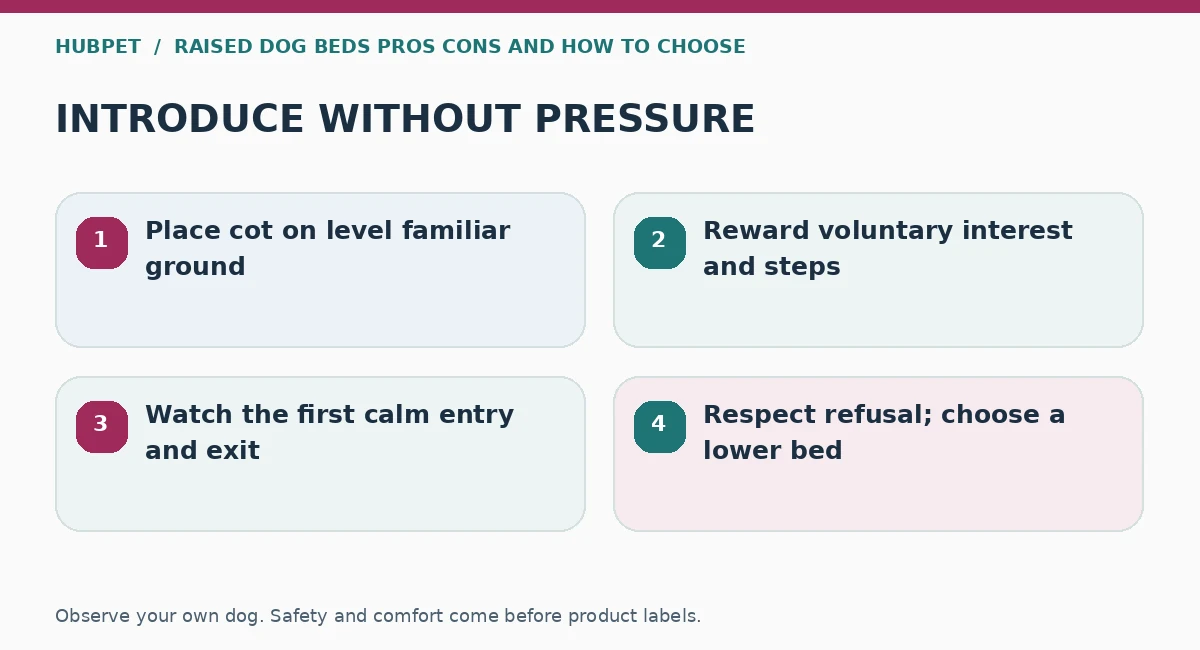
Set up the cot on level ground in a familiar room. Let the dog sniff and investigate. Reward voluntary steps toward and onto it, and allow the dog to leave immediately. Never lift a resisting dog onto a frame. A cautious dog may need several short sessions to understand the new surface.
Watch the first normal exits. If legs slip or the frame shifts, stop the trial and correct the setup or choose another design. If the dog avoids the cot repeatedly, respect that preference. A different bed type can be a better match.
A final cot buying and safety checklist
Compare usable fabric area, low-step access, frame stability, feet that grip the floor, smooth edges, fabric tension, cleaning method, and replacement part availability. Then consider airflow as an added benefit. Do not reverse the priority list just because a photo suggests a cool summer retreat.
Inspect the cot periodically, especially after moving or cleaning it. Replace worn fabric and unstable parts before use. Above all, let the dog’s safe, voluntary resting behavior guide your decision. A raised bed offers a distinct option, not a universal upgrade.
How We Research
We reviewed veterinary care and animal-welfare guidance alongside material-specific shopping information. Sources were checked on October 26, 2026; practical buyer observations remain distinct from clinical claims. HubPet does not endorse brands, claim hands-on product tests, or recommend a bed as a treatment. Learn about HubPet at About HubPet.
Sources
American Kennel Club: The Importance of a Good Dog Bed. Accessed October 26, 2026.
American Kennel Club: How to Clean Your Dog’s Bed. Accessed October 26, 2026.
PetMD: How to Pick Out Large Dog Beds for Giant Dog Breeds. Accessed October 26, 2026.
VCA Animal Hospitals: Creating a Comfortable Home for Your Mobility Compromised Dog. Accessed October 26, 2026.
Their open underside may allow more airflow, but room temperature, fabric, and the dog’s needs still matter. A cot does not protect a dog from dangerous heat.
Some can, but the height and stability must match the dog’s movement. A low-entry ground bed may suit a stiff or weak dog better; ask a veterinarian when needed.
Check for rocking, twisting, sliding feet, loose joints, and sagging fabric. Test on the actual floor before inviting the dog to use it.
Follow the maker’s guidance and provide shade, water, and supervision. Check weather, fabric condition, and safe placement. A cot is not shelter from heat or cold.
Offer voluntary exploration and brief rewards, never force entry. If the dog still avoids it, try a lower or different resting surface.