
A waterproof dog bed should help keep spilled water, muddy paws, or occasional accidents from reaching a cushion. Unfortunately, a listing may use waterproof for a coated cover, a separate liner, or merely a water-resistant fabric. These constructions behave differently at seams, zippers, and after repeated washing. See our veterinary information disclaimer if accidents relate to new health or mobility changes.
Instead of buying on an adjective, follow the path liquid would take from the surface to the filling. This guide shows where to inspect, how to compare a full barrier with a partial finish, and when cleanliness and easy drying are more valuable than a dramatic marketing demonstration.
Separate water-resistant fabric from a waterproof barrier
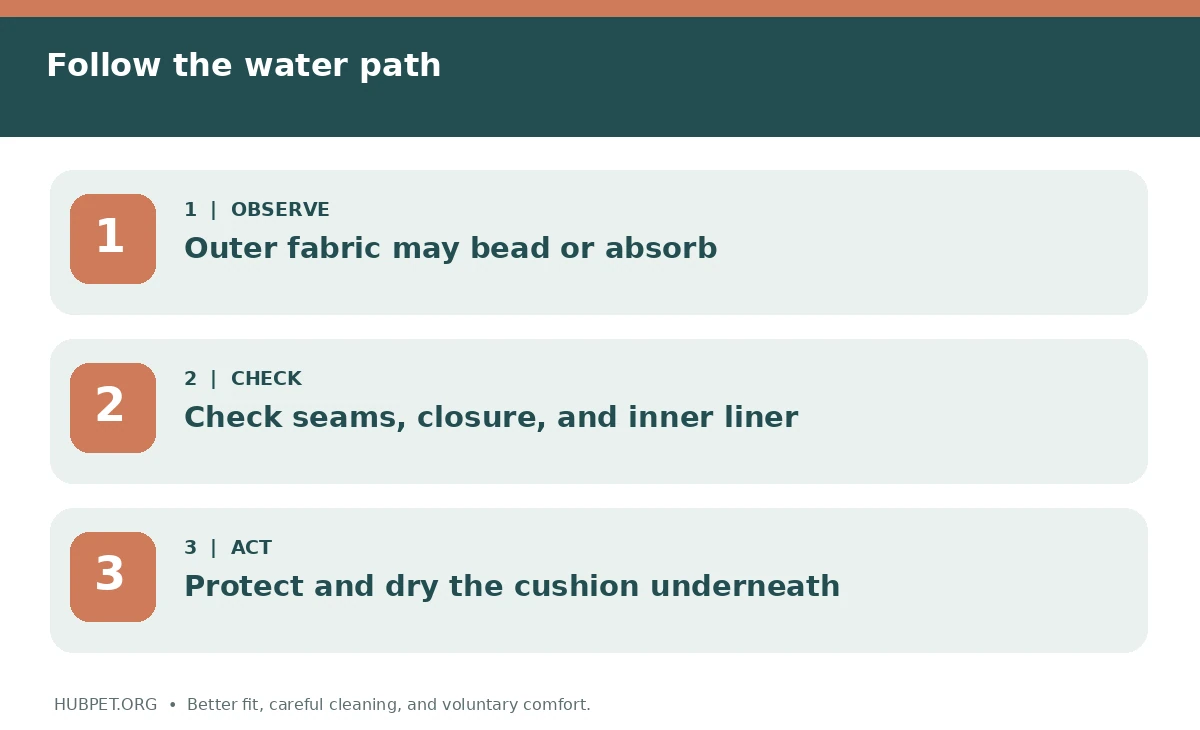
Water-resistant fabric may bead small splashes for a while yet allow sustained wet contact through. A waterproof liner aims to prevent liquid penetration, but its performance depends on seams, openings, and wear. Read the actual materials and care instructions, not just a product headline.
Ask whether the protection sits in the outer washable cover, around the foam, or under the entire bed. A coated top cannot protect a cushion when water enters from the side. If you need regular accident cleanup, a replaceable all-around liner may be more useful than a decorative finish.
Inspect stitching, zippers, and the underside
Seams are common weak points because needle holes and fabric joins interrupt the surface. Check whether a barrier continues around corners and under the bed. A hidden zipper can be less inviting to chew, but it may still allow liquid through unless the design explains its seal.
Examine product photographs for a continuous inner envelope. Avoid assuming that a plastic-looking base makes the entire bed waterproof. For a physical purchase, gently separate the cover and liner to understand which layer protects the insert. Never damage merchandise or rely on an unapproved store test.
Match fabric texture to the dog and floor
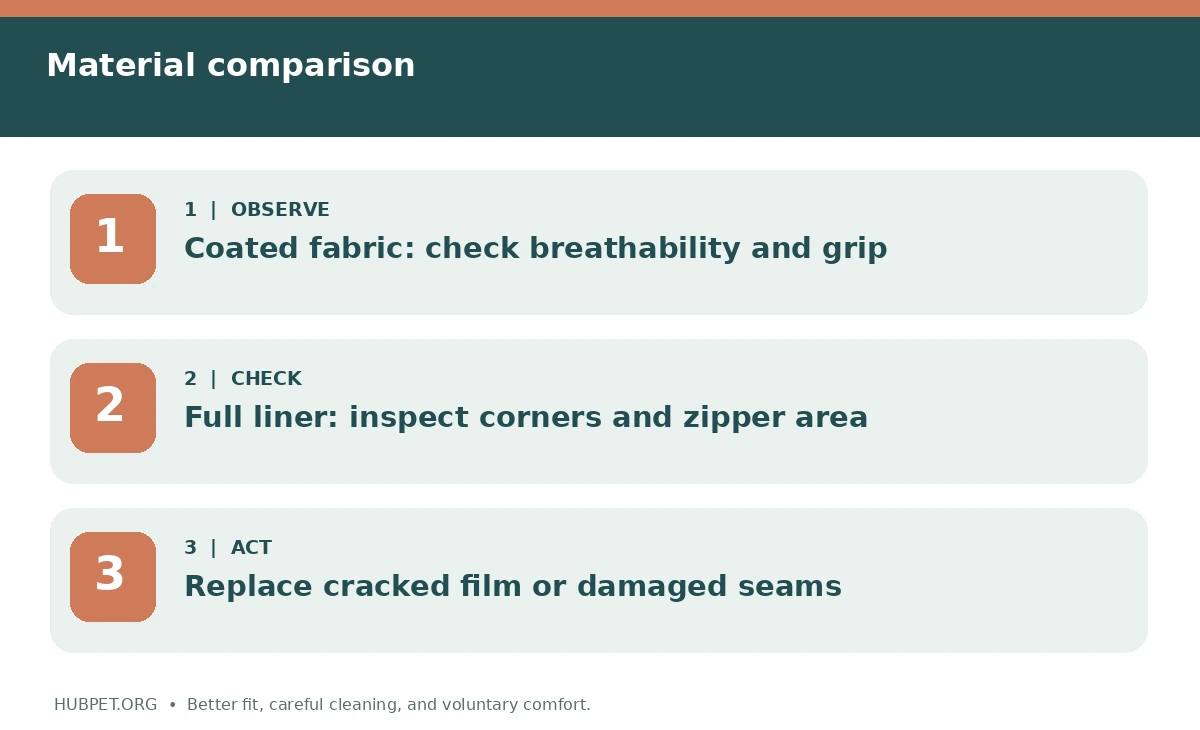
A slick coated cover may wipe clean but slide on tile or feel unpleasant to lie on. Soft fabric can be comfortable yet absorb moisture before a liner stops it. Compare grip, breathability, noise, and whether your dog avoids synthetic textures. None of those factors alone proves durability.
If the dog has trouble rising, prioritize a stable non-slip base and accessible height. Waterproofing should not introduce a fall risk. Try a low bed in the intended room and watch the dog sit, turn, and stand without the cover shifting beneath the paws.
Use a practical cleaning-path checklist
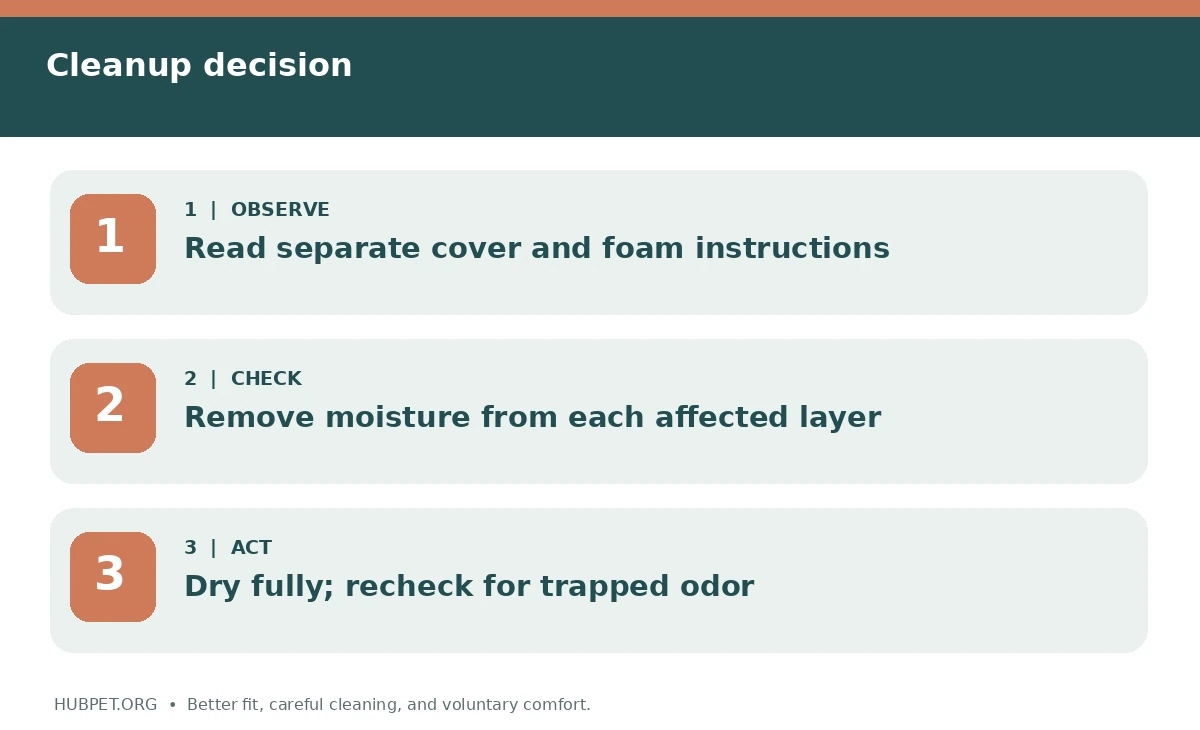
Imagine an accident at the center of the bed. Can you remove the outer cover quickly? Does it expose a separately protected insert? Could moisture collect in a folded corner? Follow each washing step on the label and find a place where parts can dry fully before reuse.
A cover that goes into the washing machine is helpful, but that does not mean foam or sealed liners can tolerate the same cycle. Some coatings degrade under high heat or harsh laundry products. Treat care instructions as material limits rather than a suggestion.
Consider odor and repeat moisture
Damp filling can remain unpleasant even when the outside looks clean. If the inner cushion becomes wet, remove it promptly and follow the maker’s approved cleaning guidance. Replace inserts that cannot be dried adequately or keep holding a sour smell. Surface fragrance cannot repair saturated foam.
For a dog with frequent urine accidents, consider washable layering and easy access rather than complex tufted shapes. Repeated new accidents should prompt a veterinarian visit because bedding changes cannot explain or treat urinary problems. Protect skin by keeping the resting surface dry.
Review chew and chemical exposure risks
Cracked coatings, torn liners, loose zipper pulls, and exposed foam should end the trial. A dog that eats fabric pieces can develop serious complications. Move damaged bedding out of reach and ask a veterinarian about suspected ingestion instead of assuming fragments will pass safely.
Clean with products compatible with the fabric and safe for a pet household. Keep your dog away while cleaners are in use and let the bed dry completely. Do not apply strong disinfectants, perfumes, or waterproofing sprays that the manufacturer has not approved.
Evaluate location and actual moisture source
An entryway mat faces damp paws and small spills; a porch bed faces humidity and ground moisture. Different situations justify different barriers. A waterproof surface does not prevent a cold, wet outdoor location from being unsuitable as a resting place, especially during harsh weather.
Avoid placing a liner on top of a slick surface where it can fold or trap paws. If the bed sits on a tile floor, test whether its underside collects condensation. A dry breathable placement and regular checks can matter as much as the material in the cover.
Build a replacement and inspection rule
After cleaning, feel corners, zipper tracks, and the underside for trapped dampness. Look for peeling film, holes, or frayed fabric after each heavy use. If the protective layer has failed, replace the affected component rather than advertising the remaining cover as waterproof.
Choose a spare removable cover only when it matches the actual bed dimensions and closure style. The purchase is successful when you can clean an ordinary mess thoroughly and the dog still rests comfortably, not when the product survives a staged water-pouring video.
How We Research
Our editorial process compares animal-welfare guidance and veterinary advice relevant to this specific dog-bed construction. We compare the use case, practical safety limits, sizing, maintenance, and alternatives. This is editorial buying guidance, not hands-on product testing; no particular maker or product receives our endorsement. We do not diagnose an individual dog or claim veterinary approval. Sources were reviewed on October 26, 2026. Read more about HubPet and our editorial approach. This guide does not replace veterinary advice for your individual animal.
Sources
ASPCA: General Dog Care. Accessed October 26, 2026.
ASPCA: What Pet Parents Need to Know About Corrosive Household Products. Accessed October 26, 2026.
American Kennel Club: The Importance of a Good Dog Bed. Accessed October 26, 2026.
No. Water resistance may delay wetting, while a waterproof barrier aims to keep liquid from passing through. Seams, zippers, and wear still matter.
Not necessarily. Liquid can enter at openings or unprotected sides. Check whether a continuous protective liner surrounds the inner cushion.
Only the components explicitly approved by the manufacturer. High heat and harsh chemicals may damage coatings or foam, even when a cover is removable.
Inspect for peeling, split seams, damp foam after a spill, or persistent odor. Remove or replace damaged layers rather than relying on surface cleaning alone.
No. It may simplify cleanup, but new or frequent accidents deserve veterinary assessment and appropriate management beyond changing bedding.