
This article is general information, not veterinary advice. If your pet seems unwell, is in pain or may have eaten something harmful, contact your vet or an animal poison control line right away. Read our vet disclaimer.
Indoor cats may feel bored easily when they get too few outlets for play, predatory behavior, scratching, climbing, hiding, and choice. FelineVMA’s 2025 position statement says indoor-only cats can develop behavior or stress-related problems when essential environmental needs are missing.
Indoor Cats Can Feel Bored Easily: What They Need to Get Enough Stimulation
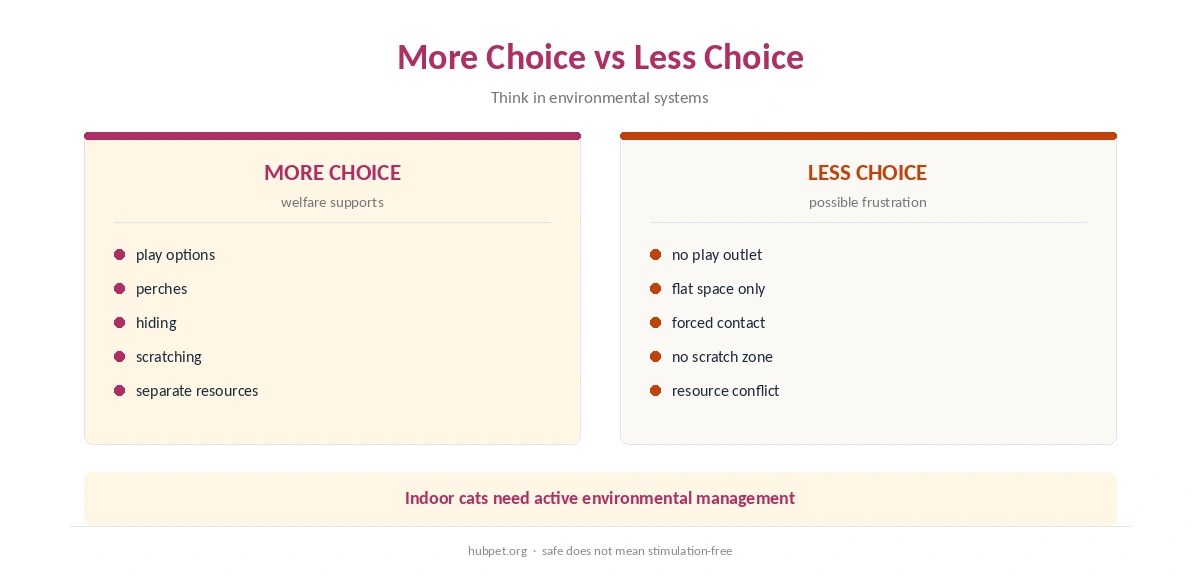
Every indoor cat can feel bored easily if they get too few ways to perform normal behaviors. FelineVMA’s five environmental pillars include a safe place, separated resources, play and predatory opportunities, predictable positive social interaction, and respect for feline sensory needs. The indoor-cat care guide explains why an indoor lifestyle still needs active daily management.
A 2023 Animal Welfare study analyzed survey responses from 1,591 cat guardians in 55 countries. Guardians who reported more games and higher playfulness scores also reported higher cat quality-of-life scores. Play-related factors also correlated with guardian-cat relationship measures. This observational study shows associations; it does not prove that one exact amount of play prevents boredom.
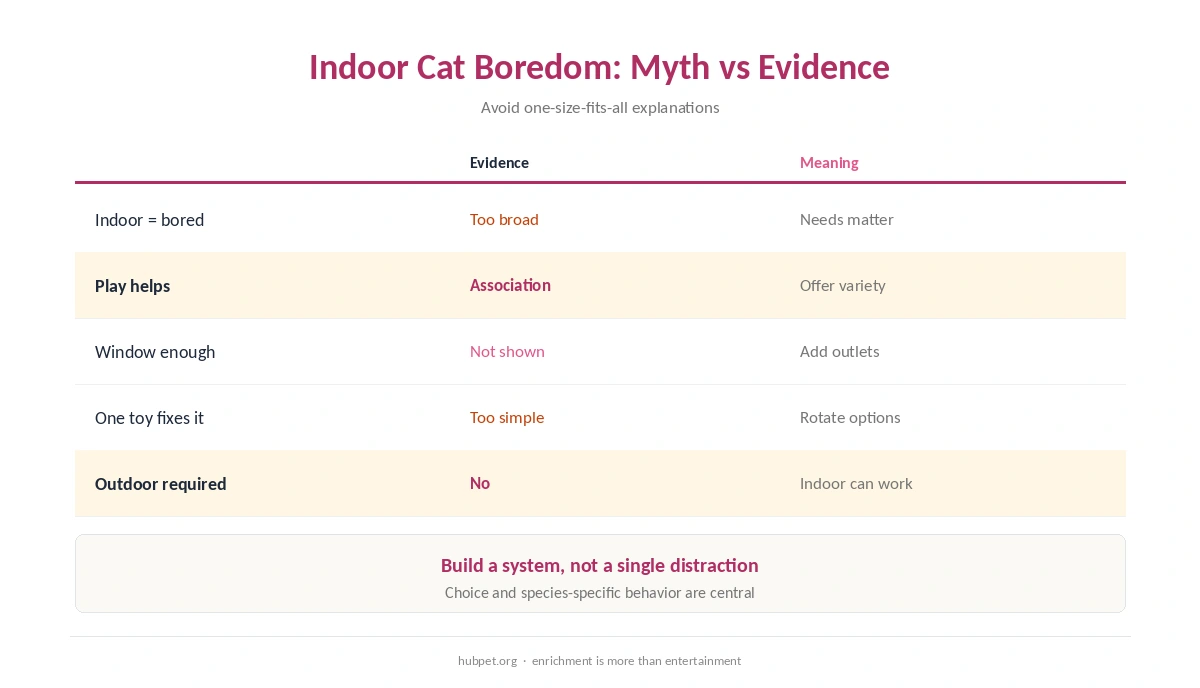
| Claim | Evidence says | Practical meaning |
|---|---|---|
| Indoor = bored | Too broad | Environment matters |
| More play is useful | Supported association | Offer varied play |
| A window is enough | Not established | Provide several outlets |
| One toy solves it | Too simple | Rotate activities and resources |
| Cats require outdoor access | No | Indoor welfare can be good when needs are met |
When Indoor Cats Feel Bored Easily: How to Get More Variety Into the Home
Indoor enrichment research emphasizes several behavior systems rather than one magic toy. Herron and Buffington’s 2010 review notes that indoor cats retain natural behavioral needs. An indoor cat can feel bored easily when they get too few suitable outlets, so build variety around the behaviors this individual cat already chooses. For a closer look at the related behavior pattern, see why Cats Watch Out the Window for Hours.
Start with what the cat already chooses. A scratching-post setup gives a legal outlet for scratching. The sofa-scratching guide helps place that outlet where it matters. A calm retreat adds another choice.
Good litter-box placement and the daily cat care checklist cover basic environmental needs. Asking do indoor cats get bored easily is more useful when you also ask which normal behaviors the home supports.
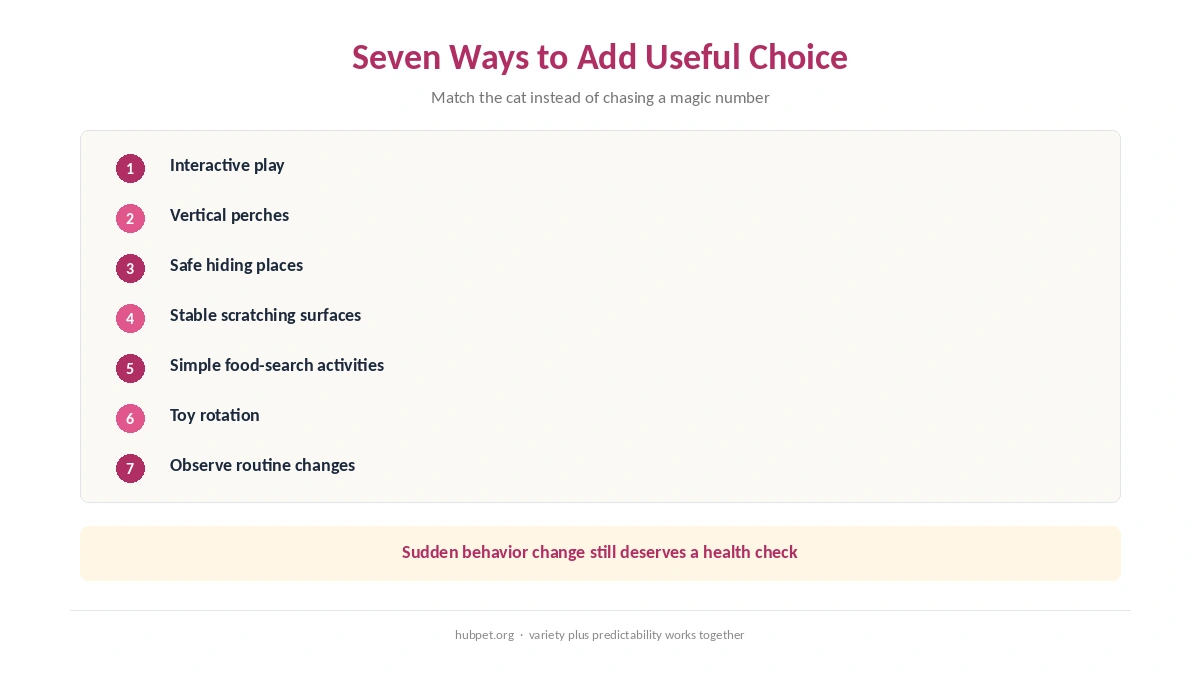
- Schedule short interactive play when your cat shows natural interest.
- Offer climbing, perching, and hiding choices in more than one part of the home.
- Provide stable scratching surfaces that match the cat’s preferred orientation and location.
- Use simple food-search or puzzle activities only if they fit the cat’s diet and do not cause frustration.
- Rotate some toys instead of leaving every object available all the time.
- Let the cat end social interaction rather than forcing continued handling.
- Watch for changes in sleep, grooming, appetite, litter-box use, activity, and social behavior.
When “Bored” Behavior May Need a Different Explanation
Indoor cats can feel bored easily, but you should not use that idea to explain every zoomie, scratch, or vocalization they get into. Cat zoomies can occur in normal activity patterns, and knocking objects can reflect exploration and learned consequences. Likewise, prey-return behavior has its own evidence, so do not reduce it to boredom.
However, sudden withdrawal, reduced play, altered grooming, or litter-box changes can overlap with pain, illness, or anxiety. Indoor cats may seem bored easily when they get quieter, but a new behavior change still needs context. Compare cat stress signs and pain signs. If your cat suddenly starts hiding, use the sudden-hiding guide and contact your veterinarian when the change persists.
How We Research
HubPet uses veterinary organizations and research rather than personal anecdotes. We read these sources on October 11, 2026: FelineVMA indoor-cat position statement, 2025, Foreman-Worsley et al. play and welfare survey, 2023, 1,591 guardians, Herron and Buffington indoor-cat enrichment review, 2010. See How We Research for our method.
Do Indoor Cats Get Bored Easily FAQ
Yes. FelineVMA states that indoor welfare depends on meeting species-specific environmental needs, not simply on whether a cat goes outside.
Look for a lack of normal outlets and changes in activity, play, scratching, social behavior, grooming, or other routines. Rule out health issues when behavior changes suddenly.
A window can add stimulation, but evidence-based guidance calls for several resources and behavioral outlets rather than one feature.
Variety can help, but placement, interaction, scratching surfaces, vertical space, hiding, and predictable routines also matter.
Not by itself. Judge sleep against the individual cat’s baseline and consider health if sleep or activity changes suddenly.