
This article is general information, not veterinary advice. If your pet seems unwell, is in pain or may have eaten something harmful, contact your vet or an animal poison control line right away. Read our vet disclaimer.
How to support an aging cat at home begins with noticing change early and making everyday resources easier to reach. The 2021 AAHA/AAFP Feline Life Stage Guidelines say new or unusual behavior in a senior cat should be evaluated for medical causes. Reduced jumping or litter-box changes can have medical causes. So can altered sleep, vocalization, withdrawal, sensory change, or cognitive change. Do not write these changes off as “just old age.”
Home changes can still make life easier while a veterinarian investigates the cause. The 2023 AAHA Senior Care Guidelines recommend environmental modifications such as nonslip footing, suitable litter-box placement, ramps where appropriate, and accessible resting areas for mobility-limited pets. HubPet’s senior-dog comfort guide uses the same principle: reduce effort without guessing at a diagnosis. For the matching checklist, see senior Pet Home Support Checklist.
How to Support an Aging Cat at Home With Easier Access
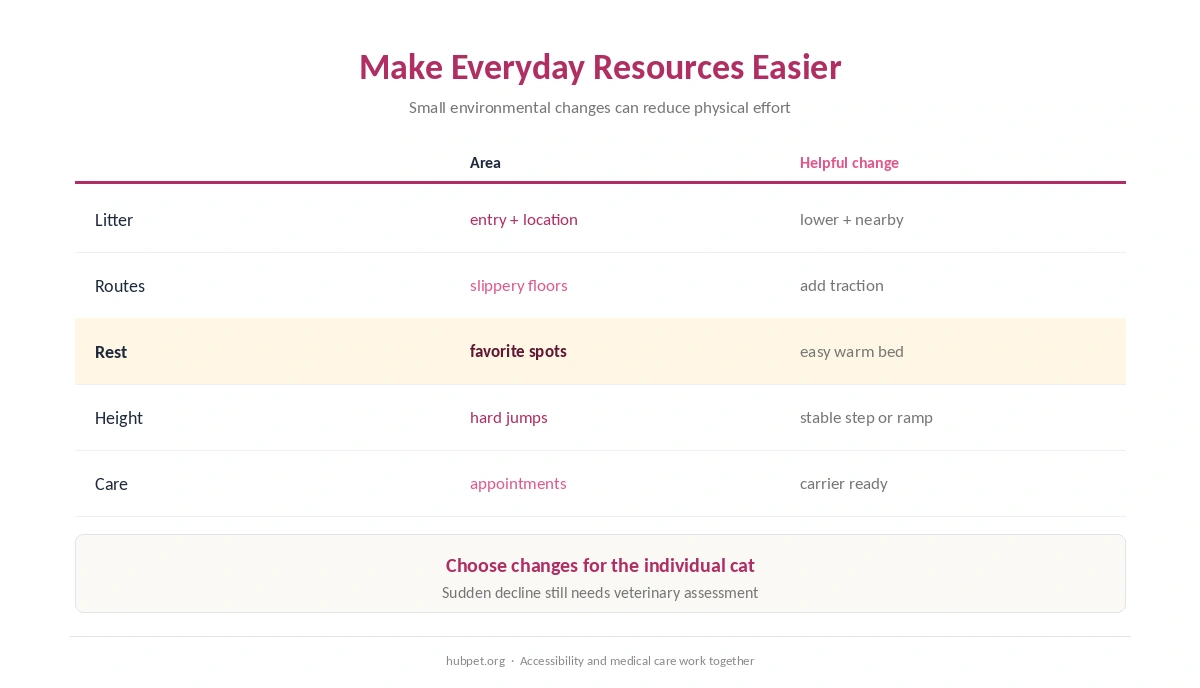
Put essential resources where the cat already spends time. A practical way to support an aging cat at home is to shorten the distance between rest, food, water, and litter areas. The 2021 AAHA/AAFP senior-cat litter-box guidance says mobility changes can make tall-sided boxes or stairs harder to manage. A lower entry and a nearby box can help some senior cats. The litter-box placement guide explains how quiet access and escape routes also matter.
Resting spots should be easy to enter and leave. The 2021 AAHA/AAFP guidance highlights warm, comfortable resting locations for senior cats. Shorter travel distances between resources can also help cats with reduced muscle mass or orthopedic problems. Use stable, nonslip routes to favored spaces. If a high perch has become difficult, apply ideas from safe climbing spaces without forcing the cat to jump.
| Home area | Senior-friendly adjustment | Why it helps |
|---|---|---|
| Litter box | Low entry, easy route, quiet location | Reduces effort and makes elimination access simpler |
| Resting place | Stable, padded, easy-to-enter bed | Supports comfortable rest without a difficult climb |
| Floor route | Nonslip runners on slippery paths | Improves traction between essential resources |
| Food and water area | Keep resources easy to reach and monitor | Makes routine changes easier to notice |
| Favorite view | Use a stable intermediate step or lower perch | Preserves choice without requiring a large jump |
How to Support an Aging Cat at Home Without Missing Medical Changes
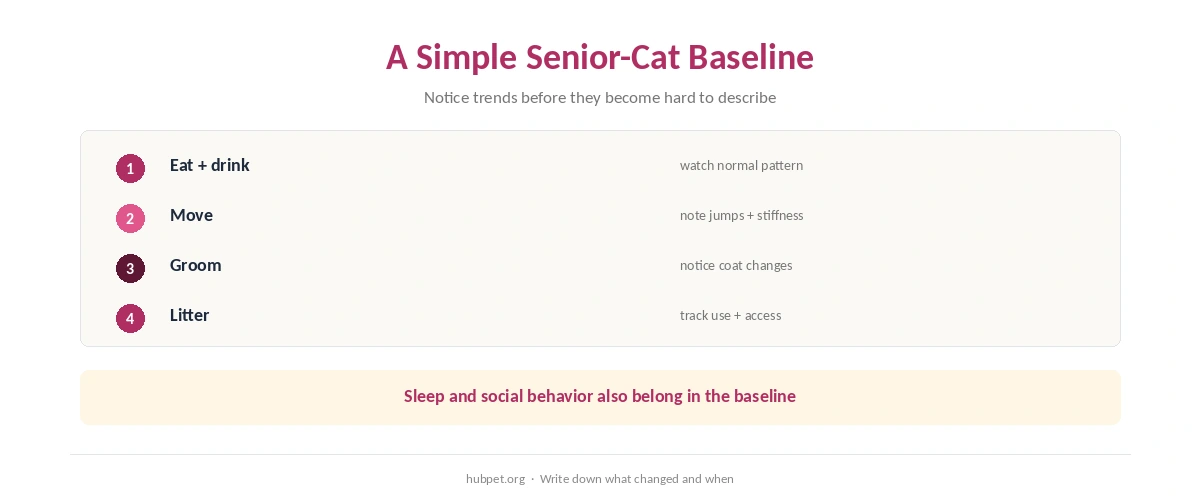
Keep a simple baseline for appetite, drinking, litter-box use, grooming, mobility, sleep, and social behavior. This is part of how to support an aging cat at home without confusing observation with diagnosis. The Merck Veterinary Manual, reviewed and updated in 2025 recommends veterinary checkups at least twice yearly or more often for senior cats. Your veterinarian may recommend a different schedule based on the individual cat.
Grooming can change with age. Cornell and AAHA sources note that older cats may groom less effectively, and mobility or discomfort can contribute. Use the gentle approach in stress-aware brushing and the monitoring steps in the healthy-coat guide. If matting, skin changes, or touch sensitivity appears suddenly, the home skin-check guide can help you record what you see before calling the veterinarian.
Keep handling predictable as well. Cooperative handling practice can make routine checks easier, while carrier familiarization and lower-stress vet-visit preparation reduce avoidable stress around appointments. The goal is not to perform a medical exam at home; it is to notice change and make professional care easier to access.
When to Call Your Vet About an Aging Cat
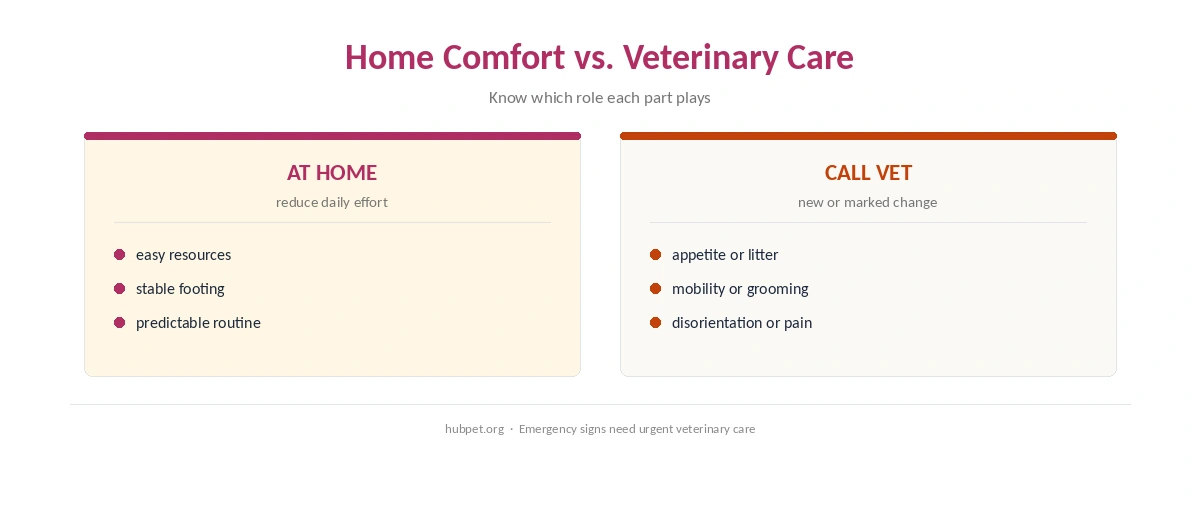
The 2021 AAHA/AAFP senior-cat guidance says new or unusual behavior deserves medical evaluation. Merck’s 2025 guidance tells owners to seek prompt care when a senior cat seems sick. Call your veterinarian for new appetite, drinking, grooming, or litter-box changes. Also call about new reluctance to jump, persistent stiffness, disorientation, major sleep changes, or a clear change in social behavior. Do not assume these changes are an inevitable part of aging.
Seek urgent care for trouble breathing, collapse, seizures, or major trauma. Repeated straining without passing urine also needs urgent veterinary attention. Use the pet emergency signs guide to recognize urgent patterns and the first-aid checklist to keep transport and contact information ready. If you notice signs of discomfort, the pain-signs guide can help you describe behavior changes without trying to diagnose them yourself.
For routine planning, keep the vet-visit checklist with notes on what changed and when. Also review the weekly care checklist so subtle shifts are easier to spot. Home monitoring is valuable because it gives the veterinarian a clearer timeline; it does not replace an examination.
How We Research
HubPet reviewed senior-cat sources on October 11, 2026. We used the 2021 AAFP Senior Care Guidelines, the 2021 AAHA/AAFP Feline Life Stage Guidelines, the 2023 AAHA Senior Care Guidelines, and the Merck Veterinary Manual, updated 2025. Our research process separates home comfort measures from diagnosis and treatment.
Make essential resources easier to reach, improve traction, protect comfortable resting places, keep routines predictable, and track changes in mobility, grooming, appetite, drinking, and litter-box use.
A lower entry can help some cats with mobility limitations. AAHA/AAFP guidance recommends accessible boxes and less unnecessary climbing for cats with mobility limits.
No single behavior proves illness. Discuss a new or marked change in sleep or activity with a veterinarian rather than dismissing it as age.
The Merck Veterinary Manual updated in 2025 recommends checkups at least twice yearly or more often for senior cats, while the individual plan should come from your veterinarian.
Trouble breathing, collapse, seizures, major trauma, or repeated straining without passing urine require urgent veterinary attention.
The Bottom Line on How to Support an Aging Cat at Home
How to support an aging cat at home is a combination of easier access, close observation, and timely veterinary care. Lower the effort needed to reach litter boxes, resting places, and favorite spaces, preserve traction and choice, and report new changes instead of writing them off as old age.