
This article is general information, not veterinary advice. If your pet seems unwell, is in pain or may have eaten something harmful, contact your vet or an animal poison control line right away. Read our vet disclaimer.
How to keep a pet’s coat healthy starts with appropriate grooming and regular skin-and-coat checks. Notice changes early instead of trying to diagnose them at home. VCA veterinary guidance accessed in 2026 says regular grooming removes loose hair and debris. It also helps owners notice tangles, parasites, lumps, and sensitive areas. Cornell feline guidance similarly recommends regular brushing or combing to keep a cat’s coat clean and to monitor the skin.
There is no single brushing or bathing schedule that fits every dog and cat. Coat length, texture, shedding pattern, age, mobility, and skin condition all matter. Use the coat in front of you as the guide. Ask a veterinarian or experienced groomer when tangles, skin changes, or handling difficulty make routine grooming hard.
How to Keep a Pet’s Coat Healthy With the Right Grooming
For dogs, VCA guidance says long, silky, or curly coats often need more frequent brushing. These coats tangle more easily than many short coats. The dog grooming guide covers a full routine. Preventing mats in long-haired pets focuses on areas that need extra attention.
For cats, Cornell guidance recommends regular brushing or combing. Grooming also gives you a chance to monitor the skin. If your cat dislikes brushing, use the low-stress steps in how to brush a cat without stress. End the session before the cat becomes distressed instead of holding them in place.
- Start with a tool that suits the coat type and use light, controlled strokes.
- Work in small sections and stop before the pet becomes frustrated or sore.
- Pay extra attention to friction areas where tangles form easily.
- Part the coat periodically so you can see the skin instead of only the hair surface.
- Remove loose debris gently; do not pick, scrape, or squeeze skin changes.
- Record new coat or skin changes so you can compare them over time.
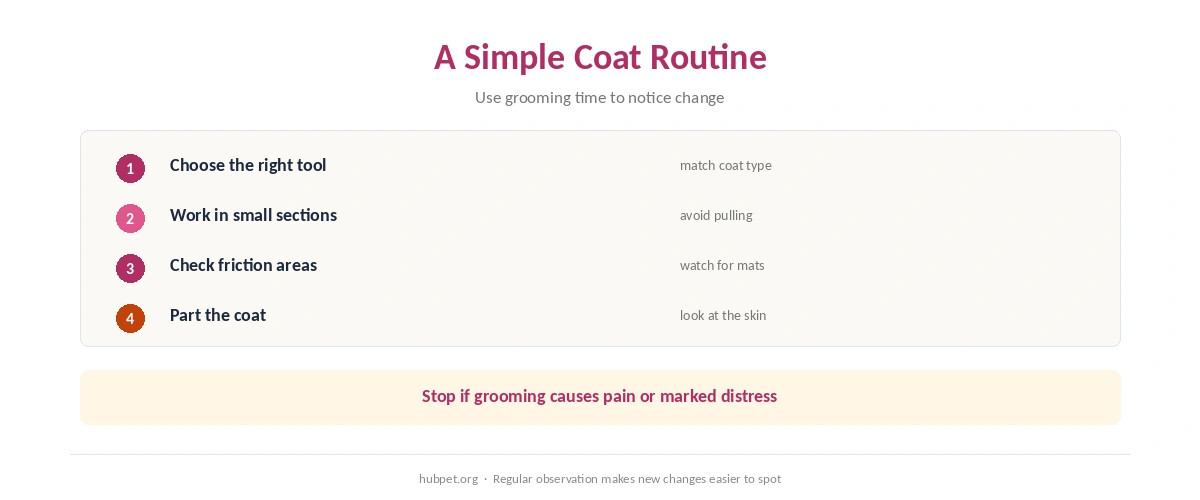
If you find a mat, do not turn the session into a pulling contest. Use the techniques in brushing out dog-fur mats for loose, manageable tangles. Stop if the mat is tight against the skin or the pet shows discomfort. A groomer or veterinarian can help when a mat is too tight or difficult to handle safely at home.
How to Keep a Pet’s Coat Healthy Between Baths
Bathing should match the individual pet rather than a rigid calendar. That principle is part of how to keep a pet’s coat healthy without overdoing routine care. The dog bathing frequency guide explains why coat, lifestyle, and skin needs change the answer. A low-mess bathing setup can make handling easier. For cats, routine brushing often matters more than bathing. A veterinarian or groomer may recommend a bath for a specific reason.
VCA coat-care guidance accessed in 2026 says grooming removes dirt, debris, loose hair, and dead skin cells. It also distributes natural skin oils along the hair shafts. That is a reason to make brushing consistent, not a reason to over-brush sensitive skin. If the skin becomes red or the pet starts resisting a previously comfortable routine, stop and reassess. A useful companion care page is how to Help a Pet with Dry Skin.
After outdoor activity, simple cleanup can protect the coat from trapped debris. The paw-cleaning guide is useful when mud or grit is the main issue. For normal shedding, the shedding guide explains what grooming can and cannot change.
| Coat-care job | Dogs | Cats |
|---|---|---|
| Brushing | Frequency depends on coat; long or curly coats often need more | Regular brushing or combing helps remove loose hair and monitor skin |
| Tangle check | Focus on friction areas and long coat | Check long hair and areas the cat cannot groom well |
| Skin check | Part the coat and look for change | Use grooming time to notice redness, hair loss, flakes, or bumps |
| Bathing | Individual need; not one universal schedule | Often secondary to brushing unless specifically needed |

What a Coat Change Can Tell You — and What It Cannot
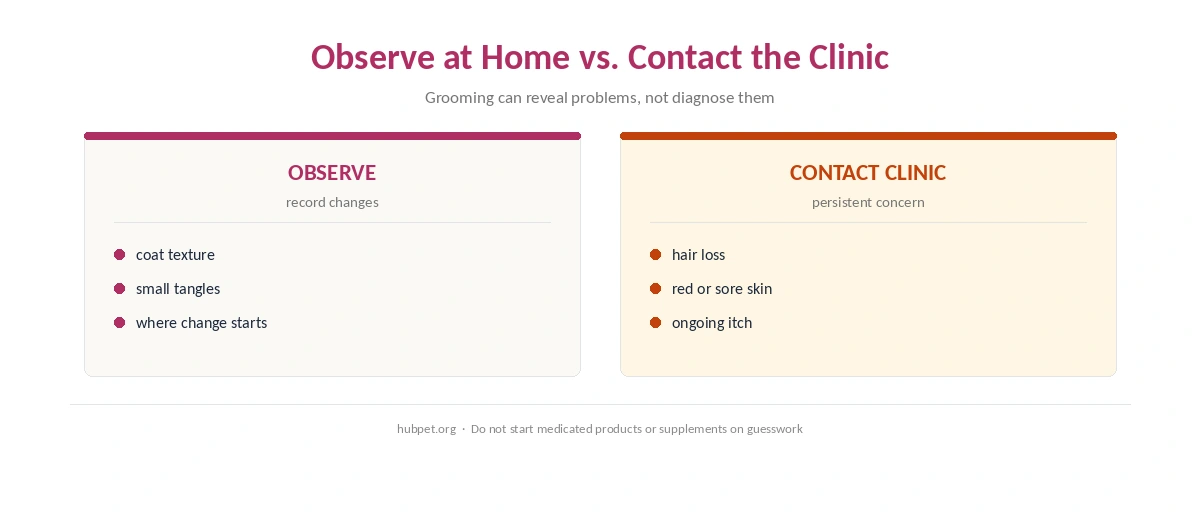
A coat change is a clue, not a diagnosis. Cornell’s feline skin-disease guidance updated in 2023 lists several possible warning signs. They include excessive scratching or licking, redness, hair loss, flaky or scabby skin, and swellings. VCA dog coat guidance likewise notes that skin and coat appearance can change with dermatologic or other health problems.
That is why the home routine should stay observational. Use the pet skin-check guide to describe what you see and where it is. Then let the veterinary team determine the cause. Do not start supplements, medicated products, or diet changes just because the coat looks dull. Treatment depends on the underlying problem.
Basic care still matters. The daily dog care checklist and daily cat care checklist keep grooming in context. Food, water, toileting, activity, and behavior matter too. A shiny coat is useful to notice, but it is not a stand-alone test of overall health.
When to Call Your Vet
Call your veterinarian for persistent itching, new bald patches, redness, sores, discharge, or swelling. Also call for strong odor, repeated over-grooming, or a sudden change in coat quality. Cornell’s 2023 feline skin guidance emphasizes that many causes can produce similar signs. A veterinarian may need an examination and testing to identify the problem.
Go sooner when the pet also seems unwell, painful, or rapidly worse. The pain-signs guide and pet emergency signs can help you separate routine grooming concerns from problems that should not wait.
How We Research
HubPet summarizes veterinary guidance and does not diagnose skin or coat conditions; see how HubPet researches care advice. We read VCA grooming and coat-care guidance for dogs and Cornell Feline Health Center grooming guidance on October 11, 2026. The review also covered Cornell’s 2023 feline skin-disease overview. HubPet avoided universal grooming schedules and did not recommend supplements or medical treatments.
FAQ
It depends on species, coat type, shedding, and the individual animal. VCA says long, silky, or curly dog coats often need more frequent attention than short coats because they tangle more easily.
A healthy-looking coat is useful information, but it cannot rule out illness. Behavior, appetite, body condition, skin, and other signs matter too. That broader view is central to how to keep a pet’s coat healthy safely. Learning how to keep a pet’s coat healthy also means noticing when grooming alone cannot explain a change.
Bathing can be useful when needed, but more is not automatically better. Match bathing to the pet’s coat, lifestyle, and veterinary or grooming guidance.
Do not add supplements just because the coat looks dull. Many different problems can affect coat quality, and a veterinarian can help decide whether nutrition or another cause needs attention.
Photograph new hair loss, redness, swelling, lesions, or other visible changes when it is safe to do so. Photos can document change but cannot diagnose the cause.
The Bottom Line
How to keep a pet’s coat healthy means keeping grooming gentle and regular. A practical rule for how to keep a pet’s coat healthy is to pair grooming with regular skin checks. Check the skin as you work, and respond to changes instead of covering them up. Match the routine to the dog or cat in front of you. Prevent tangles before they become difficult. Involve your veterinarian when coat or skin changes persist.