
This article is general information, not veterinary advice. If your pet seems unwell, is in pain or may have eaten something harmful, contact your vet or an animal poison control line right away. Read our vet disclaimer.
How to introduce a pet to a carrier is easiest when the carrier becomes part of ordinary life before travel is necessary. The FelineVMA 2026 positive-reinforcement toolkit recommends building positive associations and voluntary carrier entry for cats. For dogs, VCA travel guidance updated in 2023 likewise recommends practicing carrier or crate comfort before the trip itself. For the related care topic, see how to Make Car Rides Less Stressful for Cats.
The goal is not to shut the door as fast as possible. How to introduce a pet to a carrier works better when entry, the door, lifting, movement, and travel become separate skills. If your pet already has strong confinement fear, use the slower approach in the crate-safety guide rather than pushing through distress.
How to Introduce a Pet to a Carrier in Small Steps
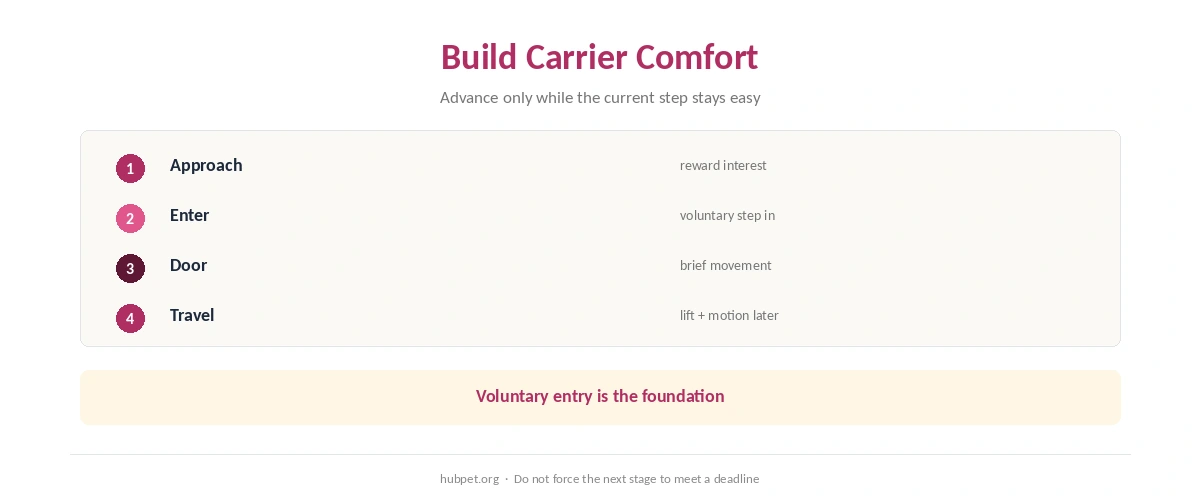
Leave the carrier open in a calm area and make approaching it optional. For cats, FelineVMA’s 2026 toolkit describes capturing or luring voluntary carrier entry with positive reinforcement. For small dogs, VCA’s dog travel guidance recommends conditioning the dog to settle in the carrier before practicing lifting and movement.
- Set the carrier on a stable surface with the door secured open so it cannot swing toward the pet.
- Reward looking at, sniffing, or approaching the carrier; do not pull or push the pet inside.
- Place rewards near the entrance, then just inside, and later farther back as the pet stays relaxed.
- Reward brief voluntary time inside while the door remains open.
- Close the door for a moment only after the pet is comfortable staying inside; reopen before distress builds.
- Add lifting, carrying, car sounds, and short trips one element at a time rather than all at once.
Keep sessions short enough that the pet can succeed. That matches the gradual training style used in positive reinforcement basics and basic dog training at home. If your pet stops taking rewards, tries to flee, or cannot settle, make the next repetition easier.
How to Introduce a Pet to a Carrier Before You Need It
Practice on ordinary days, not only before veterinary appointments. AAHA’s 2020 guidance advises keeping a cat carrier available with comfortable bedding and treats. That way, it does not predict only a stressful trip. How to introduce a pet to a carrier also becomes easier when the equipment is familiar. This fits the vet-visit checklist, the calm-space guide, and the new-home adjustment guide.
For a cat that stays tense around the setup, the stressed-cat guide can help you lower environmental pressure before another short practice.
For dogs, distinguish a small travel carrier from a general home crate. VCA’s 2023 travel guidance says an under-seat carrier should be practiced at home, including the sensations of lifting and movement. If your dog uses a larger crate for rest, mat-settle training can build the same useful skill of relaxing on a predictable station.
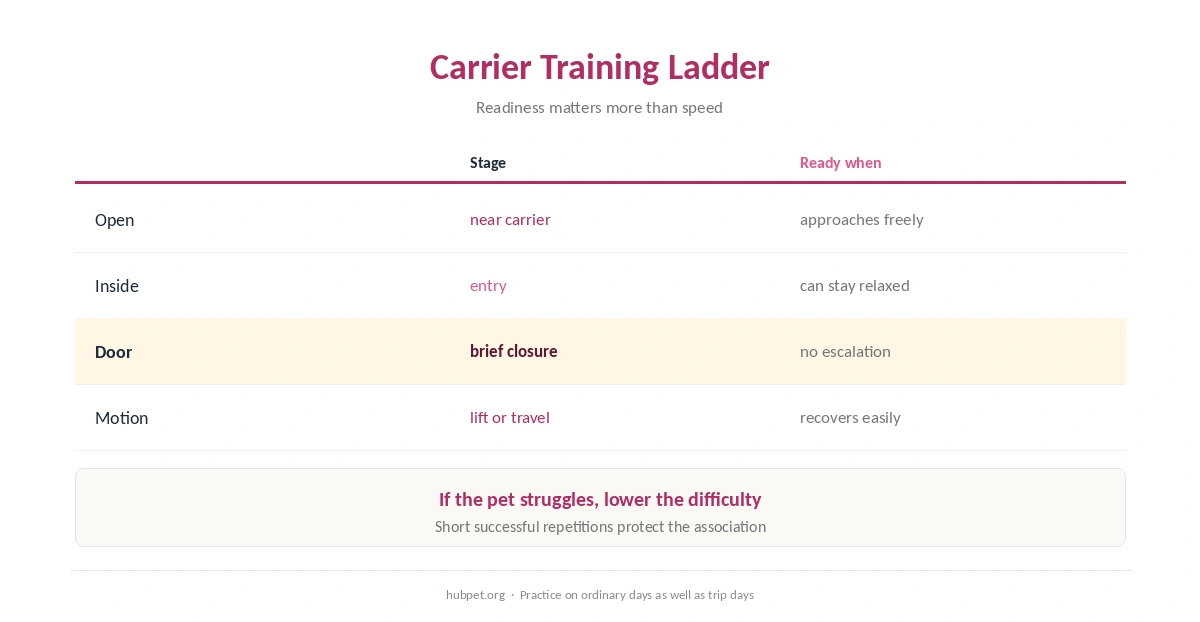
| Training stage | Ready to progress when… | If the pet struggles… |
|---|---|---|
| Carrier present | Pet can stay relaxed nearby | Increase distance and reward calm observation |
| Voluntary entry | Pet goes in and can come back out freely | Return rewards closer to the entrance |
| Door movement | Pet remains calm during a brief close-open | Shorten the closed-door moment |
| Carrier movement | Pet can settle while it is gently lifted | Practice stationary carrier time again |
When Carrier Training Needs More Help
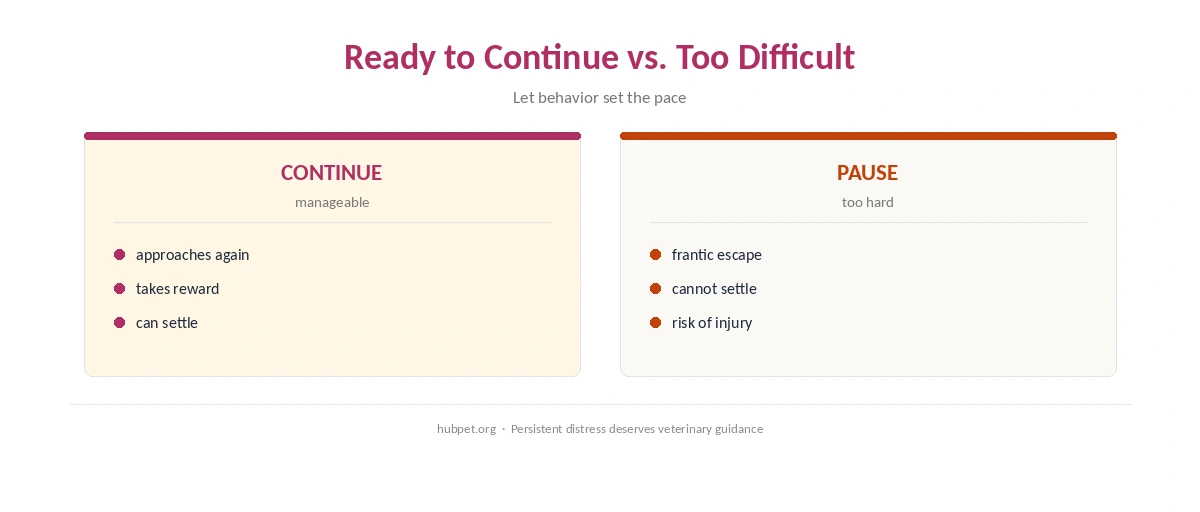
Stop increasing difficulty if confinement produces persistent panic-like behavior, frantic escape attempts, or a risk of injury. VCA crate guidance accessed in 2026 advises veterinary help when a dog repeatedly cannot settle in confinement. The 2015 AAHA behavior guidelines also emphasize veterinary assessment when behavior changes may have a medical contributor. Use the signs-of-pain guide as a reminder not to label every new struggle as “stubbornness.”
If transport itself is the problem, separate carrier training from car training. Dogs Trust recommends gradual, reward-based exposure to the car and short gentle journeys. Cats may also benefit from practice trips that end back at home, as described in AAHA and VCA veterinary-visit guidance. The aim is a manageable experience, not a long endurance test.
For new pets, do not rush carrier training alongside every other adjustment at once. Use the new-pet owner checklist, the first-week cat checklist, or the first-week dog checklist to keep the first days predictable.
How We Research
HubPet reviewed carrier and travel-training guidance on October 11, 2026. We used the FelineVMA 2026 toolkit, VCA dog travel guidance updated in 2023, and Dogs Trust reward-based car-travel guidance. Our research process explains how we adapt species-specific recommendations without pretending one carrier routine fits every pet.
Start farther away and rebuild the association with the carrier stationary and open. Progress only when the pet can stay relaxed.
Not for training. First build voluntary entry, then add very brief door movement once the pet is comfortable inside.
For many cats and small dogs, leaving an appropriate carrier available can help make it familiar rather than a signal that a stressful trip is coming.
Stop increasing confinement and talk with your veterinarian or a qualified reward-based behavior professional, especially if there are escape attempts or injury risk.
There is no universal schedule. Use short successful sessions and progress by the pet’s behavior rather than a fixed calendar.
The Bottom Line on How to Introduce a Pet to a Carrier
How to introduce a pet to a carrier comes down to voluntary approach, rewards, and tiny increases in difficulty. Teach entry before door closure, door closure before movement, and movement before longer travel. If the pet is panicking, reduce the challenge and get professional guidance rather than using force.