
This article is general information, not veterinary advice. If your pet seems unwell, is in pain or may have eaten something harmful, contact your vet or an animal poison control line right away. Read our vet disclaimer.
How to make car rides less stressful for cats starts before the engine turns on. Make the carrier familiar, keep the cat securely confined, and build short, manageable practice trips. The FelineVMA 2025 transportation statement recommends carrier acclimation and a hiding option. It also recommends stable placement of the carrier on the vehicle floor behind a front seat.
Car distress is not one single problem. The VCA motion-sickness review, accessed 2026 lists restlessness, lip licking, drooling, vomiting, and defecation among motion-sickness signs. Fear can also drive vocalizing or attempts to escape. Because the causes can overlap, repeated vomiting or marked distress deserves a veterinary plan rather than more forced exposure. In practice, how to make car rides less stressful for cats depends on whether fear, nausea, or both are present. For the related care topic, see how to Help a Dog With Car Anxiety.
How to Make Car Rides Less Stressful for Cats Before the Trip
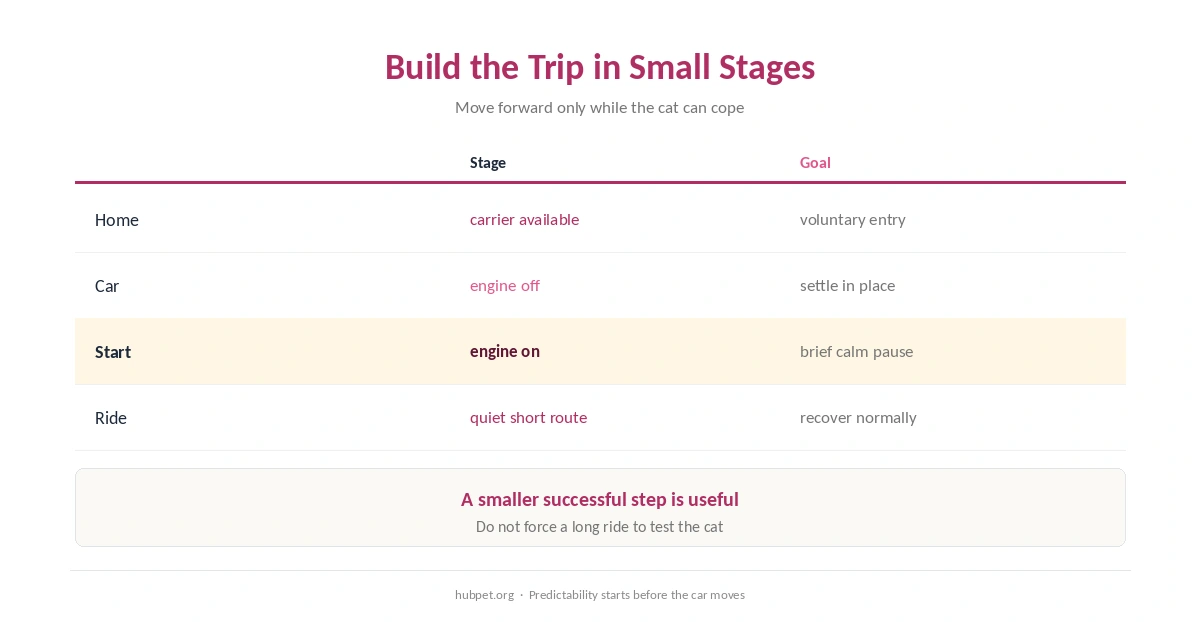
Leave the carrier available as part of the home instead of making it appear only before travel. Start with carrier introduction at home and add familiar bedding, voluntary entry, and rewards the cat values. The AAHA cat-visit guidance, updated 2026 recommends positive carrier practice and short car rides before a veterinary trip.
Keep practice easy enough that the cat can recover. A cat that rests in the carrier at home can try a small next step. A cat that hides when the carrier appears needs easier practice first. Use shy-cat support, stress-reduction basics, and predictable routines to reduce surprises around the session.
| Stage | What to practice | Move on when |
|---|---|---|
| Carrier at home | Voluntary entry and rest | Cat enters voluntarily |
| Stationary car | Carrier secured; engine off | Cat can stay below its usual stress threshold |
| Engine on | Brief stationary session | Cat recovers quickly afterward |
| Short route | Quiet drive near home | Signs stay manageable |
| Necessary trip | Same setup and familiar cues | Practice pattern remains recognizable |
How to Make Car Rides Less Stressful for Cats in the Vehicle
Secure the carrier before driving. FelineVMA 2025 recommends the floor behind a front seat for most carriers. Use a seat belt only with a carrier that has appropriate crash-test certification. This practical setup also fits the safety planning in general pet safety basics and the home-alone safety checklist.
Keep the carrier closed while the vehicle is moving. A loose cat can distract the driver or escape when a door opens. Cover part of the carrier if that helps the cat hide while keeping ventilation clear, and carry it steadily with support underneath. These steps match the broader preparation in the vet-visit checklist and the less-stressful vet-visit guide. Overall, how to make car rides less stressful for cats is to keep the physical setup as predictable as the training plan.
Do not try to solve visible distress by scolding or by extending the ride until the cat learns to tolerate it. The AAHA 2026 guidance favors positive reinforcement and practice over forcing the experience. If a session goes badly, return to an easier step and use post-visit decompression afterward.
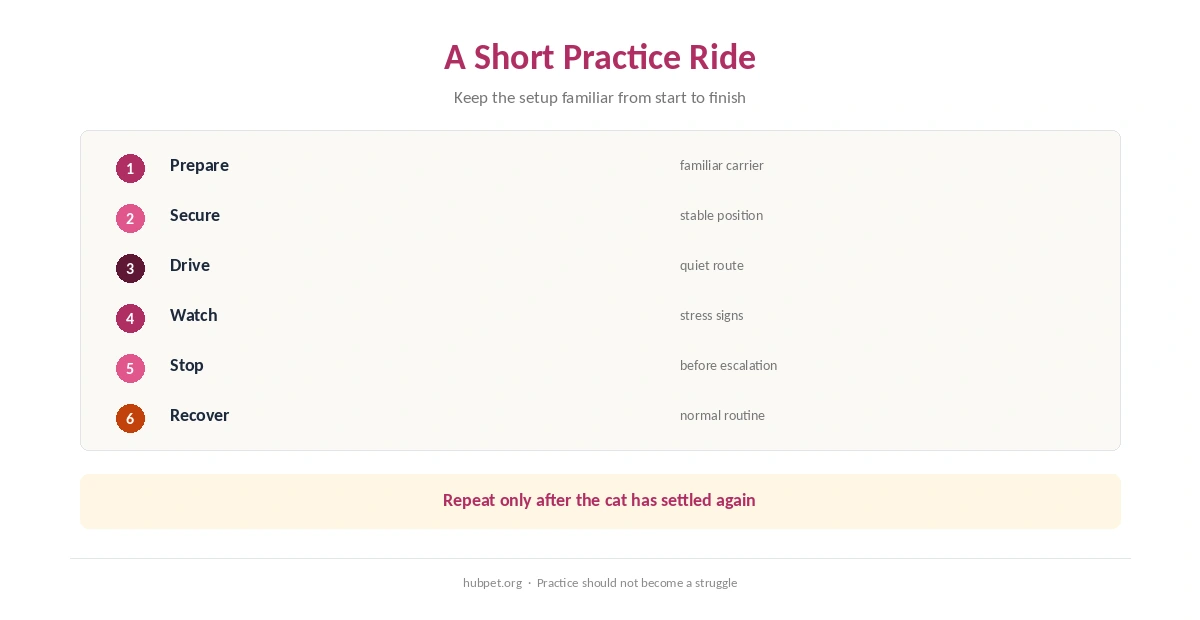
- Set up the familiar carrier before bringing the cat to the vehicle.
- Secure the carrier in the recommended stable position before driving.
- Keep the first practice drive short and on a quiet route.
- Watch for escalating vocalizing, restlessness, drooling, or vomiting.
- End practice before the cat spends the whole session distressed.
- Repeat only when the cat has returned to its normal routine.
When to Call Your Vet About Stressful Cat Car Rides
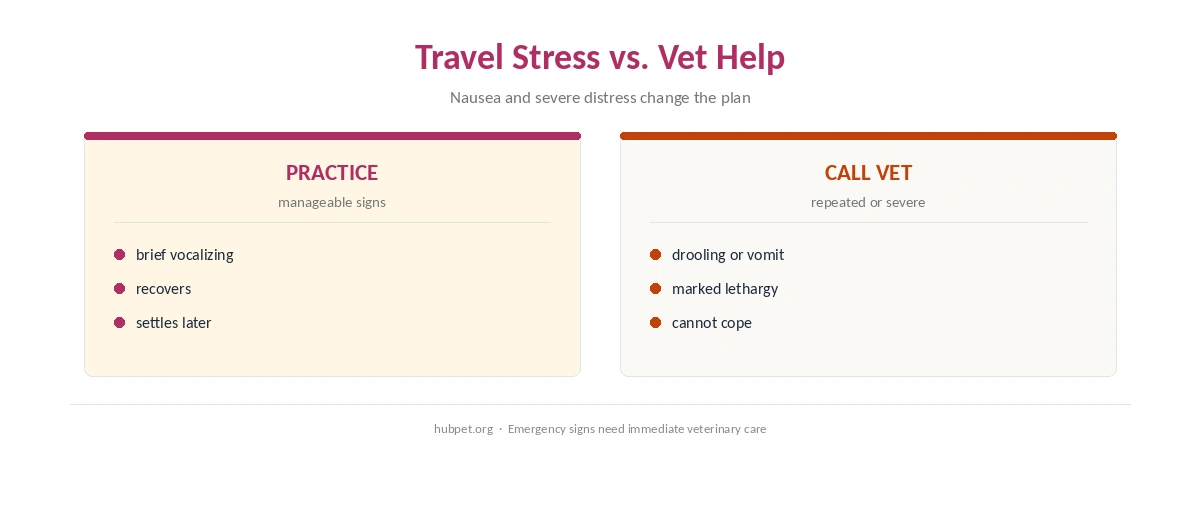
Contact your veterinarian before the next trip if your cat repeatedly drools, vomits, or becomes very lethargic. VCA, accessed 2026, lists these among motion-sickness signs, along with other travel-related changes. A veterinarian can help distinguish travel anxiety from nausea or another medical problem and decide whether any prescription support is appropriate. Do not give human medication or choose a dose yourself.
Go now for breathing difficulty, collapse, unresponsiveness, or a seizure. The AAHA pet-emergency guide, 2024 treats these as emergency signs; use HubPet’s emergency-sign guide while arranging immediate veterinary care. For any new behavior around handling or transport, cooperative handling practice can help after your veterinarian rules out medical concerns.
If the cat suddenly hides for long periods after a ride or stops returning to normal activities, review sudden hiding in cats and contact your veterinarian if the change stays strong or persistent. The goal is not to diagnose the cause online; it is to notice when travel stress no longer looks like a brief, recoverable response.
How We Research
HubPet reviewed these sources on October 11, 2026: the FelineVMA 2025 transportation statement, the AAHA cat-stress guidance, updated 2026, the Merck Veterinary Manual car-travel review, updated 2025, and VCA motion-sickness guidance. Read more about our research process.
Start with the carrier at home and reward voluntary interaction before adding any car practice.
No. FelineVMA recommends secure transport in an appropriate carrier rather than a loose cat in the vehicle.
No. Vocalizing can occur with fear or stress, while motion sickness may also involve drooling, lip licking, lethargy, vomiting, or defecation.
No. Use short practice sessions and step back when distress escalates instead of forcing a prolonged exposure.
Ask before the next trip if distress is severe or repeated, especially with drooling, vomiting, marked lethargy, or a major behavior change.
The Bottom Line on How to Make Car Rides Less Stressful for Cats
How to make car rides less stressful for cats is a preparation problem, not a test of endurance. Build carrier comfort, secure the carrier correctly, practice in small steps, and involve your veterinarian when nausea or severe distress is part of the trip.