
A cat litter box after moving home should offer familiarity while nearly everything else has changed. New sounds, smells, doors, and foot traffic can make a normally confident cat hesitate. Set up a calm starter room with the same litter and a dependable toilet route before opening the carrier. This guide covers the first night, gradual access to the larger home, and practical signs that your cat needs a slower transition or veterinary attention. For pet-health concerns, consult our veterinary disclaimer.
Set up the starter room before your cat arrives
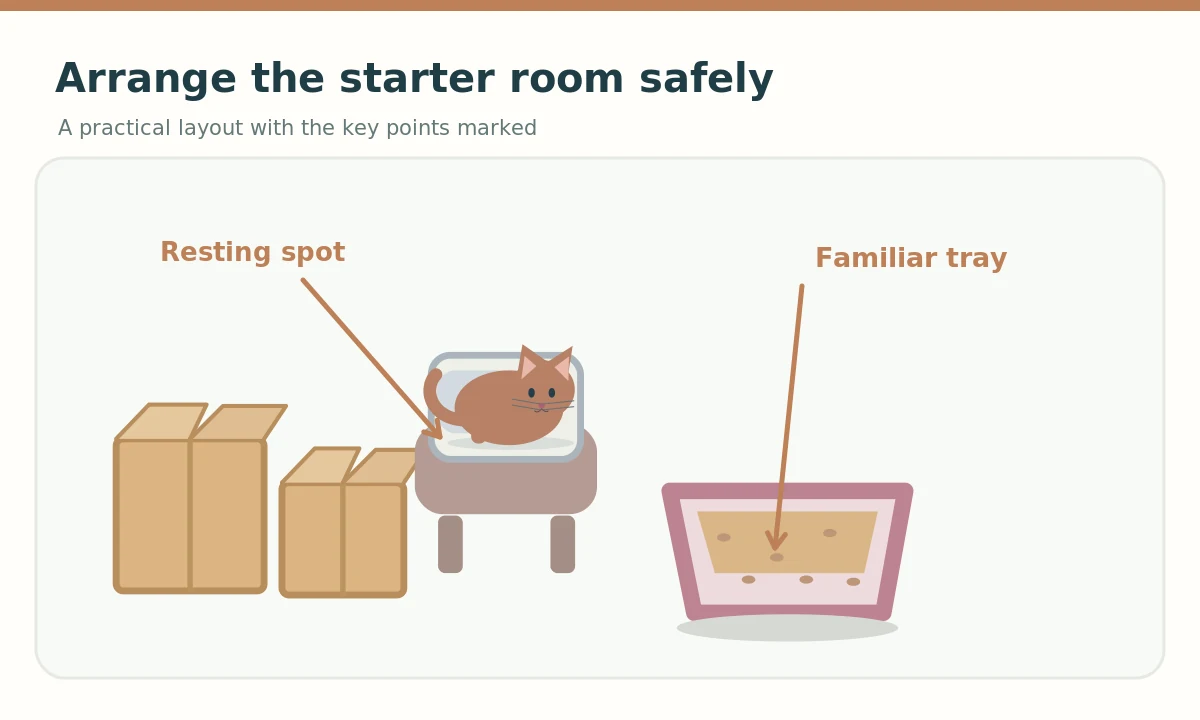
Choose a quiet room that you can close securely during unloading and cleaning. Place the familiar litter box on a stable floor with enough room to turn and dig. Keep food, water, and resting places apart from the toilet as much as the room allows. Cats Protection recommends a comfortable private starting space for a new cat. Check window screens, cords, chemicals, and gaps behind appliances before opening a carrier. A prepared room prevents the cat from meeting a crowded moving crew or exploring unfamiliar hazards immediately.
Keep the known litter and box at first
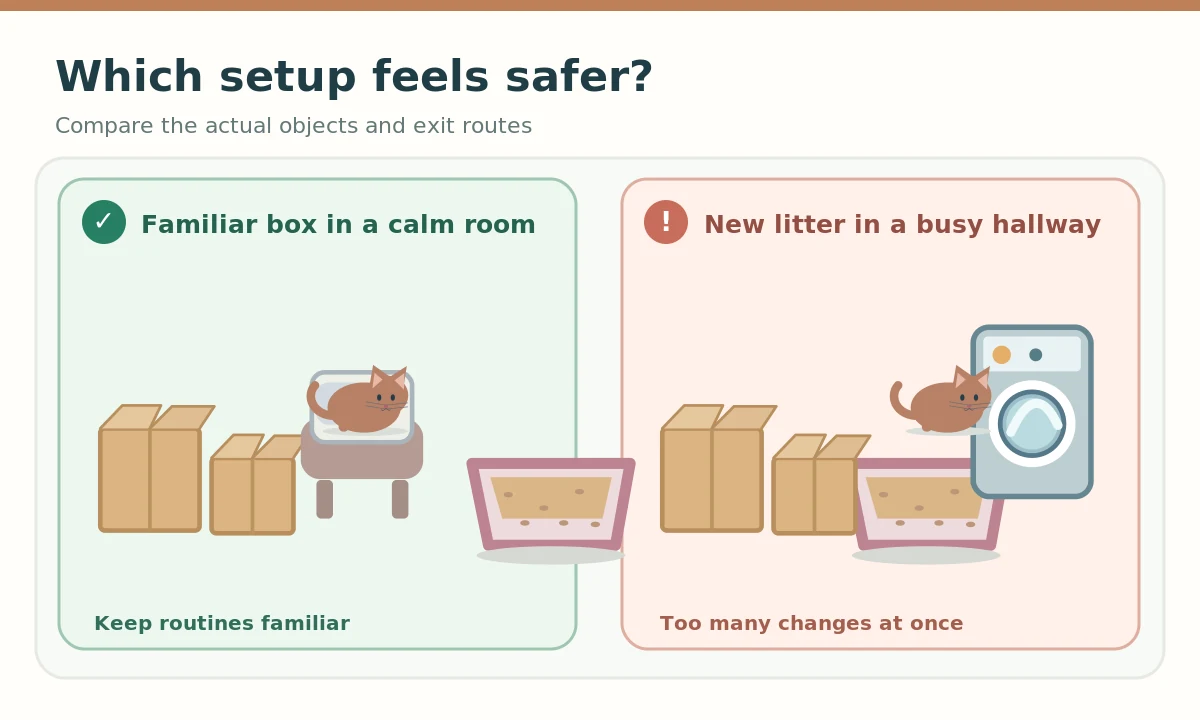
A move already changes territory, odors, and everyday sounds. Avoid combining it with a sudden new litter texture, perfume, and unfamiliar box design. Bring a clean but recognizable tray when safe, using the same brand or type of litter the cat accepts. Scoop normally; you do not need to preserve soiled waste for scent. If the old tray has a crack or sharp edge, use a safe replacement while keeping other features familiar. The goal is reliable comfort, not forcing a cat to accept every change at once.
Make the exit from the carrier voluntary
Set the secure carrier on the floor in the starter room and open it once doors and windows are safe. Let the cat emerge at their own pace. Do not place them bodily into the litter or carry them toward the tray repeatedly. Instead, keep the route visible and leave the room quiet. Some cats explore quickly; others hide until people leave. Offer familiar bedding and a covered hiding spot away from the box. Check discreetly that the cat can reach water and toilet without facing a visitor.
Plan the first night without surprises
Keep the starter room available overnight, even if the cat seems eager to explore. Confirm the litter tray stays accessible after lights go out and household doors close. Keep children, dogs, and other cats away from the secure room. Avoid running loud cleaning appliances near the box. Scoop when necessary without hovering. The first night is a poor time to introduce an automatic moving litter box or heavily scented product. A normal routine and a predictable floor plan can help the cat settle.
Expand territory only when routines are steady
Look for comfortable eating, grooming, resting, and repeated use of the litter box before opening more of the home. Let the cat explore another safe area voluntarily, with a route back to the starter room. Continue to maintain the original box during exploration. In a large home, offer another box in a different quiet area so the cat never has far to travel. Merck notes that boxes on separate floors can improve access. Do not assume that one successful exploratory lap means the whole house now feels secure.
Keep doors and access paths consistent
Moving boxes and deliveries often lead people to close or prop doors without thinking about the cat. Assign the household a simple rule for the starter-room doorway. Never block the tray with packed cartons. Make sure a vacuum, folding ladder, or repair visit cannot trap the cat in a dead-end route. If multiple pets live in the home, manage their access separately. A new litter station becomes harder to learn when entrances change each day. Use quiet, visible routes that the cat can choose.
Treat an accident as information
If you find urine or stool outside the box, clean it promptly with a surface-appropriate product and assess the environment. Was the door shut? Did someone change the litter? Did the cat have to pass a dog? Never punish, shout, or rub the cat’s face near a spot. The RSPCA advises praise and a calm setup rather than punishment for litter mistakes. A single incident during a major transition can have several explanations. However, sudden elimination changes also warrant veterinary assessment, especially with discomfort or repeated attempts.
Do not rush a multi-cat household
A cat moving into a home with resident cats needs a separate starter room and a gradual introduction plan. Do not position their only box outside a door where other cats may wait. Provide multiple boxes in separate places before shared territory expands. Watch for guarding of hallways and litter entrances, not merely overt fights. Keep feeding and litter resources spread out. A move can unsettle resident cats too, so preserve their familiar boxes and quiet routines where possible. Avoid making all animals share a small utility room.
Review the layout at the end of the week
By the end of several days, note which paths the cat uses and where noise or closing doors might interrupt access. You can add a permanent toilet station elsewhere while leaving the starter box in place. If a move of the original box becomes necessary, make it gradual or maintain both during the transition. Check litter scatter, mat grip, and cleaning access. Continue the familiar maintenance routine rather than buying several new products at once. Your cat’s behavior should guide the pace more than an arbitrary calendar deadline.

Know which changes need a veterinarian
Moving stress does not explain every elimination problem. Contact a veterinarian if your cat strains, cries while toileting, urinates outside the box, stops eating, or seems ill. Repeated attempts to urinate without producing urine require urgent help. Cornell and Merck advise veterinary evaluation for house soiling and urinary signs. Continue to provide a clean, quiet box while seeking advice. Once health problems receive attention, use the cat’s actual daily routes and preferences to refine the permanent layout.
How We Research
We reviewed current animal-welfare and veterinary guidance on litter-box access, placement, hygiene, and household transitions. We compared Cats Protection, Battersea, the ASPCA, and the Merck Veterinary Manual, then checked relevant cautions against Cornell feline-health materials. Our process is explained on the HubPet About page. This is an editorial setup guide, not a product test or a substitute for individual veterinary advice.
Sources
Cats Protection — Preparing for a Cat — guidance on cat toilet location, access, hygiene, and health warning signs.
Battersea — Best Litter Tray Set Up — guidance on cat toilet location, access, hygiene, and health warning signs.
ASPCA — Litter Box Problems — guidance on cat toilet location, access, hygiene, and health warning signs.
Merck Veterinary Manual — Providing a Litter Box for a Cat — guidance on cat toilet location, access, hygiene, and health warning signs.
Cornell Feline Health Center — House Soiling — guidance on cat toilet location, access, hygiene, and health warning signs.
Safety note: New house soiling, pain signs, or straining to urinate can indicate a medical problem. Seek veterinary attention promptly; an inability to pass urine can be an emergency.
Keep a safe familiar tray if possible. If the old one is damaged, choose a similar accessible replacement and avoid changing litter at the same time.
Use a quiet secure starter room with an open path, away from food and water as space permits.
A gradual approach gives your cat a dependable retreat and toilet. Expand access when eating, resting, and box use look comfortable.
Use familiar litter and the usual tray, but keep waste scooped and the environment clean. There is no need to preserve soiled clumps.
Check access and litter familiarity, and contact a veterinarian for persistent changes, discomfort, or repeated unproductive urination attempts.