
A cat litter box near food or water may appear space-efficient, but cats generally prefer separate toileting and eating areas. The goal is not to memorize an unsupported minimum distance. Instead, give each resource its own location and an easy route that avoids the other. This guide shows how to map a small home, move bowls without disrupting meals, and maintain clean stations that your cat can use comfortably. For pet-health concerns, consult our veterinary disclaimer.
Treat each activity as a separate station
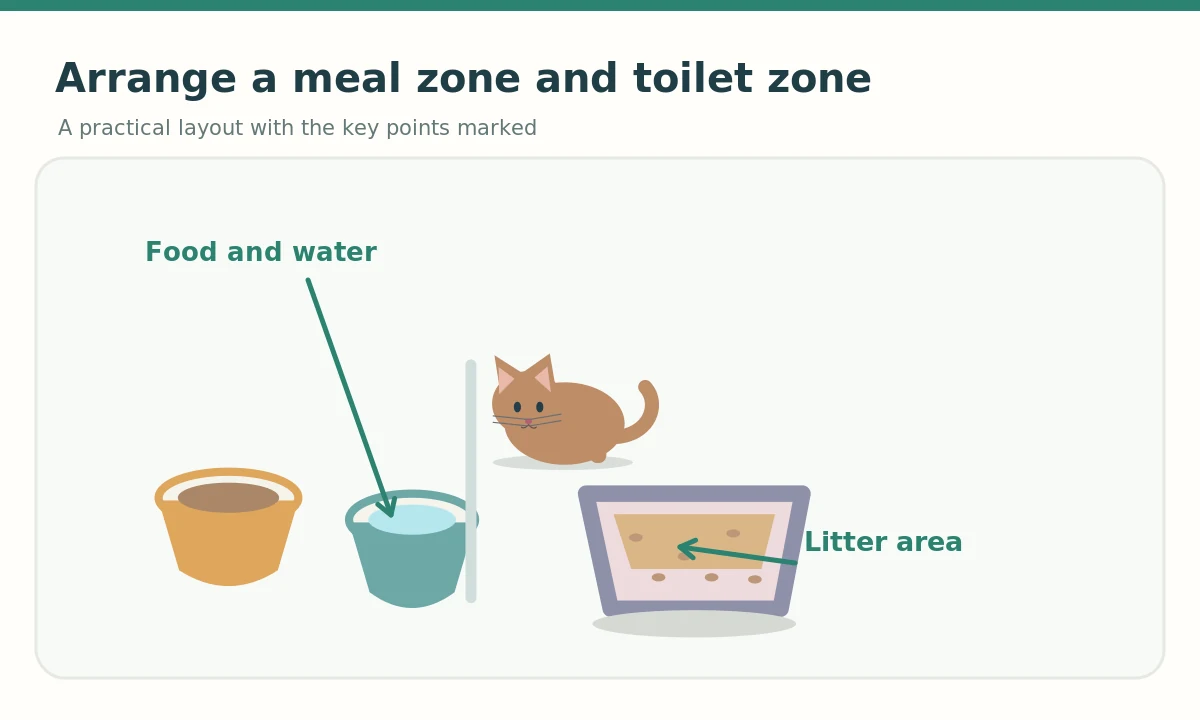
Draw a simple room map and mark the current litter box, food bowl, water source, and resting areas. Identify where cats walk during normal daily routines. Cats Protection and the ASPCA advise separating litter boxes from food and water. That advice addresses the relationship between activities, not a universal measured distance. In a tiny apartment, separate corners or rooms may work better than a row of resources along the same wall. Look for comfort, not an exact number on a ruler.
Prioritize a quiet toilet location
Find a low-traffic spot that the cat can reach even when doors close. Avoid placing a box beside the kitchen’s busy entry or directly under a feeding counter. Keep the tray out of narrow dead ends. The cat should be able to see an approaching pet and leave without passing another animal. Once you find a suitable place, maintain it rather than shifting the tray each mealtime. A stable toilet routine matters more than hiding the box from guests.
Move feeding bowls before the established box
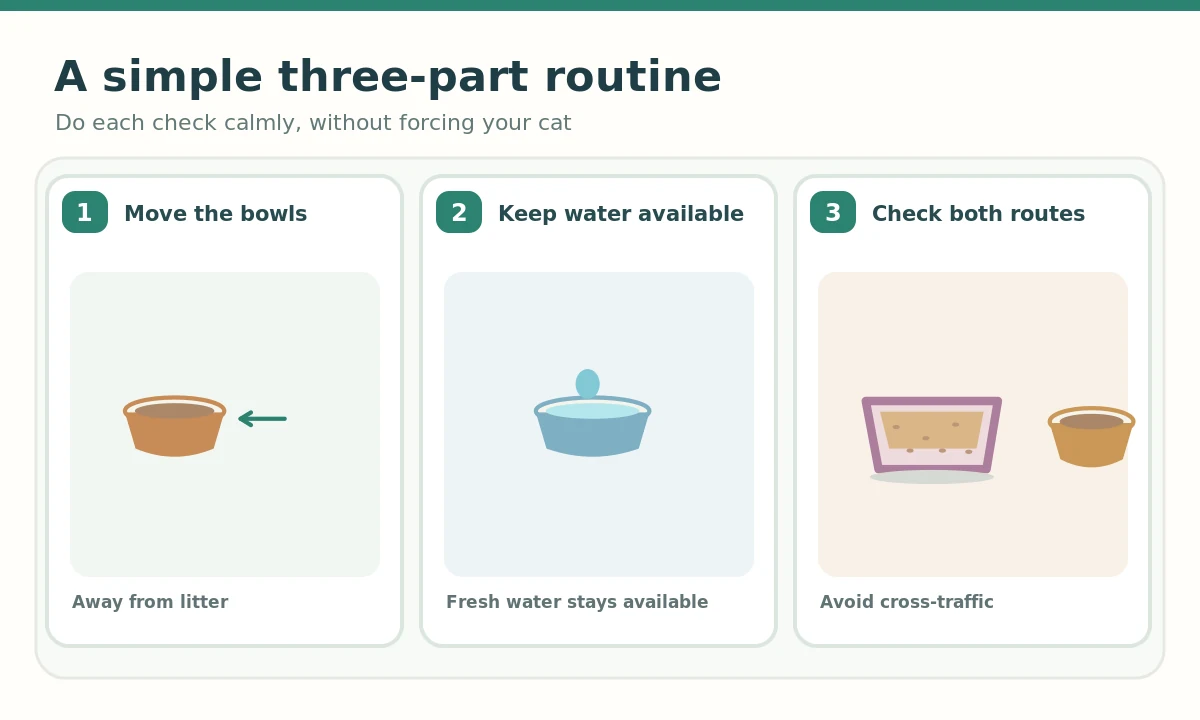
If a cat already uses a toilet reliably, consider relocating the food or water station instead of abruptly changing the litter setup. Make the new feeding area calm, washable, and easy to reach. Offer food at the normal mealtime and watch whether your cat eats comfortably. Keep water freely available at all times. If the cat hesitates, adjust the bowls gradually while maintaining access. Never withhold food or water to force a preferred location. Medical diets and special feeding needs take priority over an ideal floor plan.
Separate water from household contamination
Place the water bowl or fountain on a clean, stable surface away from scattered litter and waste. Check for granules tracked into shared mats or along baseboards. Clean water equipment according to its instructions, and refill it as usual. Do not position a fountain power cord where it crosses the litter path. A wider gap between resources reduces the chance of daily splashes or litter getting near a bowl, but the key is a genuinely separate, hygienic station. Watch for crowded traffic around both.
Handle small apartments with clear routes
A studio apartment still offers choices. A quiet corner away from the cooking area can hold the litter box, while a different wall supports feeding. Use low shelving as a visual divider only when it remains stable and does not block escape. Avoid enclosing a cat behind a screen with a single entrance that other pets can guard. Consider where people stand while preparing meals. A place that looks separated on a floor plan may still force the cat to travel through a busy bottleneck.
Keep the litter mat separate from bowl mats
A textured litter mat holds scattered granules, but it should not extend beneath food dishes. Inspect its edges for curling and slip hazards. Clean the two areas with separate tools where practical. Use mild unscented cleaning products near the tray and food-safe cleaning methods for bowls. Do not spray fragrance to cover litter odor beside a meal station. A clean floor and predictable layout benefit both resources. Check whether a robot vacuum or cleaning schedule frequently blocks the toilet route.

Observe actual eating and toileting behavior
Watch whether the cat approaches food confidently or glances toward the box. Likewise, note whether a cat delays using the tray when someone prepares a meal. These observations help identify avoidable conflict between routines. In multi-cat homes, one animal may guard a path to either resource. Separate stations across different routes rather than clustering everything in one room. A cat that eats and toilets normally today may still welcome a better layout. Make changes gently and monitor them over several days.
Do not trade access for more distance
Moving a litter box far away can create a new problem if the only remaining spot sits behind a closed door or down stairs. Accessibility comes before an idealized separation. Cornell notes that older cats and those with mobility trouble need convenient low-entry boxes. For a cat with special needs, offer more than one station in suitable areas. An extra box near a living space may be better than a perfectly distant toilet that the animal cannot reach. Ask your veterinarian about sudden mobility or elimination changes.
Keep both stations easy to maintain
Scoop litter daily and wash bowls routinely. Use dedicated cleaning supplies and wash hands after handling waste. Check that food crumbs do not accumulate near the tray. Maintain familiar litter and stable bowl positions when changing one part of the layout. A weekly floor check can reveal creeping clutter, leaking fountain equipment, or an access route that guests have blocked. Small, repeatable maintenance tasks are more useful than a complicated set of dividers that nobody keeps clean.
Ask for help when the pattern changes
If your cat suddenly avoids the litter box, stops eating, strains, or repeatedly attempts to urinate, contact a veterinarian. A new layout may reveal a problem, but it does not prove cause. Urinary obstruction can become an emergency. Avoid punishment for accidents; instead, provide a clean box in an accessible area and seek professional advice. Once health concerns are addressed, review resource placement and household stress. Both the feeding area and the toilet should feel safe and predictable.
How We Research
We reviewed current animal-welfare and veterinary guidance on litter-box access, placement, hygiene, and household transitions. We compared Cats Protection, Battersea, the ASPCA, and the Merck Veterinary Manual, then checked relevant cautions against Cornell feline-health materials. Our process is explained on the HubPet About page. This is an editorial setup guide, not a product test or a substitute for individual veterinary advice.
Sources
Cats Protection — Preparing for a Cat — guidance on cat toilet location, access, hygiene, and health warning signs.
Battersea — Best Litter Tray Set Up — guidance on cat toilet location, access, hygiene, and health warning signs.
ASPCA — Litter Box Problems — guidance on cat toilet location, access, hygiene, and health warning signs.
Merck Veterinary Manual — Providing a Litter Box for a Cat — guidance on cat toilet location, access, hygiene, and health warning signs.
Cornell Feline Health Center — House Soiling — guidance on cat toilet location, access, hygiene, and health warning signs.
Safety note: New house soiling, pain signs, or straining to urinate can indicate a medical problem. Seek veterinary attention promptly; an inability to pass urine can be an emergency.
There is no universal distance that fits every home. Use a different area or well-separated zones with clear routes whenever possible.
A separate section may work in a small home, but avoid placing the bowl right beside litter and maintain clean, distinct paths.
If your cat already uses the box confidently, moving the feeding station may preserve a dependable toilet location.
Only when it keeps areas distinct without trapping the cat, blocking access, or creating a bottleneck for another pet.
Restore predictable access, review other household changes, and contact a veterinarian if toileting behavior changes or the cat shows discomfort.