
Corn cat litter uses corn-derived material, but products can arrive as small grains, crumbles or short pellets. Some clump while others absorb moisture differently. Because this litter is plant based, many packages emphasize origin more strongly than texture or cleanup performance. The useful questions are practical: will your cat stand on it, will the scoop remove waste cleanly and can you keep the remaining bag dry? This guide separates material claims from the everyday care needed for a healthy litter box.
Read what the corn label actually promises
A corn-based product may mix ground corn with other plant fibers or ingredients. Check the complete description for clumping behavior, added scent and manufacturer disposal instructions. Terms such as “natural,” “renewable” or “lightweight” do not tell you whether the pieces feel comfortable on paws. Inspect the actual grain shape before comparing it with your current litter. A short cylindrical pellet may behave differently from a sandy crumble. Do not assume that every product made from the same crop uses the same processing or achieves the same results.
Match the texture to your cat, not a trend
Place a small amount of new litter where you can inspect the granules before filling a tray. Are they firm pellets, soft crumbs or fine particles? Cats with familiar sand-like litter may hesitate at larger shapes. Cornell advises that many cats prefer fine-textured, unscented litter, while Cats Protection recommends keeping a familiar surface available during transitions. Look for relaxed digging, turning and covering instead of trying to interpret one hesitant paw step. A cat that repeatedly avoids the new texture needs an alternative.

Observe how moisture changes the surface
After routine use, scoop the box and notice whether wet material forms a compact clump or spreads through nearby grains. A scoop that fits dry pellets might not lift a fragile wet patch cleanly. Look for damp residue sticking to the bottom, especially when the layer is shallow. Do not stir wet litter around the entire tray; this spreads contamination. The goal is to remove soiled material promptly while leaving dry litter usable. If a product does not clump, follow its replacement instructions rather than treating it like a clay formula.
Keep unopened and opened bags dry
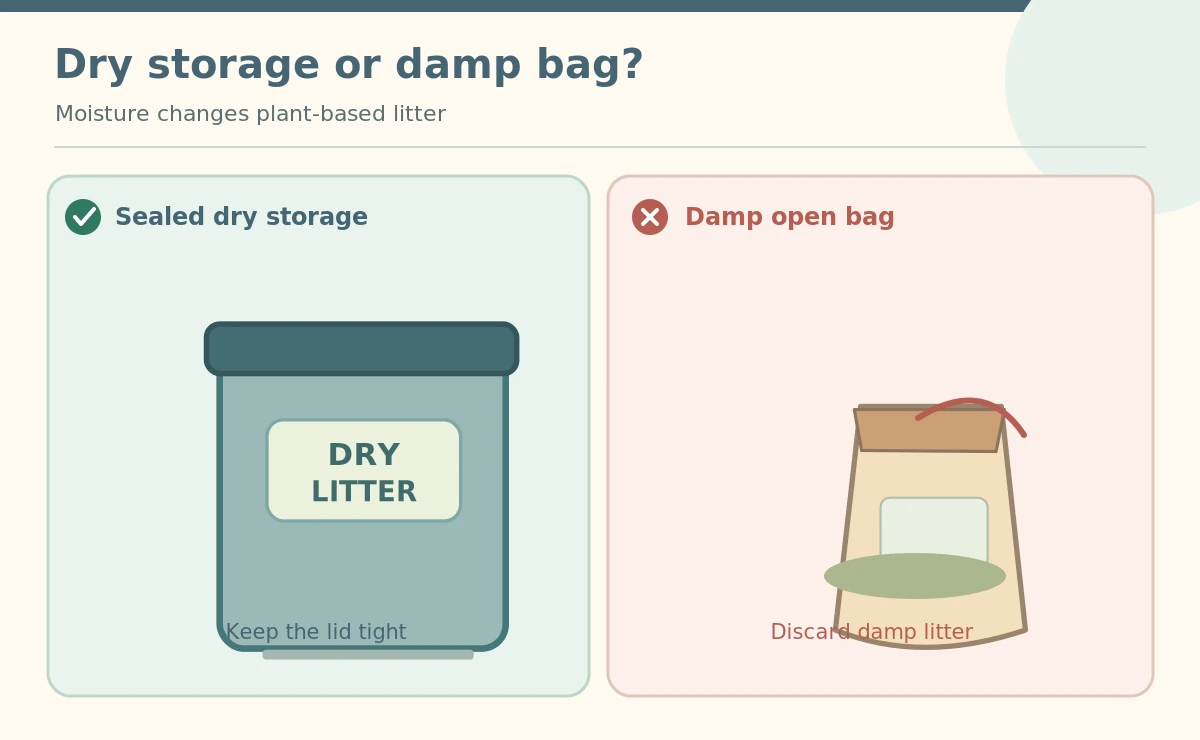
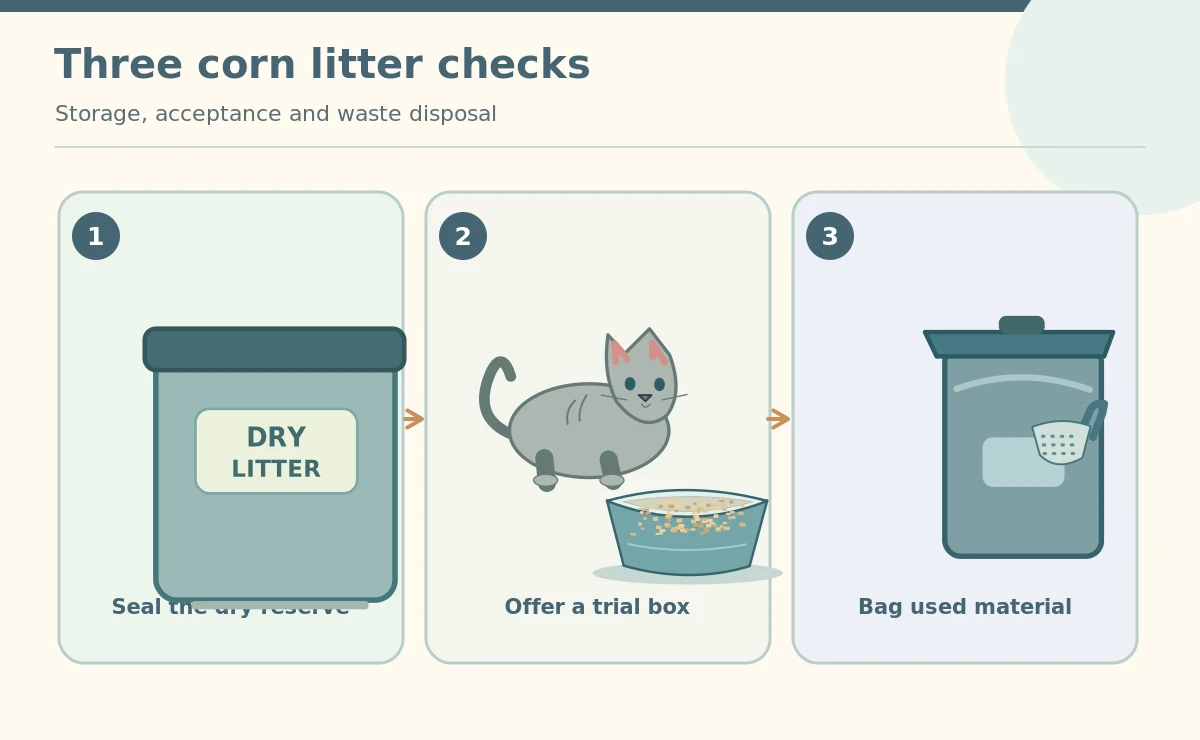
Store the bag or sealed container in a cool, dry place away from leaks, standing water and pet access. Plant-based products should not sit in a steamy bathroom with a loose lid. Avoid leaving opened bags directly on a garage floor where rain or spills can reach them. Check the manufacturer’s recommended storage conditions and discard litter with visible mold, unusual dampness or a musty smell. Do not add drying powders or perfumes to salvage a contaminated product. Clean and thoroughly dry the container before the next refill.
Separate texture dust from room dust
Fine fragments may break away during shipping or pouring. Empty a small amount slowly, near the bottom of the clean tray, and check whether a visible cloud forms. “Low dust” packaging may not predict performance for every room or handling style. Consider ventilation and how close a person’s face is to the bag while pouring. If you notice persistent dust settling on nearby surfaces, switch to a gentler pouring method or try another formulation. Do not use the cat’s box as a place to test airborne powder with fans.
Make scoop slots work for the particles
Large scoop openings let more clean corn pieces fall back into the tray, but very small slots may trap fragments that should pass through. Choose a scoop that retains clumps and feces while allowing dry grains to return. Watch the tool during ordinary care rather than measuring against a rigid universal standard. A long handle and a comfortable grip can help avoid tilting the tray into a mess. Keep the scoop near the box in a washable holder, separate from food and water equipment.
Decide whether tracking is acceptable
Lightweight pieces can ride out on paws or scatter when a cat jumps from the tray. Check the first few steps beyond the exit and place a flat, easy-clean mat where debris actually lands. Avoid textured mats that catch claws or a barrier that blocks a cat’s escape route. A large open box may reduce scatter without making the substrate coarser. Test cleaning the mat regularly: a product that stays within the litter box but becomes impossible to remove from a floor covering may not save you work.
Introduce corn litter as a genuine choice
Set a familiar box and a second, similarly placed box with corn litter side by side when practical. Leave both available and watch which one the cat uses over several days. Cats Protection suggests gradual changes when a second tray is not an option. If the cat seems unsure, do not force its paws into the new material. Keep feeding, play and resting spaces separate from the trial. A usable familiar box prevents a product comparison from becoming a toileting problem.
Plan maintenance before judging odor
Scoop daily and remove feces promptly, whether the material is corn, clay or paper. Replenish the recommended depth and clean the empty box with a cat-safe mild cleaner before drying it fully. Fragrance should not replace waste removal. If a smell persists after a thorough clean, inspect hidden seams, a damaged plastic tray or the surrounding floor. A product’s marketing may claim extended odor control, but the safest maintenance schedule remains tied to actual use and cleanliness.
Do not confuse biodegradable with flushable
Corn-derived material can break down under certain conditions, but used cat litter contains fecal contamination. The US EPA excludes pet waste and cat litter from home compost piles. Bag used litter for appropriate household waste collection and check local rules. Do not flush an entire clump simply because a package uses a green leaf icon or claims biodegradability. Plumbing and sewer requirements depend on the actual product and municipality; a conservative trash route avoids accidental pipe damage and water contamination.
Treat avoidance or illness as a separate issue
A change in litter can coincide with a health problem without causing it. If the cat strains, vocalizes, makes frequent unproductive trips or suddenly urinates elsewhere, consult a veterinarian promptly. Do not assume the corn smell or pellet shape explains every behavior. Keep a familiar clean litter box accessible while noting when the change began. The veterinarian can assess signs that a product review cannot. Never try to make a cat use an unfamiliar substrate by limiting its access to every other option.
How We Research
We review established guidance from veterinary schools, cat welfare organizations and public health agencies, alongside product attributes that readers can inspect. We distinguish general cat preferences from guarantees about any specific brand. Sources were checked on October 28, 2026. We have not performed laboratory testing or a veterinary examination for this article. Learn more about HubPet.
Sources
Cats Protection, How to Choose the Best Cat Litter for Your Cat. Read the original guidance.
Cornell Feline Health Center, Feline Behavior Problems: House Soiling. Read the original guidance.
US Environmental Protection Agency, Composting At Home. Read the original guidance.
CDC, About Cleaning and Disinfecting Pet Supplies. Read the original guidance.
Safety note: This is general litter and hygiene guidance, not medical diagnosis. If your cat strains, has trouble passing urine, appears painful, or suddenly avoids the box, contact a veterinarian promptly. People who are pregnant or immunocompromised should follow CDC litter-handling precautions. See our veterinary disclaimer.
No. Corn-based formulas and pellet shapes differ, so follow the package instructions and compare normal scoop results.
Yes. Keep opened products sealed and dry, and discard litter with mold, mustiness or visible moisture damage.
Give your cat a familiar option and change slowly. A separate trial box allows clearer observation of preferences.
No. The EPA advises excluding cat litter and pet waste from home compost, even when the substrate has plant origins.
Choose slot spacing that retains wet material while letting dry particles fall back, then judge it during routine scooping.