
An automatic cat feeder can deliver a repeatable schedule without delivering the amount you expect. A portion number on a screen is often a device setting, not a universal unit of food. Kibble shape, the dispensing mechanism, and crumbs can change the actual amount. This guide shows how to run a supervised calibration and keep meal portions consistent. If your cat needs a therapeutic diet or a weight change, follow your veterinary team’s plan; see our veterinary disclaimer.
Start with the feeding amount, not the screen number
Read the feeding plan for your cat’s current food and ask your veterinarian about any special needs. Then identify the portion units in the feeder manual. Some devices dispense fixed volume increments; others use numbered settings that differ by model. Neither number guarantees an identical weight across kibble types. For example, compact round pieces may pack differently from large flat ones. Start with the smallest reasonable test setting rather than guessing from a label. Also, keep treats and food from other bowls in the daily picture.
Prepare a clean bowl and kitchen scale
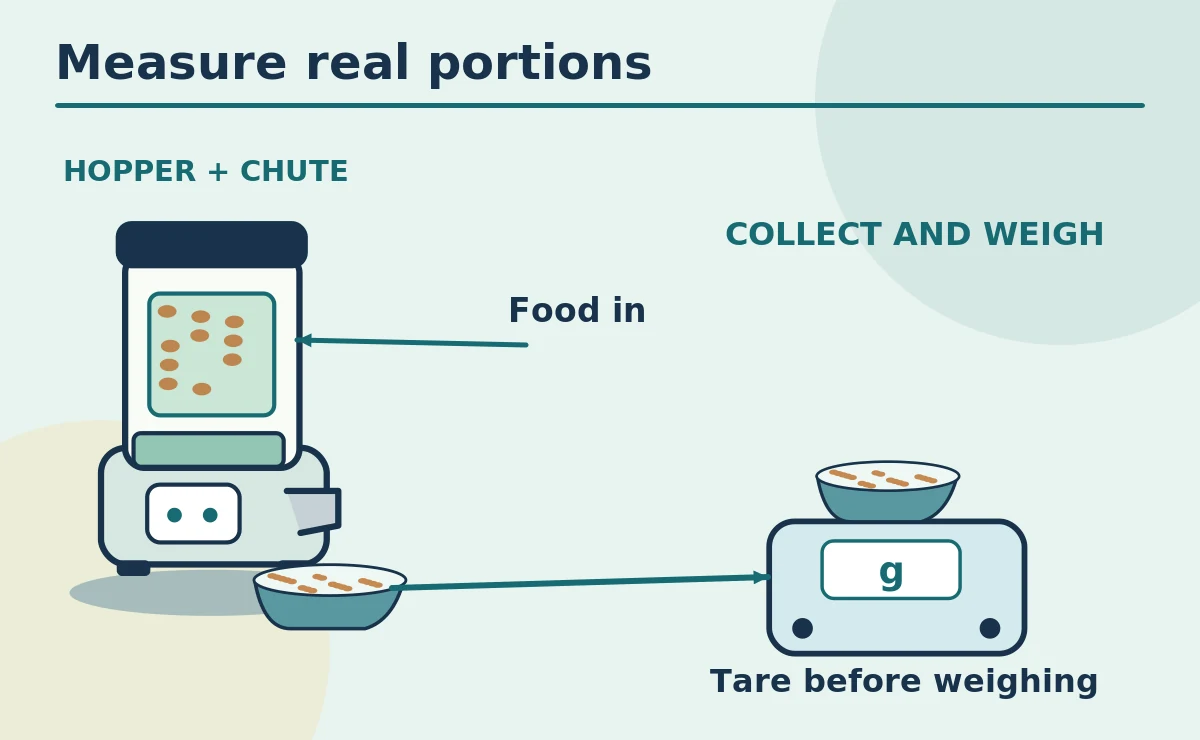
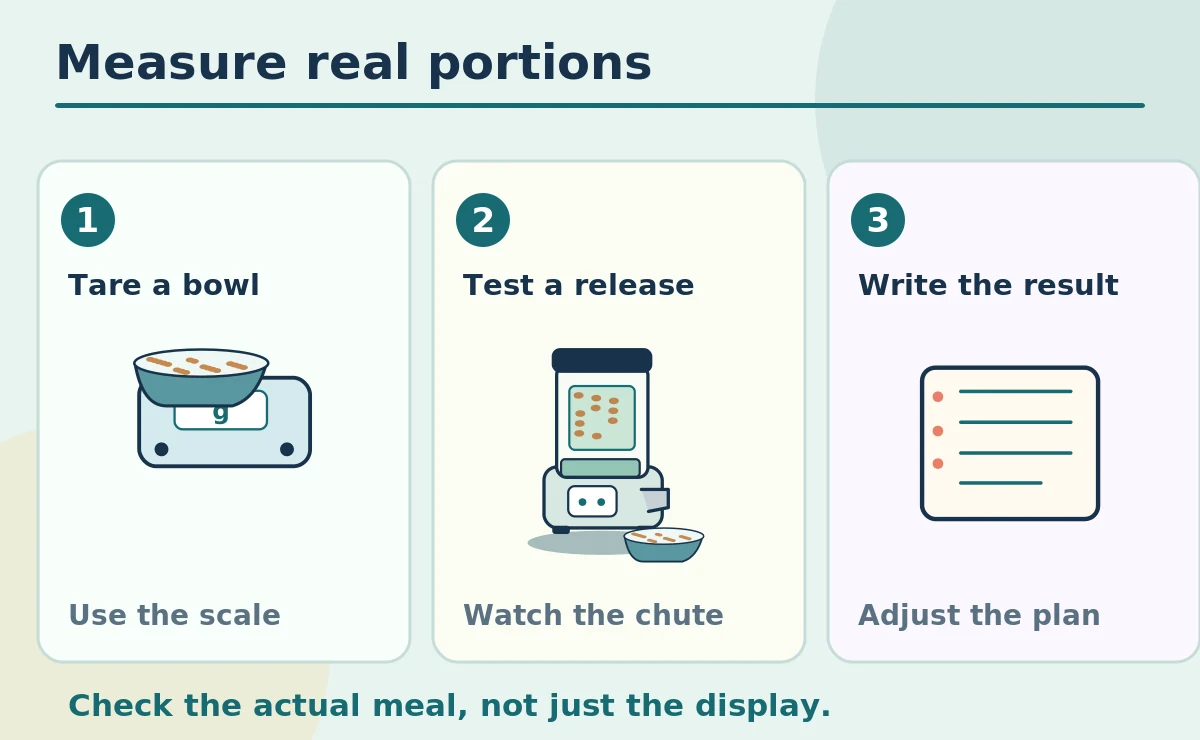
Place a clean, completely dry feeder bowl on a digital kitchen scale. Press tare so the display reads zero before adding food. If the bowl is too wide for the scale platform, use a separate clean container for the collected kibble. Next, confirm that the hopper has enough dry food to operate normally. Run the priming step in the manufacturer’s instructions if the conveyor is empty. Do not count those priming pieces as part of the measured meal. Keep pets away from the test setup so nobody eats the sample.
Measure several identical test releases
Trigger one supervised test portion and record its weight in grams. Empty the bowl, tare again, and repeat the same setting several times. One release can mislead you if a piece catches briefly in the chute. Compare the results and note any large difference, unusual sound, or delayed delivery. For example, an empty-looking bowl may mean the unit did not actually dispense. Instead of increasing the setting immediately, inspect the food path and the manual. Use your repeated results to choose a setting near the planned meal amount.
Understand why kibble geometry changes output
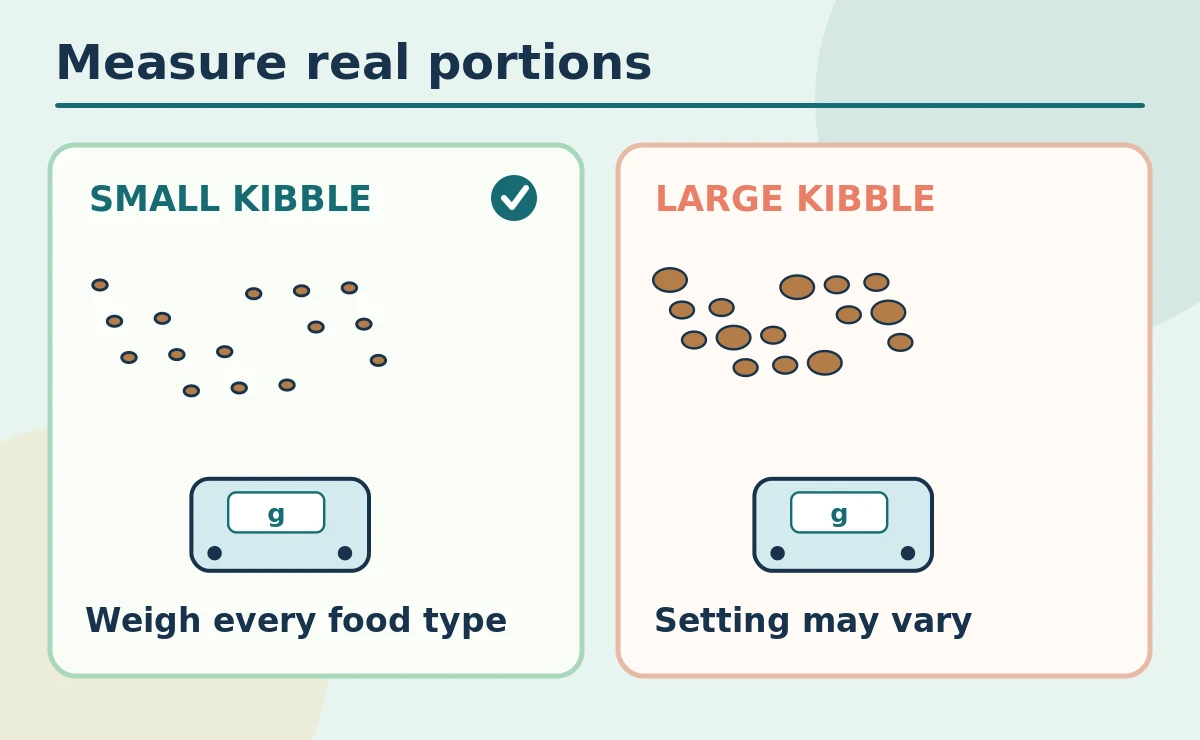
Dry foods differ in thickness, length, coating, and density. Therefore, a cup or motor turn does not always represent the same weight. Broken pieces and fine powder can also collect at narrow openings. Examine the food before filling the hopper, especially after switching formulas or opening a new bag. Never force oversized pieces through a device that lists smaller supported kibble dimensions. An uneven trickle may suggest a compatibility issue rather than a scheduling error. Match the machine’s published food requirements and use a feeder that suits the actual diet.
Translate the daily plan into scheduled meals
Once the measured output is known, divide the prescribed daily amount across the chosen mealtimes. Include snacks, training rewards, and any food served by hand so the feeder does not silently add extra calories. Then enter each scheduled portion and confirm the total on a written note. Smaller meals may suit some cats, but they are not a reason to change a medical feeding plan without guidance. If several pets share the room, watch whether the intended cat gets the full serving. A scheduled release is not proof of consumption.
Perform a full-day supervised trial
Stay home for an ordinary feeding day and observe each release. Listen for the motor, check the bowl immediately, and note leftover food before the next serving. Some cats graze slowly; others eat at once or push food out of the bowl. In addition, review whether a curious second pet can steal a portion. Record what the device dispensed separately from what the cat ate. This distinction matters when discussing appetite changes with a veterinarian. Do not leave the feeder as the only feeding option before verifying its routine.
Keep a simple calibration record
Write the food brand and formula, bag opening date, feeder model, portion setting, and measured result. Also note the bowl or container used on the scale. That small record makes future checks faster and reduces reliance on memory. When you change foods, clean the hopper, or update feeder software, repeat the relevant measurements. A feeder may retain its scheduled numbers while the actual mass changes. By contrast, an ordinary scale test catches those differences quickly. Avoid treating a single successful release as permanent accuracy certification.
Check the chute when results drift
Look for crumbs on the rim, a partially blocked outlet, and pieces trapped where the chute meets the bowl. Unplug the device before removing any approved component. Follow the manufacturer’s cleaning directions and keep electronic parts dry. Moreover, empty stale food and clean removable food-contact surfaces on the recommended schedule. The FDA advises washing and drying feeding utensils and storage containers to remove residue. Once everything is dry and assembled, test a small portion while you watch. A recurring jam needs troubleshooting, not a larger meal setting.
Avoid common measuring mistakes
Do not weigh the combined weight of the bowl and food without subtracting the container. Likewise, avoid comparing a scoop of one formula with an identical-looking scoop of another. Check that the scale uses the intended unit and sits on a firm surface. Refill the hopper according to its instructions rather than cramming it above the fill line. Also, never change a diet based only on a feeder display. If food is spilling or another pet is interfering, the problem may be access rather than volume. Correct the cause before programming more portions.
Know when a feeder is the wrong tool
Some diets require refrigeration, special textures, or precise handling that a dry-kibble dispenser cannot provide. A cat that repeatedly misses meals, guards food, or has changing appetite may need a different setup. Meanwhile, remote control and camera features do not verify that food reached the stomach. Ask a veterinarian when health, weight, or medication depends on exact intake. A suitable feeder should simplify a stable plan, not replace a person’s judgment. Keep a backup bowl and clear instructions for anyone who cares for the cat.
Recheck after every meaningful change
Repeat your short scale test after changing kibble size, resetting a program, cleaning the drive parts, or noticing an unusual amount in the bowl. Compare the current sample with your earlier notes. However, keep the process simple enough to repeat during ordinary home care. One paper log and a reliable scale are often more useful than relying on a device’s marketing precision. If the machine dispenses inconsistently despite correct setup, contact its manufacturer. Never keep compensating with increasingly large settings while the food path remains uncertain.
How We Research
We cross-checked manufacturer instructions for the specific feeder mechanisms described here and FDA or veterinary guidance where food handling and feeding routine matter. We separate documented model behavior from general shopping advice. Features such as backup batteries, local schedules, cleaning access, and portion units vary across devices. Review the current manual for the exact product before relying on a scheduled meal. Learn more about our approach on the About HubPet page.
Sources
FDA: Proper Storage of Pet Food and Treats. Refer to the source for model-specific instructions and current food-safety guidance.
AAHA: Prevention of Obesity. Refer to the source for model-specific instructions and current food-safety guidance.
PetSafe: How to Program FlexFeed Portions. Refer to the source for model-specific instructions and current food-safety guidance.
No. Portion labels and mechanics vary across models. Consult your specific manual and weigh actual output for the food you use.
Weighing repeated releases in grams helps compare output consistently. Follow the feeding plan provided for your cat and its diet.
A new kibble shape or density can change how the mechanism fills and empties. Recheck compatibility and recalibrate under supervision.
A dispensing event usually does not establish who ate the food or whether the whole portion was consumed. Watch meals and inspect leftovers.
Test after food changes, maintenance, unusual output, or a program reset. Review the schedule periodically even when the feeder seems reliable.