
The right litter scoop separates waste from clean granules without shaking clouds of dust or breaking clumps into the tray. This guide focuses on the decision that actually changes daily use. Consider the animal’s access and comfort first, then fit, cleaning, and long-term upkeep. The examples are practical screening tests rather than promises that one design works for every pet.
Match the holes to the material
The purpose of a cat litter scoop is selective separation: retain waste and used clumps, return clean granules to the tray. Slot width determines whether that works. Fine clumping litter needs openings small enough to capture intact clumps but large enough for loose grains to pass with gentle movement. Large wood pellets often need a different mesh or a purpose-built sifting approach. Nonclumping litter does not create urine clumps you can always lift. A close-slot or solid scoop helps remove feces. Follow a regular full-change routine for soiled litter. Try the tool with a small handful of clean litter before judging its design.
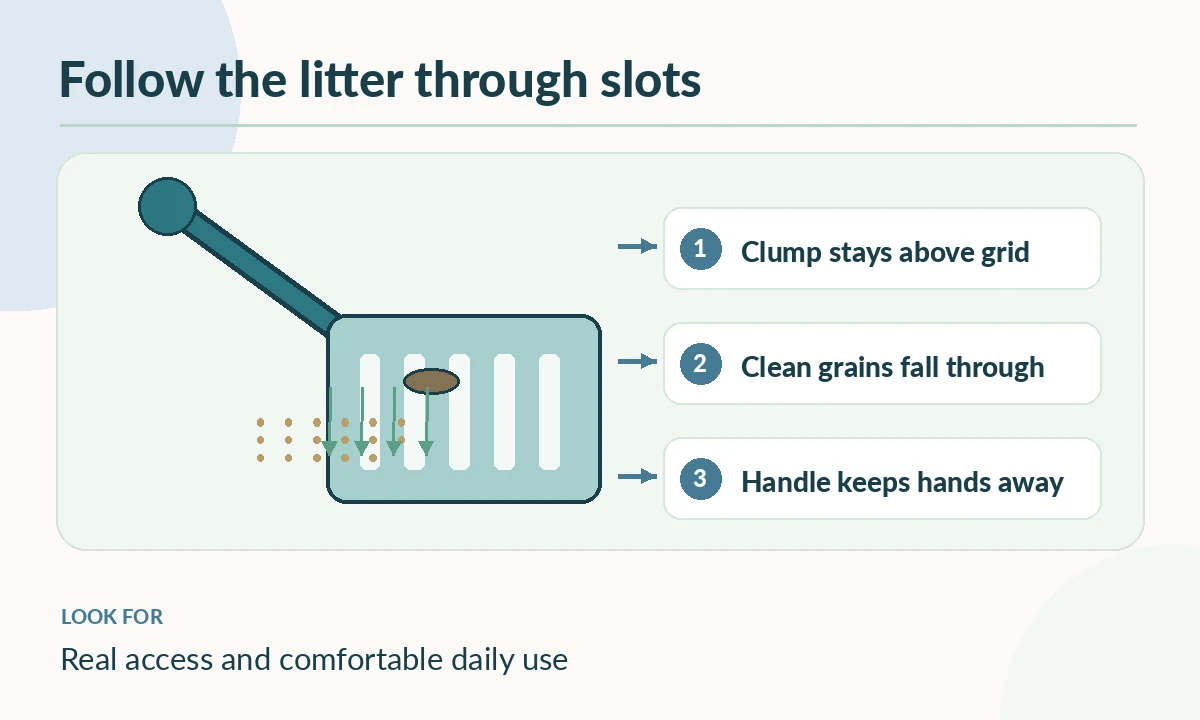
Check stiffness, edges, and reach
A flexible scoop can bow under a heavy clump, tipping dirty material back into the tray. A rigid metal or well-designed molded scoop may offer better control, but sharp edges can scratch plastic boxes or make cleanup awkward. Run a cloth carefully along the edge to identify burrs before first use. Check handle length: your hand should stay comfortably above the litter while you reach the back corners. A long handle is not useful if the tool becomes top-heavy or difficult to turn in a compact tray. Grip shape matters for anyone who scoops several boxes each day.
Understand the three common scoop shapes
A slotted shovel works with many clumping litters. A broad flat head reaches clumps on the tray floor. Deeper baskets can contain bulky waste. A perforated mesh may sift fine grains efficiently but can clog when moisture sticks to it. Oversized heads save passes in large trays yet can feel clumsy in a narrow litter box. Choose the scoop that works with your box corners and typical waste, not just the scoop with the largest head. If you often break clumps against the floor, a thinner leading edge may help you slide underneath more gently.
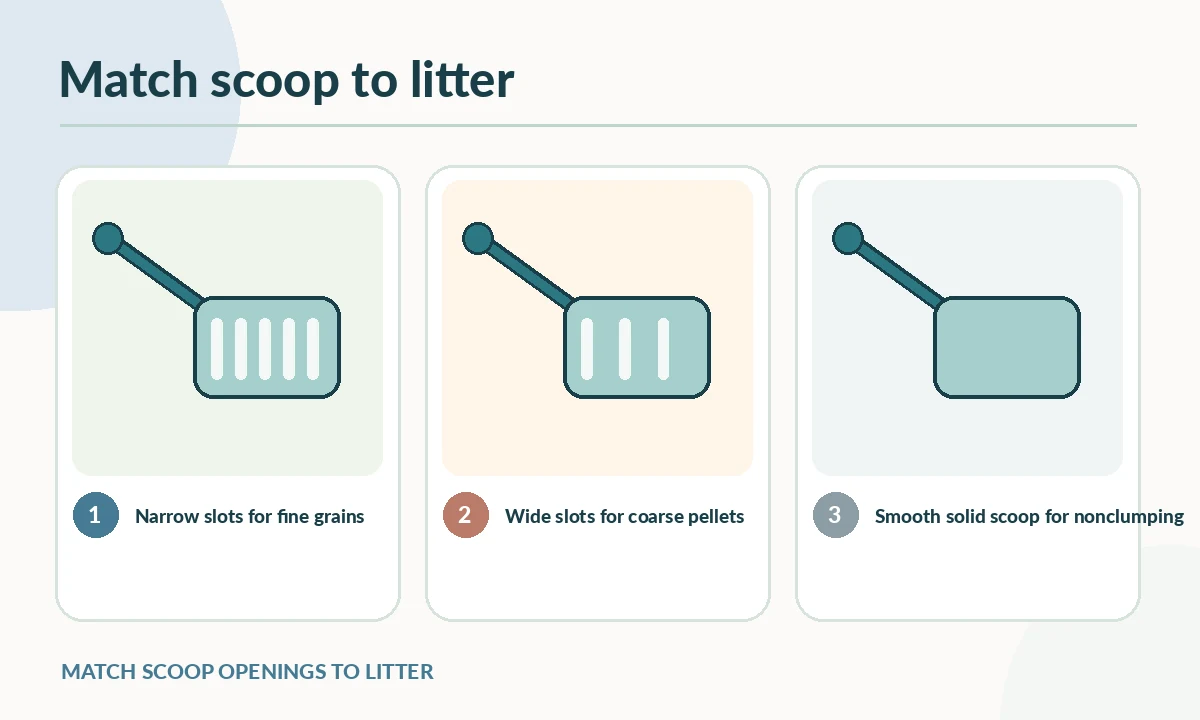
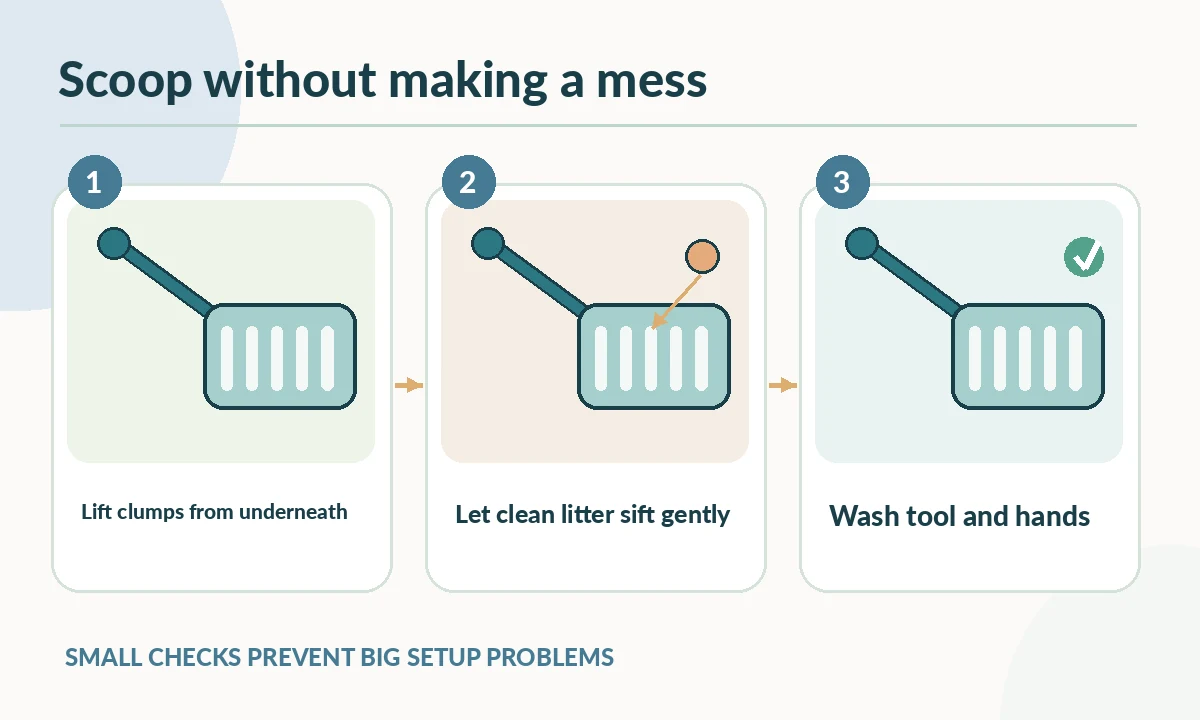
Scoop in a way that protects clumps
Begin at one end and move slowly so hidden clumps are not crushed. Slide the scoop beneath the clump rather than chopping down through it, then lift only as high as needed. Let unused litter sift through with small, controlled movements close to the tray. Shaking vigorously can fragment clumps and throw fine dust into the air. Inspect corners and the bottom surface, where wet spots may stick. Drop retained waste straight into a prepared bag or covered container. Replace displaced litter as needed while keeping a depth your cat comfortably digs in.
Clean the tool and its storage location
A scoop can carry residue to hands, hooks, and nearby surfaces. Store it in a washable holder or over a dedicated tray, not on a kitchen counter. Empty residue after each use; clean the scoop with a material-appropriate cleaner, rinse thoroughly, and dry it before storage. Do not combine cleaning chemicals or use strong fragrances inside the litter box area. Follow CDC hygiene advice: remove waste daily, wash hands after litter handling, and take extra precautions if pregnant or immunocompromised. If the tool has hollow seams that trap waste, replace it with an easier-to-clean design.
Evaluate when an upgrade pays off
Before buying a powered scoop or a complicated multistage system, identify the current failure. If clean litter falls into the waste bag, the slots may be too wide. Slow sifting may mean narrow slots or a small head. Heavy clumps that bend the blade call for a stiffer tool. An uncomfortable grip or angle can matter more than material. Test each improvement during a normal week. Keep the cat’s familiar litter unchanged so you judge the tool itself.
Keep scooping part of a larger litter plan
Even the best scoop cannot compensate for a cramped box, inaccessible location, or delayed waste removal. Check the cat’s comfort with the tray, offer separate resources where appropriate, and review any sudden avoidance with a veterinarian. Daily checks help you notice changes in litter box use. Do not try to diagnose causes from litter alone. Replace scratched or cracked equipment that can retain debris. A practical scoop is one you can use gently and clean thoroughly every day, while leaving the cat’s toileting experience predictable.
Quick decision checklist
Before making a change, check your cat’s approach and exit. Check stability and cleaning access. Ask whether the setup still works on a busy day. Offer a familiar alternative when testing a new toilet feature. Watch real use rather than relying on a product promise, and revise the arrangement if your cat hesitates or appears distressed.
How We Research
Our research compares physical design and daily use with feline welfare guidance. We prioritize voluntary access, enough room, familiar litter, and cleaning that works in a real home. Relevant sources include veterinary bodies such as AAHA, plus Cats Protection and International Cat Care. Marketing claims do not count as evidence. We make no claims of hands-on testing on commercial models. Illustrations demonstrate general principles, not safety certifications. Learn more about our editorial approach on the HubPet About page.
Sources
AAHA, General Litter Box Considerations: Read the source. Accessed October 27, 2026.
Battersea, Best litter tray setup: Read the source. Accessed October 27, 2026.
International Cat Care, Caring for your new kitten: Read the source. Accessed October 27, 2026.
CDC, About Toxoplasmosis: Read the source. Accessed October 27, 2026.
Safety note: A sudden change in urination or defecation, repeated straining, apparent pain, or persistent litter-box avoidance needs veterinary assessment; do not assume a behavior or equipment problem. For general context see our veterinary disclaimer.
A scoop with slots narrow enough to retain small clumps while letting unused granules pass is a practical starting point.
Some wide-slot scoops work better with large pellets, but pellet systems vary; match the tool to how the litter breaks down.
Rigid metal can resist flexing under heavy clumps, while smooth plastic may be lighter. Edge finish and cleanability matter most.
No. Gentle sifting avoids breaking clumps and creating unnecessary airborne dust. Work close to the litter surface.
Remove adhering waste after use and wash the scoop regularly according to its material, then dry and store it hygienically.