
Crystal cat litter generally contains porous silica granules that absorb moisture instead of forming the familiar clay clumps. That change can reduce the amount of wet material you scoop, but it also changes how you monitor and replace the litter. Crystals vary from smaller grains to larger, harder pieces; some cats dislike standing on them. This guide covers ordinary silica-crystal litter, not a clinical urine-testing system or a promise of odor-free maintenance. For individual health questions, consult your veterinarian and read HubPet’s veterinary disclaimer.
Understand the difference from clumping clay
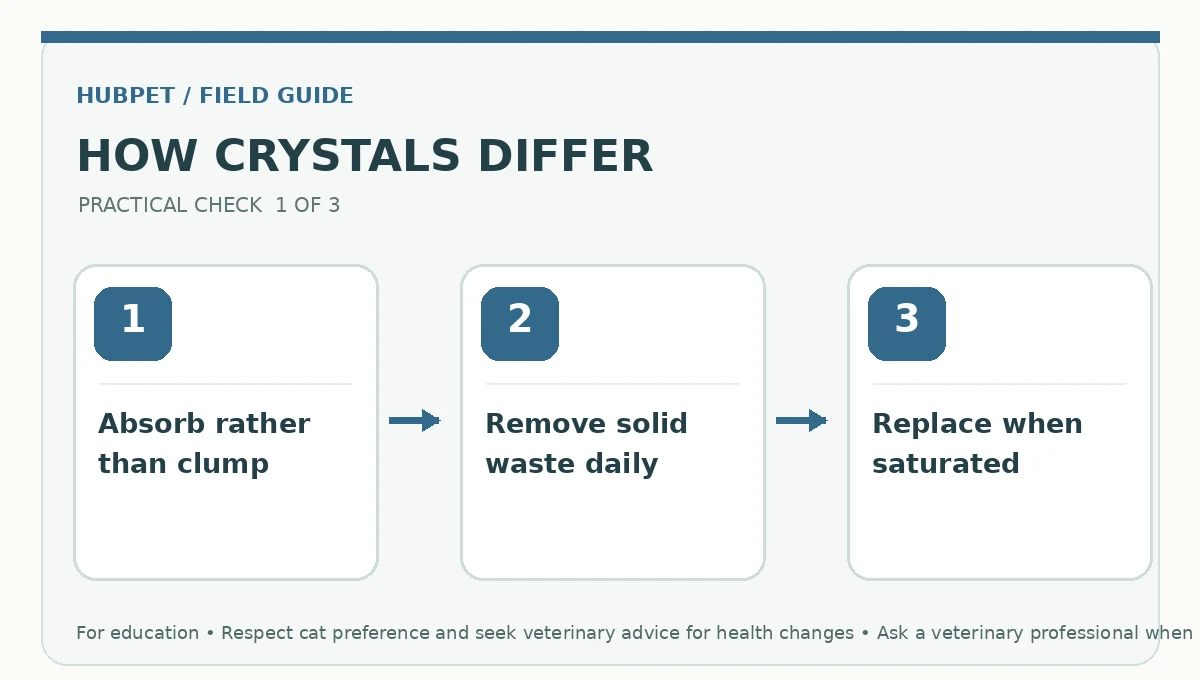
Many standard crystal litters absorb liquid into the granules, which means you do not lift an obvious urine clump each day. Instead, the product instructions may call for mixing the remaining granules and replacing the whole tray on a schedule suited to its use. Solid feces still need prompt removal. In addition, some hybrid silica products behave differently, so check the directions rather than applying generic advice to every bag. A clear box-cleaning routine matters because pooled urine or saturated granules can become unpleasant even if the surface initially looks tidy. Do not judge cleanliness only by the lack of a visible clump.
Inspect grain size and sharp-feeling pieces
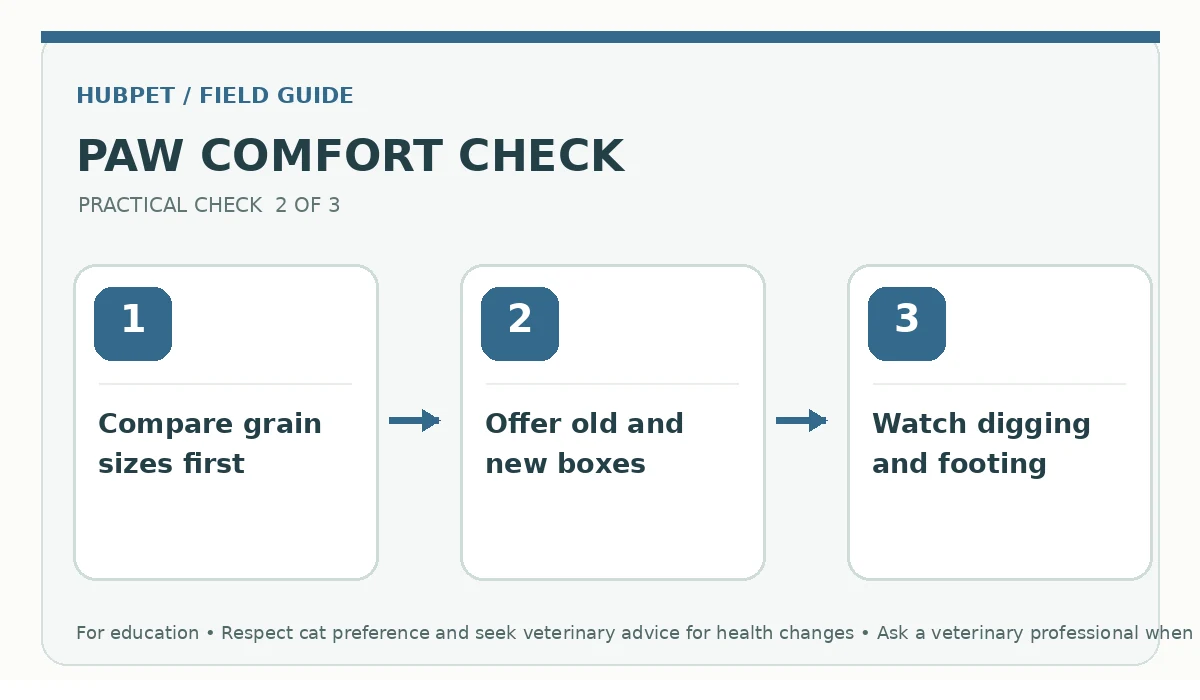
Pour a sample onto a clean flat surface and look at the largest pieces as well as the average grain. In addition, fine granules can feel different from chunky crystals, and a sensitive cat may show discomfort by standing at the edge or leaving quickly. Avoid treating reluctance as a training problem. Veterinary sources note that some cats prefer softer, finer-textured, unscented substrate. Kittens, older cats and cats with painful joints may be less willing to walk on an unfamiliar hard material. Keep a familiar litter box available while testing whether your cat can dig and cover waste comfortably.
Evaluate dust without trusting the word clear
Transparent-looking crystals can still produce fines during shipping or pouring. Meanwhile, look at dust settling around the opening when you add litter gently rather than shaking the bag. If your cat coughs, sneezes or avoids the box, evaluate the overall setup and consult a veterinarian if symptoms continue. Products claiming little dust should be compared in the same conditions, with reasonable ventilation and a clean box. A tightly covered tray can trap odor and discourage use. Avoid placing a litter box next to household fans that blow granules or waste dust into living areas.
Follow the manufacturer’s saturation signals
Some brands suggest stirring the crystals to distribute moisture, while others specify a different replacement method. Read the complete directions. Use them along with smell, visible wetness and the number of animals sharing the area. Instead, never extend replacement simply because advertising promises extended use. Take care when mixing so that you do not bury solid waste or create a dusty cloud. Clean the tray before adding new litter, rather than pouring fresh crystals on top of a saturated base. Record how many days a bag lasts in your household; shared boxes can fill faster than a single-cat setup.
Keep urine monitoring practical
A system that does not form obvious urine clumps may make it harder for you to estimate daily urine volume at a glance. Watch how often your cat visits. Note any straining or unusually wet or dry substrate. Also, some crystal products change color and advertise health insights. These signals are not a substitute for a veterinary examination or laboratory testing. Do not diagnose illness from a hue on a chart. A cat repeatedly attempting to urinate with little output needs prompt veterinary evaluation. Household monitoring should support, not replace, professional care.
Choose the right tray for the litter
Use a roomy, accessible box and confirm that the litter layer meets the package instructions without becoming too deep for comfortable footing. Also, an open tray can help you see the substrate and remove solid waste more consistently. For cats who dislike the new grains, try a second box with their usual litter rather than changing the entire home at once. Place boxes in quiet areas with more than one route away from busy doorways. A cat should not have to squeeze around a machine or jump into a tall enclosure to reach the new litter. The layout can matter as much as the product.
Store and dispose of crystals correctly
Keep unused silica litter dry and closed so moisture from a basement or laundry room does not use up some of its absorbency. Next, bag soiled crystals and feces for disposal under local regulations; do not pour them into drains or toilets. Follow the product instructions for cleaning a scoop and emptying the tray. Keep the material away from pets that chew litter, and seek veterinary advice if you suspect significant ingestion. Silica litter is not the same as household silica-gel packets or moisture absorbers, so never substitute those products. Handle each material only for its intended use.
Compare costs against effort and cat acceptance
A bag can last a long time in an advertisement yet require earlier replacement when a busy box saturates. As a result, compare the amount spent per month, how frequently you clean and whether the cat willingly uses the tray. Watch for litter grains stuck to paws or carried across hard floors; a mat may catch some pieces without blocking access. If the crystals prompt hesitancy or a change in toileting habits, any promised convenience loses value. Record your observations before committing to a bulk purchase. You can return to the known substrate without treating that as a failure.
Know the reasons to stop the experiment
Give your cat the option to use the familiar substrate throughout a reasonable trial. By contrast, stop if you see obvious discomfort, box avoidance, unusual effort to urinate or repeated accidents. New elimination problems may reflect medical issues rather than a preference alone. Ask your veterinarian to assess persistent behavior changes, and treat inability to pass urine as urgent. If the cat uses the crystal box happily, you still need daily waste removal, regular replacement and an accessible box. The best silica litter is not the most absorbent material on paper; it is one the individual cat accepts and you can maintain.

How We Research
Our editorial review compared veterinary and animal-welfare guidance on cat litter materials, feline substrate preference, accessible box placement, hygiene, and signs that warrant veterinary evaluation. We used published feline guidance as the basis for practical owner choices and contrasted it with the limitations of packaging claims. We did not run comparative laboratory absorption tests, conduct product trials or endorse brands. Texture tolerance, accessible boxes and cleaning routines vary by animal and household; ask a veterinarian about persistent behavior changes. We last reviewed the sources on October 27, 2026. Read about our editorial process on the About HubPet page.
Sources
VCA Animal Hospitals: Understanding different types of cat litter. Accessed October 27, 2026.
Cats Protection: How to choose cat litter. Accessed October 27, 2026.
Cornell Feline Health Center: Feline house-soiling behavior. Accessed October 27, 2026.
Many silica-crystal litters absorb urine without forming traditional clumps. Follow the specific product’s stirring and replacement instructions.
No. Hard or chunky granules can bother some cats, especially cats sensitive to unfamiliar texture or paw discomfort.
No. Color changes are not a veterinary diagnosis; new symptoms, straining or abnormal urination require veterinary assessment.
Use the package directions and actual signs of saturation rather than a fixed advertising claim. Continue removing solid waste every day.
No. Provide a separate box with the familiar litter and watch the cat’s voluntary choices without pressure or punishment.