
Clumping cat litter binds wet particles into scoopable clumps, allowing a person to remove urine-soaked material without emptying the entire pan each time. Many cats accept fine, unscented clumping substrates, but clump formation alone does not make a litter comfortable, dust-free, or suitable for every household. See the HubPet veterinary disclaimer for health and safety limits.
This guide compares the actual tradeoffs: clump strength, paw feel, dust during pouring, tracking into rooms, odor control, material choice, and waste handling. Rather than recommending a named product, it offers a small side-by-side test you can conduct while keeping a familiar litter option available.
Know what a good clump actually does
Clumping litter forms a mass when moisture reaches the granules, and a scoop can lift that mass out. A firm clump helps keep wet material from breaking back into the clean bed. Very sticky clumps can instead attach to the bottom of a pan or crumble when disturbed too early.
Compare how cleanly the scoop collects a normal daily clump, not a staged spill shown in an advertisement. If fragments remain after every scoop, the pan may smell sooner and need more frequent full changes. A broad enough scoop and consistent litter depth also influence results.
Compare mineral and plant-based options cautiously
Traditional clumping formulas often use clay; other formulations use materials such as corn, wheat, or mixed plant fibers. Their weight, particle shape, odor, and behavior with moisture can differ widely. A material labeled natural is not automatically safer for a particular cat or more effective in every litter pan.
Read the complete ingredient information and any product-specific restrictions. Store litter dry and away from curious pets. If a cat chews or eats litter, speak with a veterinarian rather than dismissing the behavior as normal curiosity. Product materials should fit both the cat and the household routine.

Prioritize unscented litter and familiar paw feel
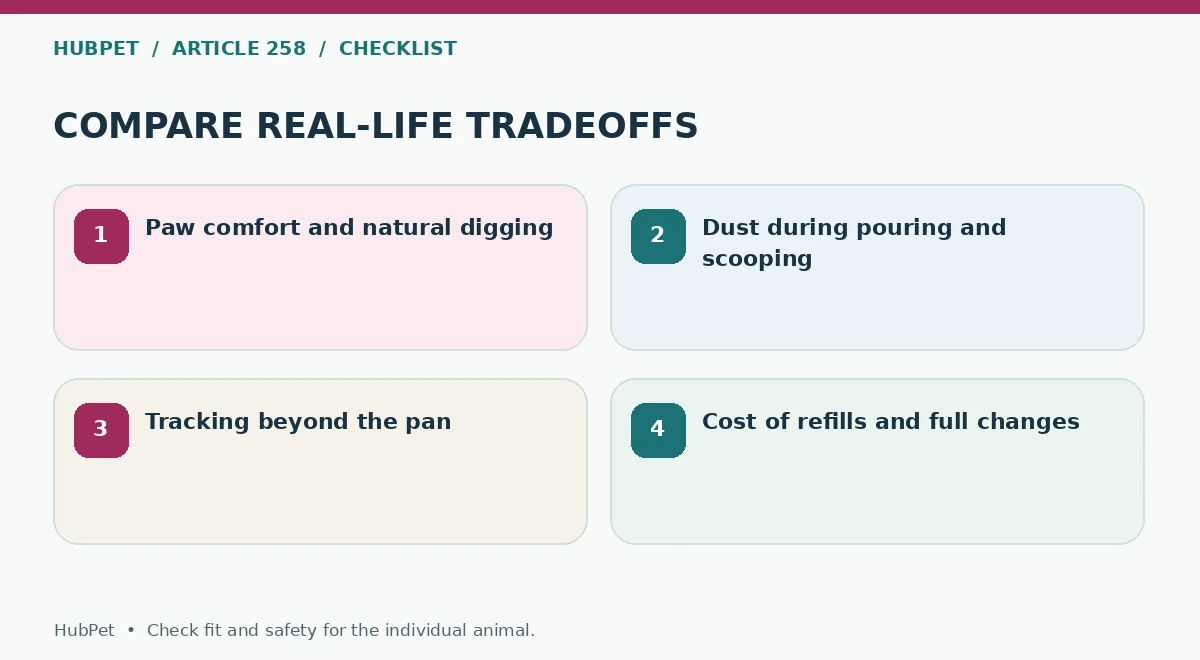
Strong fragrance may disguise odor for a person while making a pan less acceptable to a cat. Many cats prefer an unscented, fine-grained substrate that is easy to dig. Texture matters when a cat has tender paws or discomfort moving through coarse pellets.
Preserve an established comfortable material whenever possible. A cat that enters, digs calmly, and covers waste offers more meaningful feedback than a claim about pleasant perfume. Do not use scented deodorizers to compensate for neglected scooping or a poorly placed tray.
Measure dust and tracking separately
Dust describes particles stirred into the air during filling, digging, or scooping. Tracking refers to granules carried on paws outside the pan. A formula can have relatively low dust yet track extensively, or show the opposite pattern. Different floors and entry mats can change how visible tracking becomes.
Pour slowly close to the pan and observe the dust cloud in consistent lighting. Use a simple washable mat if your cat tolerates it, while leaving a clear non-slip exit. Do not judge respiratory safety only by a printed percentage or a marketing badge with no named test method.
Use an appropriate depth and a roomy pan
Cats need enough substrate to dig without contacting the bare base. Professional guidance differs on exact preferred depth, so start with your cat’s familiar level and adjust based on observed comfort and the litter instructions. Overfilling can cause more scatter and make scooping awkward.
The cat should turn freely without standing in old waste. If litter spreads outside, assess pan length, entry shape, and scratching behavior before deciding the material is defective. A cramped pan can remain unpleasant even with fresh, premium-priced litter.
Make the daily scoop predictable
Remove feces and urine clumps at least daily, increasing frequency when several cats share a location. After scooping, refill the bed to its usual depth so the cat’s experience remains familiar. Wash the pan during complete changes according to the material guidance and basic hygiene practices.
Keep scoops clean and waste sealed away from pets. Avoid flushing used litter unless a local waste authority and the product instructions expressly allow it; disposal through household trash according to local rules is the simpler default. Wash hands after litter handling.
Check whether an automatic pan needs a specific litter
A sifter, rake, or rotating cleaning mechanism may need clumps of a particular size or firmness to separate waste reliably. Large pellets may bridge a screen while soft clumps can smear. A packet saying compatible with automatic litter boxes is not a substitute for the device maker’s instructions.
Follow the device manual and prioritize mechanical safety before litter performance. Some cats reject the movement or enclosed space of an automatic model regardless of substrate. Continue to offer an ordinary open pan during any trial of a new cleaning system.
Introduce a new formula through real choice
Set up two identical accessible pans with equal depth, using the familiar litter in one and a proposed alternative in the other. Keep cleaning and placement comparable. Over several days, record relaxed voluntary use rather than forcing visits or swapping every box at once.
If the new material prompts hesitation, scratching outside, or accidents, restore the familiar option. Sudden elimination changes can have medical causes, so arrange veterinary advice rather than assuming you only chose the wrong formula. Preference testing should reduce uncertainty, not create stress.
Estimate full monthly cost, not bag price
A lightweight bag can hold a different usable volume from a heavy clay bag, and different clump strengths affect replacement frequency. Consider initial cost, quantity consumed, pan changes, storage requirements, and the time spent cleaning up tracked particles.
Write down how many scoops, refills, and full replacements your household actually uses during a trial. Avoid sweeping assumptions based on a single online review. A comfortable litter with predictable maintenance may offer more practical value than a discounted bag that the cat avoids.

Know when substrate is not the main problem
A clean litter pan in a quiet, accessible location matters even with a suitable formula. Conflict with another cat, an elevated entry, or an unwashed box can lead to avoidance. Address those factors before cycling through multiple new products and fragrances.
Repeated attempts to urinate with little output, blood, or painful toileting call for prompt veterinary assessment. A litter change is not treatment. The successful choice supports natural digging, calm use, and responsible waste monitoring without creating extra barriers.
How We Research
We checked this guide against the authoritative sources listed below on October 26, 2026. We reviewed practical differences, safety limits, and relevant home conditions rather than drawing conclusions from brand advertising. Specifications, warranty policies, and device capabilities change; check the manufacturer’s current manual. We did not purchase, laboratory-test, rank, or endorse individual products. Where a pet has pain, skin concerns, or fear, seek individual veterinary advice. See our approach at About HubPet.
Sources
ASPCA: Litter Box Problems. Accessed October 26, 2026.
VCA Animal Hospitals: Different Types of Cat Litter. Accessed October 26, 2026.
VCA Animal Hospitals: House Training for Kittens and Cats. Accessed October 26, 2026.
VCA Animal Hospitals: Cat Behavior Problems: House Soiling. Accessed October 26, 2026.
No. Many cats accept a fine, unscented clumping texture, but preferences and comfort vary. Compare voluntary use rather than expecting one formula to work for all cats.
No. Daily scooping removes wet masses, but pans still require periodic complete changes and washing according to the material and household conditions.
Some formulations bind slowly or smear against the base when wet. Check adequate litter depth, the product instructions, and how the scoop lifts clumps.
No. Different materials have different textures, dust levels, and ingestion concerns. Evaluate the specific formulation and seek veterinary advice if a cat eats litter.
A gradual preference test with a familiar alternative is gentler. Sudden refusal to use the box or signs of painful urination require veterinary attention.