
This article is general information, not veterinary advice. If your pet seems unwell, is in pain or may have eaten something harmful, contact your vet or an animal poison control line right away. Read our vet disclaimer.
How to keep pets hydrated starts with reliable access to fresh water and attention to changes in drinking, appetite, vomiting, diarrhea, heat exposure, and illness. AAHA’s 2024 fluid guidelines describe dehydration as a state in which fluid losses exceed intake, while Cornell advises prompt veterinary contact when a cat may be dehydrated. For a related practical guide, see how to Keep a Pet Cool Indoors in Summer.
How to Keep Pets Hydrated with Easy Access to Water
Put water where the pet can reach it comfortably and where another animal cannot block access. Cornell notes that conflict between cats can interfere with drinking, so multi-pet homes may need more than one water location. Therefore, how to keep pets hydrated is partly an environment problem: water must be available, clean, and easy to approach. As a result, how to keep pets hydrated includes reducing competition around a basic resource.
For cats, Cornell reports that some individuals drink more from fountains, while preferences vary. Wet food or adding water to food can also increase water intake for some cats. Do not force a universal trick if the pet dislikes it. The litter-box placement guide and multi-pet harmony guide show why essential resources work better when they are separated from conflict.
| Situation | Helpful setup | Watch for |
|---|---|---|
| Healthy routine | Fresh water in accessible places | Normal drinking pattern |
| Multiple pets | More than one water station | Blocking or guarding |
| Hot weather | Water plus heat prevention | Heavy panting or weakness |
| Illness / GI loss | Vet guidance | Vomiting, diarrhea, lethargy |

How to Keep Pets Hydrated During Heat or Illness
AAHA notes that dehydration can result from inadequate intake, excessive panting in dogs, vomiting, diarrhea, and medical conditions. During hot weather, pair water access with the heatstroke guide; water alone does not make a hot car, direct sun, or dangerous exercise safe. The emergency-signs guide covers urgent breathing, collapse, and heat-related red flags. During illness or hot weather, how to keep pets hydrated also means recognizing when water access alone is not enough.
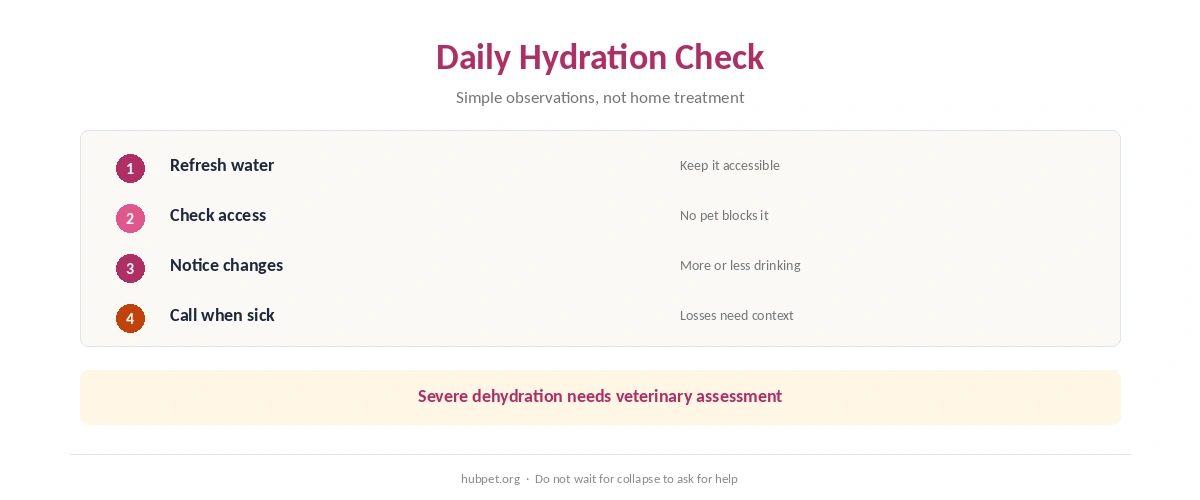
- Refresh water bowls regularly and keep them easy to reach.
- Use more than one water location when pets compete for access.
- Notice meaningful changes in drinking rather than focusing on a single generic target.
- During heat, provide water together with shade, cooling, and reduced exertion.
- If vomiting or diarrhea is ongoing, call your veterinarian rather than trying to replace substantial losses with a home formula.
- For cats that prefer it, discuss wet-food or water-added feeding strategies with your veterinary team when diet changes are appropriate.
Routine observation belongs in the daily dog care checklist and daily cat care checklist. If food also needs to change, use gradual food switching instead of changing several variables at once. Keeping one variable stable at a time makes changes easier to notice.
For a newly adopted animal, the new pet owner checklist helps establish predictable resource locations.
When to Call Your Vet About Hydration
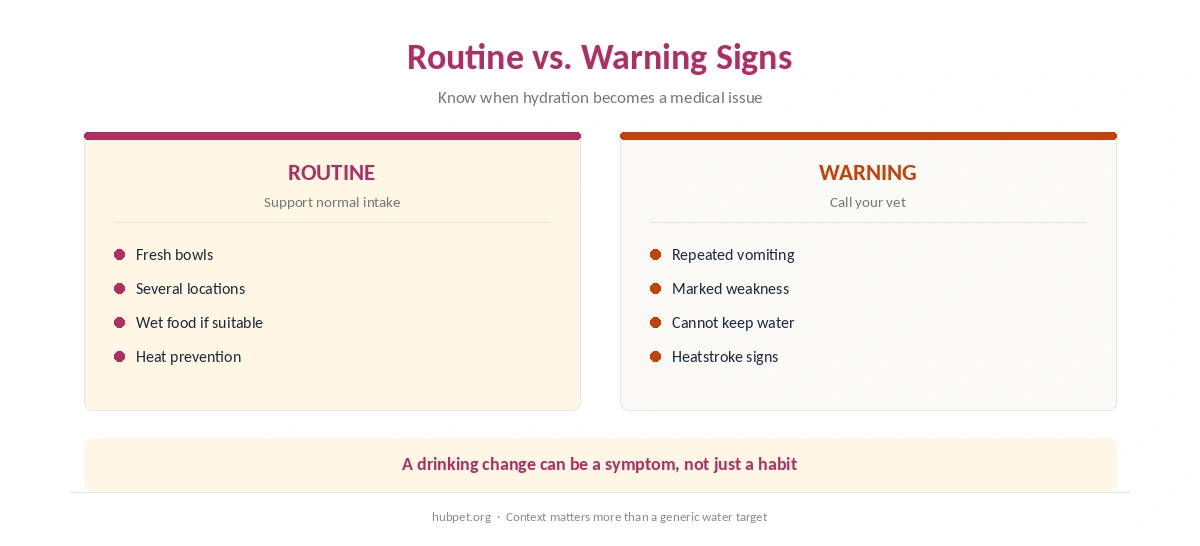
Contact your veterinarian promptly if a pet is not drinking normally and also seems weak, lethargic, painful, nauseated, or unable to keep water down. Cornell lists dry or tacky gums and reduced skin elasticity among possible dehydration signs in cats, while noting that skin turgor is less reliable in some older cats. A veterinary exam is the better way to assess dehydration accurately.
Urgent care is appropriate for collapse, severe weakness, repeated vomiting with inability to keep fluids down, significant breathing difficulty, or suspected heatstroke. If appetite also drops, compare the picky-eater guide; however, drinking and appetite changes together can be a medical pattern, not just preference.
How We Research
HubPet uses veterinary organizations and research rather than personal anecdotes. We read these sources on October 11, 2026: AAHA 2024 fluid therapy guidelines, Cornell Feline Health Center hydration guidance, accessed 2026, AAHA heat safety guidance, updated 2026. See How We Research for our method.
How to Keep Pets Hydrated FAQ
There is no single number that fits every home. Provide enough accessible water locations that another pet, noise, or room layout does not block drinking.
Some do, but Cornell notes that preferences vary. A fountain can be an option, not a requirement.
Cornell notes that wet food or adding water to food can increase water intake for some cats. Discuss diet changes with your veterinary team when needed.
Mild changes still need context, and significant dehydration or ongoing fluid loss needs veterinary assessment. Do not improvise fluid treatment for a sick pet.
Urgent signs include collapse, severe weakness, inability to keep water down, breathing difficulty, or suspected heatstroke.