
This article is general information, not veterinary advice. If your pet seems unwell, is in pain or may have eaten something harmful, contact your vet or an animal poison control line right away. Read our vet disclaimer.
Why dogs eat poop, a behavior called coprophagia, has more than one possible explanation. VCA notes that scavenging, maternal cleaning behavior, access to feces, and learned habits can all play a role, while medical causes deserve consideration when the behavior is new or accompanied by other signs (VCA, accessed 2026). For a closer look at the related behavior pattern, see why Your Dog Eats Grass.
Why Dogs Eat Poop: What Research Actually Found
A 2018 survey study compared 1,552 dog-owner responses and also analyzed 1,475 responses from owners of coprophagic dogs. In that study, 16% of sampled dogs met the researchers’ definition of frequent conspecific coprophagy, and the dogs strongly favored fresh stool. The study did not find evidence that diet or dog age explained the behavior. Therefore, why dogs eat poop does not fit a simple “nutrient deficiency” story. That evidence is another reason why dogs eat poop works better as a behavior question with several possible contexts. For a related behavior guide, see why Dogs Eat Cat Poop.
The same study reported poor owner-rated success for several commercial products and behavior-modification approaches. That does not mean management is pointless; it means owners should be cautious about miracle claims. A newer 2026 study of 44 healthy dogs found no significant difference in the measured core fecal microbiota or selected enteropathogen carriage between coprophagic and non-coprophagic groups. The sample was small, so it does not prove that feces are risk-free.
| Possible context | What to do | Why |
|---|---|---|
| Access to fresh stool | Pick up promptly | Prevents rehearsal |
| Walk scavenging | Use leash skills and supervision | Limits access |
| New sudden behavior | Call your vet | Medical causes may need checking |
| Punishment cycle | Stop punishment | Can add stress and does not teach a replacement |
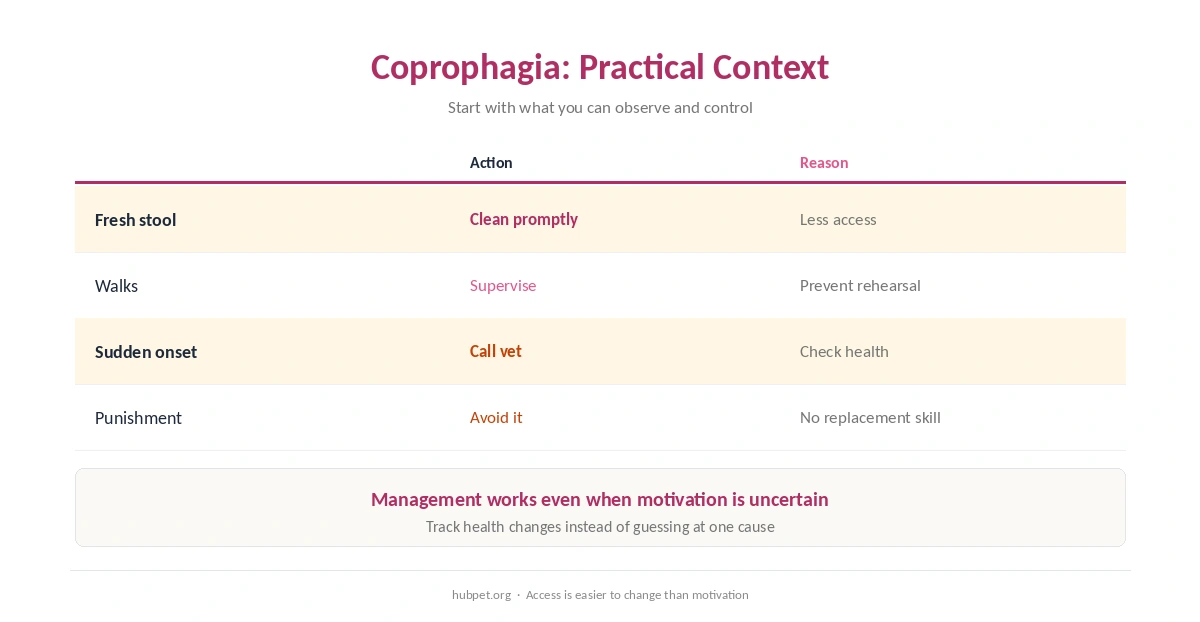
Why Dogs Eat Poop and What You Can Do at Home
The most direct management step is prompt stool pickup. On walks, use supervision and reward attention away from feces. The recall guide, loose-leash guide, and basic training guide can strengthen the skills that make prevention easier. A prevention-first plan is a practical way to address why dogs eat poop while you watch for health changes.
- Arrange prompt cleanup in the yard or litter-box area before the dog can investigate.
- Keep the dog on a leash where feces are common until reliable alternative skills are in place.
- Reward the dog for turning away, checking in with you, or moving on with you.
- Do not chase the dog around the yard because the chase itself can become part of the pattern.
- Do not punish toileting accidents or rub a dog’s nose in stool.
- Track when the behavior started and whether appetite, weight, stool, thirst, or energy changed at the same time.
If the dog also raids food or trash, use the counter-surfing plan, pet-proofing guide, and begging guide. Those pages use the same idea: prevent easy rehearsal while rewarding a better choice.
The daily dog care checklist can help you spot changes that make the behavior more medically relevant.
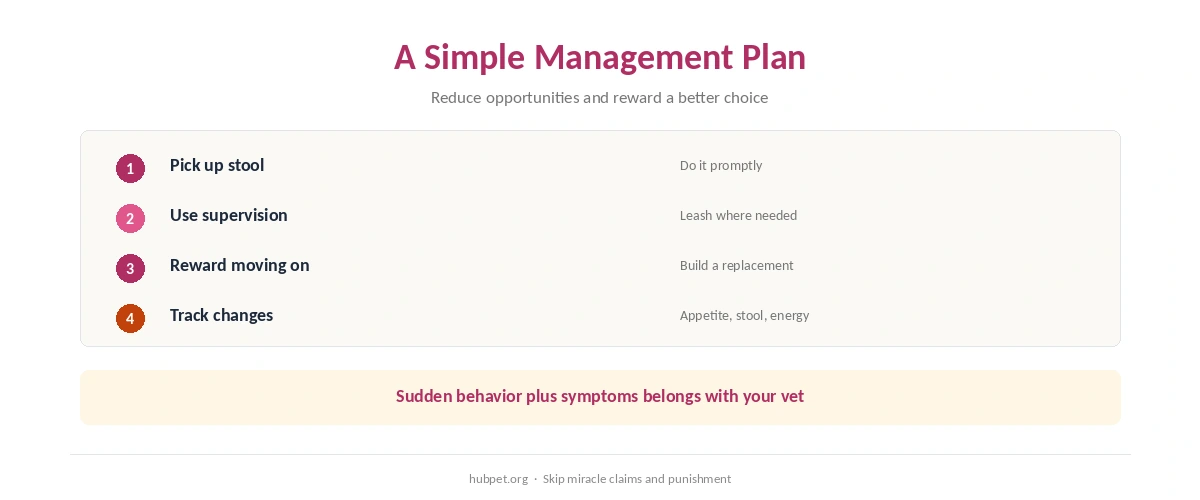
When to Call Your Vet About Coprophagia
Call your veterinarian when coprophagia begins suddenly, becomes intense, or appears with weight loss, increased hunger or thirst, vomiting, diarrhea, poor stool quality, lethargy, or other health changes. VCA specifically recommends ruling out medical contributors when appropriate. The picky-eater guide may help track appetite patterns, but it cannot replace an exam.
Seek urgent care if the dog becomes seriously ill after eating feces or another unsafe substance. Use pet emergency signs for collapse, breathing difficulty, severe weakness, seizures, or other emergencies. For routine prevention, keep food and waste secured through the pet-proofing checklist.

How We Research
HubPet uses veterinary organizations and research rather than personal anecdotes. We read these sources on October 11, 2026: VCA coprophagia guidance, accessed 2026, Hart et al. coprophagia survey study, 2018, prospective microbiota study in healthy dogs, 2026, AVSAB humane training position, reaffirmed 2025. See How We Research for our method.
Why Dogs Eat Poop FAQ
No. Research has not established a simple deficiency explanation for most dogs. New or unusual behavior still deserves veterinary context.
No. Use prevention, cleanup, supervision, and reward-based redirection instead.
No. A large 2018 owner survey reported very low success for the products and approaches evaluated.
No behavior involving feces is risk-free. Prevent access and ask your veterinarian about individual health or parasite concerns.
Call when the behavior is sudden or comes with appetite, weight, thirst, stool, vomiting, diarrhea, energy, or other health changes.