
This article is general information, not veterinary advice. If your pet seems unwell, is in pain or may have eaten something harmful, contact your vet or an animal poison control line right away. Read our vet disclaimer.
How to keep floors clean with pets works best when you stop dirt near the door, collect loose hair often, and follow cleaning-product labels. ASPCA Poison Control says most household cleaners can be safe around dogs and cats when people follow label directions (accessed 2026).
How to Keep Floors Clean with Pets by Catching Dirt Early
How to keep floors clean with pets starts at the entry point. Keep an absorbent mat where pets come inside. Have a towel ready for wet paws. The goal is to stop mud and grit from traveling through the whole home. Pair this with general pet-proofing so cleaning supplies do not become another hazard.
How to keep floors clean with pets also means collecting loose hair before it spreads. The shedding guide explains coat care. Pet-hair management covers soft surfaces. On floors, small frequent jobs can prevent a large buildup.
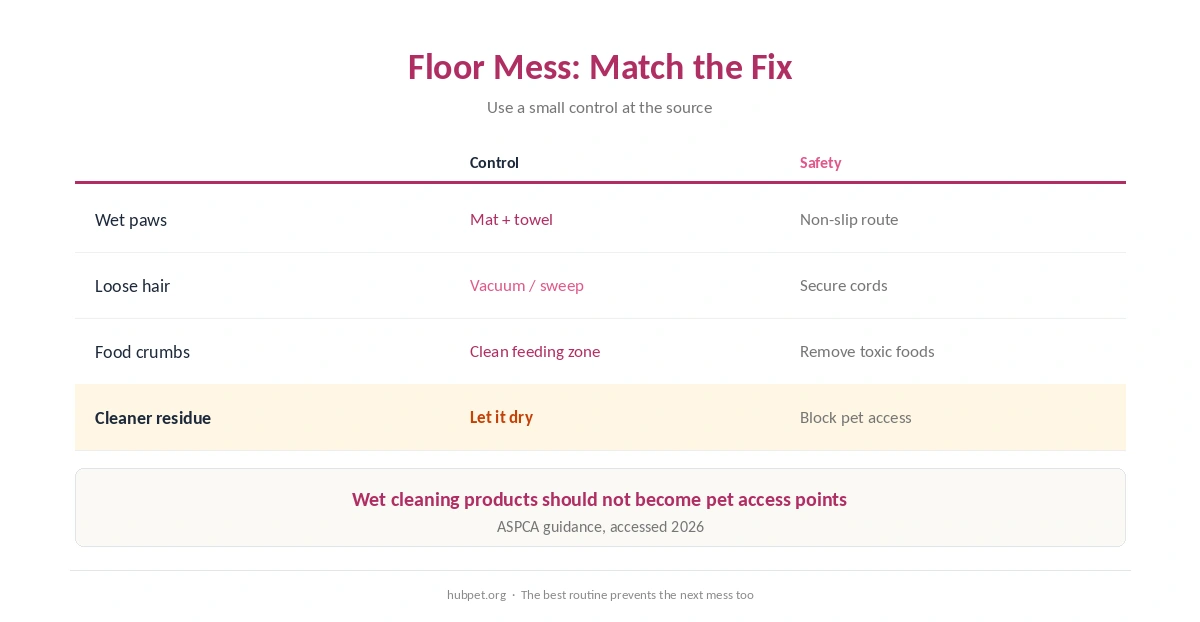
| Problem | Low-effort control | Safety check |
|---|---|---|
| Wet paws | Entry mat + towel | Keep the path non-slip |
| Loose hair | Vacuum or sweep often | Store cords and tools safely |
| Food crumbs | Clean feeding zone | Keep toxic foods inaccessible |
| Cleaner residue | Follow label and let dry | Keep pets away while wet |
How to Keep Floors Clean with Pets Without Creating a Chemical Risk
How to keep floors clean with pets safely also means controlling chemical access. ASPCA says most cleaning products are safe when people follow label directions (ASPCA, 2020; household guidance accessed 2026). Keep pets away from wet solutions, dirty mop water, and stored chemicals. In 2026, ASPCA also warned that corrosive household products can cause serious injury. Keep pets away from treated areas until surfaces are dry.
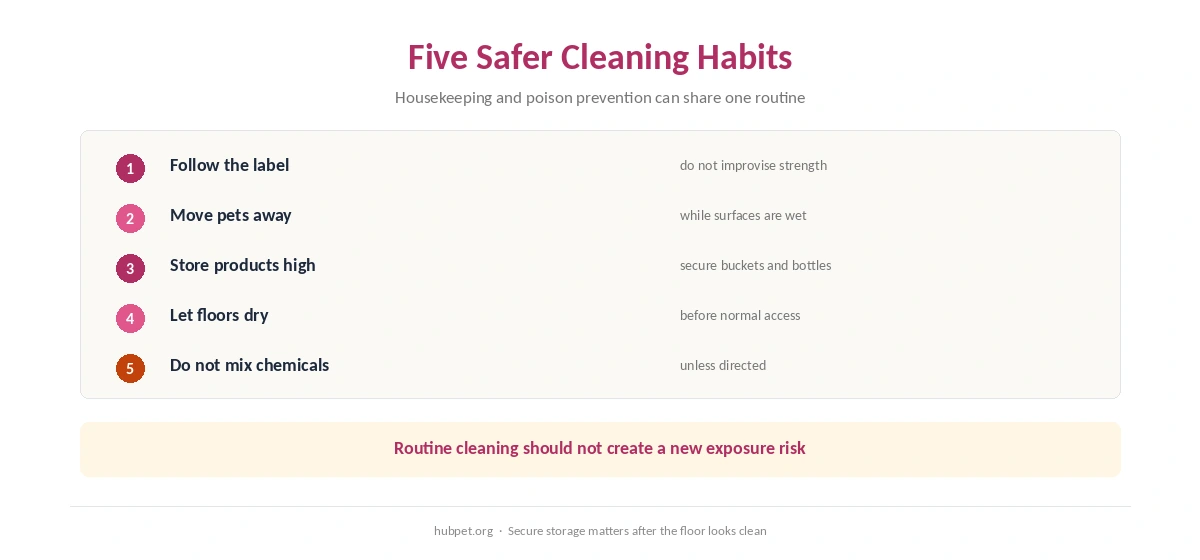
- Read and follow the product label instead of improvising a stronger concentration.
- Move pets away while you use a cleaning solution and while the floor remains wet.
- Store cleaners, mop buckets, and laundry products where pets cannot reach them.
- Let cleaned surfaces dry before pets walk on them when the label or poison-control guidance calls for it.
- Never mix household chemicals unless the product directions specifically instruct it.
For the rest of the home, connect the floor routine to odor control. The pet-proofing checklist helps keep supplies and hazards organized.
In the kitchen, use counter management to reduce crumbs and access. A coordinated routine handles food, trash, hair, and access problems together.
Food scraps deserve special attention. Keep dog-toxic foods and cat-toxic foods off the floor.
Also check toxic houseplants before sweeping dropped leaves into a pile a pet can investigate. Remove the hazard before finishing the floor.
How to keep floors clean with pets becomes easier when small tasks join the daily routine. The dog care checklist and cat care checklist separate ordinary housekeeping from new health or behavior changes.
When a Cleaning Exposure Needs Veterinary Help
ASPCA says to contact a veterinarian or animal poison control after exposure to a potentially toxic household substance. Its 2026 corrosive-products guidance says suspected corrosive ingestion needs prompt veterinary care. Do not induce vomiting unless a veterinarian specifically directs it (ASPCA, 2026).
If a pet has trouble breathing, collapses, has a seizure, or shows another urgent sign after an exposure, use pet emergency signs. Seek urgent care. Housekeeping can wait; suspected exposure cannot.

How We Research
HubPet uses veterinary and research sources rather than personal anecdotes. We read these sources on October 11, 2026: ASPCA Poison Control household-products guidance, accessed 2026, ASPCA cleaning-agent safety guidance, 2020, ASPCA corrosive household-products guidance, 2026. See How We Research for our method.
How to Keep Floors Clean with Pets FAQ
There is no universal schedule. Frequent light cleaning of entry areas and hair tends to be easier than waiting for a large buildup; adjust to coat, weather, flooring, and household traffic.
ASPCA says most cleaning products can be safe for dogs and cats when used according to label directions. Keep pets away from wet treated areas and store products securely.
“Natural” does not automatically mean harmless. Follow the label and use poison-control guidance for the actual ingredients and exposure.
Keep pets away from cleaning solutions and dirty mop water. Then empty the bucket and store the supplies somewhere pets cannot access.
Contact your veterinarian or an animal poison control service with the product information. Do not induce vomiting unless a veterinarian directs you to do so.