
This article is general information, not veterinary advice. If your pet seems unwell, is in pain or may have eaten something harmful, contact your vet or an animal poison control line right away. Read our vet disclaimer.
How to reduce pet odors at home starts by finding the source instead of covering the smell. ASPCA recommends daily litter-box scooping and thorough cleaning of accidents with an enzymatic cleanser (ASPCA, accessed 2026). AAHA says persistent bad breath can signal dental disease (AAHA, updated 2026). VCA also lists foul ear odor and strong skin odor with infection as reasons to seek veterinary assessment (VCA, accessed 2026).
How to Reduce Pet Odors at Home: Start With the Source
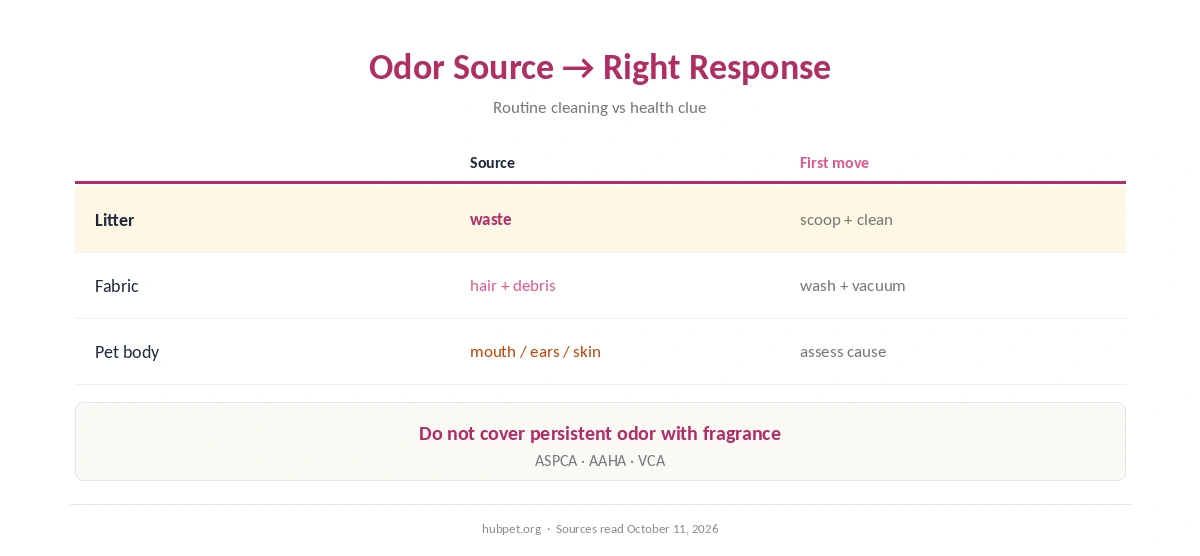
To reduce pet odors at home, divide smells into three groups: routine environment, coat and bedding, or a possible health source. How to reduce pet odors at home becomes easier when you identify that source before choosing a cleaning step. First, clean the routine source directly rather than spraying fragrance over it. Then ask whether the smell returns quickly or comes from one body area. Redness, discharge, itching, or another change shifts the question toward health (AAHA and VCA, 2024–2026).
| Odor source | First home step | When it changes category |
|---|---|---|
| Litter box | Scoop daily; clean the box routinely | New avoidance or elimination changes need a vet check |
| Bedding / furniture | Wash removable layers; vacuum hair and debris | Persistent body odor may not be a fabric problem |
| Mouth | Do not mask with fragrance | Persistent bad breath needs dental assessment |
| Ears / skin | Do not keep cleaning a painful area | Foul odor with redness or discharge needs a vet |
How to Reduce Pet Odors at Home: Clean the Environment First
ASPCA advises scooping cat litter at least daily (ASPCA, accessed 2026). It also recommends cleaning accidents thoroughly with an enzymatic cleanser designed to neutralize odor (ASPCA, accessed 2026). Therefore, use the daily cat care checklist to keep litter maintenance predictable. For soft surfaces, managing pet hair on furniture adds washable layers and repeatable vacuuming so odor-producing debris does not build up.
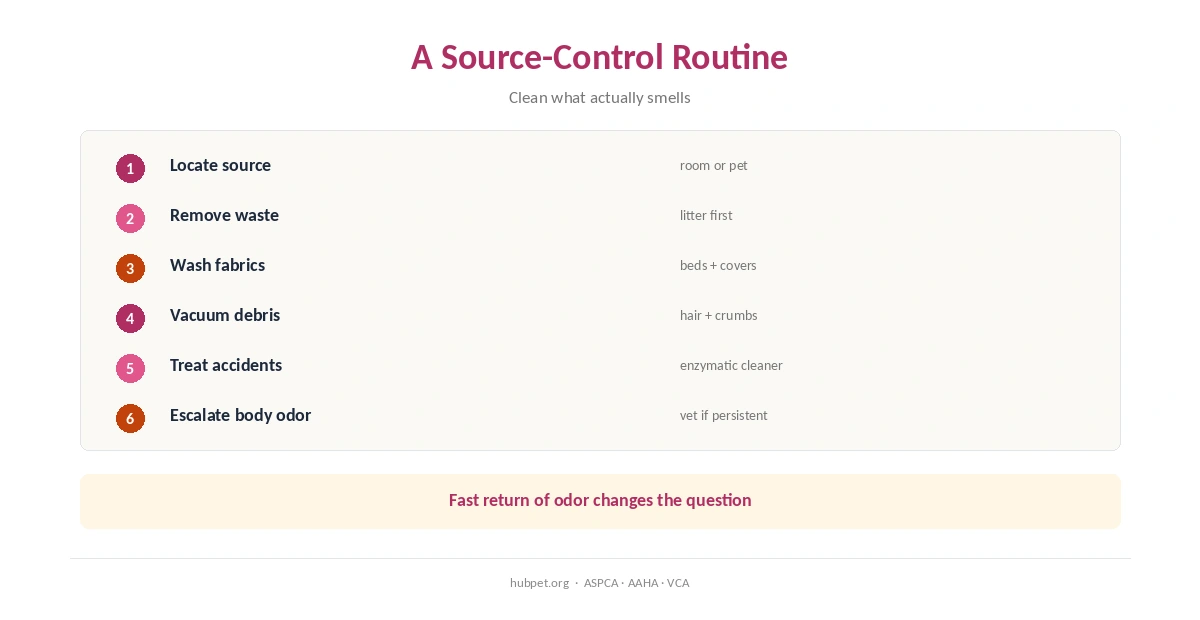
- Identify the exact source before cleaning the whole room.
- Scoop litter and remove waste on a consistent schedule.
- Wash pet bedding and removable furniture covers before odor becomes deeply embedded.
- Vacuum hair, dander, crumbs, and debris from favorite resting areas.
- Clean urine or stool accidents with an appropriate enzymatic cleanser instead of fragrance alone.
- If the smell comes from the pet and returns quickly, check for a health source rather than repeating baths.
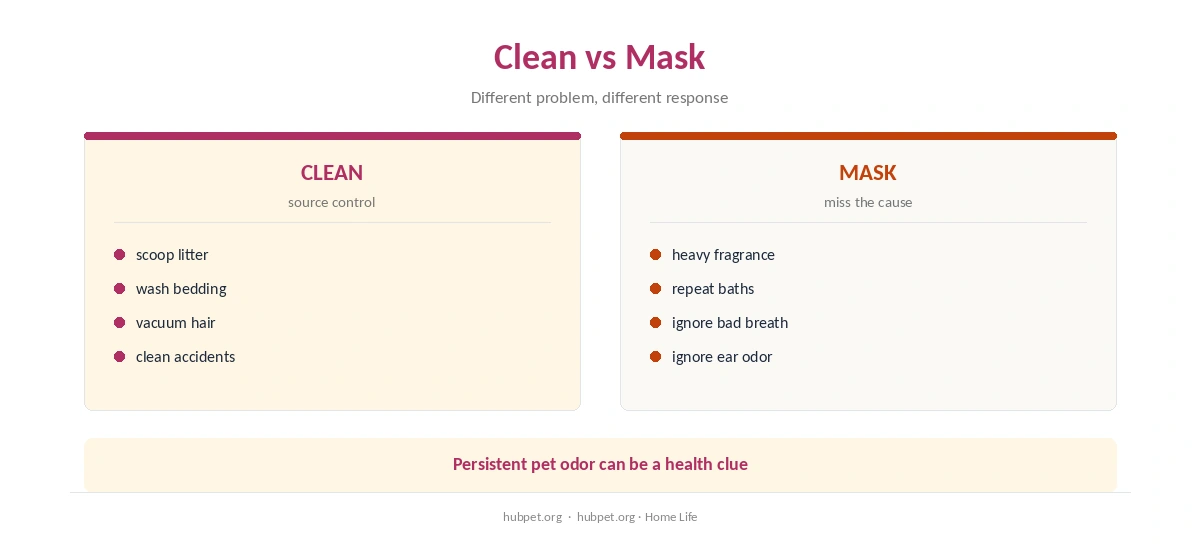
Coat care can help when the smell is simply dirt or normal buildup. Use grooming a dog at home, brushing a cat without stress, or the new dog bathing guide as appropriate. However, VCA says persistent strong odor can occur with skin or ear infection (VCA, accessed 2026). Repeated bathing should not replace veterinary assessment when other changes are present (VCA, accessed 2026).
Odors You Should Not Just Mask
AAHA says bad breath is often an early sign of dental disease (AAHA, updated 2026). Therefore, persistent “doggy” or “kitty” breath should not simply be treated as normal (AAHA, updated 2026). VCA says ear infections can cause a bad odor along with redness, discharge, scratching, or head shaking (VCA, accessed 2026). VCA also notes that skin or ear infection can create a musty odor in dogs with allergic skin disease (VCA, accessed 2026).
For dogs, cleaning dog ears safely explains why routine cleaning should be individualized instead of aggressive. Also, the daily dog care checklist gives a simple way to notice whether smell is appearing alongside a change in coat, appetite, movement, or behavior.
When to Call Your Vet
Contact your veterinarian for persistent bad breath, foul ear odor, ear discharge, or red or painful skin (AAHA, updated 2026; VCA, accessed 2026). Also call for strong recurring body odor, sudden litter-box changes, or another new physical or behavioral change (ASPCA and VCA, accessed 2026). AVMA lists trouble breathing, collapse, seizures, and suspected poisoning among reasons for urgent veterinary action (AVMA, 2025). Go now for these or another emergency sign in pet emergency signs.
How We Research
HubPet uses veterinary, welfare, and behavior sources rather than personal anecdotes. We read these sources on October 11, 2026: ASPCA Litter Box Problems, AAHA pet dental care, updated 2026, VCA ear infections in dogs, VCA skin allergy and odor guidance. AVMA Pet First Aid, 2025. See How We Research for our method.
How to Reduce Pet Odors at Home FAQ
Find the source. Clean litter, waste, bedding, furniture, or an accident directly rather than covering the room with fragrance.
ASPCA advises scooping at least once a day and keeping the box clean.
No. AAHA says persistent bad breath is often an early sign of dental disease and should lead to a dental evaluation.
Yes. VCA lists bad odor, redness, discharge, scratching, and head shaking among common signs of ear infection in dogs.
Not automatically. If odor returns quickly or comes with skin, ear, mouth, or behavior changes, contact your veterinarian instead of repeatedly bathing.
The Bottom Line
How to reduce pet odors at home is a source-control problem first. Clean litter, accidents, bedding, furniture, and loose hair on a routine, but do not mask persistent mouth, ear, or skin odor. ASPCA, AAHA, and VCA guidance supports switching from cleaning mode to veterinary advice when the smell comes with other changes (2024–2026 sources).