
A little “brrrp” when you walk into a room can sound very different from an ordinary meow. Cats make several short vocalizations that people call chirps, trills, or chirrups, and the same word is sometimes used for the rapid chatter heard at birds outside a window. To understand why your cat chirps at you, pair the sound with what the cat is doing. For sudden vocal changes alongside illness signs, see our veterinary disclaimer and seek veterinary guidance.
VCA describes chirping and trilling as common friendly greetings; Cats Protection describes a chirrup as a short contact sound. No recording can reliably translate every cat call into a specific message. Our guide to cat meows covers a related but distinct kind of vocal communication.
Listen for the kind of short sound you hear
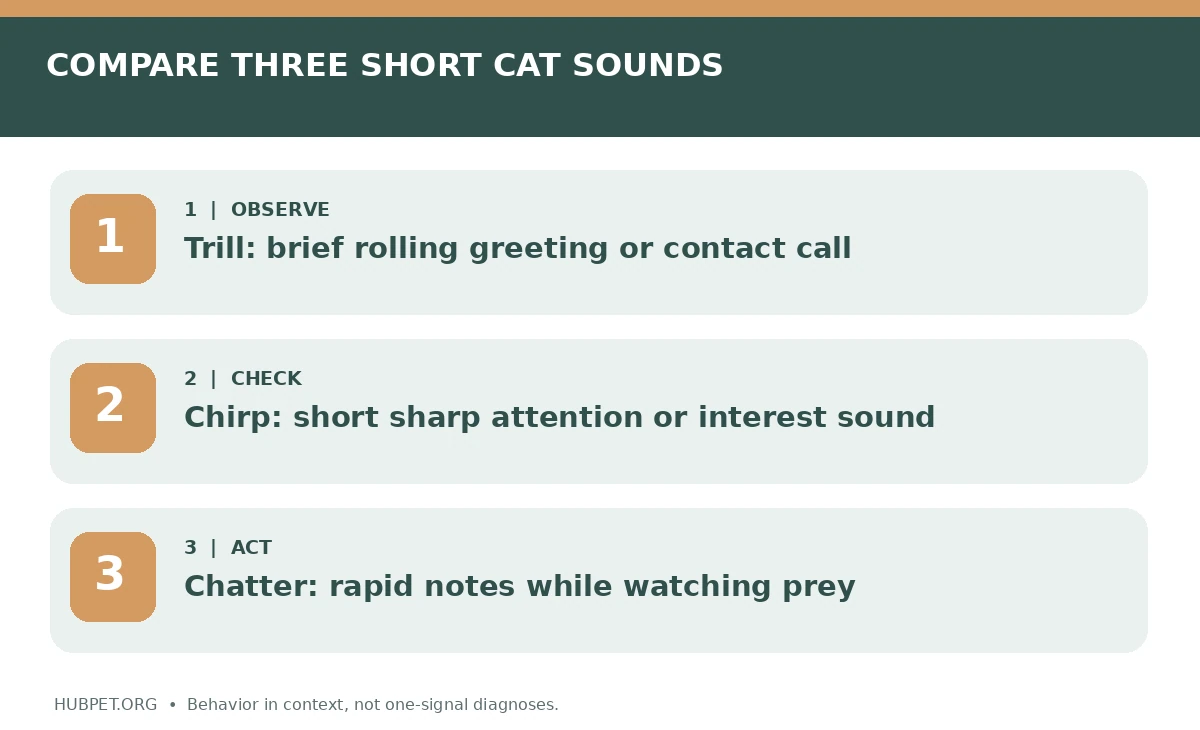
A trill often sounds like a brief rolling “prrt,” made as a greeting or contact call. A chirp may be a sharper short note. Rapid chattering at prey behind glass often has a different rhythm and context. Owners may use the same word for all three, so describe the sound rather than insist on a fixed label.
If a veterinarian asks about a vocal change, a short recording is more useful than spelling the noise. Include the animal’s posture and the environment in the clip. A chirp while walking toward you is different from irregular breathing or a cough that happens during rest.
A friendly greeting often has matching body language
Cats Protection notes that cats may greet people with soft chirrups. Look for a relaxed tail, forward or neutral ears, comfortable movement, and willingness to approach. The sound alone does not guarantee a wish to be picked up or touched.
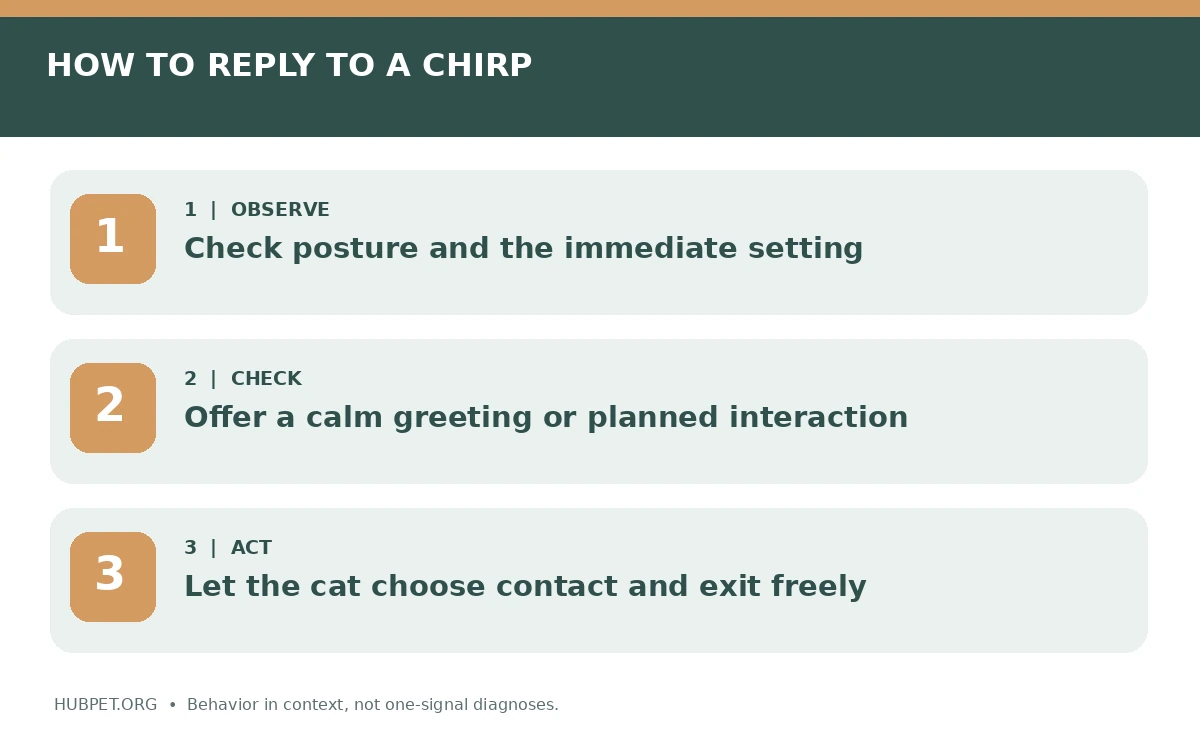
Respond with a calm voice and a still hand if the cat approaches. Let your cat decide whether to rub, stay nearby, or move along. Do not chase a retreating cat to complete a greeting. Choice protects trust better than a loud imitation of the sound.
A chirp may be a learned attention signal
Notice whether your cat chirps right before you open a door, prepare a meal, or begin play. Cats often develop specific calls that bring a predictable human response. A recurring sound can therefore become part of your routine without indicating an unmet medical need.
Before offering extra food, check the usual feeding schedule. Try a brief greeting or a planned play session when your cat appears to want engagement. This avoids teaching that every vocal request earns additional snacks while still acknowledging normal communication.
Window chatter is not identical to a greeting trill
A cat that stares at a bird, holds a fixed gaze, and rapidly chatters may be expressing interest in prey that is out of reach. VCA describes such chattering as potentially connected with excitement or frustration. It does not mean the cat intends to attack you.
Provide a secure view and safe indoor play opportunities instead of opening an unsecured window. Never use the sound as an excuse to let a cat leap toward wildlife. Our window-watching guide covers the value of observation without treating window access as an outdoor safety system.
Read posture and setting before replying
Soft movements and an easy approach suggest one kind of encounter. Flattened ears, a tucked body, frantic pacing, or a sudden refusal to eat suggest another. Sound categories are helpful starting points, but body language and behavior changes carry essential information.
Take a moment to notice whether the chirp follows your arrival, an approaching dog, a noisy appliance, or an inaccessible toy. Changing the immediate situation may help more than trying to train a cat to be silent. Never punish vocalizing that may reflect discomfort.
How to respond without creating a demand cycle
Acknowledge the sound gently, then offer an appropriate choice: petting if invited, play at the usual time, or a quiet place. If your cat repeatedly calls for food, keep servings on a consistent schedule instead of adding a snack every time the cat chirps.
Avoid ignoring all calls by rule. A new or unusually urgent sound could accompany a genuine need. Check water, access to the litter box, physical condition, and the environment before deciding the cat simply wants attention.
When a chirp is actually a different noise
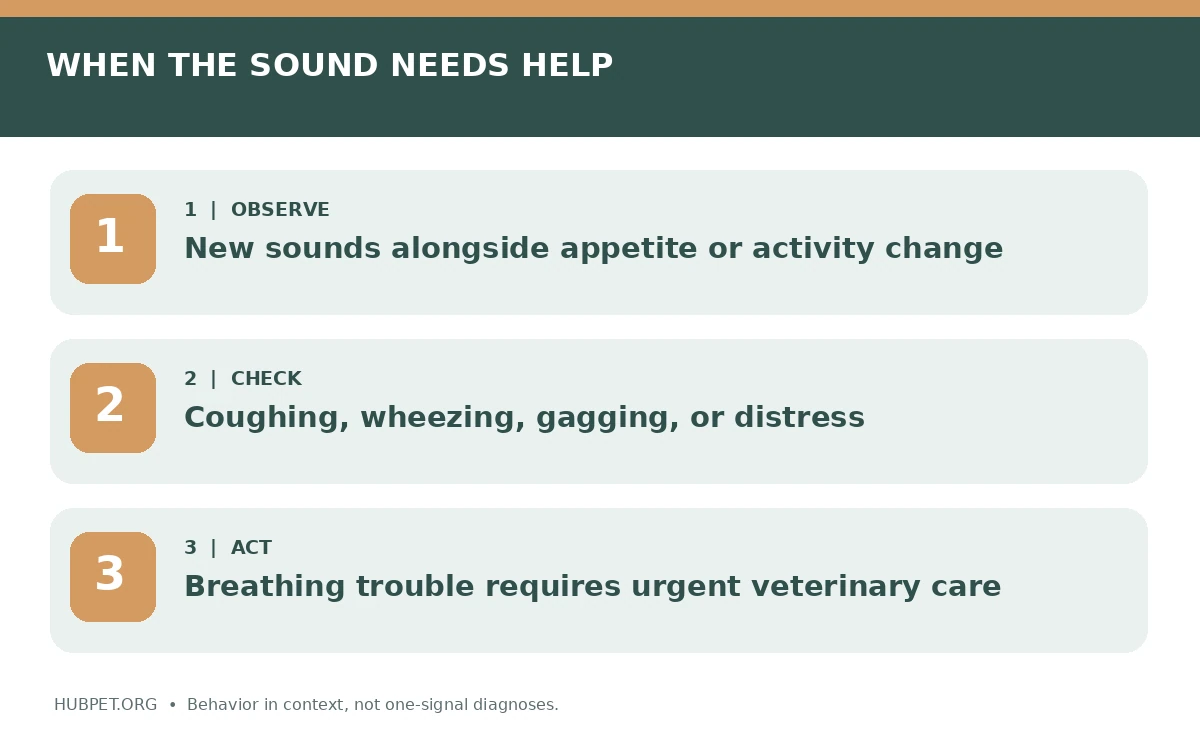
Coughing, wheezing, gagging, or labored breathing should not be dismissed as cute chattering. Those sounds can require medical attention, particularly when the cat seems distressed or struggles to breathe. Record symptoms without delaying urgent veterinary help.
By contrast, a long, harsh yowl, which may accompany stress or other concerns and deserves contextual assessment. VCA recommends evaluating vocal changes alongside appetite, posture, activity, and other signs. Do not diagnose a respiratory problem from an audio clip alone.
Support communication in multi-cat households
A chirrup directed at you does not prove two resident cats are friends. Watch how each animal moves through doorways, approaches shared resources, and responds to the other cat’s vocalizations. Provide separate food, water, resting spaces, and litter-box access where needed.
Never force two cats to approach because one makes a friendly sound toward a human. Cats have individual social boundaries. If conflict appears, allow distance and use gradual management rather than trying to translate every vocalization into an invitation.
Try a simple three-day chirp diary
Write down the time, sound description, place, posture, and what happened next. One entry might read: “Two soft prrts after I came home; tail up; walked to couch.” Another might note fast chatter while watching a bird. The difference quickly becomes clearer.
Use the notes to shape a calm response and to recognize genuine change. If a formerly quiet cat becomes suddenly vocal, or a familiar chirp accompanies hiding, pain, or appetite changes, consult your veterinarian. Understanding your individual cat matters more than a universal sound dictionary.
How We Research
Our editorial process compares veterinary and feline-welfare explanations of the specific behavior against the situation an owner can actually observe. We distinguish plausible interpretations from proven causes, recommend low-stress options, and flag meaningful changes for veterinary assessment. We do not diagnose an individual cat or claim veterinary endorsement. Sources were reviewed on October 26, 2026. Read more about HubPet and our editorial approach. This guide does not replace veterinary advice for your individual animal.
Sources
Cats Protection: Why Do Cats Meow?. Accessed October 26, 2026.
VCA Animal Hospitals: Meaning of Different Cat Sounds. Accessed October 26, 2026.
PetMD: Common Cat Sounds and What They Mean. Accessed October 26, 2026.
VCA Animal Hospitals: Ten Weird Sounds Pets Make. Accessed October 26, 2026.
It often can be, especially with relaxed posture and a voluntary approach. Always check the whole setting before assigning a meaning.
People use these labels inconsistently. A trill often sounds like a short rolling prrt, while chirps can be sharper notes.
Fast chatter in that setting can accompany excitement and frustration about prey out of reach. Keep windows secure and provide safe play.
A gentle voice response is fine if your cat seems comfortable. Watch whether the cat chooses to approach; do not force interaction.
Ask your veterinarian about abrupt sound changes with appetite or behavior changes. Trouble breathing, wheezing, or obvious distress needs urgent care.