
A kitten spinning after its own tail can look like a tiny game of tag. The same movement in an adult cat, especially with repeated biting or distressed vocalization, deserves a closer look. Tail chasing is a behavior, not a diagnosis; its meaning depends on age, frequency, intensity, and the cat’s condition before and after the episode. For medical concerns, use our veterinary disclaimer and ask your veterinarian.
Cats Protection describes occasional tail chasing as play, particularly in kittens, and recommends attention to repetitive biting. Our article on cat zoomies offers a separate look at energetic running bursts.
Distinguish one playful spin from repetitive pursuit
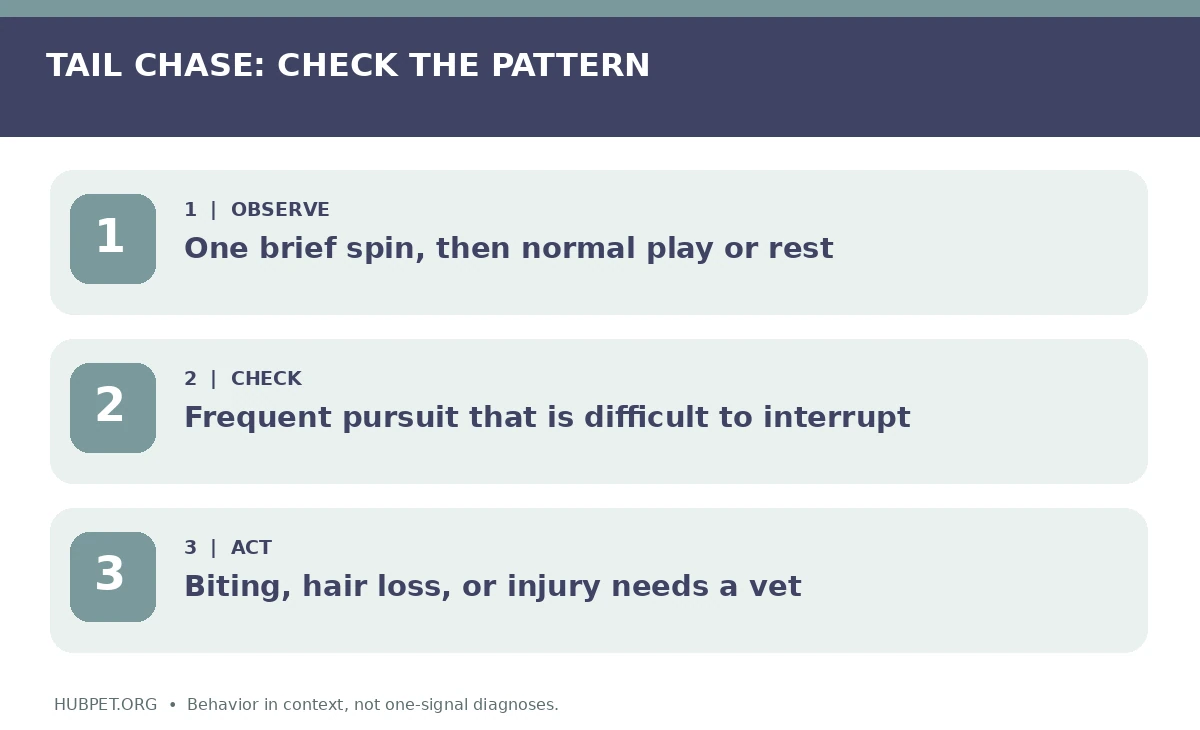
A young cat may notice a moving tail, swat once, and then return to another activity. This brief sequence can fit normal play. An episode that lasts a long time, appears hard to interrupt, or ends with fierce biting is a different pattern and should not be explained away as cute behavior.
Ask three basic questions: How often does it happen? Can the cat stop and rejoin ordinary activity? Is the skin or fur being damaged? Answering those questions over several days gives a clearer picture than a single amusing video clip.
Why kittens may find their tails interesting
Kittens practice tracking, pouncing, and grasping moving objects. A tail that swishes at the edge of vision can provide a convenient target. Cats Protection notes that tail chasing is more common in kittens and can be part of exploratory play. The movement is not inherently a sign of emotional distress.
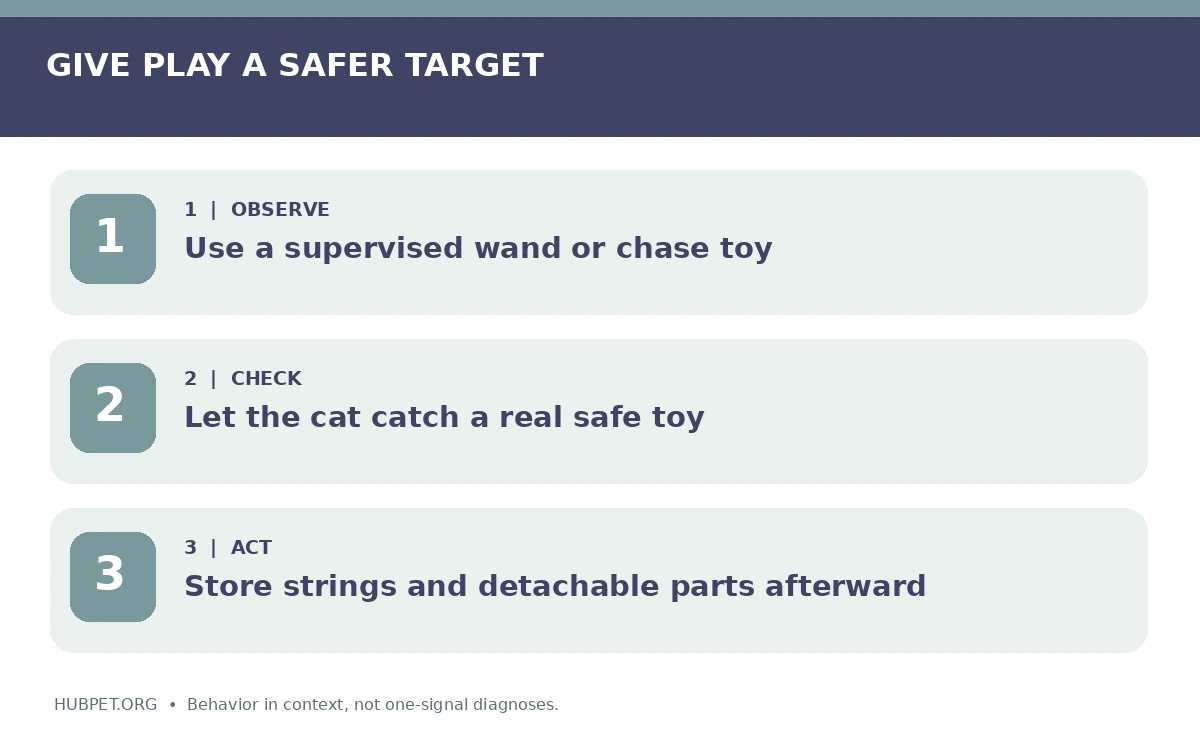
Provide supervised, age-appropriate play with toys that move away from the kitten, rather than encouraging constant self-chasing. Put away toys with string, elastic, or detachable parts after play. An adult should monitor interactive play so excitement does not turn into swallowing small components.
Boredom is possible, but it is not the only explanation
Some cats may chase or attack their tails more when they have few predictable opportunities to stalk and pounce. A short daily play schedule can give that energy a safer outlet. Still, frequent chasing can occur for reasons unrelated to entertainment, so enrichment alone is not a universal fix.
Before adding new toys, check whether the cat has vertical spaces, quiet rest, hiding options, and regular human-led play. Rotation matters more than filling the floor with objects. A toy that encourages looking, chasing, and a final catch can support a natural play sequence.
When biting changes the concern level
Repeated chewing or pulling at the tail may irritate skin or worsen an existing problem. If you notice sores, bald patches, bleeding, an abnormal tail posture, or painful reactions to touch, ask your veterinarian for help. Never apply human skin creams or bandages without professional guidance.
Avoid grabbing the tail to interrupt a chase. That can increase fear or cause injury. Instead, calmly create distance from household hazards and record what is happening. Seek urgent care for bleeding, severe pain, injury, or inability to move the tail normally.
Watch the rest of the cat, not just the tail
Ear position, muscle tension, vocalization, pupils, and the surrounding environment all matter. A relaxed cat that pauses to groom is different from one that hides, hisses, lashes its tail repeatedly, or seems frantic. Tail movement by itself has no perfect dictionary.
Look for changes in grooming, appetite, litter-box use, sleep, and touch tolerance. A veterinarian can assess physical causes and advise whether a qualified behavior professional is appropriate. Do not assume an adult cat is “obsessive” based on a brief clip.
Offer a replacement for the chase
Use a wand toy under supervision and let the cat stalk, chase, and catch it. Finish with a successful capture rather than endless frustration. Choose a toy that cannot break into small swallowable pieces, and put the wand away when the session ends.
If your cat becomes highly aroused, slow the toy or end the interaction before frustration builds. Never tease by pulling the tail, restraining the cat for a photograph, or shining a laser indefinitely without a physical target to catch. Calm, rewarding play is more useful than provoking another spin.
Build a low-pressure play schedule
Try two or three brief opportunities spread through the day and adjust to your cat’s age and energy. A senior cat may prefer gentle tracking, while an energetic youngster may want more movement. Do not force a tired cat to continue just to meet a timer.
Place resting options near the play area so the cat can stop independently. If there are several cats, supervise separate play when one cat crowds or steals the toy. Observe whether tail chasing becomes less frequent without assuming that improvement proves its original cause.
Record a useful video for your veterinarian
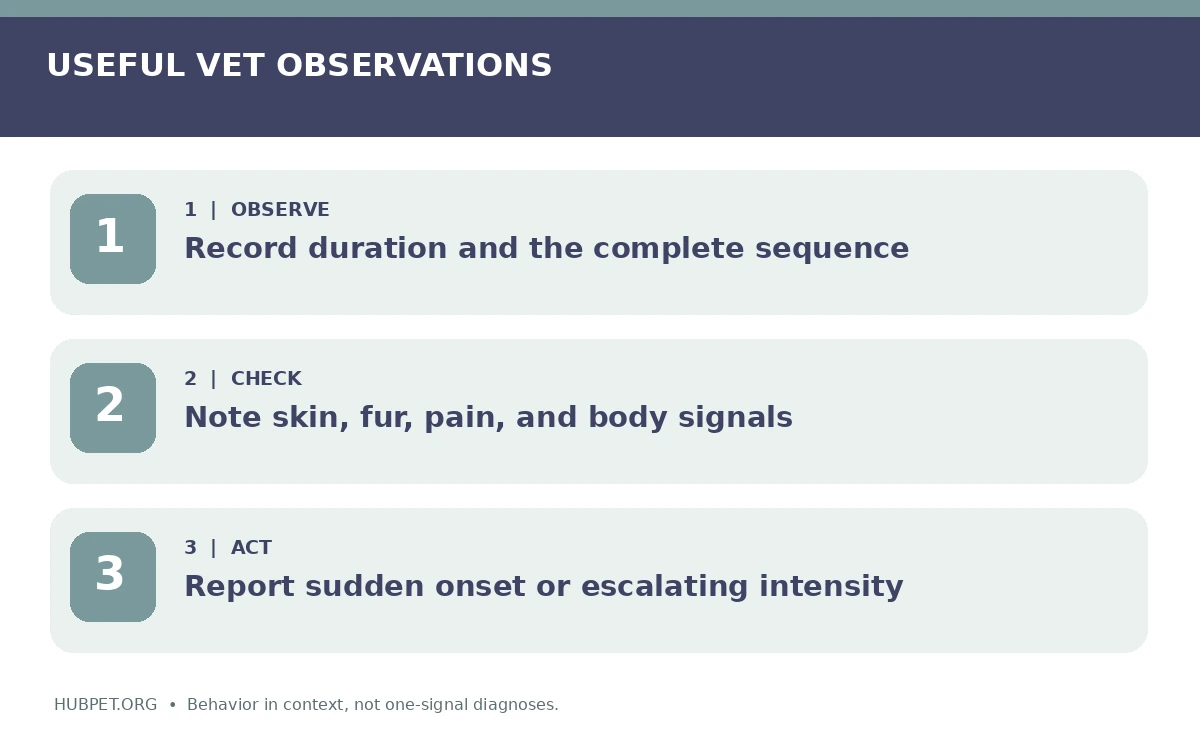
Film from a safe distance without touching or startling your cat. Capture the start and end of the episode if possible, not just the most dramatic second. Note how long it lasts, the location, and whether the cat reacts if you offer another activity.
A short record should also mention any skin changes, fall, recent household disruption, or new medication. Veterinary assessment is especially important when behavior emerges abruptly in an adult cat or escalates despite more opportunities for normal play.
What not to do if tail chasing worries you
Do not punish, spray, chase, or try to hold the cat still. Fear can make observation harder and turn a manageable event into a struggle. Avoid diagnosing parasites, pain, or compulsive disorder yourself. Keep the environment safe and consult a veterinarian when the pattern is intense, new, or damaging.
If chasing is occasional and your cat is otherwise comfortable, provide normal play and let the episode pass. The useful goal is not zero tail movement. It is a cat that can play, rest, groom, and move comfortably without injuring itself.
How We Research
Our editorial process compares veterinary and feline-welfare explanations of the specific behavior against the situation an owner can actually observe. We distinguish plausible interpretations from proven causes, recommend low-stress options, and flag meaningful changes for veterinary assessment. We do not diagnose an individual cat or claim veterinary endorsement. Sources were reviewed on October 26, 2026. Read more about HubPet and our editorial approach. This guide does not replace veterinary advice for your individual animal.
Sources
Cats Protection: Why Do Cats Have Tails?. Accessed October 26, 2026.
Cats Protection: How to Tell if Your Cat Is Happy. Accessed October 26, 2026.
VCA Animal Hospitals: How Pain Affects Behavior in Cats. Accessed October 26, 2026.
Occasional playful tail chasing can be normal for kittens as they explore movement. Watch for frantic repetition or bites that damage the tail.
Play is possible, but an abrupt new pattern can also accompany discomfort or other problems. Contact your veterinarian for assessment.
It may contribute in some cats. Offer suitable interactive play, but do not treat enrichment as a substitute for veterinary care if chasing is intense.
No. Avoid grabbing the tail or restraining the cat. Make the area safe and offer a calm redirect when appropriate.
Seek prompt veterinary help for bleeding, significant injury, severe pain, or abnormal tail movement. Do not apply human treatments yourself.