
A dog crate bed should make an already comfortable crate easier to rest in, not turn the crate into a dangerous storage box. The decision begins with your dog: Does the dog shred fabric, have frequent accidents, run hot, or turn around carefully because of limited mobility? These details matter more than a fluffy product photo. See our veterinary information disclaimer for health-related limits.
Unlike a freestanding dog bed, a crate insert must fit within a fixed enclosure without blocking the door or taking away turning space. This guide explains how to measure that space, choose a reasonable surface, introduce it gradually, and know when no bedding is temporarily safer.
Measure the crate floor, not its advertised exterior size
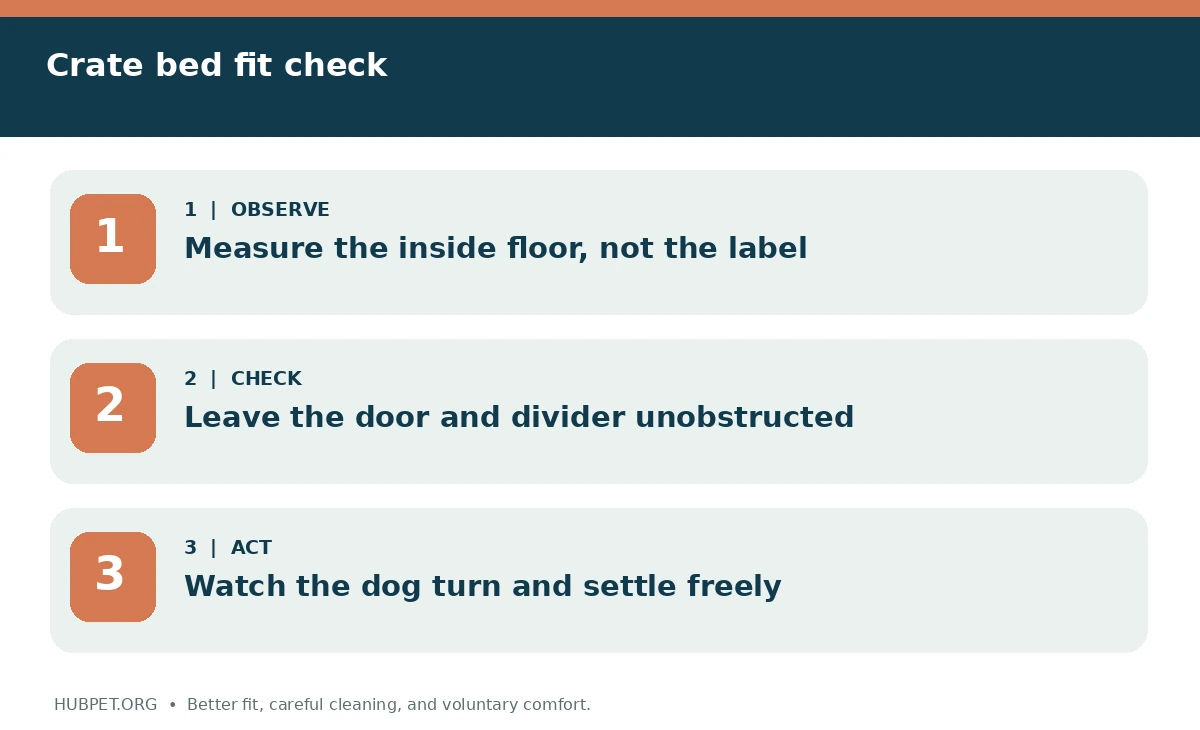
Open the crate and measure the usable inside width and depth along the floor. Ignore the product name on the crate packaging; wire frames, rounded plastic walls, latches, and divider panels all reduce usable space. Measure the narrowest section where a pad will actually rest.
A pad can be slightly smaller than the floor without failing its purpose. An oversized pad that folds against the sides can bunch near a door hinge or reduce space to reposition. Before buying, place a cardboard rectangle of the proposed dimensions inside and confirm that the door works normally.
Check your dog’s sleeping posture and freedom to turn
Observe whether your dog sleeps curled tightly, lies on one side, or stretches with front paws extended. The crate itself must allow comfortable standing, turning, and lying down; a thick mattress cannot fix a crate that is too small. Compare the pad thickness with available headroom.
Give special attention to dogs who move slowly or rise stiffly. Look for a stable, flat surface that does not slide when they push up. If standing, turning, or settling seems painful, ask a veterinarian for an individual mobility assessment instead of relying on a bedding label.
Choose fabric around real chewing behavior
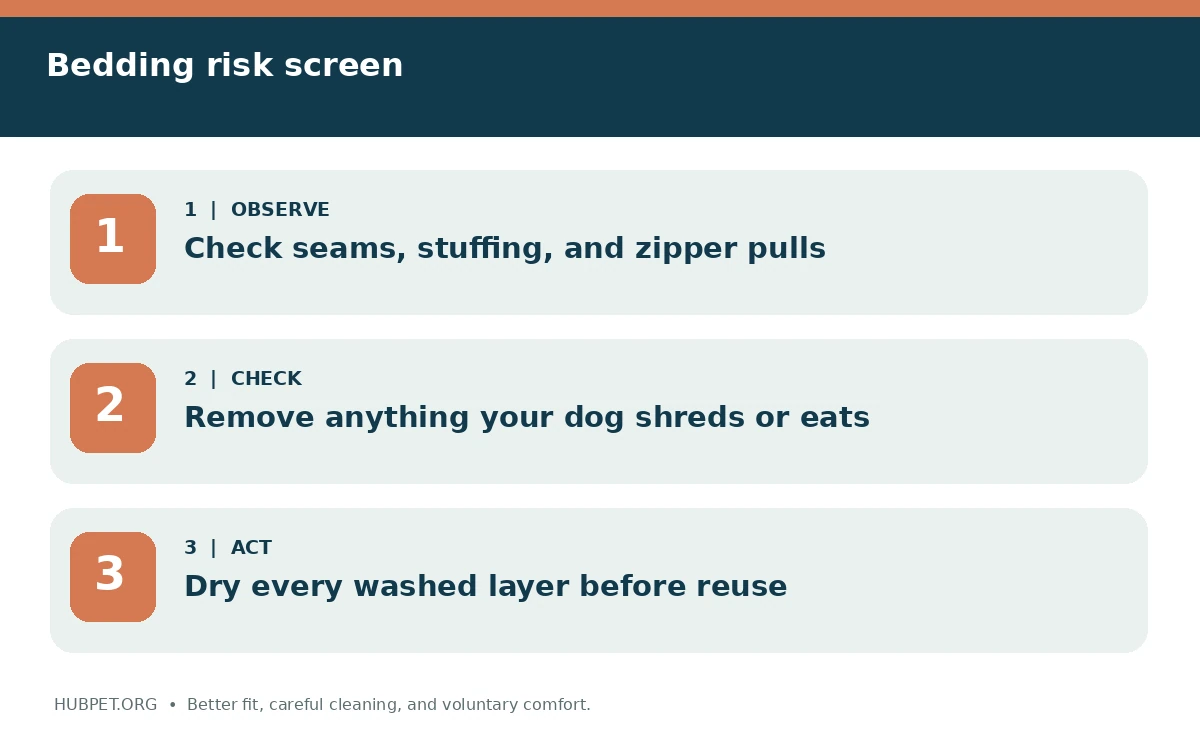
Inspect any pad for loose fibers, exposed foam, dangling cords, and long zipper pulls. A sewn-in zipper guard and intact edging can lower access to weak points, but a label that says chew-proof cannot guarantee safety. Watch how your dog interacts with the item while awake.
For a puppy that tears padding and swallows pieces, remove the bedding and talk with your veterinarian if ingestion may have occurred. Provide approved chewing outlets during supervised time outside the crate. Do not leave an unfamiliar stuffed pad in an enclosed crate overnight as an experiment.
Match the surface to accidents and cleaning
During house training, a very absorbent, thick mattress may hold odors and complicate cleanup. A thin washable pad may work for a dog that keeps it clean, while a bare easy-clean floor can be a temporary choice when the puppy repeatedly soils or destroys bedding. Maintain frequent toilet breaks.
Check the maker’s actual wash instructions rather than assuming a removable cover makes the whole bed washable. Moisture can reach the insert through seams. After an accident, wash all affected parts, dry completely, and inspect for persistent odor before returning the pad to the crate.
Avoid heat buildup and blocked ventilation
An enclosed crate can become stuffy when a thick plush bed meets a heavy cover or a sunny window. Keep vents clear, watch the room temperature, and let the dog choose a cooler resting option when practical. Cooling claims on bedding do not replace normal indoor temperature control.
Do not place heating pads, exposed electrical cords, or improvised heat sources inside a crate. Dogs with short noses, heavy coats, or underlying health concerns may need a different setup. Excessive panting, weakness, or distress call for prompt action and veterinary advice, not a new mattress.
Test the setup while the door stays open
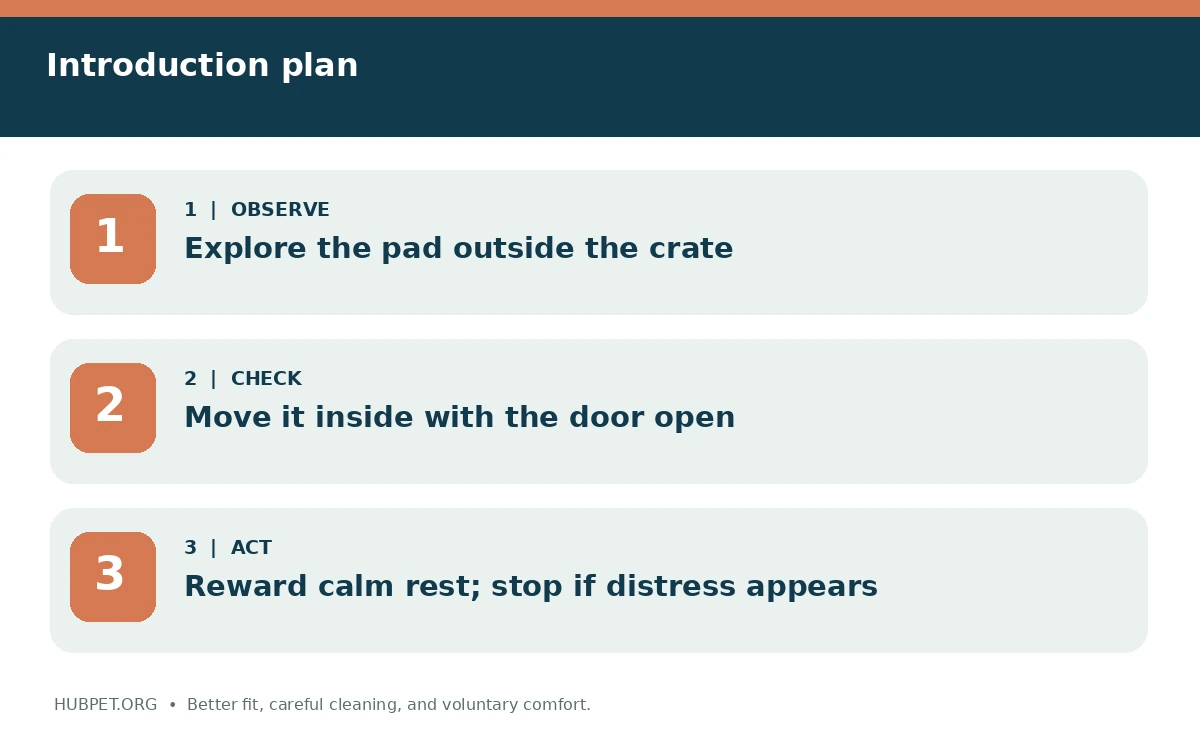
Begin with the pad outside the crate, where your dog can investigate and walk away. Reward relaxed sniffing or stepping onto it without pushing the dog down. Move the pad inside after the dog shows comfort, and let the dog enter voluntarily for short sessions.
Watch for paw catching, sliding, chewing, or a sudden reluctance to enter. These are reasons to change the setup, not signs that the dog is being stubborn. Keep crate sessions short and pleasant; bedding should support crate training rather than become a reason to confine a distressed animal.
Check the bed after routine use
Run your fingers along stitched edges, corners, and zipper covers when the dog is elsewhere. Replace pads with split seams, exposed stuffing, or a persistently damp center. Recheck fit when you adjust a puppy divider or replace the crate because the usable floor dimensions may change.
A washable spare cover can help in households with muddy walks or occasional accidents. Keep a clean fallback resting place outside the crate while the insert dries. A spare is not a reason to ignore a dog that repeatedly chews and ingests bedding material.
Decide when a crate bed is the wrong addition
Pause the purchase if your dog shreds materials, becomes frantic when confined, repeatedly soils the sleeping space, or cannot turn comfortably. The immediate problem may be the confinement plan, toilet schedule, environment, or health rather than the pad itself. Seek appropriate veterinary or qualified reward-based behavior support.
Choose a practical alternative only after identifying the concern. For some dogs that means supervised rest on a simple mat outside the crate; for others it means temporary bare-floor management with careful monitoring. Comfort is not measured by mattress thickness alone.
How We Research
Our editorial process compares animal-welfare guidance and veterinary advice relevant to this specific dog-bed construction. We compare the use case, practical safety limits, sizing, maintenance, and alternatives. This is editorial buying guidance, not hands-on product testing; no particular maker or product receives our endorsement. We do not diagnose an individual dog or claim veterinary approval. Sources were reviewed on October 26, 2026. Read more about HubPet and our editorial approach. This guide does not replace veterinary advice for your individual animal.
Sources
American Kennel Club: How to Crate Train Your Dog. Accessed October 26, 2026.
American Kennel Club: How Much Do Puppies Sleep?. Accessed October 26, 2026.
ASPCA: General Dog Care. Accessed October 26, 2026.
It should lie flat within the usable floor area without bunching or blocking the door. Leave enough functional space for the dog to stand, turn, and settle comfortably.
Not automatically. A puppy that chews or soils soft padding may need simpler bedding or a temporarily bare easy-clean floor with close attention to the toilet schedule.
Remove damaged bedding and prevent access to loose stuffing. If you suspect ingestion, contact a veterinarian; do not assume an advertised chew-resistant label prevents obstruction.
Avoid exposed electrical products or improvised heat sources. Ask your veterinarian about special temperature needs and follow any approved device instructions with appropriate supervision.
Watch whether the dog enters voluntarily, can change position easily, rests calmly, and does not slip or catch claws on the surface. Reassess after every size or setup change.